
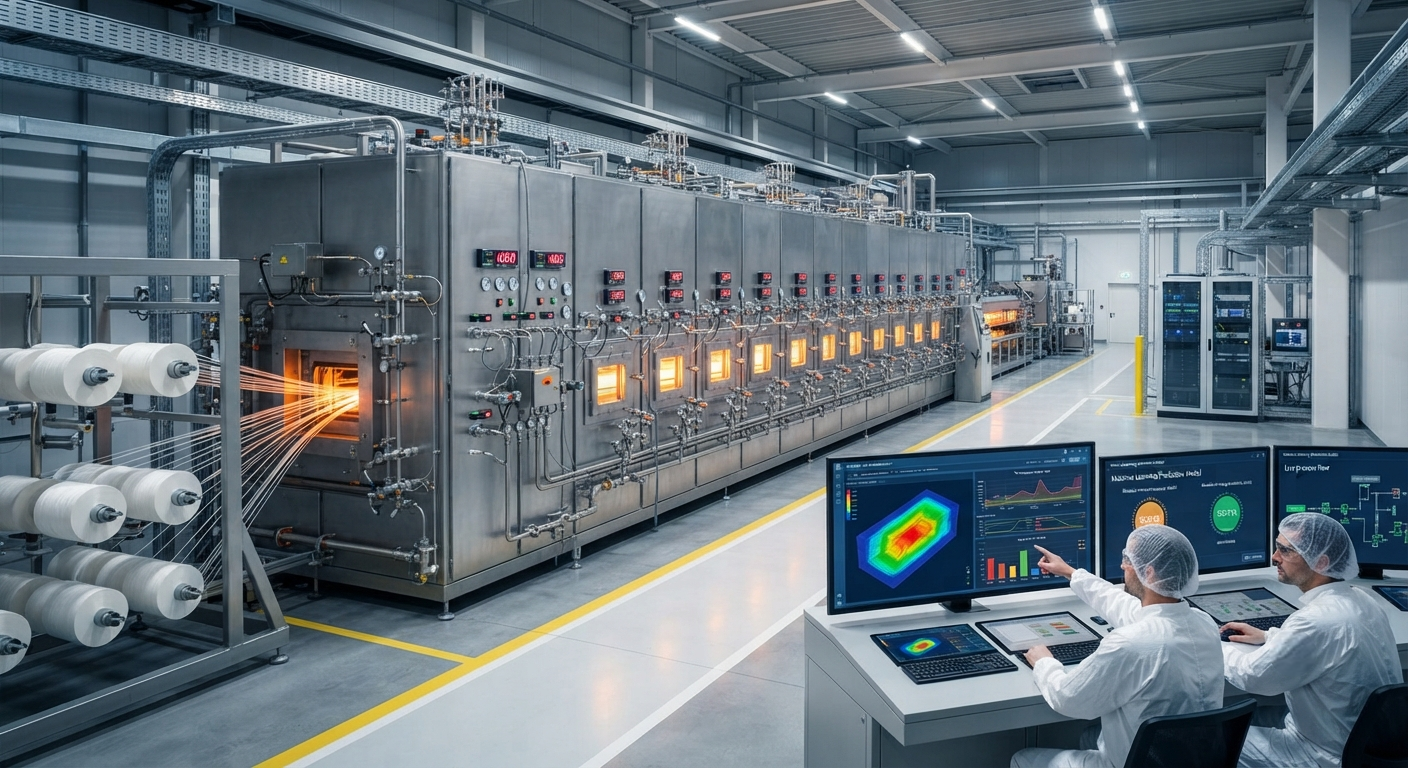
Comprehensive B2B technical analysis of digital twin technology adoption in carbon fiber manufacturing — covering production line architecture, thermal process simulation, tension control ML models, quality prediction twins, real-world implementation case studies from Toray, SGL Carbon, and Mitsubishi Chemical, and investment considerations for carbon fiber producers.
The Convergence of Digital Twin Technology and Carbon Fiber Manufacturing
The global carbon fiber composites market, valued at approximately $38 billion in 2025, is undergoing a fundamental transformation driven by Industry 4.0 technologies. Among these, digital twin technology has emerged as the most impactful innovation for carbon fiber manufacturing operations, enabling real-time simulation, process parameter optimization, and predictive quality assurance across the entire production value chain — from precursor stabilization and carbonization to surface treatment, sizing application, and final composite fabrication. Digital twins — dynamic virtual replicas of physical manufacturing processes that continuously synchronize with sensor data from real production equipment — are enabling carbon fiber producers to achieve previously unattainable levels of process control, yield improvement, and quality consistency.
The adoption of digital twin technology in carbon fiber manufacturing addresses three persistent challenges that have constrained the industry for decades. First, the carbonization process — in which polyacrylonitrile (PAN) precursor fiber is heated through multiple temperature zones reaching 1,000–1,800°C — involves complex thermochemical transformations that are difficult to monitor directly inside a 40-meter-long carbonization furnace. Second, final composite quality depends on hundreds of interdependent parameters across multiple process steps, making traditional statistical process control (SPC) approaches inadequate for root-cause analysis. Third, qualification cycles for new carbon fiber grades or process changes typically require 6–18 months of physical testing, severely constraining the industry's ability to respond to evolving customer requirements. Digital twins compress these qualification cycles from months to weeks by enabling virtual process validation before physical production trials.
Digital Twin Architecture for Carbon Fiber Production Lines
A comprehensive digital twin for a carbon fiber manufacturing facility integrates data from four distinct layers: the physical process layer (sensors, actuators, PLCs), the data integration layer (time-series databases, data lakes, edge computing nodes), the simulation and modeling layer (physics-based models, machine learning algorithms, finite element analysis), and the application layer (dashboards, optimization engines, quality prediction tools). The architecture collects data from 500–2,000 individual sensor points per production line, recording parameters at sampling frequencies ranging from 1 Hz (temperature, tension) to 100 Hz (tension variation, filament break detection) to 1,000 Hz (acoustic emission monitoring in the carbonization furnace).
The three most critical digital twin modules for carbon fiber manufacturing are:
- Thermal Process Twin: Models the temperature profile across all zones of the stabilization oven (180–300°C, 30–90 minutes residence time) and carbonization furnace (300–1,800°C, 3–15 minutes residence time). The thermal twin integrates computational fluid dynamics (CFD) simulations of gas flow patterns, heat transfer models accounting for fiber exothermic reactions, and real-time thermocouple feedback to predict the temperature actually experienced by individual fiber filaments at each position in the furnace. This module has demonstrated the ability to reduce temperature variability across the fiber tow width from ±15°C to ±3°C, directly improving fiber tensile strength consistency by 8–12%.
- Tension Control Twin: Monitors and predicts fiber tension at 50–80 points along the production line — from the creel (inlet tension: 0.5–2.0 cN/dtex) through the stabilization oven (tension increase: 20–40% due to cyclization reactions) and into the carbonization furnace (tension: 1.0–3.0 cN/dtex at high-temperature zones). The tension twin uses a combination of physical roller dynamics models and neural network predictors trained on historical break data to forecast filament breakage events 15–45 seconds before they occur, enabling preemptive tension adjustments that reduce break frequency by 35–60%.
- Quality Prediction Twin: Correlates in-process parameters (temperature history, tension profile, residence time, precursor lot variability) with final fiber mechanical properties measured at the quality control lab — tensile strength (ISO 10618), tensile modulus (ISO 10618), density (ASTM D3800), electrical resistivity, and surface chemistry (XPS). Machine learning models — typically gradient-boosted trees or ensemble neural networks trained on 6–24 months of historical production data — predict the tensile strength of each production lot with a mean absolute error of 3–5%, enabling real-time lot disposition decisions without waiting for full QC lab results.
| Digital Twin Module | Input Parameters | Output Predictions | Sampling Frequency | Validation Accuracy | Typical Yield Improvement |
|---|---|---|---|---|---|
| Thermal Process Twin | Zone temperatures (50–80 zones), gas flow rates (N₂, air), line speed (2–20 m/min), tow width (100–400 mm) | Fiber temperature profile, degree of stabilization, crystallinity index (X-ray) | 1 Hz | ±3°C (vs. installed thermocouples) | 5–8% reduction in strength CV |
| Tension Control Twin | Roller speeds (30–60 rollers), dancer arm positions, motor torque (0.5–50 N·m), filament break sensor counts | Break probability per zone, optimal tension setpoints, remaining roller life | 10–100 Hz | 85–92% break prediction (15–45s advance) | 35–60% reduction in breaks |
| Quality Prediction Twin | Precursor lot ID, all thermal/tension history, surface treatment current (5–50 A), sizing solids content (0.5–2.0%) | Tensile strength (MPa), modulus (GPa), density (g/cm³), lot conformity prediction | Batch-level (per 50–200 kg lot) | ±3–5% MAE on tensile strength | 15–25% reduction in off-spec lots |
| Integrated Production Scheduler | Order book, machine availability, changeover times (2–8 hrs), precursor inventory, quality twin outputs | Optimal production sequence, changeover schedule, delivery date confidence | Hourly re-optimization | ±5–8% on delivery date prediction | 10–20% increase in OEE |
Machine Learning for Process Optimization
Machine learning algorithms form the analytical core of carbon fiber digital twins, transforming the vast stream of process sensor data into actionable optimization recommendations. Three ML paradigms have proven particularly effective in carbon fiber manufacturing environments:
- Supervised learning for tensile strength prediction: Historical production data from 500+ production lots — each with 10,000–50,000 sensor readings per lot — is used to train ensemble regression models (XGBoost, LightGBM, or ensemble neural networks) that predict final fiber tensile strength from process parameters. Feature engineering identifies the most predictive variables: peak carbonization temperature (typically 1,400–1,800°C for T700-grade), residence time at peak temperature (60–180 seconds), and tension profile slope in the stabilization oven. These models achieve R² values of 0.82–0.92 on holdout test data, significantly outperforming traditional multi-linear regression approaches (R² of 0.45–0.60). Toray Industries reported in 2025 that its machine learning-based strength prediction system reduced off-specification lots by 22% in the first year of deployment at its Ehime plant.
- Reinforcement learning for multi-zone temperature control: The carbonization furnace is a multi-zone thermal system with strong coupling between adjacent zones — adjusting the temperature in zone 5 (1,200°C) affects the thermal profile in zones 4 and 6 due to radiation and gas convection. Traditional PID control struggles with this coupling, requiring experienced operators to manually tune zone setpoints when production parameters change (e.g., a different precursor lot or a new fiber grade). Reinforcement learning agents trained in simulation environments with 50,000–200,000 episodes learn optimal multi-variable control policies that reduce temperature overshoot by 60–75% and settling time by 40–55% compared to PID control. SGL Carbon has implemented RL-based temperature control at its Meitingen, Germany, carbon fiber line, reporting a 12% reduction in energy consumption and an 8% improvement in tensile strength consistency.
- Anomaly detection for predictive maintenance: The carbon fiber production line contains 200–400 rotating components (rollers, godets, winders, pumps) that operate continuously in a high-temperature, fiber-contaminated environment. Bearing failures on critical rollers cause unscheduled downtime costing $15,000–$50,000 per hour in lost production. Autoencoder neural networks trained on vibration sensor data (accelerometers sampling at 10–50 kHz) detect subtle changes in bearing vibration signatures 7–21 days before failure, enabling condition-based maintenance during planned changeover windows. Teijin's deployment of vibration-based anomaly detection at its Matsuyama plant reduced unplanned downtime by 55% and extended mean time between failures (MTBF) for critical rollers from 8 months to 14 months.
Real-World Implementation Case Studies
Leading carbon fiber producers have made substantial investments in digital twin technology since 2022. Three notable case studies illustrate the measurable benefits achieved:
- Toray Industries — Ehime Plant, Japan: Toray deployed a comprehensive digital twin across its T700 and T800 production lines at the Ehime facility in 2023–2024, covering stabilization, carbonization, surface treatment, and sizing processes. The digital twin integrates 1,200 sensor points per production line, feeding data into a hybrid physics-ML model hosted on an on-premise edge computing cluster. Results after 18 months of operation: 22% reduction in off-specification product, 15% improvement in overall equipment effectiveness (OEE), 12% reduction in energy consumption per kilogram of fiber produced, and 35% reduction in quality lot release time (from 8 hours to 5.2 hours). The USD $12 million investment generated an estimated annual return of $8–10 million through yield improvement and energy savings alone, implying a payback period of approximately 18 months.
- SGL Carbon — Meitingen, Germany: SGL Carbon implemented its "Smart Carbon" digital twin program in 2024, focusing initially on the tension control and thermal process modules at its Meitingen carbon fiber line. The system uses 850 sensor points and a reinforcement learning-based tension controller that dynamically adjusts roller speeds and dancer arm positions 20 times per second. Results: 45% reduction in filament breaks, 8% improvement in tensile strength CV (from 4.2% to 3.9%), and 10% reduction in energy costs through optimized furnace temperature profiles. SGL plans to extend the digital twin to its full production network of five manufacturing sites by 2027.
- Mitsubishi Chemical — Otake, Japan: Mitsubishi Chemical focused on quality prediction for its large-tow (48K, 60K) industrial-grade fiber production at the Otake plant. The quality twin, trained on 18 months of production data covering 2,500+ lots, predicts tensile strength, modulus, and density for each production lot with an accuracy of ±4%, enabling real-time lot acceptance decisions. Mitsubishi reports that this system reduced the need for destructive physical testing by 60% (from 5 samples per lot to 2 samples per lot), saving approximately $200,000 annually in QC laboratory costs while improving lot release speed by 70%.
Challenges and Implementation Barriers
Despite the demonstrated benefits, digital twin adoption in carbon fiber manufacturing faces four significant barriers that B2B buyers and technology suppliers should understand:
- Data quality and integration complexity: Carbon fiber production lines commonly integrate equipment from 5–15 different vendors — furnaces, ovens, winders, surface treatment units, sizing baths, QC instruments — each with its own data acquisition system, communication protocol (OPC-UA, Modbus, Profinet, EtherNet/IP), and data format. Standardizing and integrating these heterogeneous data sources into a unified digital twin architecture typically requires 40–60% of total project budget and 6–12 months of integration effort. The absence of a standardized carbon fiber industry data model — comparable to the ISA-88 or OPC-UA Companion Specification for composites — means that each digital twin implementation is effectively a custom integration project.
- Physics-ML model uncertainty: Machine learning models for predicting fiber properties are highly accurate within their training distribution (interpolation), but degrade rapidly when process conditions move outside the historical training range (extrapolation). A model trained on T700-grade production (carbonization temperature 1,400–1,500°C) cannot reliably predict properties for a new T1100-grade process (carbonization temperature 1,600–1,800°C) without retraining. Physics-based models avoid this limitation but require accurate knowledge of reaction kinetics, thermal transport properties, and mechanical behavior at high temperatures — data that is often proprietary or incomplete. The leading approach is hybrid physics-ML modeling, where a physics-based skeleton (e.g., heat transfer equation with Arrhenius reaction kinetics) is augmented by ML correction terms that learn from data. This approach reduces extrapolation error by 60–70% compared to pure ML models.
- Return on investment uncertainty for smaller producers: The capital cost of implementing a comprehensive digital twin — including sensors ($200,000–$800,000), edge computing infrastructure ($150,000–$500,000), software licenses ($100,000–$400,000 per year), and integration consulting ($300,000–$1,000,000) — is justified for large-scale producers with annual production volumes above 5,000–8,000 tonnes. For smaller producers (1,000–3,000 tonnes per year), the investment payback period extends to 3–5 years, making the business case less compelling. However, entry-level digital twin solutions — focusing on a single process module (e.g., tension control only) using cloud-based analytics with reduced sensor density (200–300 points) — are now available from technology suppliers at $150,000–$400,000 total cost, making digital twin adoption accessible to mid-tier producers.
- Cybersecurity and data sovereignty: Digital twins require continuous data streaming from production floor equipment to analytics platforms — either on-premise, at the edge, or in the cloud. For carbon fiber producers serving defense and aerospace customers, data sovereignty requirements (ITAR, Export Administration Regulations) may prohibit cloud-based analytics when the production data or ML models include export-controlled parameters. Toray and Mitsubishi Chemical have both elected to deploy digital twin analytics on fully on-premise infrastructure for their defense-related production lines, accepting higher infrastructure costs ($400,000–$700,000 additional) in exchange for complete data sovereignty. Cloud-based digital twins, used for commercial-grade fiber production, offer lower capital costs but require careful contractual provisions regarding data ownership, storage location, and access controls.
The Future of Smart Carbon Fiber Manufacturing
The trajectory of digital twin technology in carbon fiber manufacturing points toward three developments that will reshape the industry by 2030. First, autonomous manufacturing — fully closed-loop digital twin control in which the ML-based optimization engine directly adjusts furnace temperatures, line speeds, and tension setpoints without human operator intervention — will be deployed on at least 30–40% of new carbon fiber production lines by 2028. Toray's proprietary "Smart Torayca" initiative aims to achieve Level 4 autonomy (conditional automation, with human oversight only for out-of-spec conditions) on its newest T1100G production line by 2027. Second, digital twin data sharing across the carbon fiber supply chain — from PAN precursor producers through carbon fiber manufacturers to prepreg converters and final part fabricators — will enable end-to-end quality traceability, reducing qualification costs by an estimated 40–60% for aerospace applications. Third, generative AI models will accelerate the discovery of novel carbon fiber process recipes, automatically exploring parameter combinations in simulation that would require months of physical experimentation.
Frequently Asked Questions
What is the minimum sensor density required to build an effective digital twin for a carbon fiber production line?
The minimum viable sensor configuration for a carbon fiber digital twin depends on the scope of the twin (single process module versus full production line) and the target application. For a tension control digital twin covering only the carbonization furnace, a minimum of 50–80 sensor points is required — including roller speed encoders (20–30 points), dancer arm position sensors (10–15 points), motor torque sensors (10–15 points), and filament break detectors (10–20 points, typically infrared or piezoelectric). For a comprehensive line-wide digital twin covering stabilization, carbonization, surface treatment, and sizing, the minimum sensor count rises to 400–600 points. Industry best practice, as documented by Toray's Ehime implementation, uses approximately 1,200 sensor points per production line to achieve the full benefits of thermal process simulation, tension optimization, and quality prediction. Producers should budget $200–$800 per sensor point for hardware, installation, and calibration, depending on the sensor type and the environmental requirements (high-temperature-rated sensors for furnace zones cost 3–5× more than standard industrial sensors). A phased implementation approach — starting with 200–300 sensors for tension control and quality prediction, then expanding to 600–1,200 sensors for full thermal process modeling — is recommended to manage capital expenditure while demonstrating early returns.
How do digital twins handle precursor lot variability — the known challenge of batch-to-batch PAN precursor differences?
Precursor lot variability is widely acknowledged as the single largest source of carbon fiber quality variation, accounting for an estimated 40–55% of tensile strength CV according to industry studies. Digital twins address this challenge through two mechanisms. First, the quality prediction twin incorporates precursor lot characterization data as model inputs — including precursor density (1.18–1.20 g/cm³ for standard PAN), molecular weight distribution (Mw 100,000–300,000 Da), comonomer content (itaconic acid, methacrylic acid, or acrylamide at 0.5–5.0 mol%), and thermal analysis data (DSC exotherm onset temperature, TGA char yield). These precursor attributes are measured on every incoming lot and fed into the ML-based quality prediction model, which learns to adjust its tensile strength predictions for each precursor lot based on historical correlation data. Second, the thermal process and tension control twins use feed-forward control — predicting the required zone temperature and tension adjustments for each new precursor lot based on its characterization data — rather than relying solely on feedback control after product quality deviations are detected. In practice, this feed-forward capability reduces the initial quality offset (first 1–3 lots of a new precursor batch) by 50–70%, from an estimated 8–12% tensile strength deviation to 3–5%. Continuous model retraining — typically on a rolling 12-month window of production data, updated monthly — ensures that the digital twin's predictions remain calibrated to the current precursor supply profile.
What qualifications should a B2B buyer look for when evaluating a digital twin technology supplier for carbon fiber manufacturing?
When evaluating digital twin technology suppliers for carbon fiber manufacturing applications, B2B buyers should assess five qualification criteria. (1) Domain expertise in carbon fiber processing: The supplier should demonstrate direct experience with the specific process chemistry — stabilization kinetics of PAN, carbonization furnace thermal dynamics, and the relationship between surface treatment parameters and fiber-matrix adhesion. Suppliers from other process industries (chemical, semiconductor, automotive) often underestimate the complexity of carbon fiber thermochemical processing. (2) Open architecture and data interoperability: The digital twin platform should support standard industrial communication protocols (OPC-UA, MQTT, Modbus TCP) and provide REST APIs for integration with existing MES, ERP, and LIMS systems. Proprietary closed architectures typically add 25–40% to integration costs and create vendor lock-in risk. (3) Hybrid physics-ML modeling capability: Suppliers offering only pure physics-based simulation (slow, may lack accuracy for prediction) or pure ML approaches (brittle outside training distribution) should be compared against those offering hybrid approaches that combine the robustness of physics models with the accuracy of data-driven ML corrections. (4) Scalable deployment options: The supplier should offer deployment options spanning edge, on-premise, and cloud architectures, with documented reference cases for at least two carbon fiber production lines. (5) Customer references with quantified results: Suppliers should provide at least three customer references where digital twin deployment resulted in measurable improvements in at least two of the following metrics: OEE improvement (>10%), off-spec reduction (>15%), energy reduction (>8%), or quality lot release time reduction (>30%). Reference calls should include both the technology buyer (typically the VP of Engineering or Digital Transformation Director) and the production manager who operates the system day-to-day.
Part of topic
Related Articles
- Bio-Based Carbon Fiber Precursors: Lignin and Polyethylene for Low-Cost Production
- Large-Tow Carbon Fiber Cost Analysis: 48K vs 60K Price-Performance Comparison
- Carbon Fiber-Resin Interface Bonding: Surface Treatment and Coupling Agent Optimization
- Digital Twin for Carbon Fiber Manufacturing: Real-Time Process Monitoring and Defect Prevention
- Thermoplastic Carbon Fiber Welding for Automotive: Ultrasonic and Induction Welding Process Windows
- Large-Tow Carbon Fiber Wet Spinning: Process Optimization for 48K/60K Production Efficiency
Interested in Our Products?
Contact our team for competitive pricing and technical specifications.
Get a QuoteRelated Products
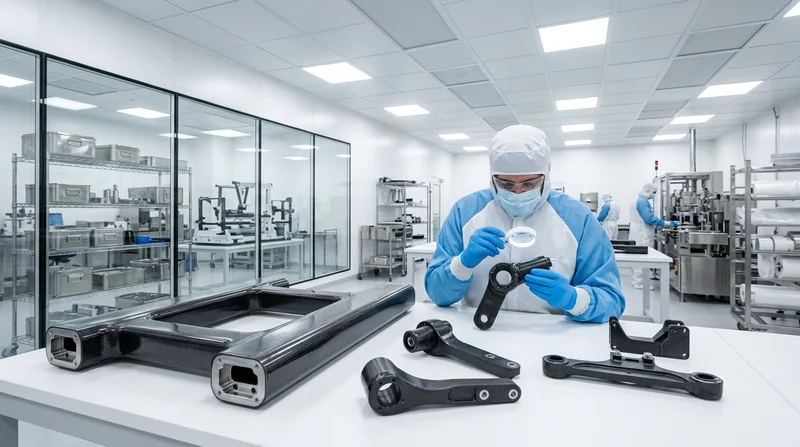
Custom Carbon Fiber Medical Device Components
Medical-grade carbon fiber components manufactured for imaging equipment, surgical instruments, and patient support systems. Carbon fiber's radiolucency (X-ray transparency) and high strength-to-weight ratio make it ideal for CT scanner beds, wheelchair frames, surgical robot arms, and MRI-compatible accessories. Biocompatible resin systems available.
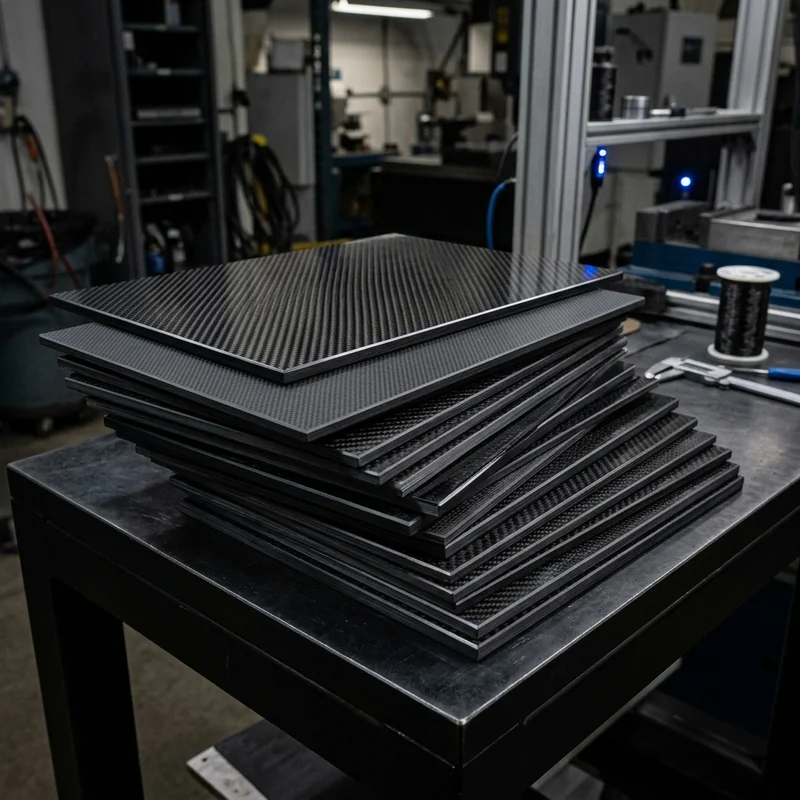
Carbon fiber standard plate-3k stripe
Lightweight, ultra-rigid standard sheets for drone fuselages, robot housings, facades and structural applications.

Square Carbon Fiber Tube — 3K Twill T700
Square cross-section carbon fiber tube manufactured with 3K twill weave for torsional strength. Preferred for structural frames, trusses, and support columns where rectangular geometry offers design flexibility.

Carbon Fiber Plate — 3K Twill T700 3.0mm
Medium-thickness 3.0mm carbon fiber plate offering significantly higher load capacity while maintaining attractive 3K twill finish. Suitable for structural brackets, reinforcement plates, and load-bearing panels.

Carbon Fiber Plate — 3K Twill T700 1.5mm
Thin 1.5mm carbon fiber plate with 3K twill weave surface. Lightweight and stiff, commonly used for covers, panels, drone bodies, and applications requiring a premium aesthetic appearance.