Carbon fiber prepreg shelf life directly impacts manufacturing cost, waste rates, and part quality. This article quantifies storage requirements, out-life limits, and the financial consequences of cold-chain failures for B2B buyers and composite fabricators.
Carbon Fiber Prepreg Shelf Life: Engineering Limits and Cost Implications
Carbon fiber prepreg is a perishable engineered material. Its epoxy resin matrix begins cross-linking (curing) at room temperature the moment it is manufactured. Without proper cold-chain storage, the material's tack, drape, and final mechanical properties degrade irreversibly.
Prepreg Chemistry: Why Shelf Life Exists
Prepreg consists of carbon fiber reinforcement pre-impregnated with a partially cured (B-staged) epoxy resin. Once cross-linking reaches 50–60% of full cure, the prepreg becomes too rigid to conform to mold geometries.
| Prepreg Classification | Frozen Storage (≤−18°C) | Out-Life (21°C) |
|---|---|---|
| Standard-modulus (T300, T700) | 12–18 months | 21–30 days |
| Intermediate-modulus (T800, IM7) | 9–12 months | 14–21 days |
| High-modulus (M40, M55J) | 6–9 months | 10–14 days |
| High-temperature BMI | 6–8 months | 7–10 days |
Recommended Storage Conditions
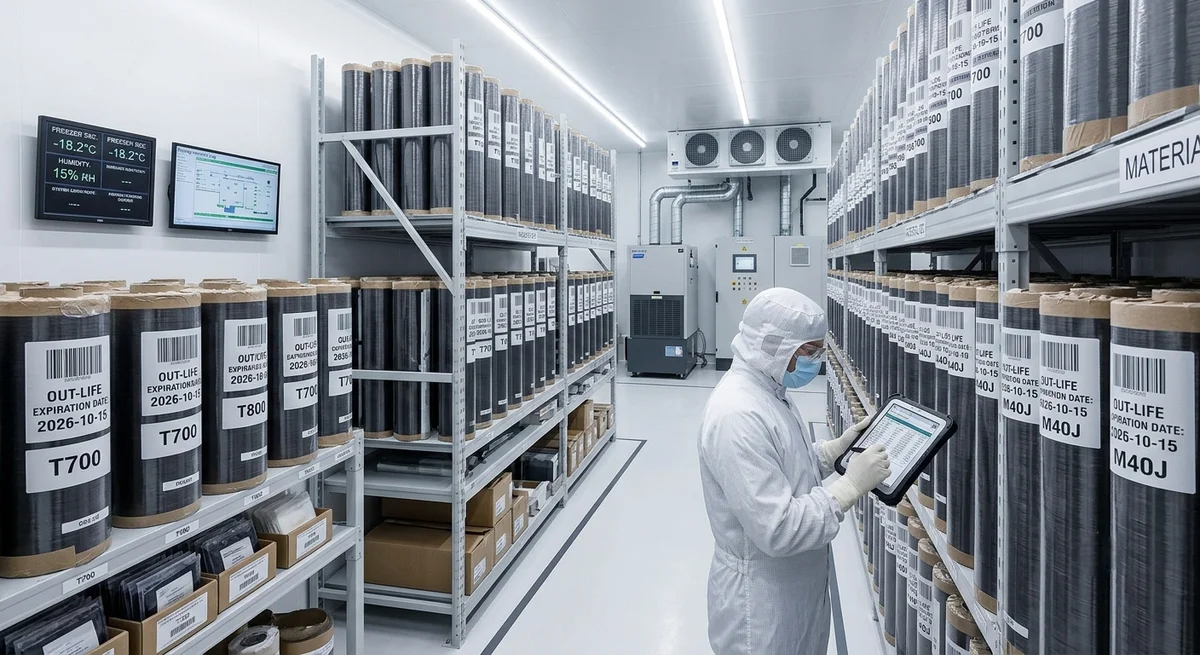
Industry best practice: −18°C or below. Every 5°C above −18°C halves usable storage life. Sealed in moisture-barrier bags. Continuous temperature logging with alarm thresholds at −15°C.
Out-Life Tracking: Temperature Effects
| Storage Temperature | Days to Consume 30-Day Rated Out-Life |
|---|---|
| 18°C (cleanroom) | ≈43 days |
| 21°C (rated) | 30 days |
| 25°C (factory) | 20 days |
| 30°C (summer) | 13 days |
| 35°C (no A/C) | 8.5 days |
Cost Implications of Cold-Chain Failure
Failed out-life management creates three categories of cost: (1) Direct material scrap — $1,250–$7,500 per 50 kg roll. Average 3.8% scrap rate with tracking, 7–12% without. (2) Rework and failed parts — each failed autoclave cycle costs $500–$2,000. (3) Certification risk — a single data gap can trigger NCR and recertification costing $5,000–$50,000.
FAQ
Q: Can expired prepreg still be used for non-critical parts?
A: Yes, with qualification testing. Expired prepreg (up to 2× rated out-life) can be used for tooling, prototypes, or non-structural parts if ILSS ≥ 40 MPa and Tg ≥ rated temperature minus 15°C. Structural certification bodies (FAA, EASA) prohibit use for flight-critical components without re-qualification ($8,000–$20,000 per campaign).
Q: How many freeze-thaw cycles can prepreg withstand?
A: Standard epoxy prepreg can tolerate 3–5 freeze-thaw cycles before ice micro-crystallization damages the resin matrix. Each cycle permanently consumes 1–2 days of out-life. Advanced toughened-epoxy prepregs (Solvay CYCOM 5320, Toray 2510) tolerate up to 10 cycles.
Q: What is the cost-benefit of automated cold-chain monitoring?
A: IoT cold-chain monitoring costs $8,000–$15,000/year. With scrap reduction from 3.8% to 1.5%, annual savings reach $20,700 — a 1.4–2.6× ROI within the first year. Additional savings from reduced rework and avoided NCRs are typically 2–3× the direct scrap savings.
Part of topic
Related Articles
- Bio-Based Carbon Fiber Precursors: Lignin and Polyethylene for Low-Cost Production
- Large-Tow Carbon Fiber Cost Analysis: 48K vs 60K Price-Performance Comparison
- Carbon Fiber-Resin Interface Bonding: Surface Treatment and Coupling Agent Optimization
- Digital Twin for Carbon Fiber Manufacturing: Real-Time Process Monitoring and Defect Prevention
- Thermoplastic Carbon Fiber Welding for Automotive: Ultrasonic and Induction Welding Process Windows
- Large-Tow Carbon Fiber Wet Spinning: Process Optimization for 48K/60K Production Efficiency
Interested in Our Products?
Contact our team for competitive pricing and technical specifications.
Get a QuoteRelated Products
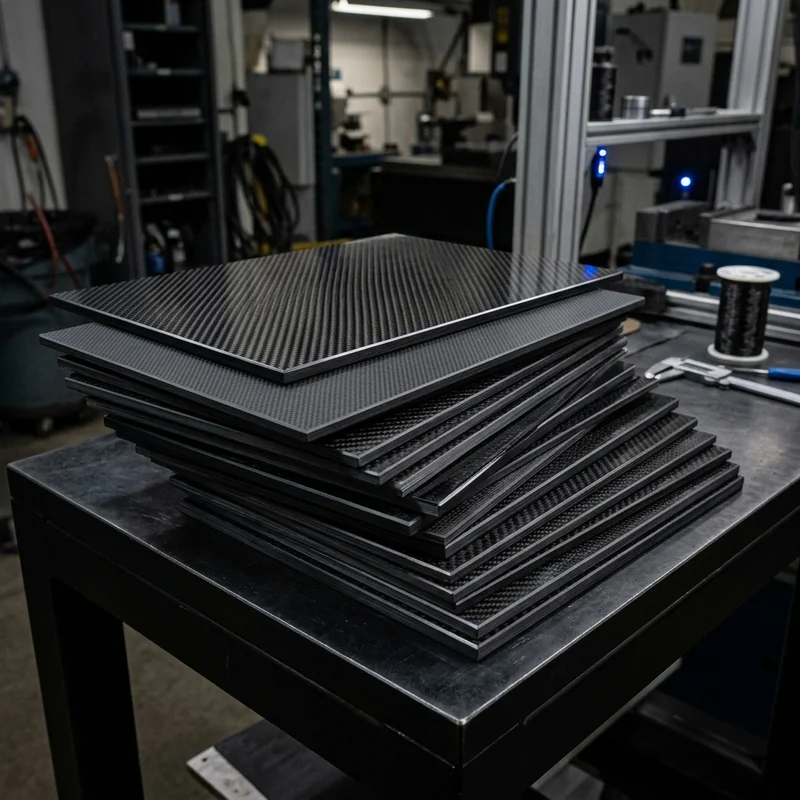
Carbon fiber standard plate-3k stripe
Lightweight, ultra-rigid standard sheets for drone fuselages, robot housings, facades and structural applications.
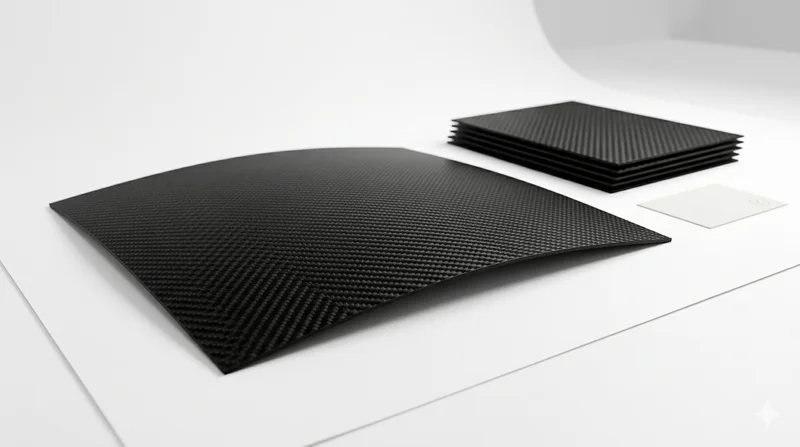
Carbon Fiber Plate — 3K Twill T700 1.5mm
Thin 1.5mm carbon fiber plate with 3K twill weave surface. Lightweight and stiff, commonly used for covers, panels, drone bodies, and applications requiring a premium aesthetic appearance.
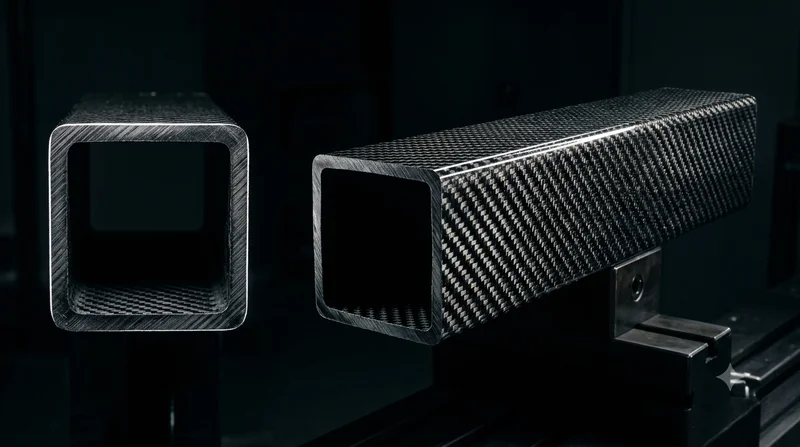
Square Carbon Fiber Tube — 3K Twill T700
Square cross-section carbon fiber tube manufactured with 3K twill weave for torsional strength. Preferred for structural frames, trusses, and support columns where rectangular geometry offers design flexibility.
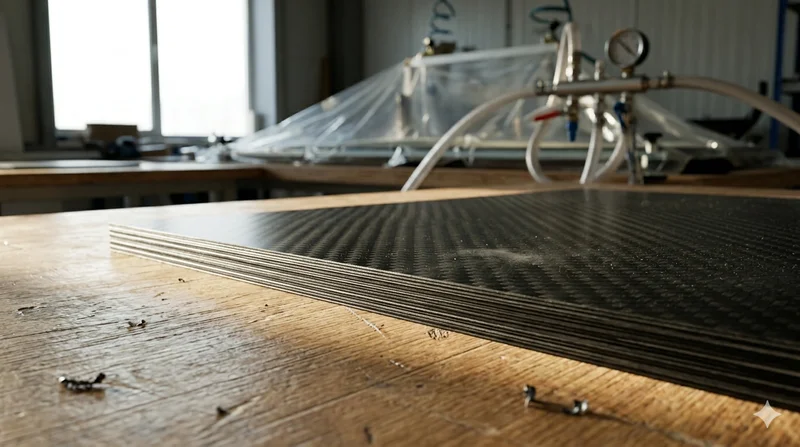
Carbon Fiber Plate — 3K Twill T700 3.0mm
Medium-thickness 3.0mm carbon fiber plate offering significantly higher load capacity while maintaining attractive 3K twill finish. Suitable for structural brackets, reinforcement plates, and load-bearing panels.
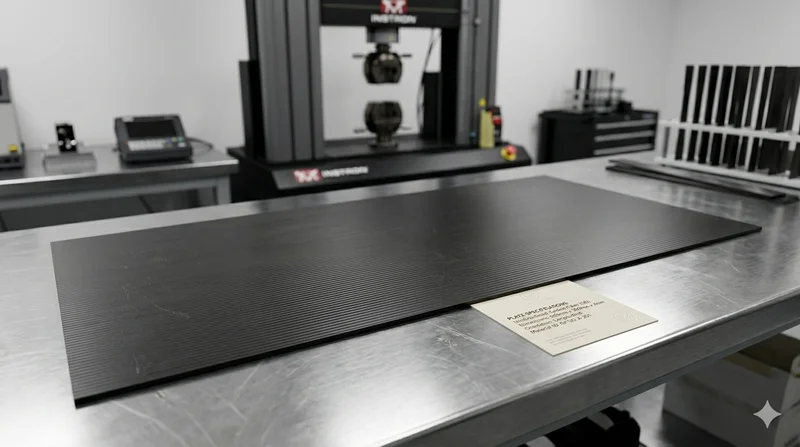
Carbon Fiber Plate — UD Unidirectional T700
Unidirectional carbon fiber plate with all fibers oriented in a single direction for maximum strength along the fiber axis. Essential for structural reinforcements, splints, and applications where load direction is predictable.