
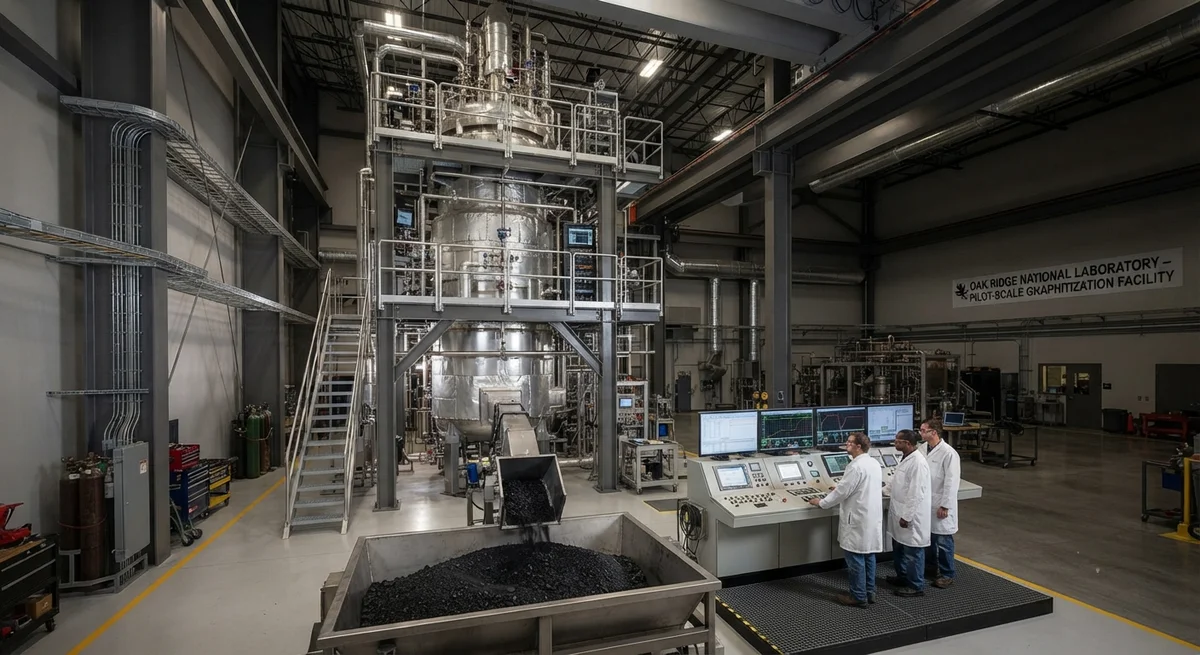
Explore how Oak Ridge National Laboratory partners with ACP Technologies to scale sustainable graphite production from waste precursors, reducing costs and environmental impact in carbon fiber manufacturing.
Introduction: The Graphite Supply Challenge in Advanced Manufacturing
The global demand for high-quality graphite has surged dramatically in recent years, driven by the accelerating adoption of lithium-ion batteries for electric vehicles and the expanding production of carbon fiber composites for aerospace, defense, and renewable energy applications. Traditional graphite production relies heavily on mined natural graphite or energy-intensive synthetic graphite processes derived from petroleum coke, both of which carry significant environmental footprints and geopolitical supply chain dependencies. Oak Ridge National Laboratory (ORNL), one of the United States' premier energy research institutions, has entered into a strategic partnership with ACP Technologies to address these challenges head-on by developing scalable, sustainable graphite production methods using waste-derived precursor materials. This collaboration represents a pivotal moment in the effort to decouple critical material supply from traditional extractive industries while simultaneously reducing the cost and carbon intensity of carbon fiber manufacturing.
The Technology Behind Waste-Derived Graphite Production
At the heart of the ORNL-ACP Technologies partnership lies a novel thermochemical conversion process that transforms low-value waste feedstocks — including scrap textiles, reclaimed carbon fiber, biomass residues, and even municipal solid waste streams — into high-purity graphite suitable for battery anodes and carbon fiber precursor applications. The process leverages ORNL's deep expertise in pyrolysis and graphitization catalysis, combined with ACP Technologies' proprietary reactor design that enables continuous, energy-efficient operation at scale. Unlike conventional graphitization furnaces that operate at temperatures exceeding 2,500°C for days at a time, the ORNL-ACP process achieves comparable crystallinity at significantly lower temperatures through the use of specialized transition metal catalysts that promote carbon rearrangement and graphitic ordering. This reduction in thermal energy requirements translates directly into lower production costs and substantially reduced greenhouse gas emissions per kilogram of graphite produced.
Comparison: Waste-Derived vs. Conventional Graphite Production
| Parameter | Waste-Derived (ORNL-ACP) | Synthetic Graphite (Conventional) | Natural Graphite (Mined) |
|---|---|---|---|
| Feedstock Source | Textile waste, reclaimed CF, biomass | Petroleum coke, coal tar pitch | Mined ore (flake/amorphous) |
| Process Temperature | 1,800–2,200 °C | 2,500–3,000 °C | Beneficiation + chemical purification |
| Energy Consumption (kWh/kg) | 12–18 | 25–40 | 8–15 (mining + processing) |
| CO₂ Emissions (kg CO₂/kg) | 3.5–5.0 | 8.0–15.0 | 2.0–6.0 (varies by source) |
| Purity (carbon %) | 99.5–99.95% | 99.9–99.99% | 94–99.5% (after upgrading) |
| Production Cost ($/kg) | $3–6 (projected at scale) | $8–15 | $2–8 (volatile pricing) |
| Supply Chain Risk | Low (diverse waste feedstocks) | Moderate (petroleum dependence) | High (China controls ~70% of supply) |
| Scalability to 10,000 t/yr | Demonstrated pilot → commercial | Proven (mature industry) | Proven (geology-dependent) |
Implications for Carbon Fiber Manufacturing
The implications of this technology for the carbon fiber industry are profound and multifaceted. Carbon fiber production currently relies on polyacrylonitrile (PAN) as the dominant precursor material, with PAN-based carbon fiber accounting for approximately 95% of global production volume. The cost of PAN precursor alone represents 40–50% of the total carbon fiber manufacturing cost, and PAN itself is derived from petrochemical feedstocks subject to crude oil price volatility. The ORNL-ACP process opens a pathway to alternative precursor routes by demonstrating that lower-cost, waste-derived graphitic carbon can serve as an intermediate for carbon fiber production through melt-spinning and stabilization techniques adapted for non-PAN precursors. This could fundamentally reshape the economics of carbon fiber manufacturing by reducing precursor costs by 30–50% while simultaneously lowering the embodied carbon footprint of the finished fiber.
Key Technical and Economic Advantages
- Feedstock flexibility: The process accepts a wide range of carbon-bearing waste streams, reducing dependency on any single raw material source and enabling regional feedstock optimization.
- Circular economy integration: End-of-life carbon fiber composites from wind turbine blades, aerospace structures, and automotive components can be recycled through the process, creating a true materials loop.
- Domestic supply chain resilience: For the United States and other nations seeking to reduce reliance on Chinese graphite exports, waste-derived production offers a pathway to strategic autonomy in critical materials.
- Co-product valorization: The process generates valuable byproducts including hydrogen-rich syngas that can be used for on-site power generation or sold as a chemical feedstock.
- Dual-market output: The same production line can be tuned to produce either battery-grade graphite (for EV anodes) or carbon fiber precursor-grade material, providing operational flexibility.
Market Context and Commercialization Timeline
The global graphite market was valued at approximately $17.5 billion in 2025 and is projected to reach $32 billion by 2032, growing at a compound annual growth rate (CAGR) of 8.9%. The battery segment alone accounts for over 40% of this demand, with electric vehicle battery anodes consuming an estimated 1.2 million metric tons of graphite annually by 2030. ACP Technologies has already commissioned a pilot-scale production facility capable of processing 500 metric tons of waste feedstock per year, with plans to scale to a 10,000-ton-per-year commercial facility by late 2027. ORNL provides ongoing characterization support, process optimization expertise, and access to the laboratory's suite of advanced analytical instruments including transmission electron microscopy, X-ray diffraction, and Raman spectroscopy. The partnership has also attracted funding from the U.S. Department of Energy's Advanced Manufacturing Office, which has committed $8.7 million to accelerate technology demonstration and scale-up activities.
Environmental Impact Assessment
Lifecycle analysis conducted by ORNL's Manufacturing Science Division indicates that waste-derived graphite production offers a 55–65% reduction in cradle-to-gate greenhouse gas emissions compared to conventional synthetic graphite, and a 30–40% reduction compared to natural graphite mining and purification. Water consumption is also significantly lower — approximately 60% less than natural graphite processing, which typically requires extensive acid washing and flotation separation. The process avoids the generation of toxic fluoride-containing effluents common in synthetic graphite production and eliminates the land disturbance associated with open-pit graphite mining. These environmental benefits align with the sustainability commitments of major carbon fiber end-users including automotive OEMs, aerospace primes, and wind turbine manufacturers who are increasingly requiring suppliers to provide environmental product declarations and carbon footprint documentation.
Challenges and Path Forward
Despite its considerable promise, the waste-derived graphite production pathway faces several challenges that must be addressed before widespread commercial adoption. Feedstock consistency remains a primary concern — waste streams vary significantly in composition, moisture content, and contaminant levels, requiring robust preprocessing and quality control systems. The transition metal catalyst systems used in the low-temperature graphitization process must be recovered and recycled economically to maintain cost competitiveness and avoid introducing new environmental burdens. Additionally, carbon fiber manufacturers will need to qualify the alternative precursor materials through their rigorous certification processes, which can take 18–36 months for aerospace applications. The ORNL-ACP partnership is actively addressing these challenges through a structured technology development roadmap that includes feedstock standardization protocols, catalyst recovery optimization, and collaborative qualification programs with major carbon fiber producers.
Frequently Asked Questions
How does waste-derived graphite compare in quality to conventional graphite for battery applications?
Waste-derived graphite from the ORNL-ACP process achieves 99.5–99.95% carbon purity, which is suitable for most battery anode applications. Electrochemical testing has demonstrated reversible capacities of 350–365 mAh/g, comparable to commercial synthetic graphite anodes (355–370 mAh/g). First-cycle efficiency and rate capability are also within acceptable ranges for EV battery applications.
What types of waste feedstocks are most suitable for this process?
The most promising feedstocks are high-carbon-content waste streams including scrap carbon fiber from manufacturing offcuts (60–80% carbon), textile waste with high cotton content (cellulose-derived carbon), and biomass residues such as nutshells and agricultural waste. The process can also utilize recycled carbon fiber from end-of-life composite materials.
When will this technology reach commercial scale?
ACP Technologies plans to commission a 10,000 metric ton per year commercial facility by late 2027. The first commercial output is expected to serve the battery anode market, with carbon fiber precursor applications following as qualification programs are completed in 2028–2029.
How does the cost of waste-derived carbon fiber compare to PAN-based carbon fiber?
At commercial scale, waste-derived carbon fiber is projected to cost $12–18/kg for standard modulus grades, compared to $18–28/kg for PAN-based equivalent. The cost advantage comes primarily from lower precursor costs and reduced energy consumption during graphitization.
Part of topic
Related Articles
- Bio-Based Carbon Fiber Precursors: Lignin and Polyethylene for Low-Cost Production
- Large-Tow Carbon Fiber Cost Analysis: 48K vs 60K Price-Performance Comparison
- Carbon Fiber-Resin Interface Bonding: Surface Treatment and Coupling Agent Optimization
- Digital Twin for Carbon Fiber Manufacturing: Real-Time Process Monitoring and Defect Prevention
- Thermoplastic Carbon Fiber Welding for Automotive: Ultrasonic and Induction Welding Process Windows
- Large-Tow Carbon Fiber Wet Spinning: Process Optimization for 48K/60K Production Efficiency
Interested in Our Products?
Contact our team for competitive pricing and technical specifications.
Get a QuoteRelated Products
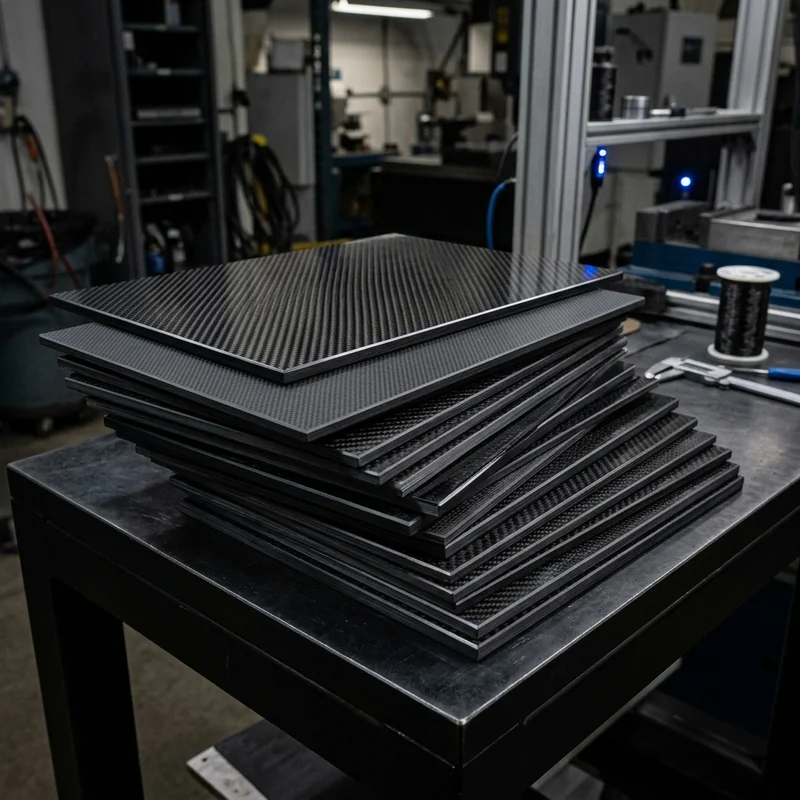
Carbon fiber standard plate-3k stripe
Lightweight, ultra-rigid standard sheets for drone fuselages, robot housings, facades and structural applications.

Carbon Fiber Plate — 3K Twill T700 1.5mm
Thin 1.5mm carbon fiber plate with 3K twill weave surface. Lightweight and stiff, commonly used for covers, panels, drone bodies, and applications requiring a premium aesthetic appearance.

Square Carbon Fiber Tube — 3K Twill T700
Square cross-section carbon fiber tube manufactured with 3K twill weave for torsional strength. Preferred for structural frames, trusses, and support columns where rectangular geometry offers design flexibility.

Carbon Fiber Plate — 3K Twill T700 3.0mm
Medium-thickness 3.0mm carbon fiber plate offering significantly higher load capacity while maintaining attractive 3K twill finish. Suitable for structural brackets, reinforcement plates, and load-bearing panels.
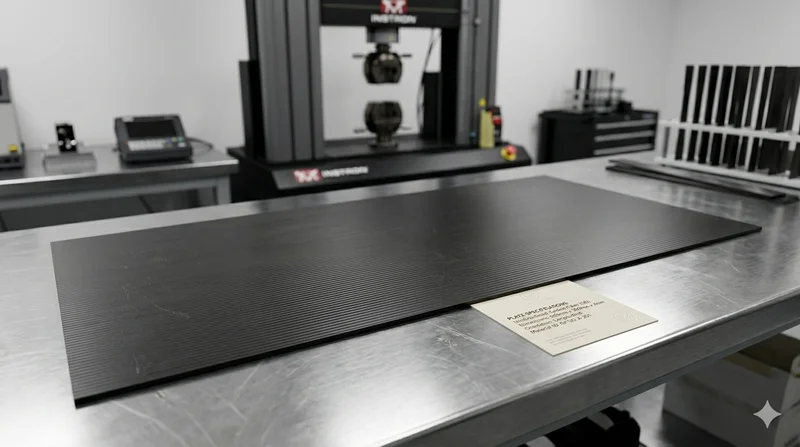
Carbon Fiber Plate — UD Unidirectional T700
Unidirectional carbon fiber plate with all fibers oriented in a single direction for maximum strength along the fiber axis. Essential for structural reinforcements, splints, and applications where load direction is predictable.