
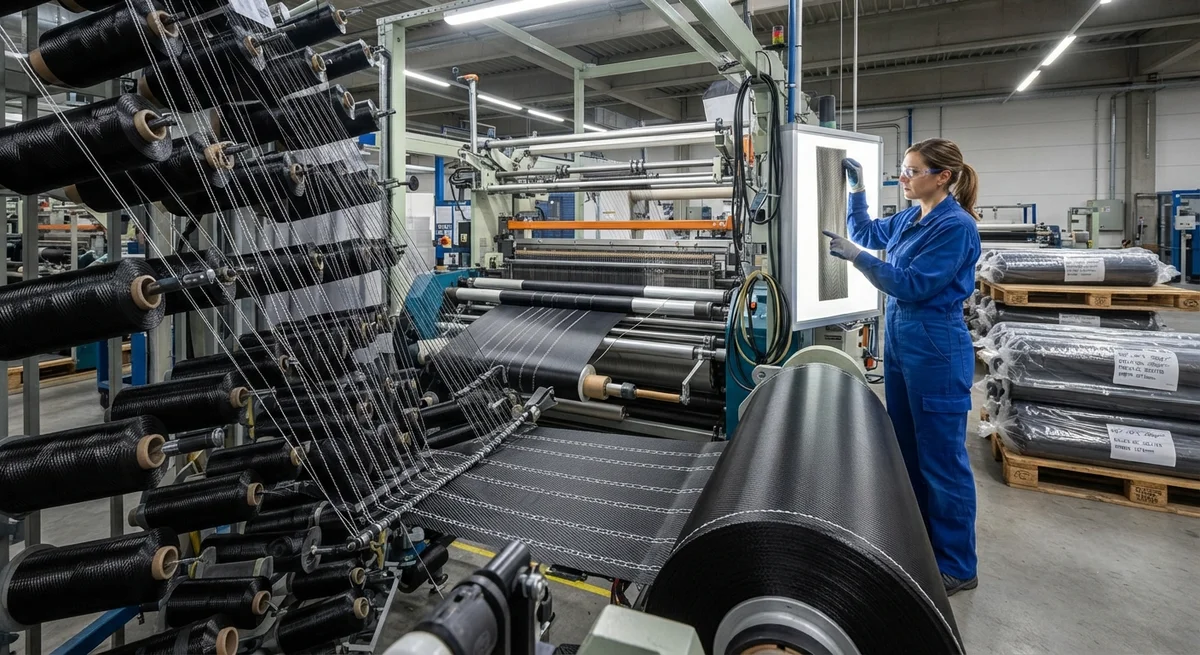
Non-Crimp Fabrics (NCF) are revolutionizing carbon fiber composite manufacturing by offering superior mechanical properties compared to traditional woven fabrics. This comprehensive guide covers NCF types, typical properties, and key selection criteria for B2B buyers in the composites industry.
What Are Non-Crimp Fabrics?
Non-Crimp Fabrics (NCF) are engineered textile reinforcements for composite materials in which multiple layers of unidirectional fiber tows are stacked in defined orientations and held together by a lightweight stitching thread — typically polyester or nylon. Unlike woven fabrics where warp and weft yarns are crimped (undulated) as they cross over and under each other, NCFs maintain the fibers in straight, parallel alignments within each ply. This straight fiber architecture preserves the intrinsic mechanical properties of the carbon fiber, delivering significantly higher stiffness, strength, and fatigue resistance compared to woven equivalents of the same areal weight and fiber type.
NCFs were first developed in the 1990s as the composites industry sought higher-performance reinforcements for aerospace and wind energy applications where woven fabric crimp created unacceptable strength reductions. Today, NCFs have become the dominant reinforcement architecture in wind turbine blade manufacturing and are increasingly specified in automotive, marine, and aerospace primary structures. The global NCF market was valued at approximately USD 1.8 billion in 2025 and is projected to reach USD 3.2 billion by 2031, growing at a CAGR of 10.1%.
NCF Architecture Types
NCFs are classified by the number of fiber layers and their orientation sequence. The most common architectures cover a range from simple uniaxial constructions to complex multi-axial designs optimized for specific load paths.
| NCF Type | Layer Orientation | Areal Weight Range (g/m²) | Typical Applications | Formability |
|---|---|---|---|---|
| Uniaxial (U-NCF) | 0° only | 100 - 600 | Wind blade spar caps, pultrusion reinforcement | Low |
| Biaxial (±45°) | +45° / -45° | 200 - 800 | Torsional components, shear panels, automotive body panels | Medium |
| Biaxial (0°/90°) | 0° / 90° | 200 - 800 | General structural laminates, flat panels | Low |
| Triaxial (0°/±45°) | 0° / +45° / -45° | 400 - 1200 | Aerospace wing skins, automotive chassis components | Medium |
| Quadraxial (0°/90°/±45°) | 0° / 90° / +45° / -45° | 600 - 1600 | Marine hulls, wind blade roots, thick structural laminates | Low-Medium |
| Custom Multi-axial | User-defined (e.g. 0°/±60°) | 300 - 2000 | Specialized aerospace, sports equipment, pressure vessels | Variable |
Mechanical Properties: NCF vs. Woven Fabrics
The fundamental advantage of NCFs lies in fiber straightness. In a woven fabric, the crimp causes each fiber tow to undulate by approximately 4-8% of its length, creating local stress concentrations and micro-buckling under compressive loads. This crimp reduces tensile strength by 10-25% and compressive strength by 15-30% compared to the theoretical fiber bundle properties. NCFs eliminate this penalty entirely. In practice, a ±45° biaxial NCF laminate will exhibit 15-20% higher in-plane shear strength and 20-30% higher fatigue life compared to a plain-weave fabric of equivalent fiber areal weight and resin system. The improvement in compressive strength is particularly significant for applications like wind blade spar caps and aerospace stringers, where the laminate is primarily loaded in compression on one side.
However, NCFs have trade-offs. The stitching thread — typically 5-20 grams per square meter of thin polyester yarn — creates resin-rich zones at the stitch points that can act as micro-crack initiation sites under extreme cyclic loading. State-of-the-art NCFs use soluble stitching threads that dissolve during resin infusion, eliminating these stitch-line defects entirely. Additionally, NCFs typically cost 15-30% more than equivalent woven fabrics due to the more complex manufacturing process (multiaxial warp knitting machines), though this premium is often offset by reduced laminate thickness requirements in strength-critical applications.
- Fiber Volume Fraction: NCFs achieve 55-65% fiber volume fraction (FVF) in infusion, versus 45-55% for woven fabrics — higher FVF directly translates to better mechanical performance per unit thickness
- Drapeability: Biaxial NCFs (±45°) offer excellent conformability to double-curved surfaces, outperforming most woven architectures in complex mold geometries
- Permeability: NCFs have higher through-thickness and in-plane permeability than wovens, reducing infusion time by 20-40% in resin transfer molding (RTM) and vacuum-assisted resin infusion (VARI) processes
- Impact Resistance: The absence of crimp reduces interlaminar shear strength slightly (5-10%) compared to woven fabrics, but the improved in-plane properties more than compensate in most structural applications
- Dimensional Stability: The stitching grid provides excellent handling stability — NCFs do not unravel at cut edges, unlike woven fabrics that require edge tacking or sealed cuts
B2B Selection Criteria for NCFs
Selecting the correct NCF for a B2B application requires evaluating several interdependent parameters. The first consideration is fiber type and tow size: aerospace applications typically specify 12K or 24K intermediate-modulus fibers (IM-7, T800-class), while wind energy and marine applications favor 48K or 60K large-tow standard-modulus fibers for cost optimization. The second parameter is areal weight — lighter fabrics (100-300 g/m² per layer) provide better drapeability for complex geometries and are preferred for hand layup and automated fiber placement (AFP), while heavier fabrics (600-1200 g/m²) maximize layup speed for simple flat or gently curved laminates. The stitching pattern and density are the third critical parameter: chain stitches (tricot) offer good stability for unidirectional and biaxial NCFs, while tricot-and-insert stitches provide superior fiber alignment retention for multi-axial fabrics.
B2B buyers should also evaluate the stitching thread type and solubility. Standard polyester stitching (5-20 g/m²) is suitable for epoxy and polyester resin systems where the stitch does not interfere with the laminate properties. For high-performance aerospace and automotive applications requiring maximal fatigue life, tricot-soluble stitching threads (soluble in styrene-free polyester or custom epoxy formulations) are recommended. Finally, roll width and packaging are important logistical considerations. Typical NCF roll widths range from 1270 mm (50 inches) to 2540 mm (100 inches), with longer rolls reducing the number of splices in automated layup processes. B2B purchasers should request a full technical data sheet including tensile strength (0° and 90° where applicable), compressive strength, interlaminar shear strength (ILSS), and cured laminate FVF for the specific resin system planned for production.
Processing Considerations
The choice of NCF architecture significantly influences the manufacturing process. For resin infusion processes (VARI, RTM), biaxial and quadraxial NCFs with high permeability enable rapid resin flow and complete wet-out of thick laminates. The stitching pattern creates micro-channels that act as efficient flow paths, reducing fill times compared to woven fabrics of equivalent thickness. Manufacturers should account for the nesting behavior of NCF layers — the stitch pattern creates a surface texture that causes plies to nest together, potentially reducing the effective laminate thickness by 3-8% compared to theoretical stack calculations. For prepreg processing, uniaxial and biaxial NCFs with low areal weights (150-300 g/m²) provide excellent tack and handleability, though the stitching can produce a surface finish that requires additional sanding or a gel coat in visible applications. In filament winding and pultrusion, specialized NCFs with binder systems (rather than stitching) are available for applications where high fiber alignment and process speed are paramount.
Quality Assurance & Testing
B2B buyers should verify that NCF suppliers provide traceability and quality documentation for every production batch. Key quality parameters to request include: fiber areal weight per layer (measured by burn-off or solvent digestion per ASTM D3171 or ISO 11667), stitching thread type and areal weight, fabric width tolerance (±3 mm standard, ±1 mm for aerospace), roll length consistency, and dry fabric tensile strength per ASTM D5035 or ISO 13934-1. For mission-critical applications, additional testing may include cured laminate mechanical properties (tensile, compression, ILSS per ASTM D3039, D6641, D2344), resin infusion flow front analysis, and micrographic analysis of fiber alignment and stitch-line defects. Reputable NCF manufacturers will provide this data as standard practice and can also produce custom architectures for volume commitments.
FAQ
What is the difference between NCF and woven carbon fiber fabric?
The fundamental difference is fiber architecture. In woven fabrics, warp and weft tows cross over and under each other, creating crimp — a periodic undulation that reduces tensile and compressive strength by 10-30% compared to straight fibers. In NCFs, multiple layers of straight, parallel fiber tows are stacked in defined orientations and stitched together, eliminating crimp entirely. This gives NCFs superior stiffness, strength, and fatigue resistance, though NCFs typically cost 15-30% more than equivalent woven fabrics. NCFs also offer higher fiber volume fractions (55-65% vs 45-55%) and better permeability for resin infusion processes.
When should I choose NCF over woven fabric for my carbon fiber project?
NCFs are the preferred choice when: (1) mechanical performance is the primary requirement — applications where every percentage point of strength and stiffness matters, such as aerospace primary structures, wind turbine spar caps, and high-performance automotive components, (2) the laminate will be manufactured by resin infusion (RTM, VARI) where NCFs' higher permeability reduces cycle times, (3) the part has large flat or gently curved surfaces where NCF drapability is adequate, and (4) the budget allows for the 15-30% material cost premium in exchange for reduced laminate thickness. Choose woven fabrics when: cost is the overriding factor, the part requires extreme drapeability over complex double-curved surfaces, or the application has modest structural requirements such as cosmetic panels, interior trim, or prototype tooling.
What stitching types are used in NCFs and which is best for my application?
The three main stitching types are: (1) Tricot (chain stitch) — the most common, using a single needle to create a chain loop on the fabric surface. It provides good stability for unidirectional and biaxial fabrics and is the most cost-effective option. (2) Tricot with Insert — adds a straight insert thread that is locked in place by the tricot stitch, providing superior fiber alignment and structural integrity for multi-axial fabrics. This is the preferred choice for aerospace and wind energy applications. (3) Soluble stitch — made from special polymer threads that dissolve completely during resin infusion or during a dedicated wash step. This eliminates stitch-line stress concentrations entirely and is recommended for fatigue-critical applications like wind blade roots and aerospace wing attachments. For most industrial and marine applications, standard tricot or tricot-with-insert stitching is perfectly adequate.
Conclusion
Non-Crimp Fabrics represent a significant advancement in carbon fiber reinforcement technology, delivering measurable mechanical advantages over traditional woven fabrics through the elimination of fiber crimp. For B2B buyers in the composites industry, the selection of the appropriate NCF architecture — considering fiber type, areal weight, stitching pattern, and processing method — is a critical decision that directly impacts final part performance, manufacturing cycle time, and total cost. As the global NCF market continues to expand at over 10% annually, driven primarily by wind energy and aerospace demand, understanding these selection criteria becomes increasingly important for composites professionals making material sourcing decisions. Partnering with an experienced NCF manufacturer who can provide comprehensive technical data, custom architectures, and reliable quality assurance is the foundation of a successful composite material supply relationship.
Part of topic
Related Articles
- Bio-Based Carbon Fiber Precursors: Lignin and Polyethylene for Low-Cost Production
- Large-Tow Carbon Fiber Cost Analysis: 48K vs 60K Price-Performance Comparison
- Carbon Fiber-Resin Interface Bonding: Surface Treatment and Coupling Agent Optimization
- Digital Twin for Carbon Fiber Manufacturing: Real-Time Process Monitoring and Defect Prevention
- Thermoplastic Carbon Fiber Welding for Automotive: Ultrasonic and Induction Welding Process Windows
- Large-Tow Carbon Fiber Wet Spinning: Process Optimization for 48K/60K Production Efficiency
Interested in Our Products?
Contact our team for competitive pricing and technical specifications.
Get a QuoteRelated Products
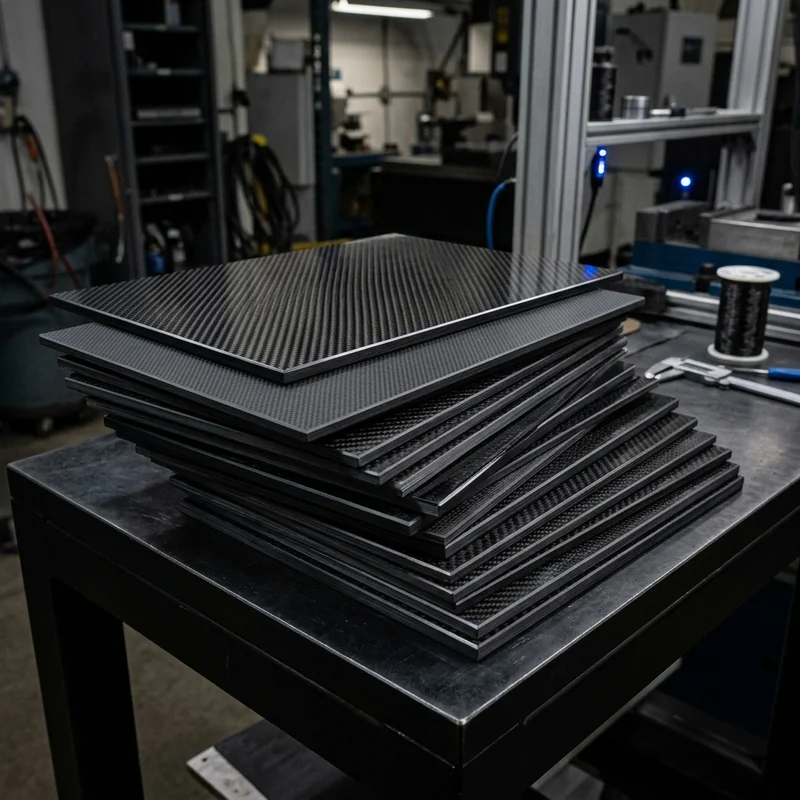
Carbon fiber standard plate-3k stripe
Lightweight, ultra-rigid standard sheets for drone fuselages, robot housings, facades and structural applications.

Carbon Fiber Plate — 3K Twill T700 1.5mm
Thin 1.5mm carbon fiber plate with 3K twill weave surface. Lightweight and stiff, commonly used for covers, panels, drone bodies, and applications requiring a premium aesthetic appearance.

Square Carbon Fiber Tube — 3K Twill T700
Square cross-section carbon fiber tube manufactured with 3K twill weave for torsional strength. Preferred for structural frames, trusses, and support columns where rectangular geometry offers design flexibility.

Carbon Fiber Plate — 3K Twill T700 3.0mm
Medium-thickness 3.0mm carbon fiber plate offering significantly higher load capacity while maintaining attractive 3K twill finish. Suitable for structural brackets, reinforcement plates, and load-bearing panels.
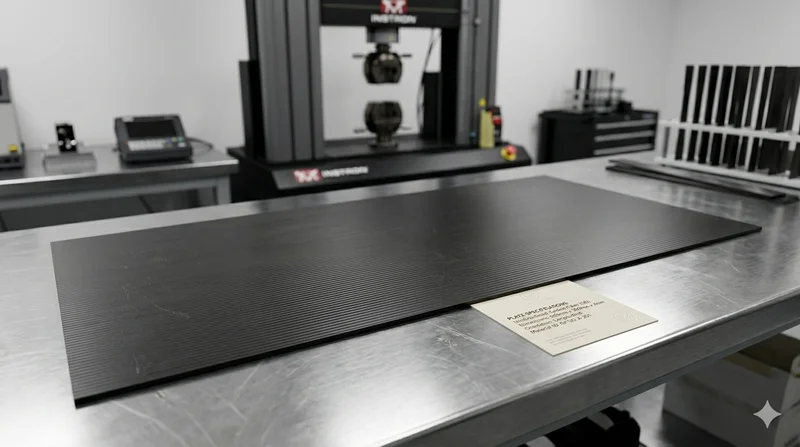
Carbon Fiber Plate — UD Unidirectional T700
Unidirectional carbon fiber plate with all fibers oriented in a single direction for maximum strength along the fiber axis. Essential for structural reinforcements, splints, and applications where load direction is predictable.