
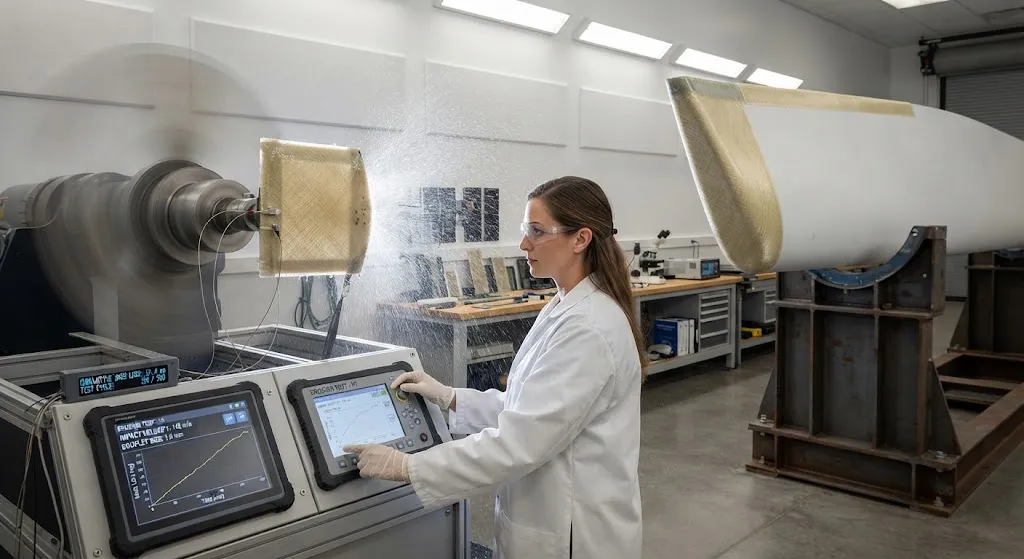
Wind turbine blade leading edge erosion is one of the most persistent maintenance challenges in the wind energy industry. Rain, hail, and particulate impact degrade blade surfaces over time, reducing aerodynamic efficiency by 5-25% and costing operators an estimated $1.5 billion annuall
Introduction
Wind turbine blade leading edge erosion is one of the most persistent maintenance challenges in the wind energy industry. Rain, hail, and particulate impact degrade blade surfaces over time, reducing aerodynamic efficiency by 5-25% and costing operators an estimated $1.5 billion annually in lost energy production and repair expenses. Traditional leading edge protection solutions — polyurethane tapes, adhesive films, and metallic shields — address erosion but create end-of-life recycling challenges as blade decommissioning volumes accelerate.
Natural fiber reinforced thermoplastic (NFRTP) composites offer a paradigm shift: a leading edge protection system that is both impact-resistant and fully recyclable. The European Union's RECREATE project and several blade OEMs are developing NFRTP leading edge shields using natural fibers (flax, hemp, jute) combined with recycled thermoplastic matrices (polypropylene, polyethylene, PLA). This article examines the material science, manufacturing processes, and field validation of NFRTP blade leading edge solutions.
Material System: Why Natural Fibers and Recycled Thermoplastics
The NFRTP material system combines two sustainability-driven material families:
- Natural fibers (flax, hemp, jute): Specific stiffness comparable to glass fiber (25-40 GPa modulus at 1.4-1.5 g/cm³ density), with 60-80% lower embodied energy during fiber production. Flax fiber tensile strength of 500-900 MPa and modulus of 25-40 GPa make it suitable for impact-absorbing structures where extreme tensile performance is secondary.
- Recycled thermoplastic matrices (rPP, rPE, PLA): Thermoplastic matrices enable fusion bonding, in-situ repair, and end-of-life reprocessing — capabilities absent in thermoset systems. Recycled polypropylene (rPP) and recycled polyethylene (rPE) offer impact resistance, chemical stability, and processing temperatures compatible with natural fiber thermal limits (typically below 200°C).
The synergy is significant: natural fibers provide adequate mechanical properties at lower cost and environmental impact, while recycled thermoplastics enable circular material flow. A 2.5-meter NFRTP leading edge shield weighing 8-12 kg can be ground and reprocessed at end of life, recovering 85-95% of material value.
Manufacturing Process: Pultrusion and Thermoforming
NFRTP leading edge shields are manufactured using two primary processes:
Pultrusion: Continuous natural fiber rovings are pulled through a heated die with recycled thermoplastic matrix, producing profiled sections with consistent cross-section geometry. Pultrusion delivers high fiber volume fractions (40-55%) and production rates of 2-5 m/min, making it suitable for high-volume blade leading edge protection. The pultruded profiles are cut to length and thermoformed to match blade curvature.
Thermoforming: Pre-consolidated NFRTP sheets are heated above the thermoplastic melting point (160-180°C for rPP) and pressed into blade-shaped molds. Thermoforming enables complex double-curvature geometries that pultrusion cannot achieve, and is preferred for leading edge shields on larger blades (>80 m) where curvature varies significantly along the blade span.
| Property | NFRTP (Flax/rPP) | GFRP (Glass/PE) | Polyurethane Tape | Aluminum Shield |
|---|---|---|---|---|
| Density (g/cm³) | 1.15-1.25 | 1.8-2.0 | 1.10-1.15 | 2.70 |
| Impact energy absorption (J/mm) | 35-50 | 25-40 | 15-25 | 5-10 |
| Fatigue cycles to failure | 2-4 million | 3-5 million | 1-2 million | 5-8 million |
| End-of-life recyclability | 85-95% | 10-20% | 0% | 90-95% |
| Mass per linear meter (2.5 m shield) | 8-12 kg | 12-18 kg | 3-5 kg | 15-20 kg |
| Estimated cost per meter (2026) | $80-120 | $100-150 | $50-80 | $200-300 |
Field Validation: Erosion Performance Data
Leading edge erosion protection is validated through accelerated erosion testing and field deployment. The standard test protocol (IEC 61400-1 Ed. 5) simulates 20 years of rain erosion using a rotating arm test rig with water droplet impact at blade tip speeds of 80-100 m/s.
NFRTP materials have demonstrated erosion resistance comparable to polyurethane tape in accelerated testing, with mass loss rates of 0.02-0.05 g/m² per million impacts for flax/rPP composites — within the acceptable range for 20-year service life. Field trials on 3 MW onshore turbines in northern Germany have shown no visible erosion damage after 18 months of operation, with surface roughness increase of less than 5 μm.
Sustainability and Circular Economy Integration
The NFRTP leading edge solution aligns with the wind industry's circular economy commitments. The European Wind Charter targets 95% blade recyclability by 2030, and NFRTP materials support this goal through:
- Material circularity: NFRTP shields can be ground at end of life and reprocessed into new leading edge protection or lower-grade composite products, recovering 85-95% of material value.
- Reduced virgin material consumption: Natural fibers require 60-80% less energy to produce than glass fiber, and recycled thermoplastics divert plastic waste from landfills.
- In-situ repair capability: Thermoplastic matrices enable fusion bonding repair of minor erosion damage without removing the shield — extending service life and reducing maintenance costs.
Frequently Asked Questions
How does NFRTP leading edge protection compare to polyurethane tape in erosion resistance?
NFRTP composites demonstrate erosion resistance comparable to polyurethane tape in accelerated testing. Mass loss rates of 0.02-0.05 g/m² per million impacts for flax/rPP composites fall within the acceptable range for 20-year service life. NFRTP shields offer advantages in impact resistance (35-50 J/mm vs 15-25 J/mm for tape) and repairability (thermoplastic fusion bonding vs tape replacement). The primary disadvantage is weight: NFRTP shields weigh 8-12 kg per linear meter versus 3-5 kg for tape, requiring structural verification for blade root attachment.
What is the expected service life of NFRTP leading edge shields?
Accelerated erosion testing simulating 20 years of rain erosion shows NFRTP shields maintaining structural integrity with surface roughness increase below 10 μm. Field trials on 3 MW turbines have shown no visible damage after 18 months. The thermoplastic matrix provides UV resistance through carbon black or HALS stabilizer additives, and natural fiber moisture absorption is managed through fiber surface treatment and matrix encapsulation. Estimated service life is 20-25 years, matching blade design life.
Can NFRTP leading edge shields be repaired in the field?
Yes. The thermoplastic matrix enables fusion bonding repair: damaged areas are cleaned, heated with a hot air gun or infrared lamp to the melting point (160-180°C for rPP), and pressed against a repair patch of matching NFRTP material. This process restores 85-95% of original impact resistance without removing the shield from the blade. Field repair capability reduces maintenance costs by 40-60% compared to tape replacement, which requires full removal and reinstallation.
Conclusion
NFRTP blade leading edge protection represents a convergence of performance and sustainability. Natural fiber reinforced thermoplastic composites deliver erosion resistance comparable to conventional materials while enabling end-of-life recyclability and in-situ repair — capabilities critical to the wind industry's circular economy commitments. As blade OEMs and operators seek solutions that reduce environmental impact without sacrificing performance, NFRTP leading edge shields offer a technically validated, economically competitive pathway.
For wind energy buyers evaluating sustainable blade protection materials, NFRTP composites deserve serious consideration. Browse our carbon fiber and composite product range to explore materials suited to wind energy applications, or contact our engineering team for NFRTP material specifications and sourcing guidance.
Part of topic
Related Articles
- Bio-Based Carbon Fiber Precursors: Lignin and Polyethylene for Low-Cost Production
- Large-Tow Carbon Fiber Cost Analysis: 48K vs 60K Price-Performance Comparison
- Carbon Fiber-Resin Interface Bonding: Surface Treatment and Coupling Agent Optimization
- Digital Twin for Carbon Fiber Manufacturing: Real-Time Process Monitoring and Defect Prevention
- Thermoplastic Carbon Fiber Welding for Automotive: Ultrasonic and Induction Welding Process Windows
- Large-Tow Carbon Fiber Wet Spinning: Process Optimization for 48K/60K Production Efficiency
Interested in Our Products?
Contact our team for competitive pricing and technical specifications.
Get a QuoteRelated Products
Carbon Fiber Watch Strap — 20mm/22mm Quick-Release
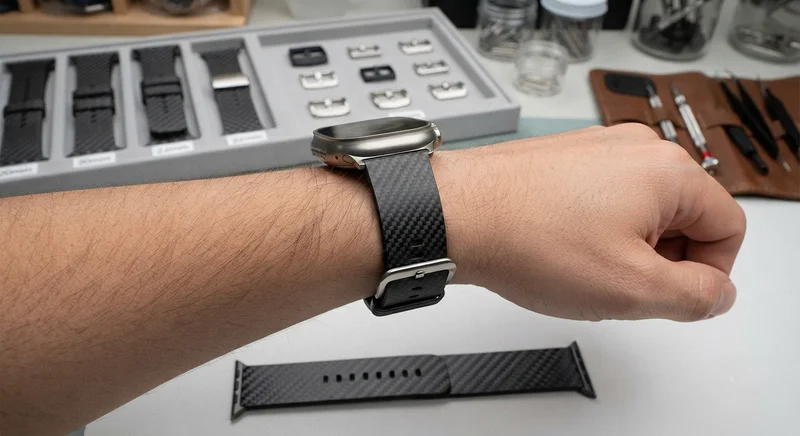
Premium carbon fiber watch strap with quick-release spring bars. Woven from T700 3K twill prepreg with a flexible resin system that conforms to the wrist. Available in 20mm and 22mm lug widths, compatible with Apple Watch, Samsung Galaxy Watch, Garmin, and traditional mechanical watches. Features a stainless steel buckle and carbon fiber keepers. The natural weave pattern makes each strap unique.
Carbon Fiber Fishing Rod Blank
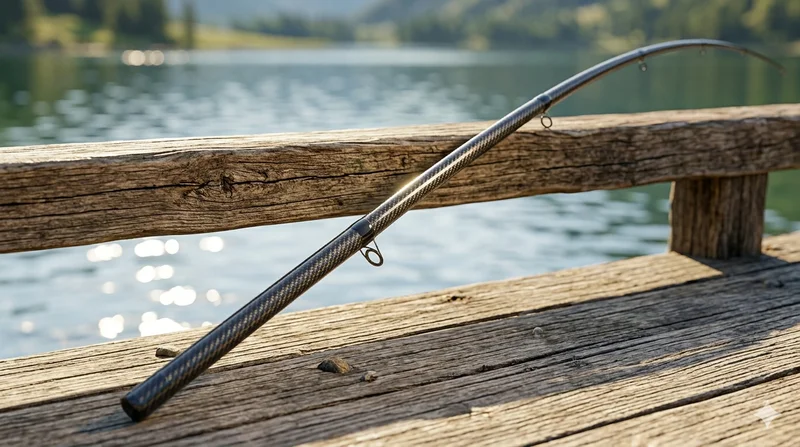
High-quality carbon fiber fishing rod blank manufactured from multiple grades of Toray carbon fiber cloth. Available in a wide range of lengths, powers, and actions for freshwater and saltwater applications. Suitable for OEM rod building.
Carbon Fiber Plate — UD Unidirectional T700
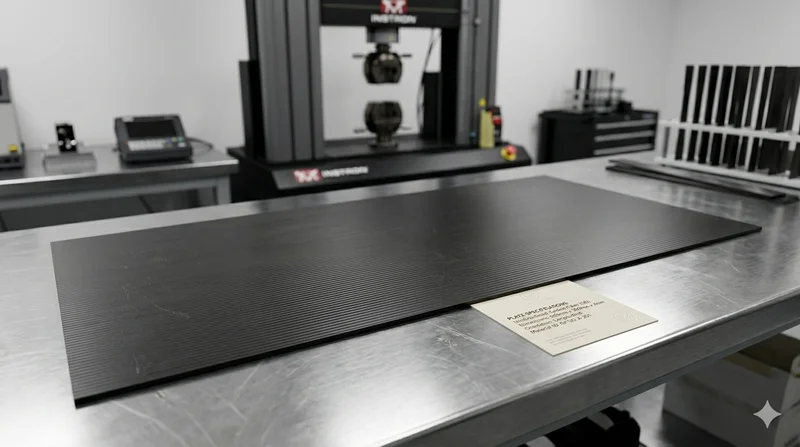
Unidirectional carbon fiber plate with all fibers oriented in a single direction for maximum strength along the fiber axis. Essential for structural reinforcements, splints, and applications where load direction is predictable.
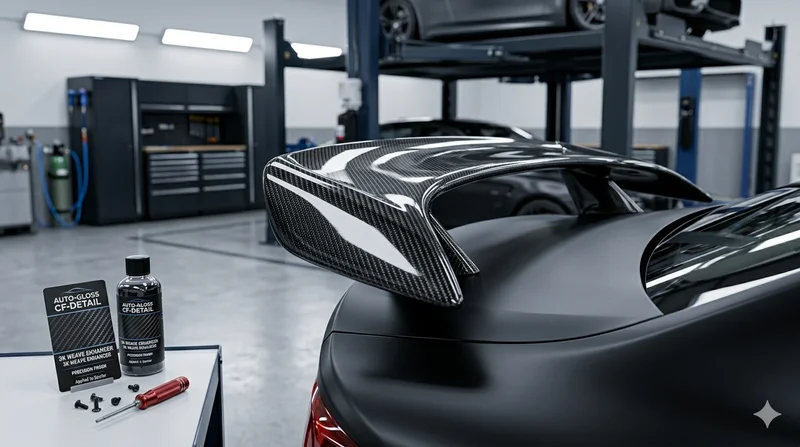
Carbon Fiber Automotive Spoiler
Automotive-grade carbon fiber spoiler manufactured using autoclave-cured pre-preg technology. Each spoiler is vacuum-bagged and oven-cured for optimal fiber-to-resin ratio, strength, and a flawless cosmetic finish.
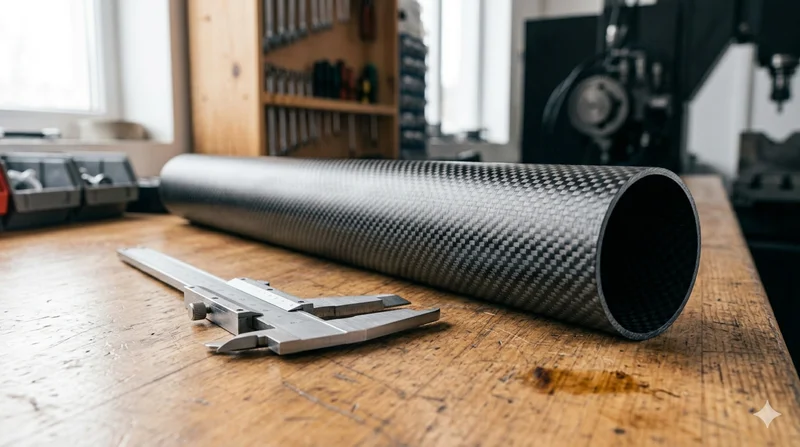
Round Carbon Fiber Tube — 3K Plain Weave T700
Standard round carbon fiber tube manufactured from Toray T700 grade fiber with 3K plain weave. Offers balanced strength and stiffness for general industrial applications including robotics, automation, sports equipment, and aerospace structures.