
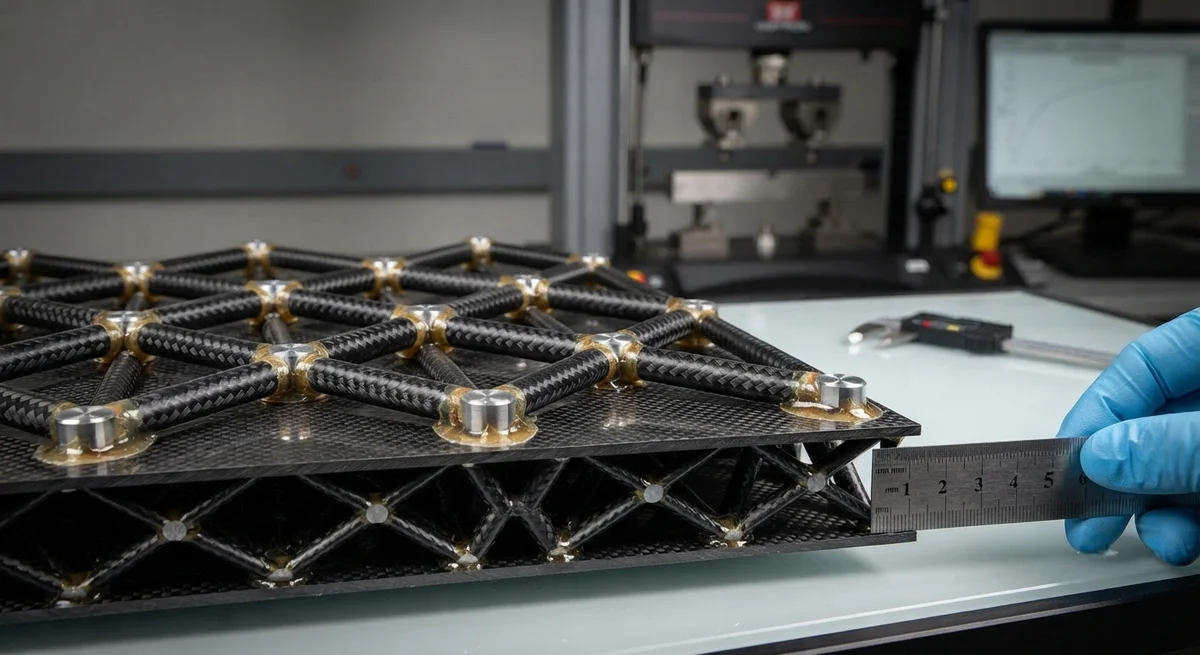
An in-depth technical analysis of mesoscale carbon fiber lattice structures — an emerging class of architectural composites that combine the weight-saving benefits of foam cores with the mechanical performance of solid laminates. Covering lattice topologies (octet, rhombic dodecahedron, gyroid), manufacturing methods (3D weaving, additive manufacturing, snap-fit assembly), and structural performance data for aerospace, automotive, and marine applications.
Introduction to Architected Carbon Fiber Materials
The pursuit of ultralight structural materials has led composites engineers to a paradigm-shifting insight: the geometry of a material's internal architecture matters as much as the intrinsic properties of its constituent materials. Mesoscale architected carbon fiber materials — periodic lattice structures with unit cell dimensions ranging from 1 mm to 50 mm — represent a novel class of structural composites that achieve previously inaccessible combinations of density, stiffness, strength, and energy absorption. Unlike traditional foam cores (which are stochastic and achieve low shear strength) or honeycomb cores (which are anisotropic and prone to moisture ingress), mesoscale carbon fiber lattices can be designed to carry multi-axial structural loads while maintaining densities as low as 100–300 kg/m³ — comparable to polyvinyl chloride (PVC) foam at 80–250 kg/m³ — but with compressive strengths reaching 15–50 MPa, representing a strength-to-weight ratio 5–15 times higher than conventional foam cores.
The term "mesoscale" distinguishes these structures from microscale lattice materials (unit cells < 100 μm, typically fabricated by two-photon lithography or additive manufacturing of metals and polymers) and macroscale truss structures (unit cells > 100 mm, used in building and bridge construction). The mesoscale range (1–50 mm) is uniquely suited for structural sandwich panel cores, energy-absorbing crash structures, lightweight automotive floor panels, aerospace secondary structures, and sports equipment. The global market for architected composite materials is projected to grow from $280 million in 2026 to $890 million by 2034, driven by demand in electric vehicles, aerospace cabin interiors, and high-performance marine structures.
Lattice Topologies and Mechanical Performance
The mechanical properties of mesoscale carbon fiber lattices are governed by three interrelated factors: the topology (unit cell geometry), the relative density (ρ_rel = ρ_lattice / ρ_solid), and the fiber architecture within each strut element. The most extensively studied topologies fall into three categories: stretching-dominated lattices (such as the octet truss, where all struts carry axial tension or compression), bending-dominated lattices (such as the rhombic dodecahedron, where struts primarily bend), and triply periodic minimal surface (TPMS) topologies (such as the gyroid, where the carbon fiber material follows a continuous curvature-minimized surface). Stretching-dominated topologies achieve the highest stiffness and strength at a given relative density — the octet truss has an elastic modulus scaling of E ∝ ρ_rel^1.0 and strength scaling of σ ∝ ρ_rel^1.0 — compared to bending-dominated lattices where E ∝ ρ_rel^2.0 and σ ∝ ρ_rel^1.5. This scaling advantage means that at 10% relative density, an octet truss lattice is approximately 10 times stiffer and 5 times stronger than a bending-dominated equivalent of the same mass.
Fabricated from carbon fiber — either as dry braided tubes subsequently infused with epoxy, as prepreg tow-preg wrapped around metal or polymer mandrels, or as continuous fiber-reinforced 3D-printed struts — mesoscale lattices achieve remarkable absolute properties. An octet truss lattice with 5 mm unit cells and 1.2 mm diameter struts, using T700 carbon fiber at 60% fiber volume fraction, achieves an absolute compressive strength of 28 MPa at a density of only 180 kg/m³. The specific compressive strength (strength/density) of 156 MPa·m³/Mg exceeds that of 7075-T6 aluminum (82 MPa·m³/Mg), Ti-6Al-4V titanium (115 MPa·m³/Mg), and most polymer composites. This specific strength advantage becomes even more pronounced in bending-dominated load cases: a 15 mm thick sandwich panel with 8 mm octet truss cores achieves a flexural stiffness of 5.2 × 10⁶ N·mm² per 100 mm width at an areal density of just 5.8 kg/m² — outperforming an equivalent-weight aluminum honeycomb panel by a factor of 1.8.
| Topology | Deformation Mode | Relative Density Range | Compressive Strength (MPa) at 15% ρ_rel | Specific Strength (MPa·m³/Mg) | Energy Absorption (kJ/m³) @ 30% strain | Manufacturing Complexity |
|---|---|---|---|---|---|---|
| Octet Truss | Stretching-dominated | 5–30% | 32–48 | 130–165 | 1,200–2,800 | Medium |
| Rhombic Dodecahedron | Bending-dominated | 5–25% | 8–14 | 42–68 | 450–1,100 | Low-Medium |
| Gyroid (TPMS) | Mixed (bend-stretch) | 8–35% | 18–32 | 88–120 | 900–2,200 | High |
| Pyramidal Truss | Stretching-dominated | 3–15% | 12–22 | 98–140 | 800–1,600 | Low |
| Kagome Lattice | Stretching-dominated | 5–20% | 22–38 | 110–155 | 1,000–2,400 | Medium-High |
| Honeycomb (Nomex, reference) | Bending/stretch (in-plane/out-of-plane) | 2–8% | 2–8 (out-of-plane) | 35–60 | 200–600 | Low |
Manufacturing Methods for Carbon Fiber Lattices
Three principal manufacturing approaches have been developed for mesoscale carbon fiber lattice production, each with distinct capabilities and limitations. The first approach — braided tube and snap-fit assembly — involves braiding continuous carbon fiber tows into small-diameter tubes (0.5–3 mm ID) on dedicated braiding machines, cutting them to length, and assembling the unit cells by hand or robotic gripping into the desired periodic lattice. Dowel-type joints or adhesive bonding at the nodes (using aerospace-grade epoxy paste adhesives such as Hysol EA 9394 or 3M Scotch-Weld DP460) achieve node joint efficiencies of 65–80% of the parent strut strength. This method is the most commercially mature, with companies like Polypect and Origami Composites producing octet truss panels up to 2.4 m × 1.2 m for aerospace and marine applications. Production rates are approximately 30–60 minutes per square meter of panel (assembled and bonded), with a total panel cost of $1,200–$3,500/m² depending on fiber grade and geometry complexity.
The second approach — continuous 3D weaving — uses modified Jacquard looms to weave three-dimensionally interconnected carbon fiber tows into a near-net-shape preform. The 3D weaving process creates orthogonal or angle-interlock architectures where z-direction (through-thickness) fibers are woven integrally with x-y plane fibers, producing a single-piece preform that is subsequently infused with epoxy resin via vacuum-assisted resin infusion (VARI) or resin transfer molding. The resulting lattice — technically a 3D woven composite rather than a discrete lattice — offers excellent interlaminar properties (interlaminar shear strength of 35–50 MPa versus 8–15 MPa for 2D laminate equivalents) and can be produced at rates of 0.5–2 meters per hour of woven fabric width (typically 0.5–1.0 meter width). Biteam and 3D WOVEN are among the pioneers commercializing this technology for automotive seat structures and aircraft cargo floor panels.
The third approach — continuous fiber additive manufacturing (CFAM) — deposits carbon fiber-reinforced thermoplastic or thermoset filaments through a modified FDM (fused deposition modeling) print head, enabling the direct 3D printing of lattice structures with optimized topology. Companies like Markforged (Continuous Fiber Fabrication, CFF), Anisoprint, and Continuous Composites have demonstrated lattice structures with continuous carbon fiber (typically 1K–6K tows) achieving fiber volume fractions of 35–55% and tensile strengths of 600–1,200 MPa in the fiber direction. The key advantage of additive manufacturing is the ability to realize functionally graded lattices where the unit cell size, strut diameter, and topology vary across the part to match local load requirements. The limitation is build speed: CFAM lattice production rates are typically 10–50 cm³ per hour, limiting parts to relatively small sizes (< 500 mm in any dimension) and making per-unit costs high ($5,000–$15,000 per component for complex graded lattices).
- Braided Tube Assembly: Most commercially mature. Produces 30–60 min/m² of panel at $1,200–$3,500/m². Suitable for large-format panels (2.4 m × 1.2 m demonstrated).
- 3D Weaving: Single-piece preform with integrated z-direction reinforcement. ILSS of 35–50 MPa. Production rate 0.5–2 m/h of fabric width. Ideal for continuous panel production.
- CF Additive Manufacturing: Maximum design freedom with functional grading. FVF 35–55%, tensile strength 600–1,200 MPa. Limited to < 500 mm parts at 10–50 cm³/h.
- Hybrid Approaches: Emerging research combines 3D-printed polymer lattice tools infused with continuous carbon fiber tow, or uses robotic filament winding around a dissolvable mandrel lattice to create hollow strut architectures.
Structural Performance and Application-Specific Data
The sandwich panel bending performance of mesoscale carbon fiber lattices has been extensively characterized through three-point and four-point bending tests per ASTM C393. A representative 20 mm thick sandwich with 8 mm unit cell octet truss carbon/epoxy core (ρ_rel = 12%, core density 185 kg/m³) and 0.5 mm carbon/epoxy facesheets achieves a peak face stress of 520 MPa at failure, with core shear failure initiating at 2.8 kN for a 200 mm span. The specific flexural stiffness of this panel is 3.2 × 10⁶ N·mm²/kg — approximately 2.5 times that of a Nomex honeycomb panel of equivalent mass and 4 times that of a PVC foam core panel. Impact performance is equally impressive: drop-weight impact tests (ASTM D7136) at 50 J impact energy show the octet truss core absorbing 82% of incident energy through progressive strut buckling and fracture, with barely visible impact damage (BVID) area of only 1,200 mm² — compared to 3,800 mm² for Nomex honeycomb and 5,400 mm² for PVC foam at equivalent areal density.
Application-specific performance data strengthens the case for mesoscale lattices across multiple industries. In aerospace cabin interiors, a carbon fiber gyroid lattice floor panel (15 mm thick, 10 mm unit cell, 15% relative density) achieves the FAA 25.853(a) heat release requirement (peak HRR < 65 kW/m², total HR < 65 kW·min/m²) and 60-second vertical burn test compliance while weighing 35% less than the incumbent Nomex honeycomb panel. In automotive crash structures, a 40 mm thick octet truss lattice crush rail (square cross-section, 100 mm × 100 mm, wall thickness 2 mm with 8 mm lattice core) achieves a specific energy absorption (SEA) of 55 kJ/kg in dynamic axial crush at 10 m/s impact velocity — exceeding the 35–45 kJ/kg of 6061-T6 aluminum extrusions and the 25–35 kJ/kg of mild steel tubes of equivalent mass. In marine structures, 25 mm thick pyramidal lattice core panels subjected to 200,000 cycles of flexural fatigue at 40% of static failure load retain 92% of their initial flexural stiffness — compared to 78% retention for PVC foam core (Divinycell H100) and 85% for aluminum honeycomb.
B2B Sourcing and Integration Considerations
For B2B buyers evaluating mesoscale carbon fiber lattices for structural applications, several practical considerations should guide the sourcing decision. First, the design workflow differs fundamentally from traditional sandwich panel specification — the core topology, unit cell size, and strut geometry must be optimized concurrently with the facesheet material and thickness, requiring integrated FEA capabilities (Abaqus, Ansys, or Altair OptiStruct with periodic unit cell homogenization). Second, the interface between lattice cores and facesheets is critical: bonding through a structural adhesive film (Cytec FM 300-2 or 3M AF 163-2 at 150–250 g/m²) with a bondline thickness of 0.1–0.3 mm achieves peel strengths of 15–25 N/mm. Third, environmental durability must be verified: carbon/epoxy lattices exhibit 8–15% reduction in compressive strength after 1,000 hours at 70°C/85% RH (hot-wet conditions), consistent with the performance of conventional carbon/epoxy laminates. Fourth, the supply chain is still emerging — lead times for custom lattice panels range from 6–18 weeks (braided tube assembly being faster, CFAM being slower), and production capacity is constrained by specialized braiding machines, 3D weaving looms, and continuous fiber 3D printers. Buyers should expect to engage in a collaborative design-for-manufacturing (DFM) process with the lattice supplier, optimizing the topology for the specific manufacturing method, tooling constraints, and production volume.
Frequently Asked Questions
How do mesoscale carbon fiber lattices compare to traditional honeycomb cores?
Mesoscale lattices offer 2–5× higher specific compressive strength and 2–4× higher specific shear strength compared to Nomex or aluminum honeycomb of equivalent density. They also provide multi-axial load-bearing capability (honeycomb is weak in in-plane directions), superior impact damage tolerance (82% energy absorption vs 40–60% for honeycomb), and the ability to tailor anisotropy to match load paths. However, they are currently more expensive ($1,200–$3,500/m² versus $150–$600/m² for honeycomb) and the supply chain is less mature.
What is the maximum panel size that can be produced?
Braided tube assembly: up to 2.4 m × 1.2 m panels (limited by assembly jig size). 3D weaving: up to 1.0 m width continuous length (rolls up to 50 m possible for some architectures). CF additive manufacturing: typically < 400 mm in any dimension. Larger panels can be produced by joining multiple lattice core segments through secondary bonding operations.
Are mesoscale carbon fiber lattices cost-effective for automotive applications?
Current costs of $1,200–$3,500/m² limit applications to high-value automotive segments (supercar floor panels, structural battery enclosures, crash structures). The technology is at an inflection point: projected costs of $400–$800/m² by 2029–2031 (driven by automation of assembly, higher-volume braiding machines, and optimized adhesive systems) would enable broader adoption in mainstream electric vehicle platforms. For aftermarket automotive components, the cost premium is increasingly justified by the weight savings and structural integration potential.
What are the key challenges in certifying lattice core structures for aerospace?
Three primary challenges: (1) Lack of standardized design allowables — unlike honeycomb cores governed by MIL-C-7438 and BSD 7017, lattice cores require program-specific allowables development costing $500K–$1.5M per topology; (2) Inspection methodology — NDE of bonded lattice core-to-facesheet interfaces requires tailored ultrasonic techniques due to the periodically varying acoustic impedance; (3) Fire, smoke, and toxicity (FST) qualification — strut geometry affects flame propagation differently than solid laminates, requiring full-scale OSU calorimeter testing per FAR 25.853.
Related Articles
- Bio-Based Carbon Fiber Precursors: Lignin and Polyethylene for Low-Cost Production
- Large-Tow Carbon Fiber Cost Analysis: 48K vs 60K Price-Performance Comparison
- Carbon Fiber-Resin Interface Bonding: Surface Treatment and Coupling Agent Optimization
- Digital Twin for Carbon Fiber Manufacturing: Real-Time Process Monitoring and Defect Prevention
- Thermoplastic Carbon Fiber Welding for Automotive: Ultrasonic and Induction Welding Process Windows
- Large-Tow Carbon Fiber Wet Spinning: Process Optimization for 48K/60K Production Efficiency
Interested in Our Products?
Contact our team for competitive pricing and technical specifications.
Get a QuoteRelated Products
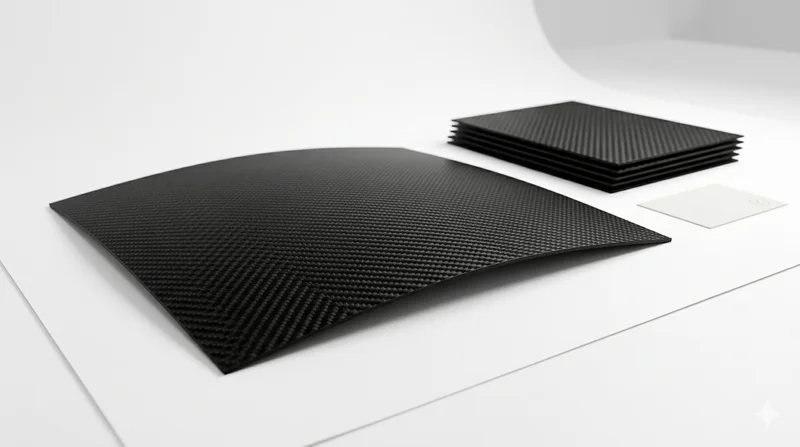
Carbon Fiber Plate — 3K Twill T700 1.5mm
Thin 1.5mm carbon fiber plate with 3K twill weave surface. Lightweight and stiff, commonly used for covers, panels, drone bodies, and applications requiring a premium aesthetic appearance.
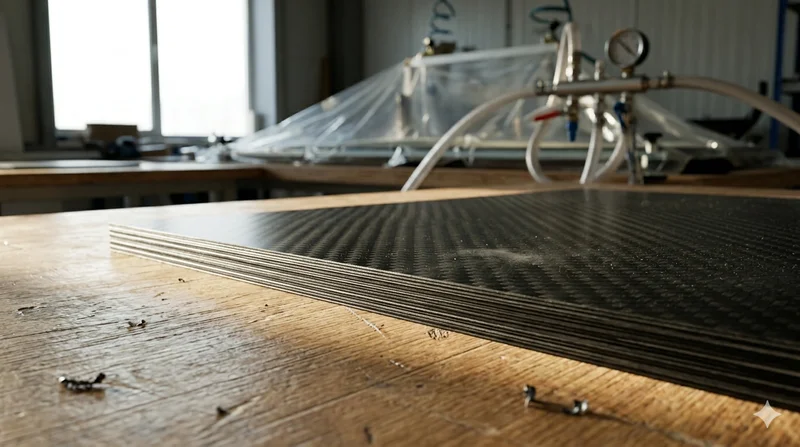
Carbon Fiber Plate — 3K Twill T700 3.0mm
Medium-thickness 3.0mm carbon fiber plate offering significantly higher load capacity while maintaining attractive 3K twill finish. Suitable for structural brackets, reinforcement plates, and load-bearing panels.
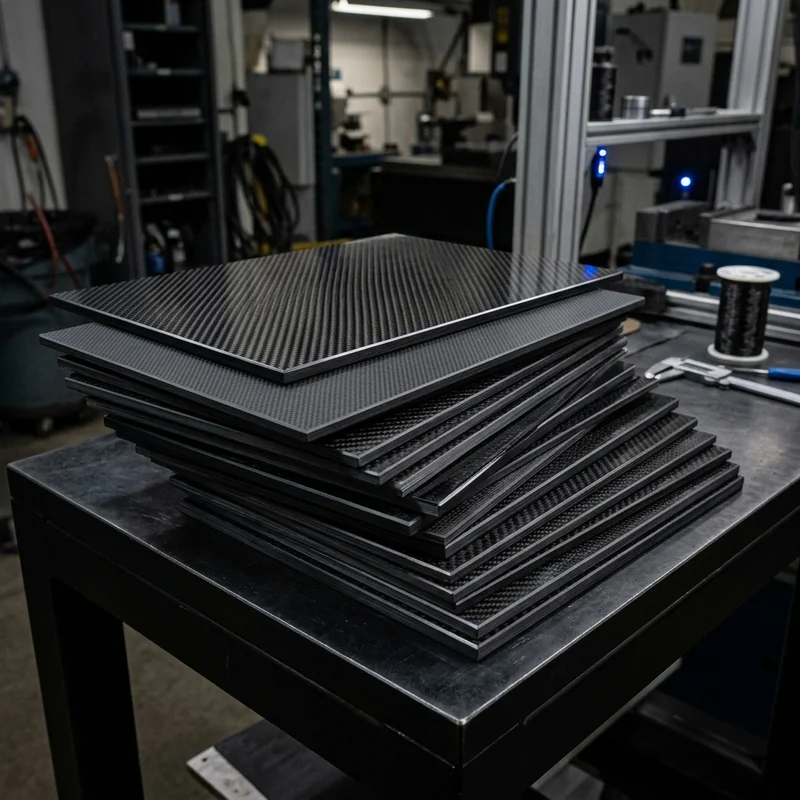
Carbon fiber standard plate-3k stripe
Lightweight, ultra-rigid standard sheets for drone fuselages, robot housings, facades and structural applications.
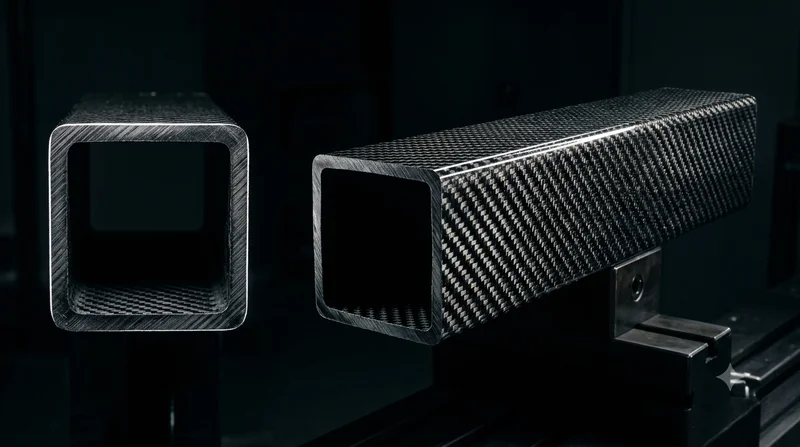
Square Carbon Fiber Tube — 3K Twill T700
Square cross-section carbon fiber tube manufactured with 3K twill weave for torsional strength. Preferred for structural frames, trusses, and support columns where rectangular geometry offers design flexibility.
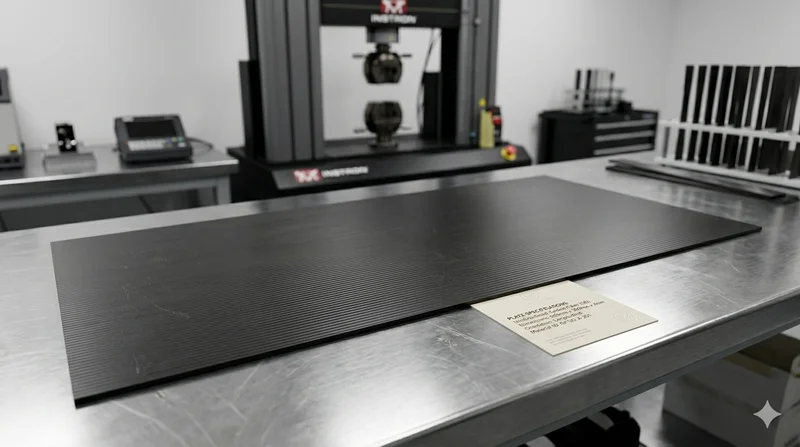
Carbon Fiber Plate — UD Unidirectional T700
Unidirectional carbon fiber plate with all fibers oriented in a single direction for maximum strength along the fiber axis. Essential for structural reinforcements, splints, and applications where load direction is predictable.