
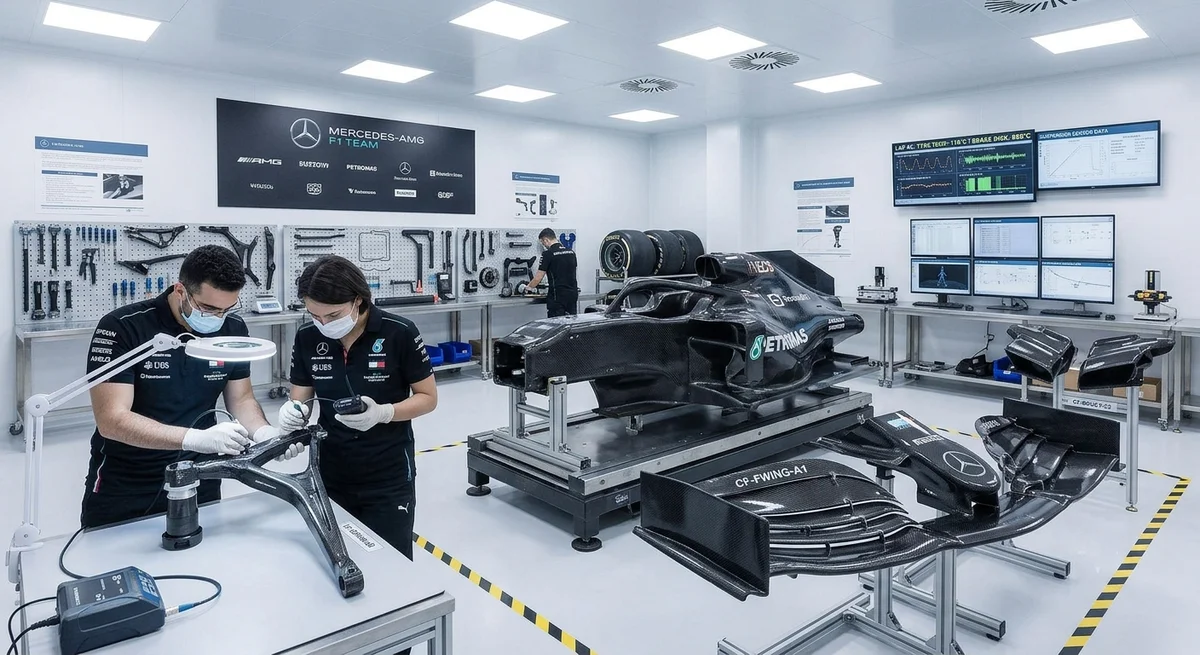
From Formula 1 monocoques to WRC body panels, carbon fiber composites dominate modern motorsport. This article examines material specifications, manufacturing processes, and cost-performance trade-offs across racing disciplines.
Introduction
Carbon fiber composites have revolutionized motorsport engineering over the past four decades. What began as exotic experimental materials in the 1980s has become the baseline specification for virtually every professional racing series worldwide. From the $15 million Formula 1 monocoque to the cost-optimized panels on a World Rally Championship car, carbon fiber offers the highest strength-to-weight ratio of any commercially available structural material.
This technical guide provides B2B buyers and motorsport engineers with a comprehensive overview of carbon fiber material specifications across different racing disciplines. We examine prepreg grades, weaves, core materials, and manufacturing processes, with real-world cost data and performance benchmarks.
Material Grades in Motorsport Applications
| Grade | Tensile Modulus (GPa) | Tensile Strength (MPa) | Typical Use | Cost/kg (USD) |
|---|---|---|---|---|
| Standard Modulus (SM) | 230–240 | 3,500–4,500 | Body panels, wings, diffusers | $25–45 |
| Intermediate Modulus (IM) | 280–300 | 4,500–5,500 | Chassis monocoques, suspension arms | $55–90 |
| High Modulus (HM) | 350–400 | 3,000–4,000 | Driveshafts, pushrods, gearbox components | $120–200 |
| Ultra High Modulus (UHM) | 450–600 | 2,000–3,000 | Specialized aerospace-level racing parts | $300–600 |
Formula 1 teams predominantly use Intermediate Modulus (IM) fibers for monocoque construction, balancing strength and stiffness. WRC and GT3 teams often specify Standard Modulus fibers for body panels to control costs while maintaining crash performance.
Prepreg Systems and Cure Cycles
The majority of motorsport carbon fiber components are manufactured using prepreg (pre-impregnated) materials. Key resin systems include:
- High-temperature epoxy: Cure at 120–180°C, Tg up to 200°C. Used for engine bay components and brake ducts. Typical cycle: 90-minute ramp, 120-minute hold, ramp down.
- Standard epoxy: Cure at 90–120°C, Tg 140–170°C. Used for body panels and aerodynamic devices. Cycle: 60-minute ramp, 90-minute hold.
- Fast-cure epoxy: Cure at 100–130°C in under 30 minutes. Used for prototype and low-volume production. Reduces autoclave utilization cost by up to 40%.
Autoclave pressure typically ranges from 3 to 7 bar depending on the targeted fiber volume fraction (55–65% for motorsport components). Out-of-autoclave prepregs are gaining traction in grassroots racing categories where autoclave access is limited.
Weave Patterns and Structural Performance
Motorsport engineers select weave architecture based on specific load paths and manufacturing complexity:
- Plain weave (1×1): Tightest crimp, best stability for hand layup. Used for flat panels and contours. Drapeability: moderate.
- Twill weave (2×2): Better conformability to complex curves. Preferred for monocoques and suspension components. 30% better drapability than plain weave.
- Unidirectional (UD): Maximum stiffness in one direction. Used for chassis stringers, wishbones, and anti-roll bars. Requires careful ply orientation sequencing.
- 3D woven: Through-thickness reinforcement for impact-critical areas like side intrusion structures. Still limited adoption due to cost premiums of 200–300%.
Discipline-Specific Requirements
Formula 1
F1 monocoques must pass 28 FIA static load tests including a 150 kN side impact, 50 kN steering column push-off, and 12 kN seat belt anchor pull. Layups typically involve 40–60 plies of IM carbon/epoxy, with local reinforcement at hardpoints using woven IM fabric. Monocoque weight: approximately 35 kg before paint and trim.
World Rally Championship (WRC)
WRC cars face unique durability challenges including gravel impacts, water fording, and extreme temperature swings. Body panels use SM carbon with Kevlar hybrid layers for impact resistance. The total carbon fiber content per WRC car is approximately 50–70 kg, compared to 120–160 kg for an F1 car.
GT3 and LMDh
Customer racing teams require crash-repairable structures. GT3 cars use modular carbon fiber front and rear crash structures that bolt onto an aluminum chassis backbone. This hybrid approach reduces replacement costs by up to 60% compared to full monocoque designs.
Cost Analysis for Motorsport Buyers
| Component | Material Cost | Manufacturing Cost | Typical Lead Time | Replacement Frequency |
|---|---|---|---|---|
| Full monocoque (F1) | $35,000–$55,000 | $80,000–$120,000 | 6–8 weeks | Per season |
| Front wing assembly (F1) | $4,000–$7,000 | $12,000–$18,000 | 2–3 weeks | Every 2–3 races |
| Door panel (GT3) | $800–$1,200 | $2,500–$4,000 | 1 week | Per season or after crash |
| Rear diffuser (WRC) | $600–$900 | $1,500–$2,500 | 5–7 days | Every 3–4 rallies |
| Bargeboard set (F1) | $2,000–$3,500 | $6,000–$10,000 | 2 weeks | Every race (iterated) |
Quality Control and NDT Requirements
Motorsport components face rigorous non-destructive testing: ultrasonic C-scan for monocoques (100% coverage), tap testing for body panels, and shearography for bonded joint integrity. The FIA mandates that all structural carbon components carry traceability markings linking to process documentation and batch numbers.
FAQ
Why does F1 use carbon fiber instead of aluminum?
Carbon fiber offers a specific stiffness (stiffness-to-weight ratio) approximately 3.5× higher than aluminum 7075-T6. For the same weight, a carbon fiber monocoque provides 3.5× the bending stiffness, which is critical for chassis torsional rigidity targets exceeding 100 kNm/deg.
Can carbon fiber racing components be repaired?
Yes, but repair is strictly regulated. The FIA allows scarf repairs on non-critical body panels but forbids structural repairs on monocoques. GT3 components can be repaired by certified centers using original prepreg and cure cycles. Cost of repair is typically 40–60% of replacement cost.
What is the lifespan of a carbon fiber monocoque?
F1 monocoques are designed for one season (approximately 8,000–15,000 km). They undergo mandatory scrapping after 3 years regardless of condition, as UV degradation and micro-cracking from vibration cycles reduce residual strength by 15–25% over that period.
Part of topic
Related Articles
- Bio-Based Carbon Fiber Precursors: Lignin and Polyethylene for Low-Cost Production
- Large-Tow Carbon Fiber Cost Analysis: 48K vs 60K Price-Performance Comparison
- Carbon Fiber-Resin Interface Bonding: Surface Treatment and Coupling Agent Optimization
- Digital Twin for Carbon Fiber Manufacturing: Real-Time Process Monitoring and Defect Prevention
- Thermoplastic Carbon Fiber Welding for Automotive: Ultrasonic and Induction Welding Process Windows
- Large-Tow Carbon Fiber Wet Spinning: Process Optimization for 48K/60K Production Efficiency
Interested in Our Products?
Contact our team for competitive pricing and technical specifications.
Get a QuoteRelated Products
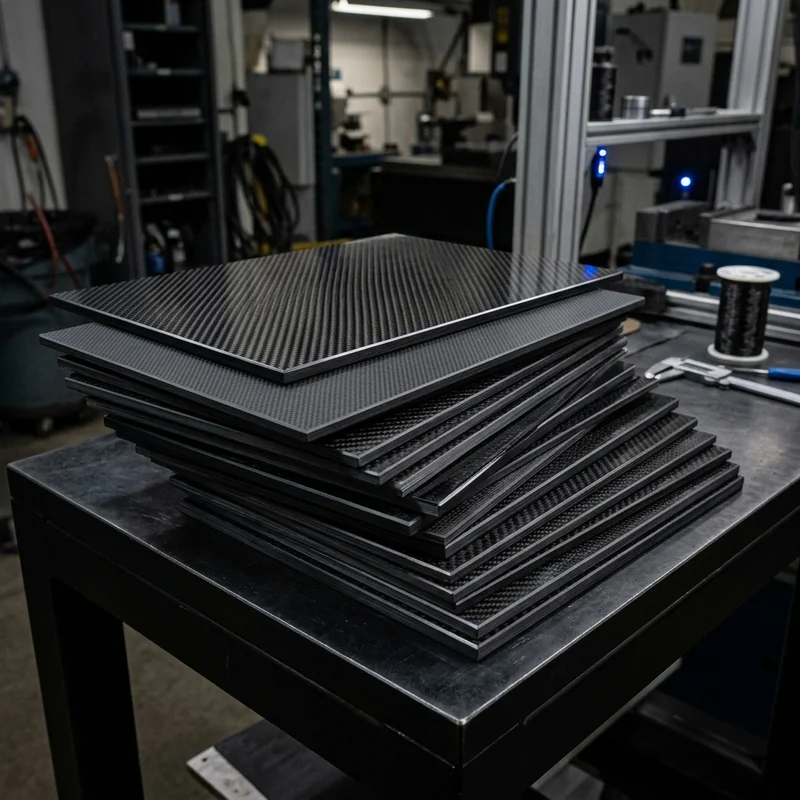
Carbon fiber standard plate-3k stripe
Lightweight, ultra-rigid standard sheets for drone fuselages, robot housings, facades and structural applications.
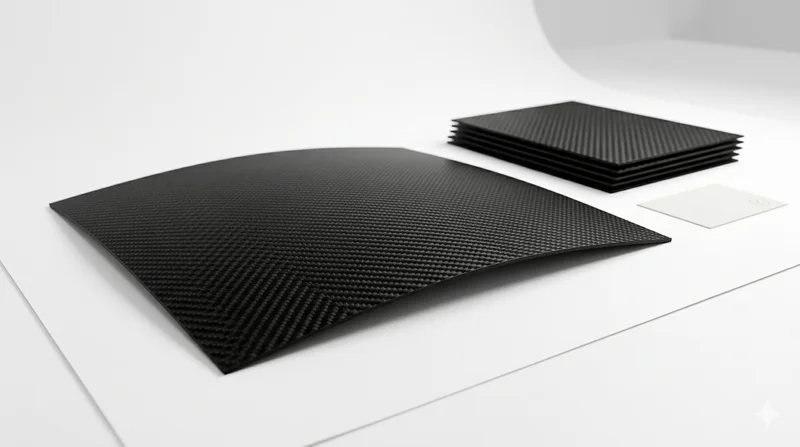
Carbon Fiber Plate — 3K Twill T700 1.5mm
Thin 1.5mm carbon fiber plate with 3K twill weave surface. Lightweight and stiff, commonly used for covers, panels, drone bodies, and applications requiring a premium aesthetic appearance.
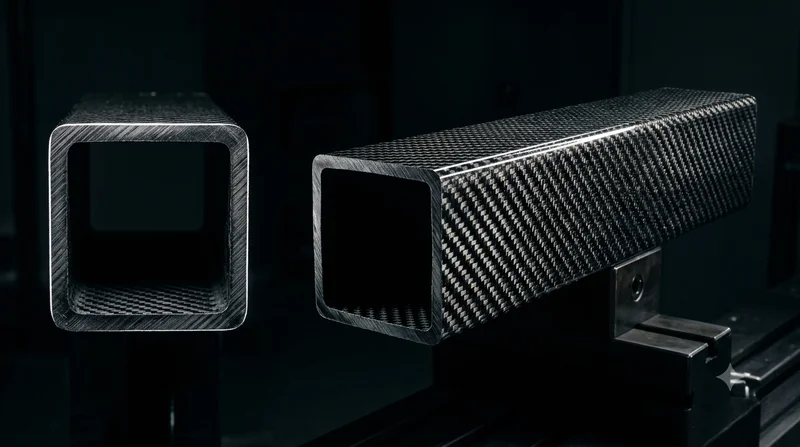
Square Carbon Fiber Tube — 3K Twill T700
Square cross-section carbon fiber tube manufactured with 3K twill weave for torsional strength. Preferred for structural frames, trusses, and support columns where rectangular geometry offers design flexibility.
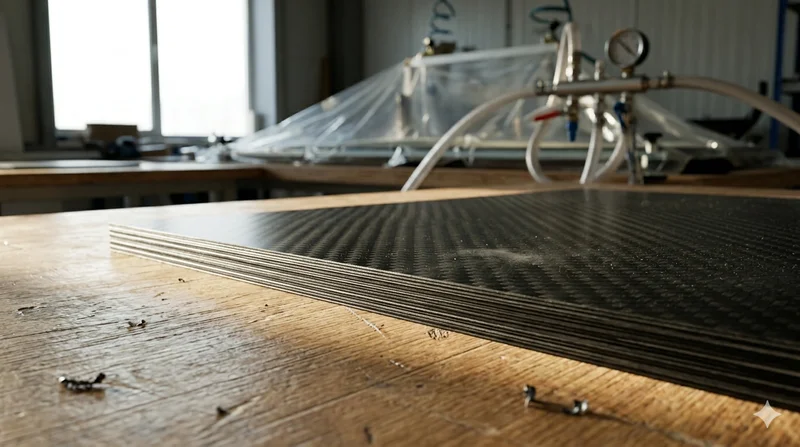
Carbon Fiber Plate — 3K Twill T700 3.0mm
Medium-thickness 3.0mm carbon fiber plate offering significantly higher load capacity while maintaining attractive 3K twill finish. Suitable for structural brackets, reinforcement plates, and load-bearing panels.
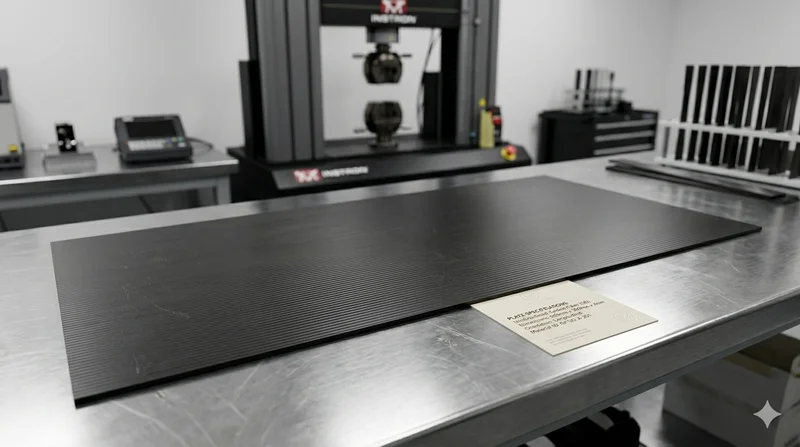
Carbon Fiber Plate — UD Unidirectional T700
Unidirectional carbon fiber plate with all fibers oriented in a single direction for maximum strength along the fiber axis. Essential for structural reinforcements, splints, and applications where load direction is predictable.