A detailed technical guide to carbon fiber honeycomb sandwich panel manufacturing, covering core materials, adhesive bonding, autoclave and out-of-autoclave processes, mechanical performance data, and quality control for B2B industrial buyers.
Carbon Fiber Honeycomb Sandwich Panels: Engineering Lightweight Strength
Carbon fiber honeycomb sandwich panels represent one of the most efficient structural configurations in modern composite engineering. By bonding thin, high-strength carbon fiber face sheets to a lightweight honeycomb core, manufacturers achieve bending stiffness-to-weight ratios that are 5–7 times higher than equivalent monolithic aluminium panels of the same mass. This structural efficiency makes honeycomb sandwich panels the material of choice for aerospace flooring, satellite structural panels, high-speed train interiors, marine bulkheads, and lightweight industrial equipment enclosures.
For B2B buyers evaluating honeycomb sandwich panels for their specific applications, understanding the interplay between core selection, face sheet material, adhesive bonding, and manufacturing process parameters is essential to specifying the right product. This article provides a comprehensive technical overview of the manufacturing process, structural performance characteristics, and quality control methods used in the production of carbon fiber honeycomb sandwich panels.
Core Material Selection
The honeycomb core is the heart of the sandwich structure, providing shear resistance and through-thickness stiffness while maintaining minimal weight. Three primary core materials dominate the industrial landscape:
Aluminium Honeycomb offers the best strength-to-weight ratio among metallic cores at the lowest material cost. Typical densities range from 32 to 130 kg/m³ with cell sizes of 3.2 mm to 19 mm. Aluminium honeycomb is the standard choice for aerospace flooring and interior panels where fire resistance and electrical grounding are requirements. However, it is susceptible to galvanic corrosion when in direct contact with carbon fiber face sheets, necessitating a fibreglass scrim layer between core and face sheet.
Aramid (Nomex®) Honeycomb provides excellent fatigue resistance, dielectric properties, and fire-smoke-toxicity performance. With typical densities of 29–144 kg/m³, Nomex cores are widely used in aircraft interior panels, helicopter rotor blades, and marine structures where moisture resistance is critical. Nomex exhibits superior resilience under cyclic loading compared to aluminium, retaining >90% of compression strength after 10⁶ fatigue cycles at 70% static strength.
Thermoplastic Honeycomb, primarily polypropylene (PP) and polyethersulfone (PES), offers the lowest material cost and excellent chemical resistance. These cores are favoured in automotive interior panels, recreational vehicle flooring, and architectural applications. Thermoplastic honeycomb is fully recyclable, aligning with growing end-of-life requirements in the European automotive sector.
| Core Material | Density Range (kg/m³) | Cell Size (mm) | Shear Modulus (MPa) | Compression Strength (MPa) | Max Service Temp (°C) | Relative Cost |
|---|---|---|---|---|---|---|
| Aluminium | 32–130 | 3.2–19 | 100–350 | 1.7–8.5 | 180 | $$ |
| Nomex® Aramid | 29–144 | 1.6–19 | 25–170 | 0.8–7.0 | 220 | $$$ |
| PP Thermoplastic | 60–120 | 4–12 | 15–60 | 0.5–2.5 | 90 | $ |
| PES Thermoplastic | 70–140 | 3–10 | 25–80 | 1.0–3.5 | 190 | $$ |
| Carbon/Phenolic | 60–160 | 3–10 | 80–250 | 2.0–7.0 | 260 | $$$$ |
Face Sheet Materials and Prepreg Selection
The face sheets carry the in-plane tensile and compressive loads in a sandwich panel. For high-performance structural applications, carbon fiber prepreg face sheets are standard. Typical specifications include:
- Intermediate Modulus (IM) Prepregs (230–295 GPa modulus): Best balance of stiffness, strength, and cost for aerospace and defence applications. Typical cured ply thickness ranges from 0.125 mm to 0.250 mm.
- High Modulus (HM) Prepregs (295–440 GPa modulus): Used where maximum stiffness is required, such as satellite optical benches and metrology structures. HM fibers have lower strain-to-failure (0.4–0.7%) and require careful design to avoid stress concentrations.
- Standard Modulus Prepregs (200–240 GPa modulus): Cost-effective choice for industrial and automotive applications where absolute stiffness is not critical. These are commonly paired with lower-cost non-crimp fabric (NCF) architectures.
- Thin-Ply Technology (0.03–0.08 mm per ply): Emerging trend enabling thinner face sheets with more precise fibre angle control, reducing overall panel mass by 15–25% compared to standard ply thickness laminates.
Adhesive Bonding and Film Selection
Structural adhesive film is the critical interface between the honeycomb core and the face sheets. The adhesive must wet the cell walls, fillet at the core-to-face-sheet junction, and transfer shear loads without failure. Key selection parameters include:
Epoxy film adhesives dominate the aerospace segment. FM® 300K (Cytec/Solvay) and Redux® 322 (Hexcel) are industry standards, offering peel strengths of 40–60 N/25mm at room temperature and retention of >70% peel strength after hot-wet conditioning (70°C/85% RH for 30 days). Cure temperatures range from 120°C to 180°C depending on the system. For out-of-autoclave (OOA) processing, lower-tack film adhesives such as FM® 309-1 allow vacuum-bag-only curing with equivalent bondline performance.
For secondary bonding — where pre-cured face sheets are bonded to the core in a separate operation — paste adhesives offer practical advantages. Two-part epoxy pastes, such as Hysol® EA 9309.3NA, provide working times of 60–90 minutes at 25°C and cure fully at room temperature or moderate heat (50–65°C). Paste adhesives are preferred for prototyping, repair, and low-volume production, while film adhesives are standard for high-volume OEM production where process consistency is paramount.
Manufacturing Processes
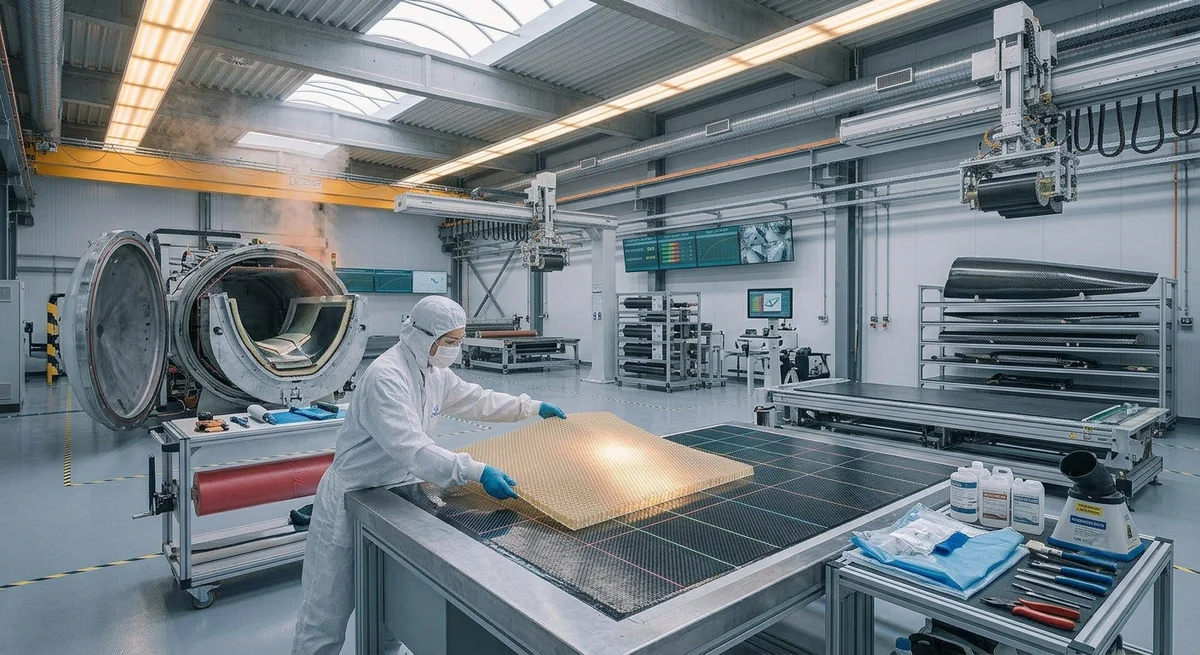
Autoclave Curing remains the gold standard for aerospace-grade honeycomb sandwich panels. The typical cycle involves laying up prepreg face sheets, applying adhesive film to the core, placing the assembly in a vacuum bag, and curing under 3–7 bar pressure and 120–180°C temperature. Autoclave pressure consolidates the face sheets, forces adhesive into the core cell walls creating uniform fillets, and eliminates voids. Typical cycle times are 4–8 hours for full cure plus controlled cool-down. Autoclave-cured panels achieve void contents below 1% and bondline thickness uniformity within ±0.025 mm.
Out-of-Autoclave (OOA) Processing has gained significant traction over the past decade. OOA prepregs, such as Hexcel's HexPly® M56 and Solvay's CYCOM® 5320, are formulated to achieve aerospace-grade mechanical properties using only vacuum bag pressure (≈0.95 bar). OOA processing eliminates the capital expense of autoclaves — a typical 3 m × 10 m autoclave costs $800,000–$1,500,000 — and enables larger panel sizes limited only by oven dimensions. OOA panels achieve void contents below 2% and mechanical properties within 90–95% of autoclave-cured equivalents.
Resin Transfer Moulding (RTM) with honeycomb cores is a specialized process used for complex three-dimensional sandwich structures. Dry fabric is laid over the honeycomb core, the assembly is placed in a closed mould, and resin is injected under pressure. RTM is ideal for integrally stiffened panels with embedded inserts or complex edge close-outs but requires expensive matched metal tooling, limiting economic feasibility to production runs of 500+ parts per year.
Quality Control and NDE Methods
Sandwich panel manufacturing demands rigorous non-destructive evaluation (NDE) to detect the three most common defect types: face-sheet/core disbonds, core crushing, and water ingress. The primary inspection methods are:
- Tap Testing: A manual or automated low-frequency acoustic method for rapid screening. Skilled operators can detect disbonds larger than 20 mm in diameter. Automated tap testers achieve throughput of 1–2 m² per minute.
- Ultrasonic A-Scan and C-Scan: The industry standard for quantitative bondline inspection. C-scan provides a colour-coded map of bond condition across the entire panel area. Through-transmission ultrasonics are preferred for honeycomb panels as they are insensitive to core depth variations. Typical inspection rates are 0.5–1.0 m² per minute.
- Shearography (Electronic Speckle Pattern Interferometry): A non-contact optical method that detects subsurface disbonds and core damage by applying a slight vacuum or thermal load and measuring the surface deformation field. Shearography is particularly effective for thin-skinned honeycomb panels and can inspect up to 5 m² per hour.
- Thermography: Active thermography uses heat lamps or flash lamps to apply a thermal pulse to the panel surface, then an IR camera records the cooling profile. Disbonds appear as hot spots due to reduced heat transfer. This method is well-suited for in-service inspection of installed panels.
Frequently Asked Questions for B2B Buyers
Q: What is the typical lead time for custom carbon fiber honeycomb sandwich panels?
A: Lead times vary significantly based on panel complexity and manufacturing method. Standard flat panels with aluminium or Nomex cores using autoclave curing typically require 6–8 weeks from design approval, including 2 weeks for core procurement, 1 week for prepreg procurement (if not stocked), 2–3 weeks for layup and curing, and 1 week for NDE and final machining. OOA-processed panels can reduce lead time to 4–6 weeks by eliminating autoclave scheduling bottlenecks. Complex three-dimensional panels with RTM or co-cured inserts add 3–5 weeks for tooling fabrication. For urgent needs, some manufacturers offer expedited service at a 25–35% premium, delivering standard panels in 3–4 weeks.
Q: How do I prevent galvanic corrosion between carbon fiber face sheets and aluminum honeycomb core?
A: The carbon-aluminium galvanic couple is a well-understood challenge in hybrid sandwich panels. Three mitigation strategies are standard: (1) A fibreglass scrim layer — typically one ply of 80–120 g/m² E-glass or S-glass fabric — is placed between the carbon face sheet and the aluminium core. This provides electrical isolation of >10 MΩ and prevents galvanic current flow. (2) The aluminium core is specified with a chromate conversion coating (MIL-DTL-5541 Class 1A) or a corrosion-inhibiting primer prior to bonding. (3) Edges and fastener holes must be sealed with a polysulfide or epoxy edge sealant to prevent moisture ingress to the core. For marine and high-humidity environments, Nomex aramid cores are strongly preferred over aluminium to eliminate the galvanic risk altogether.
Q: What dimensional tolerances can I expect for autoclave-cured honeycomb panels?
A: Typical dimensional tolerances for aerospace-grade autoclave-cured honeycomb sandwich panels are: panel length and width ±0.5 mm for dimensions up to 2 m, ±1.0 mm for 2–4 m; panel thickness ±0.13 mm (with a nominal core + face sheet tolerance); flatness 0.5 mm per 300 mm (0.0017 mm/mm); edge squareness ±0.5°; and hole position tolerances of ±0.25 mm for CNC-drilled holes. OOA-processed panels achieve slightly relaxed tolerances: thickness ±0.20 mm and flatness 0.8 mm per 300 mm. These tolerances assume machined (not as-cured) edges and precision fixturing during the drilling operation. Discussing tolerance requirements with your supplier during the design review phase is essential, as tighter tolerances increase manufacturing cost significantly — a flatness requirement of 0.25 mm per 300 mm can double panel cost.
Part of topic
Related Articles
- Bio-Based Carbon Fiber Precursors: Lignin and Polyethylene for Low-Cost Production
- Large-Tow Carbon Fiber Cost Analysis: 48K vs 60K Price-Performance Comparison
- Carbon Fiber-Resin Interface Bonding: Surface Treatment and Coupling Agent Optimization
- Digital Twin for Carbon Fiber Manufacturing: Real-Time Process Monitoring and Defect Prevention
- Thermoplastic Carbon Fiber Welding for Automotive: Ultrasonic and Induction Welding Process Windows
- Large-Tow Carbon Fiber Wet Spinning: Process Optimization for 48K/60K Production Efficiency
Interested in Our Products?
Contact our team for competitive pricing and technical specifications.
Get a QuoteRelated Products
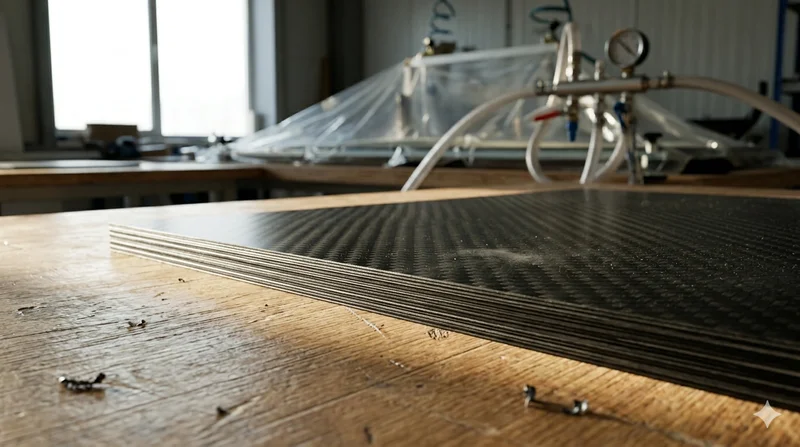
Carbon Fiber Plate — 3K Twill T700 3.0mm
Medium-thickness 3.0mm carbon fiber plate offering significantly higher load capacity while maintaining attractive 3K twill finish. Suitable for structural brackets, reinforcement plates, and load-bearing panels.
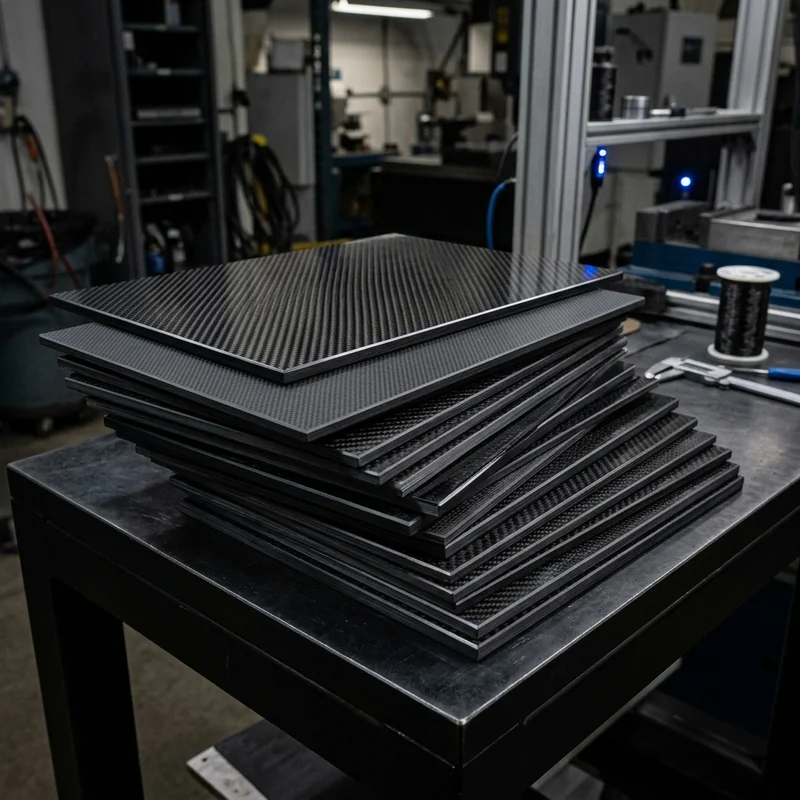
Carbon fiber standard plate-3k stripe
Lightweight, ultra-rigid standard sheets for drone fuselages, robot housings, facades and structural applications.
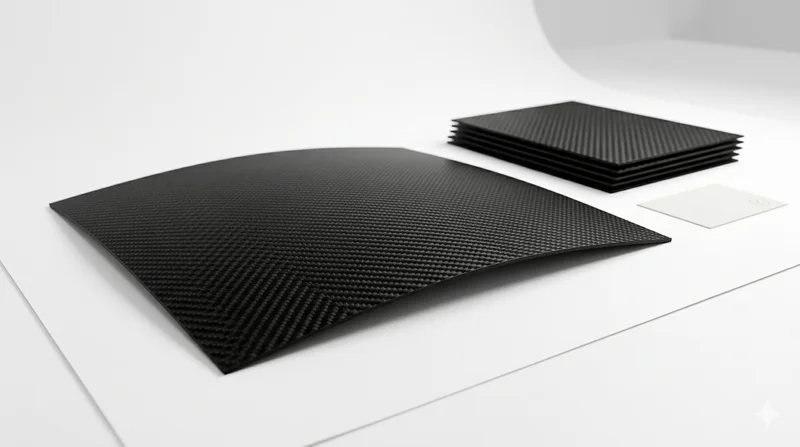
Carbon Fiber Plate — 3K Twill T700 1.5mm
Thin 1.5mm carbon fiber plate with 3K twill weave surface. Lightweight and stiff, commonly used for covers, panels, drone bodies, and applications requiring a premium aesthetic appearance.
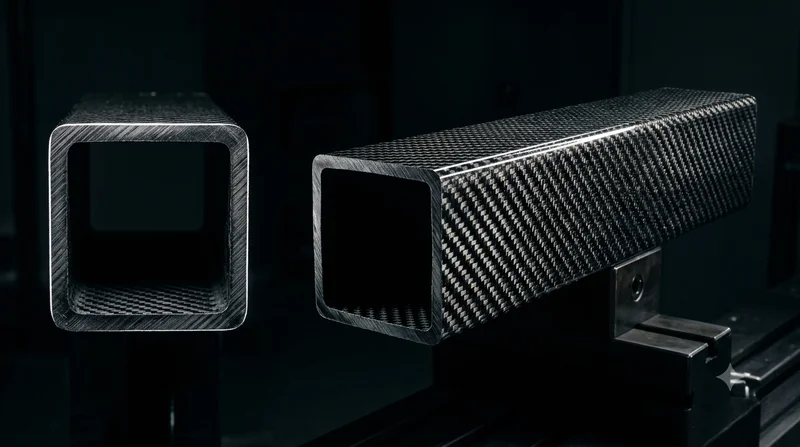
Square Carbon Fiber Tube — 3K Twill T700
Square cross-section carbon fiber tube manufactured with 3K twill weave for torsional strength. Preferred for structural frames, trusses, and support columns where rectangular geometry offers design flexibility.
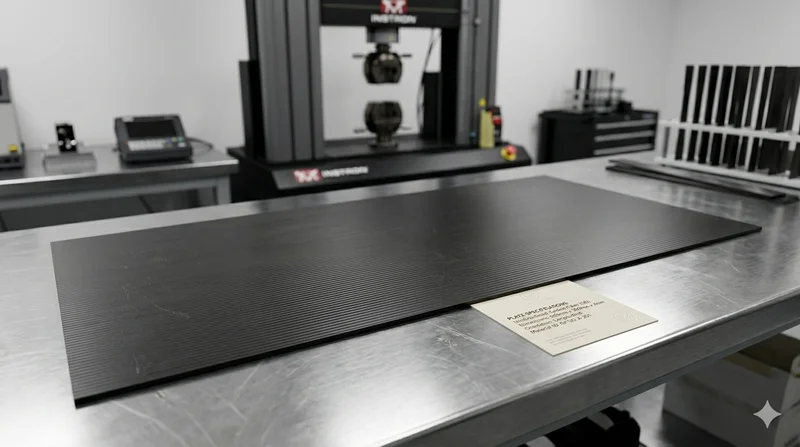
Carbon Fiber Plate — UD Unidirectional T700
Unidirectional carbon fiber plate with all fibers oriented in a single direction for maximum strength along the fiber axis. Essential for structural reinforcements, splints, and applications where load direction is predictable.