
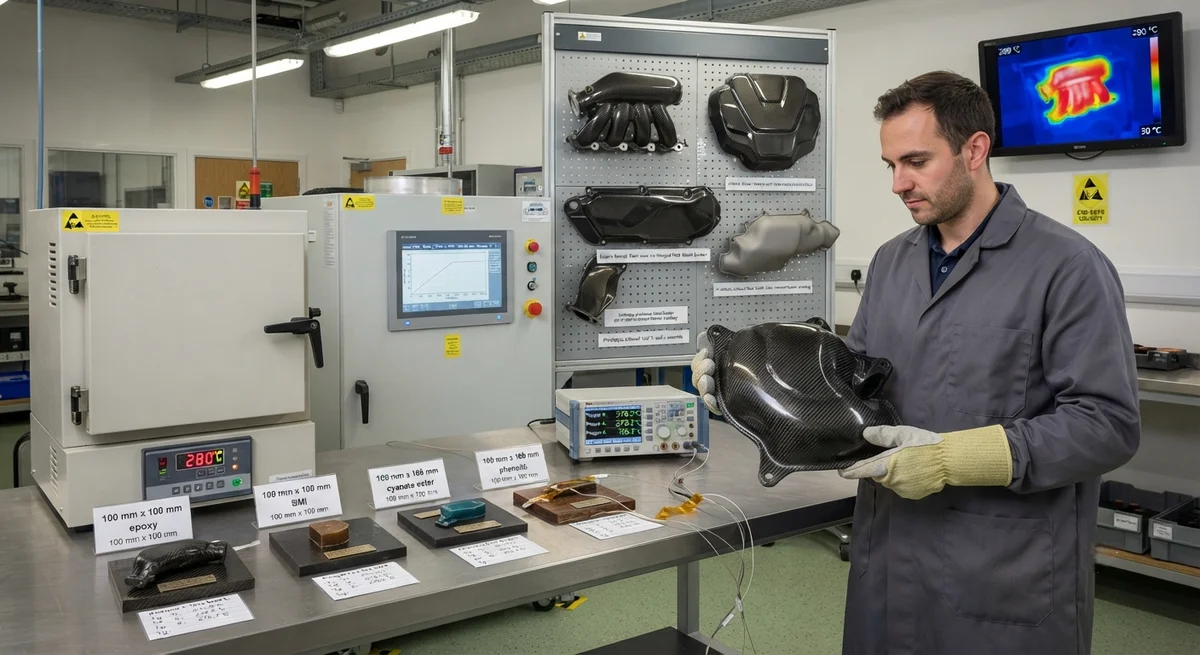
A technical guide to resin system selection for carbon fiber composites used in engine bay and exhaust applications — comparing epoxy, BMI, cyanate ester, and phenolic resins across thermal performance, mechanical retention at elevated temperatures, processing requirements, and cost for B2B buyers i
Introduction: The Thermal Challenge Under the Hood
Modern engine compartments operate at temperatures that push conventional polymer matrix composites beyond their limits. While a standard epoxy-based carbon fiber part (Tg 120–150°C) performs admirably at ambient temperatures, the same component placed within 300 mm of a turbocharged engine block or exhaust manifold will experience sustained temperatures of 150–250°C and transient spikes exceeding 300°C during heat soak after shutdown. At these temperatures, the matrix softens, the fiber-matrix interface degrades, and mechanical properties — particularly compressive strength and interlaminar shear strength (ILSS) — drop catastrophically.
For B2B buyers sourcing carbon fiber components for engine bay, exhaust, or thermal management applications, selecting the correct resin system is as critical as the fiber architecture itself. This article provides a detailed technical comparison of the four major resin families suitable for high-temperature carbon fiber composites, covering glass transition temperature (Tg), continuous service temperature (CST), mechanical property retention, processing requirements, and cost implications.
Resin System Comparison: The Four Contenders
| Resin Family | Tg (°C) | Continuous Service Temp (°C) | Peak / Transient Temp (°C) | ILSS Retention at 200°C | Flexural Modulus Retention at 200°C | Processing Temp (°C) | Relative Cost Index |
|---|---|---|---|---|---|---|---|
| High-Tg Epoxy (e.g., CYCOM 977-2) | 180–220 | 160–190 | 220–250 | 55–70% | 75–85% | 180 ± 10 | 1.0× (baseline) |
| Bismaleimide (BMI) (e.g., CYCOM 5250-4) | 270–330 | 230–260 | 290–320 | 75–85% | 85–92% | 190–210 | 1.8–2.5× |
| Cyanate Ester (CE) (e.g., RS-3, EX-1515) | 250–400 | 200–300 | 350–400 | 70–80% | 80–90% | 180–230 | 2.5–4.0× |
| Phenolic (e.g., GP™ 500, Durite SC-1008) | 160–200 | 180–220 | 280–350* | 50–65% | 65–75% | 150–170 | 0.8–1.2× |
*Phenolic resins exhibit char-forming (ablative) behavior rather than melting; structural load-bearing capability above 250°C is limited but fire/smoke/toxicity (FST) performance is superior.
High-Tg Epoxy: The Workhorse
Toughened high-Tg epoxy systems — such as Hexcel's 8552, Solvay's CYCOM 977-2, or Toray's 2510 — represent the baseline for high-temperature carbon fiber components. With Tg values of 180–220°C, these materials are suitable for engine bay components that experience continuous temperatures up to 160–190°C, covering most intake manifolds, valve covers, engine beauty covers, and air intake ducts on production and performance vehicles.
- Advantages: Proven aerospace qualification (thousands of flight hours on nacelle and pylon components), excellent adhesion to carbon fiber, moderate processing temperature (180°C cure), and the lowest material cost among high-temperature resin families. Available in prepreg form with standard 120–180 minute cure cycles.
- Limitations: Rapid mechanical property degradation above 190°C continuous. At 220°C, flexural strength retention drops below 50%. Not suitable for direct exhaust manifold contact or turbocharger heat shield applications. Moisture absorption (1.5–2.5% by weight at saturation) depresses wet Tg by 15–30°C, a critical factor for underhood components exposed to humidity and thermal cycling.
- Best applications: Engine covers, intake plenums, charge air cooler ducts, radiator end tanks, and structural bracketry in locations where peak temperatures remain below 200°C.
Bismaleimide (BMI): The Industry Standard for Exhaust-Adjacent Components
BMI resins — typified by Cytec's 5250-4 and Hexcel's M65 — occupy the middle ground between high-Tg epoxy and specialty resins. With Tg of 270–330°C and continuous service capability at 230–260°C, BMI is the most common choice for components mounted directly to engine blocks or in proximity to exhaust manifolds.
- Advantages: Excellent hot-wet performance — retains 75–85% of room-temperature ILSS at 200°C wet. Lower moisture absorption than epoxy (0.8–1.8% at saturation) with correspondingly smaller Tg depression (8–15°C). Good fatigue resistance under thermal cycling conditions (−55°C to +230°C). Compatible with standard carbon fiber prepreg manufacturing.
- Limitations: Higher processing temperature (190–210°C) requires capable autoclave or press equipment. More brittle than toughened epoxies — fracture toughness (G₁c) of 150–250 J/m² compared to 250–500 J/m² for high-Tg epoxies. Material cost is 1.8–2.5× that of epoxy. Requires vacuum bag-only or low-pressure processing to manage volatiles during cure.
- Best applications: Turbocharger heat shields, exhaust manifold heat shields, engine block structural covers, oil pan components, and transmission housings in high-performance automotive and motorsport applications.
Cyanate Ester (CE): Maximum Thermal Performance
Cyanate ester resins deliver the highest Tg values (250–400°C) and the best dielectric properties of any thermoset resin, making them the material of choice for the most demanding thermal environments. Commercial systems such as TenCate's RS-3 and Patz Materials' EX-1515 offer continuous service temperatures of 200–300°C with transient capability to 350–400°C.
- Advantages: Lowest moisture absorption of any thermoset resin (0.5–1.2% at saturation), resulting in virtually no wet Tg depression. Exceptional thermal oxidative stability — mass loss after 1,000 hours at 250°C in air is typically <2%, compared to 5–8% for BMI and 10–15% for epoxy. Very low outgassing for applications requiring vacuum or clean-room compatibility.
- Limitations: High material cost (2.5–4.0× epoxy). Requires the highest processing temperatures (180–230°C cure, 250–300°C post-cure). Some formulations are brittle and may require thermoplastic toughening. Catalyst selection is critical — certain metal carboxylate catalysts can affect long-term thermal stability. Limited supplier base compared to epoxy and BMI.
- Best applications: Exhaust system components within 100 mm of the manifold flange, after-treatment system housings (DPF, SCR), brake caliper pistons and housings, and high-temperature structural inserts where epoxy and BMI would degrade within the service life.
Phenolic: The Fire-Safe Alternative
Phenolic resins — often overlooked in structural applications — offer unique advantages for engine bay components where fire resistance and low smoke emission are critical. Unlike epoxy and BMI, phenolics form a char layer when exposed to flame, providing a self-extinguishing barrier that limits heat penetration to the underlying structure.
- Advantages: Superior fire, smoke, and toxicity (FST) performance — achieves V-0 rating in UL 94 vertical burn testing at 1.6 mm thickness without additives. Excellent chemical resistance to automotive fluids (oil, coolant, gasoline, brake fluid). Lowest cost of any high-temperature resin family (0.8–1.2× standard epoxy). Good thermal insulation properties — thermal conductivity of 0.25–0.35 W/m·K compared to 0.40–0.55 W/m·K for epoxy.
- Limitations: Lower mechanical properties — tensile strength of phenolic/carbon composites is typically 30–40% lower than equivalent epoxy composites. Requires careful process control to manage condensation byproducts (water) during cure. Not suitable for primary structural applications under continuous load above 250°C. Limited prepreg shelf life (typically 30–60 days at −18°C storage).
- Best applications: Firewall panels, battery enclosure covers (EV and hybrid), engine bay heat shields in public transport and marine applications, and ducts or housings where FST certification (FAR 25.853, ECE R118, NFPA 130) is mandatory.
Processing Considerations for B2B Buyers
The choice of resin system directly impacts manufacturing feasibility and cost. Key processing parameters that procurement teams must evaluate:
| Parameter | High-Tg Epoxy | BMI | Cyanate Ester | Phenolic |
|---|---|---|---|---|
| Cure temperature | 170–190°C | 190–210°C | 180–230°C | 150–170°C |
| Cure time (typical) | 120–180 min | 180–360 min | 180–300 min + post-cure | 60–120 min |
| Post-cure required? | Optional (+2h at 200°C) | Recommended (+4–6h at 230°C) | Required (+4–8h at 250–300°C) | Optional (+2h at 180°C) |
| Autoclave pressure | 3–7 bar | 3–7 bar | 3–7 bar | 1–3 bar (low pressure) |
| Prepreg shelf life (@ −18°C) | 6–12 months | 3–6 months | 3–6 months | 1–2 months |
| Tooling material | Al or steel | Steel (Al degrades) | Steel (high temp) | Al or steel |
| Relative cycle cost | 1.0× (baseline) | 1.3–1.6× | 1.8–2.5× | 1.0–1.2× |
Making the Selection: A Decision Framework for Buyers
For B2B buyers evaluating resin systems for engine bay or exhaust carbon fiber components, the following three-step framework simplifies the selection process:
- Step 1 — Define the thermal envelope: Measure or estimate the maximum continuous temperature (MCT) at the component location during worst-case operating conditions (full load, 40°C ambient, heat soak after shutdown). If MCT ≤ 180°C, high-Tg epoxy is sufficient. If MCT = 180–250°C, BMI is indicated. If MCT > 250°C, cyanate ester or phenolic (for FST-critical applications) is required.
- Step 2 — Assess regulatory and certification requirements: If the component requires FST certification (public transport, marine, underground mining), phenolic is the default choice. If the component is structural and requires fatigue certification (e.g., engine mount bracket), BMI or cyanate ester with documented fatigue data is preferred. For cosmetic or semi-structural covers, high-Tg epoxy with a ceramic thermal barrier coating can extend the effective service range by 30–50°C at lower cost than upgrading the resin.
- Step 3 — Evaluate total cost of ownership: Include not just material cost, but also processing cycle time, tooling requirements, NDT validation, and warranty exposure. A BMI component that costs 2.0× the material cost of epoxy may only add 30–40% to the finished part cost when tooling amortization and processing are included — and the warranty savings from eliminating thermal degradation failures can more than offset the premium.
Frequently Asked Questions
What is the maximum continuous temperature a standard epoxy carbon fiber component can withstand in an engine bay?
A standard high-Tg epoxy system (e.g., Tg 180–200°C) can safely withstand continuous service temperatures of 160–180°C under dry conditions. In the hot-wet state (moisture-saturated, as occurs after exposure to humid underhood conditions), the serviceable temperature drops to 140–160°C due to plasticization of the epoxy network. This is sufficient for intake-side components such as air intake manifolds, air filter housings, and engine covers located on the cool side of the engine. Components on the exhaust side, within 200 mm of the manifold, will experience temperatures that exceed epoxy's capability — here BMI (CST 230–260°C) or cyanate ester (CST 200–300°C) is required. A practical test: if you cannot hold your hand on the component after a 15-minute highway drive, the surface temperature exceeds 55–60°C, and a thermocouple measurement is recommended before selecting the resin system.
Can BMI resin be processed on the same autoclave tooling as epoxy?
Partially. BMI requires cure temperatures of 190–210°C, which exceeds the typical maximum service temperature of aluminum tooling (180°C sustained). For BMI processing, nickel-alloy tooling (Invar 36 or similar) or steel tooling is required. However, the same autoclave can handle both epoxy and BMI cycles if it can achieve and maintain 210°C uniformly — most autoclaves rated for aerospace composite processing are specified to 250–400°C maximum. The transition from epoxy to BMI processing should include a thermal validation of the tooling to verify that the coefficient of thermal expansion (CTE) mismatch between the carbon fiber part (near-zero CTE) and the tool material does not cause dimensional distortion. Invar 36 tooling has a CTE of approximately 1.3 × 10⁻⁶ /°C, closely matching the carbon fiber layup, while standard steel tooling (CTE 11–13 × 10⁻⁶ /°C) may induce residual stresses during cool-down from BMI cure temperatures.
What is the cost premium for upgrading from epoxy to BMI or cyanate ester?
At the raw material level, BMI prepreg costs 1.8–2.5× standard high-Tg epoxy prepreg, and cyanate ester prepreg costs 2.5–4.0×. However, at the finished component level, the premium is lower. For an engine bay heat shield (typical size 300 mm × 200 mm, 2 mm thick, 50 g fiber weight), the raw material cost is approximately $8–12 in epoxy, $16–25 in BMI, and $22–40 in cyanate ester. Including processing, NDT, and overhead, the finished part cost spans roughly $45–65 (epoxy), $65–95 (BMI), and $95–150 (cyanate ester). The practical recommendation: use the highest-temperature-capable resin that the thermal envelope requires — over-specifying to cyanate ester when BMI would suffice adds unnecessary cost; under-specifying to epoxy when BMI is needed risks warranty failures that can cost 10–50× the material savings.
How does thermal cycling affect carbon fiber composites with different resin systems?
Thermal cycling underhood (from −30°C cold start to 200°C+ operating temperature) induces microcracking in the matrix due to the CTE mismatch between carbon fiber (−1 to 0 × 10⁻⁶ /°C longitudinal) and the resin (50–70 × 10⁻⁶ /°C). Epoxy systems typically begin showing microcracks after 500–1,000 full-range thermal cycles, with crack density increasing to 5–10 cracks/cm² by 2,000 cycles. BMI systems perform significantly better — microcrack initiation occurs at 2,000–4,000 cycles, and crack density remains below 2 cracks/cm² through 5,000 cycles. Cyanate ester systems show minimal microcracking even after 5,000+ cycles due to their lower resin CTE (35–55 × 10⁻⁶ /°C) and higher strain-to-failure. For components that experience daily thermal cycling over a 5–10 year vehicle life (approximately 1,800–3,600 cycles), BMI offers a clear durability advantage over epoxy. For motorsport applications where components are replaced frequently (every 10–20 race hours), high-Tg epoxy with periodic inspection is often sufficient.
Are there hybrid approaches that balance cost and thermal performance?
Yes. Three hybrid strategies are commonly employed in production engine bay components: (1) Co-cured hybrid layups — using BMI or cyanate ester only in the surface plies (2–3 outer fabric layers) that face the heat source, while using lower-cost epoxy in the core plies. This reduces material cost by 25–40% compared to a full-BMI laminate while retaining 85–95% of the thermal protection. (2) Ceramic thermal barrier coatings — a 50–100 µm coating of yttria-stabilized zirconia (YSZ) or aluminum oxide applied by plasma spray to the heat-facing surface of a standard epoxy component. This can reduce the surface temperature by 50–80°C, allowing epoxy components to survive environments that would otherwise require BMI. Coating cost adds $8–$20 per component depending on area. (3) Selective reinforcement with phenolic pre-preg in high-heat zones — for components like composite intake manifolds that have localized hot spots near EGR ports, a phenolic insert or localized phenolic ply buildup can manage temperatures up to 300°C while the bulk structure remains in epoxy. The design complexity is higher, but the cost savings over a full BMI or cyanate ester solution can be 40–60%.
Related Articles
- Bio-Based Carbon Fiber Precursors: Lignin and Polyethylene for Low-Cost Production
- Large-Tow Carbon Fiber Cost Analysis: 48K vs 60K Price-Performance Comparison
- Carbon Fiber-Resin Interface Bonding: Surface Treatment and Coupling Agent Optimization
- Digital Twin for Carbon Fiber Manufacturing: Real-Time Process Monitoring and Defect Prevention
- Thermoplastic Carbon Fiber Welding for Automotive: Ultrasonic and Induction Welding Process Windows
- Large-Tow Carbon Fiber Wet Spinning: Process Optimization for 48K/60K Production Efficiency
Interested in Our Products?
Contact our team for competitive pricing and technical specifications.
Get a QuoteRelated Products
Carbon fiber standard plate-3k stripe
Lightweight, ultra-rigid standard sheets for drone fuselages, robot housings, facades and structural applications.
Carbon Fiber Plate — 3K Twill T700 1.5mm
Thin 1.5mm carbon fiber plate with 3K twill weave surface. Lightweight and stiff, commonly used for covers, panels, drone bodies, and applications requiring a premium aesthetic appearance.
Square Carbon Fiber Tube — 3K Twill T700
Square cross-section carbon fiber tube manufactured with 3K twill weave for torsional strength. Preferred for structural frames, trusses, and support columns where rectangular geometry offers design flexibility.
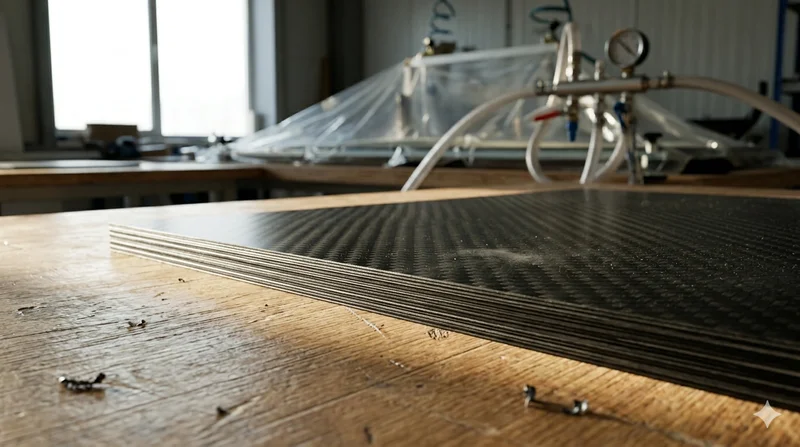
Carbon Fiber Plate — 3K Twill T700 3.0mm
Medium-thickness 3.0mm carbon fiber plate offering significantly higher load capacity while maintaining attractive 3K twill finish. Suitable for structural brackets, reinforcement plates, and load-bearing panels.
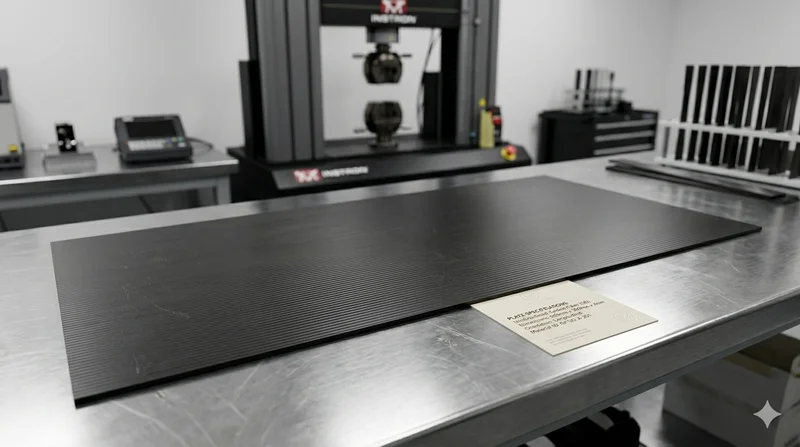
Carbon Fiber Plate — UD Unidirectional T700
Unidirectional carbon fiber plate with all fibers oriented in a single direction for maximum strength along the fiber axis. Essential for structural reinforcements, splints, and applications where load direction is predictable.