
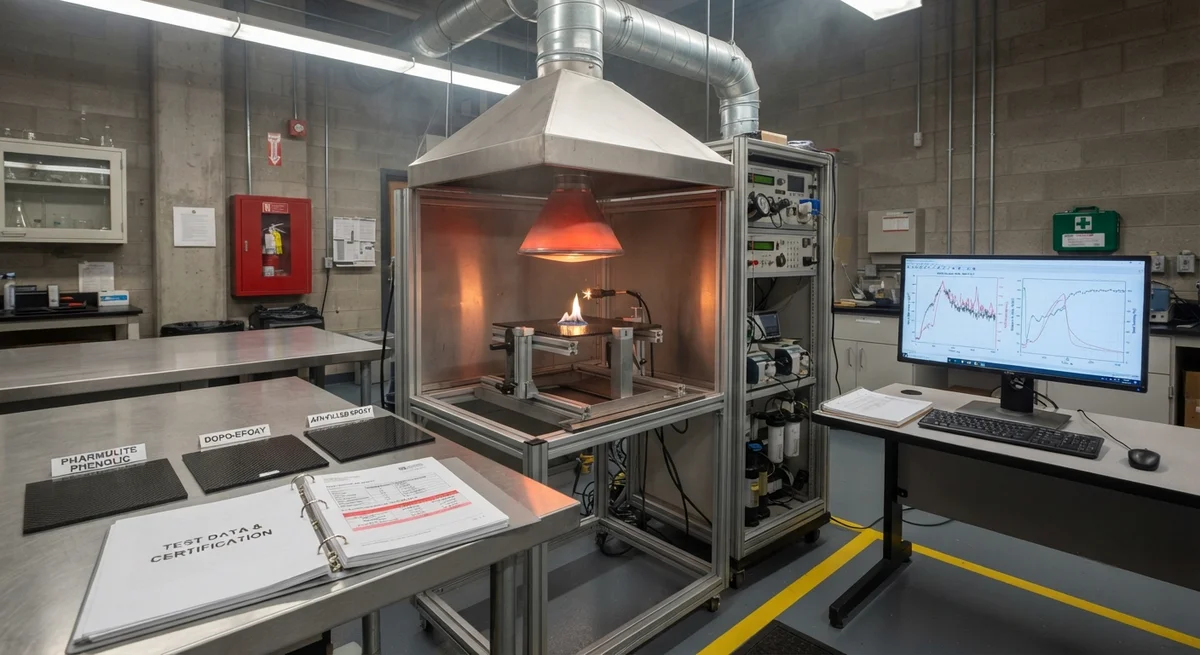
A detailed B2B analysis of flame retardant standards for carbon fiber composites across railway (EN 45545), aerospace (FAR 25.853), and building (ASTM E84, GB 8624) regulations, with resin system selection guidance and comparative performance data.
Introduction
The adoption of carbon fiber reinforced polymer (CFRP) composites in transportation and building infrastructure has accelerated dramatically over the past decade. Railway rolling stock manufacturers now specify carbon fiber for interior panels, seat structures, and even structural body shells to achieve weight reductions of 35–50% versus aluminum. Aerospace OEMs use carbon fiber for interior cabin panels, overhead bins, and floor structures to improve fuel efficiency and payload capacity. Building and construction engineers specify carbon fiber facades, structural reinforcement, and interior architectural elements for its combination of light weight, corrosion resistance, and design flexibility. However, each of these sectors imposes stringent flame retardant (FR) requirements on composite materials — requirements that fundamentally constrain the resin system selection, additive formulation, and manufacturing process for carbon fiber components.
For B2B buyers in the composite parts supply chain — whether supplying railway interior panels to CRRC or Siemens, aircraft cabin components to Boeing or Airbus, or building facade panels for high-rise construction — understanding the specific flammability standards, test methods, and certification pathways is critical for commercial success. A carbon fiber panel that meets the railway EN 45545 standard may fail the aerospace FAR 25.853 test, while a building-code-compliant ASTM E84 Class A panel may use halogenated flame retardants that are prohibited in railway applications under the EU REACH regulation. The resin system selection — whether epoxy, phenolic, polyester, or polyurethane matrices — must be tailored to the target sector's regulatory framework.
This article provides a comprehensive analysis of flame retardant requirements for carbon fiber composites across three major sectors — railway (EN 45545), aerospace (FAR 25.853), and building construction (ASTM E84, GB 8624) — with detailed resin system comparisons, additive chemistry guidance, comparative fire test data, and certification best practices for B2B suppliers.
Railway Standards: EN 45545 for Rolling Stock Interiors
The European standard EN 45545, adopted as the harmonized standard for railway fire safety across the EU and increasingly referenced in China (via TB/T 3237) and other markets, defines fire performance requirements for materials used in railway rolling stock. The standard classifies vehicles into four hazard levels (HL1 through HL3) based on design category (e.g., sleeping cars = HL3, the most stringent) and operating category (e.g., automated metros without driver = highest). For interior carbon fiber components — including seat shells, wall panels, ceiling panels, luggage racks, and partition walls — the relevant test parameters are: heat release rate (HRR) per EN ISO 5660-1 (cone calorimeter at 50 kW/m²), smoke production rate and total smoke density per EN ISO 5659-2 (with and without pilot flame), and flame spread per EN ISO 9239 (radiant panel test). For HL3 (highest hazard level, applicable to sleeping cars and double-deck trains), the maximum allowable MARHE (maximum average rate of heat emission) is 60 kW/m², the maximum smoke density (Dₛ(max)) is 150, and the critical flux at extinguishment (CFE) must exceed 20 kW/m².
Standard epoxy resin systems — the most common matrix for structural carbon fiber composites — typically fail EN 45545 HL2 and HL3 requirements without flame retardant modification. A standard bisphenol-A epoxy (EP) with an aliphatic amine hardener produces a MARHE of 90–120 kW/m², a Dₛ(max) of 400–600, and a CFE of 8–12 kW/m² — failing all three HL3 parameters by wide margins. The modification strategies to achieve EN 45545 compliance include: (1) using brominated epoxy resin (20–30% bromine content by weight) which reduces MARHE to 50–65 kW/m² but increases smoke toxicity (elevated hydrogen bromide and brominated dioxin formation during combustion) — increasingly restricted under EU REACH; (2) incorporating aluminum trihydroxide (ATH) at 30–50 phr (parts per hundred resin) loading, which acts as an endothermic fire retardant releasing water vapor at 220–400°C, diluting combustible gases and cooling the pyrolysis zone; and (3) using phosphorus-based flame retardants — either additive (ammonium polyphosphate, APP, at 15–25 phr) or reactive (DOPO, 9,10-dihydro-9-oxa-10-phosphaphenanthrene-10-oxide, at 5–15 phr by weight) — which promote char formation and reduce heat release. Phenolic resin systems inherently offer superior fire performance without FR additives, with MARHE values of 35–55 kW/m² and low smoke density (Dₛ(max) 80–120), making them the preferred matrix for railway interior panels despite their higher processing cost and lower mechanical properties compared to epoxy.
The following table compares fire performance data for various resin systems in carbon fiber composites tested according to EN 45545 HL3 parameters, using cone calorimetry at 50 kW/m² heat flux with a 200 gsm 3K twill carbon fiber fabric at 55% fiber volume fraction.
| Resin System | FR Additive | MARHE (kW/m²) | Dₛ(max) (smoke) | CFE (kW/m²) | HL Rating | Tg (°C) | Relative Cost |
|---|---|---|---|---|---|---|---|
| Phenolic (resole) | None | 42 | 95 | 28 | HL3 | 180 | 1.8 |
| Brominated epoxy | 24% Br (resin) | 58 | 280 | 22 | HL3 | 145 | 1.4 |
| Epoxy + ATH | 40 phr ATH | 55 | 180 | 24 | HL3 | 120 | 1.5 |
| Epoxy + DOPO | 12 phr DOPO | 48 | 160 | 26 | HL3 | 155 | 2.0 |
| Epoxy + APP | 20 phr APP | 52 | 140 | 25 | HL3 | 130 | 1.6 |
| Standard epoxy (no FR) | None | 105 | 510 | 10 | HL2 only | 160 | 1.0 (baseline) |
| Polyester (orthophthalic) | None | 145 | 780 | 6 | Fail | 95 | 0.7 |
| Polyester + ATH | 50 phr ATH | 65 | 220 | 20 | HL2 | 85 | 1.1 |
Key conclusions for railway suppliers: (1) Phenolic resins are the only systems that achieve HL3 compliance without flame retardant additives, making them the safest choice for certification but requiring higher cure temperatures (160–180°C) and longer cycle times (6–12 minutes versus 2–4 minutes for epoxy in compression molding). (2) DOPO-modified epoxy offers the best balance of HL3 performance (MARHE 48 kW/m²) and mechanical properties retention (>85% of baseline flexural strength) among modified epoxy systems, but at the highest cost premium. (3) APP-based systems offer adequate HL2-plus performance at moderate cost and are widely accepted for seat shells and partition walls in HL2 vehicles (regional trains, metro cars). (4) Standard brominated epoxy, while technically HL3-compliant, faces increasing regulatory pressure under EU REACH (Restriction proposal for tetrabromobisphenol-A, TBBPA) and should be avoided for new product development targeting the European and Chinese railway markets.
Aerospace Standards: FAR 25.853 and OSU Heat Release
Aerospace fire safety requirements for carbon fiber cabin interior components are governed by FAR (Federal Aviation Regulation) 25.853 in the United States, with equivalent standards in EASA CS 25.853 (European) and CCAR 25.853 (Chinese). These regulations establish flammability requirements for interior materials including sidewall panels, ceiling panels, stowage bins, partitions, floor panels, and seat structures. The most critical tests are the vertical burn test (12-second flame application, 60-second after-flame maximum, 150 mm burn length maximum) per FAR 25.853(a) and Appendix F, Part I, and — for large surface area components — the Ohio State University (OSU) heat release rate test per FAR 25.853(d) and Appendix F, Part IV. The OSU test is the most demanding: the peak heat release rate (PHRR) must not exceed 65 kW/m² and the total heat release at 2 minutes (THR₂) must not exceed 65 kW·min/m² when tested at 35 kW/m² external heat flux. These requirements apply to all large-surface-area interior components, which includes the majority of carbon fiber panels used in cabin interiors.
Carbon fiber phenolic composites are the gold standard for aerospace interior panels, achieving OSU PHRR values of 25–40 kW/m² and THR₂ of 20–40 kW·min/m² — well within the 65/65 requirement and offering a significant safety margin. Phenolic matrix composites also produce minimal smoke density (specific optical density Dₛ < 50 at 4 minutes per ASTM E662) and pass the vertical burn test with flame times typically under 5 seconds and burn lengths under 75 mm. However, phenolic resins present manufacturing challenges: they generate volatile byproducts (water and formaldehyde) during cure that must be vented, requiring tooling with controlled venting channels; they have limited shelf life (3–6 months at -18°C for pre-preg grades); and their cured mechanical properties are 30–40% lower than epoxy equivalents (flexural strength 350–450 MPa for phenolic vs. 600–800 MPa for epoxy). For seat structures and other lightly loaded components, this reduction is acceptable; for structural floor panels subject to concentrated loads (e.g., galley and lavatory attachment points), epoxy-based solutions with OSU-compliant FR formulations are preferred.
For carbon fiber components that require the mechanical properties of epoxy but must also meet FAR 25.853 requirements, two approaches are available. Approach 1 — Modified epoxy pre-pregs with phosphorus FR: Aerospace-grade FR epoxy pre-pregs are now available from major suppliers (Hexcel HexPly M35-2 with DOPO-based FR, Toray 2510 FR epoxy) that achieve OSU PHRR of 50–60 kW/m² and THR₂ of 45–55 kW·min/m² with mechanical property retention of 85–90% versus standard epoxy. These materials are autoclave-cured at 180°C/7 bar and provide cured ply thickness of 0.13–0.19 mm for standard 3K fabric formats. Approach 2 — Surface film coating: For standard epoxy pre-preg panels that pass the vertical burn test but fail OSU, a 0.1–0.2 mm flame retardant surface film (phenolic-based or Teflon-based FR coated films) can be co-cured or secondarily bonded to the exposed surface. This approach adds 40–80 g/m² weight and $12–$25/m² material cost but allows the use of standard structural epoxy for the laminate core, preserving mechanical performance in the load-bearing region. B2B aerospace suppliers should note that surface film coatings must themselves pass the OSU test as part of a panel-level qualification, and the bonding interlayer must maintain adhesion after 7-day humidity exposure (85% RH at 70°C) per FAR 25.853 appendix requirements.
Building and Construction Codes: ASTM E84 and GB 8624
Building construction fire codes for carbon fiber composites vary by region but share common test frameworks. In North America, the primary standard is ASTM E84 (Standard Test Method for Surface Burning Characteristics of Building Materials), which measures the flame spread index (FSI) and smoke developed index (SDI) over a 7.3 m Steiner tunnel. Materials are classified as Class A (FSI 0–25, SDI 0–450), Class B (FSI 26–75, SDI 0–450), or Class C (FSI 76–200, SDI 0–450). For carbon fiber composites used as building cladding panels, facade elements, and interior architectural finishes, Class A (FSI ≤ 25) is typically required by IBC (International Building Code) for buildings exceeding three stories or in occupancy groups A (assembly), E (educational), and I (institutional). In China, the equivalent standard is GB 8624-2012, which classifies materials into A (non-combustible), B1 (flame retardant), B2 (combustible), and B3 (highly combustible) based on the cone calorimeter test (GB/T 16172) and the SBI (single burning item) test (GB/T 20284). For commercial building carbon fiber interior finishes and exterior curtain wall panels, the minimum requirement is typically B1 (flame spread ≤ 25%, heat release ≤ 8.5 MJ/m² at 30 seconds, smoke production ≤ 10 m²/s²).
Carbon fiber composites using standard epoxy, polyester, or polyurethane resins fail ASTM E84 Class A requirements with FSI values of 75–200 and SDI values of 300–600 — falling into Class C or worse. The pathway to Class A compliance for architectural carbon fiber components involves either (a) using an inherently fire-resistant resin such as phenolic or modified acrylic, (b) incorporating fire-resistant surface treatments, or (c) using intumescent coatings. Intumescent coatings — applied at 0.3–1.0 mm dry film thickness — expand to 20–50× their original thickness when exposed to flame, forming an insulating char layer that protects the underlying carbon fiber substrate. A two-pack epoxy intumescent system (e.g., based on ammonium polyphosphate, melamine, and pentaerythritol) applied at 0.5 mm over a standard epoxy carbon fiber panel achieves ASTM E84 FSI of 15–20 and SDI of 150–250 — solidly within Class A. For external facade applications, the intumescent coating must be UV-stable and weather-resistant, typically requiring a 50–100 µm UV-curable acrylic topcoat. The total system cost (carbon fiber panel + intumescent coating + UV topcoat) ranges from $85–$180/m² depending on panel size and complexity, versus $30–$60/m² for an uncoated carbon fiber panel.
A growing trend in Chinese high-rise construction is the use of carbon fiber-reinforced polymer (CFRP) for external structural reinforcement as an alternative to steel plate bonding — a technique codified in GB 50367-2013 (Code for Design of Strengthening Concrete Structures). For these structural CFRP applications, the fire resistance rating (FRR) of the composite system — typically 1–3 hours per GB 50016-2014 (Code for Fire Protection in Building Design) — is achieved through supplemental fire protection measures rather than inherent composite fire resistance. A 20–30 mm thick vermiculite-cement spray coating or calcium silicate board encasement is applied over the CFRP reinforcement to maintain the composite temperature below the epoxy glass transition temperature (Tg) during the rated fire exposure. B2B suppliers should clearly distinguish between inherent composite fire resistance (achieved through resin and additive selection) and applied fire protection (achieved through protective coatings or encasement) when specifying CFRP products for building applications.
Cross-Sector Resin Selection Guide for Fire Performance
- Phenolic (resole) resin systems are the best-performing FR matrix across all three sectors, achieving EN 45545 HL3, FAR 25.853 OSU compliance (PHRR < 45 kW/m²), and ASTM E84 Class A (FSI < 25) without FR additives. Trade-offs include lower mechanical strength (flexural modulus 45–55 GPa vs. 60–70 GPa for epoxy), higher water absorption (1.5–2.5% vs. 0.3–0.8%), and processing constraints — phenolic prepregs must be stored at -18°C and processed with careful venting of condensation byproducts. Preferred for: railway interior panels, aircraft cabin panels, and building interior finishes where fire performance is the primary requirement.
- DOPO-modified epoxy systems offer the best combination of FR compliance and mechanical property retention for structural applications. DOPO (9,10-dihydro-9-oxa-10-phosphaphenanthrene-10-oxide) is a reactive phosphorus-based FR that chemically bonds into the epoxy network, providing permanent FR performance without the leaching or blooming issues associated with additive FRs. DOPO-epoxy achieves EN 45545 HL3 (MARHE 48 kW/m²), FAR 25.853 OSU compliance with margin (PHRR 50–58 kW/m²), and can pass ASTM E84 Class A with an appropriate surface treatment. Material cost premium: 60–100% over standard epoxy.
- ATH-filled systems (aluminum trihydroxide at 35–50 phr) provide a cost-effective FR solution for non-structural and semi-structural components in railway and building applications. ATH is halogen-free and environmentally preferred under EU REACH and RoHS. However, the high filler loading reduces mechanical properties (tensile strength reduction of 20–30%) and increases viscosity, requiring adjustments to the injection or infusion process. ATH systems achieve EN 45545 HL2 classification and ASTM E84 Class B at moderate cost premium (30–50%).
- Intumescent-coated standard epoxy is the most practical approach for building and architectural CF components where the structural advantages of epoxy are required. The intumescent coating (0.5–1.0 mm) adds 300–800 g/m² weight and $25–$50/m² cost but allows the use of standard epoxy with full mechanical properties for the structural laminate. This approach is widely accepted for building facade panels and interior architectural elements where a painted or coated finish is already planned for aesthetic purposes.
- Polyurethane and polyester systems are generally unsuitable for any fire-critical application without very high FR additive loading (ATH > 60 phr or APP > 30 phr), which degrades mechanical properties and increases brittleness. These systems should be limited to non-fire-rated applications or components separated from occupied spaces by a fire-rated barrier.
Certification Pathway and Best Practices for B2B Suppliers
Obtaining fire certification for carbon fiber components follows a structured pathway that B2B suppliers should plan for early in the product development cycle. Step 1: Identify the applicable standard (EN 45545 for railway, FAR 25.853 for aerospace, ASTM E84 + building code for construction) and the specific hazard or performance class required. Step 2: Select candidate resin systems and FR formulations based on the comparative data provided in this article, and produce test coupons using the intended manufacturing process (compression molding, vacuum bag oven cure, or autoclave). Step 3: Perform screening-level fire tests — cone calorimetry for EN 45545, OSU calorimetry for FAR 25.853, and small-scale Steiner tunnel (ASTM E84-adapted) for building materials. Step 4: After passing screening tests, conduct full-scale certification testing at an accredited laboratory — such as Efectis (railway), FAA-accepted labs for aerospace, or UL (building materials). Step 5: Document the certified material system and process parameters in a material specification that defines the FR additive content, processing conditions, and quality control tests. We recommend that suppliers request a "statement of conformity to flame retardant standards" from their carbon fiber component manufacturer, including the specific test standard, classification achieved, and test report reference number for each batch.
Important quality control practices for FR-certified carbon fiber production include: (1) incoming inspection of FR additive content by thermogravimetric analysis (TGA) for every resin batch — a ±2% deviation in ATH or APP content can move a panel from passing to failing a cone calorimeter test; (2) in-process measurement of cured ply thickness — a 10% increase in laminate thickness increases heat release by 8–15% due to the higher combustible mass per unit area; and (3) periodic (every 50th production panel) certification testing at the accredited laboratory to validate that the production process continues to meet the certified performance. B2B buyers should include these quality control requirements in their procurement contracts and reserve the right to audit the supplier's TGA records and in-process testing results.
Frequently Asked Questions
Can a single carbon fiber resin formulation satisfy both railway EN 45545 and aerospace FAR 25.853 requirements?
While it is technically possible, achieving simultaneous compliance with both standards requires a carefully optimized formulation — typically a DOPO-modified epoxy with 12–15 phr reactive phosphorus content and a low-smoke-curative (aromatic amine rather than aliphatic amine). Such a system can achieve EN 45545 HL3 MARHE <55 kW/m² and FAR 25.853 OSU PHRR <60 kW/m² simultaneously. However, we advise against pursuing a single-formulation approach unless the production volume justifies the development cost (typically $150,000–$300,000 for full qualification across both standards). For most B2B suppliers, maintaining separate railway and aerospace formulations — phenolic for rail interiors, DOPO-epoxy for aerospace interiors — is more cost-effective and carries lower certification risk. The qualification testing alone for a new FR formulation under FAR 25.853 requires 60–90 panel-level OSU tests at $1,500–$3,000 per test, plus component-level burn testing.
Are halogenated flame retardants still acceptable in carbon fiber composites for railway and aerospace applications?
Halogenated flame retardants — primarily brominated compounds such as tetrabromobisphenol-A (TBBPA) and decabromodiphenyl ether (DecaBDE) — are still technically accepted in aviation under FAR 25.853 but face increasing regulatory and commercial pressure. The EU REACH regulation has restricted TBBPA in electronic applications and is evaluating a broader restriction for construction materials and transportation interiors. Boeing and Airbus have published materials restrictions lists that discourage or prohibit brominated FR compounds in new interior designs, favoring halogen-free alternatives. In the Chinese railway market, TB/T 3139-2018 references the European approach but with additional restrictions on halogen content: total halogen content must be below 0.5% by weight for HL2 and HL3 classifications. For new product development targeting multi-market compliance (EU, China, North America), we strongly recommend using halogen-free FR systems — phosphorus-based (DOPO, APP), mineral-based (ATH, magnesium hydroxide), or intumescent coatings — to avoid future reformulation or market access restrictions.
How does flame retardant modification affect the mechanical properties and processing of carbon fiber composites?
Flame retardant additives and modified resin chemistries affect both mechanical properties and processing in several ways. (1) Flexural modulus and strength: Phenolic resin offers 35–45% lower flexural strength than epoxy. ATH at 40 phr loading reduces tensile strength by 20–25% and compressive strength by 15–20%. DOPO-modified epoxy retains 85–90% of baseline mechanical properties, offering the least mechanical compromise. (2) Glass transition temperature: ATH and APP fillers reduce Tg by 15–30°C due to plasticization effects and altered cure stoichiometry. DOPO reactive FR increases Tg by 5–10°C because of its rigid biphenyl structure. (3) Process viscosity: ATH-filled systems (40 phr) increase mixed resin viscosity from 500–1,000 cP to 3,000–8,000 cP, requiring higher injection pressures (5–10 bar vs. 2–4 bar) in RTM processes and careful degassing. (4) Cure cycle: Phenolic resins require higher cure temperatures (160–180°C) and longer cycles (6–12 minutes vs. 2–4 minutes for epoxy in compression molding), reducing throughput by 50–70% for the same tooling investment. B2B buyers should request mechanical property data from the specific FR formulation they are considering, tested at the laminate level (not just neat resin), as fiber-matrix adhesion can be affected by FR additives.
What are the cost implications of flame retardant compliance for carbon fiber components?
The cost impact of FR compliance varies significantly by sector and performance class. For railway HL2 carbon fiber panels, a phenolic composite costs 2.5–3.5× more than a standard epoxy panel ($85–$130/m² vs. $30–$50/m² for a 2.0 mm thick panel, including raw materials and processing). For aerospace OSU-compliant panels, the cost premium is 3–5× ($150–$350/m² vs. $50–$80/m² for non-FR epoxy). For building construction Class A interior panels, the cost premium for intumescent coating on standard epoxy is 1.5–2.5× ($85–$180/m² vs. $30–$60/m²). The cost is driven by three factors: the FR resin/additive material cost (40–100% premium), reduced processing throughput (50–70% lower cycle times for phenolic), and certification testing costs ($30,000–$80,000 per material system per standard, amortized over production volume). For high-volume railway panel production (5,000–20,000 m²/year), the amortized certification cost adds $4–$16/m². Despite these premiums, the total system cost often remains competitive when considering the weight savings and durability advantages of carbon fiber versus aluminum or steel alternatives in fire-rated applications.
Can flame retardant carbon fiber composites be recycled or reprocessed?
Flame retardant additives complicate the already challenging CFRP recycling landscape. For mechanical recycling (grinding and use as filler), FR additives are generally compatible — ATH-filled carbon fiber waste can be ground and used as a filler in new ATH-filled panels at up to 15% recyclate content without significant fire performance degradation (MARHE increase <5 kW/m²). For thermal recycling (pyrolysis or fluidized bed fiber recovery), the FR additives present challenges: ATH releases its water of hydration during pyrolysis, requiring modified furnace conditions; phosphorus-based FRs can produce phosphoric acid residues that embrittle recovered fibers, reducing their tensile strength retention from 85–95% (typical for non-FR CFRP) to 60–75%. For solvolysis (chemical recycling using solvents), halogenated FR compounds are a significant concern — they can contaminate the recovered resin stream and require additional purification steps. B2B buyers targeting circular economy compliance should specify halogen-free FR systems and request data from their supplier on the compatibility of the FR formulation with their preferred recycling pathway. EU regulations under the End-of-Life Vehicles Directive and the proposed Ecodesign for Sustainable Products Regulation (ESPR) are expected to impose recycling documentation requirements for FR CFRP components in transportation applications starting in 2028–2030.
Part of topic
Related Articles
- Bio-Based Carbon Fiber Precursors: Lignin and Polyethylene for Low-Cost Production
- Large-Tow Carbon Fiber Cost Analysis: 48K vs 60K Price-Performance Comparison
- Carbon Fiber-Resin Interface Bonding: Surface Treatment and Coupling Agent Optimization
- Digital Twin for Carbon Fiber Manufacturing: Real-Time Process Monitoring and Defect Prevention
- Thermoplastic Carbon Fiber Welding for Automotive: Ultrasonic and Induction Welding Process Windows
- Large-Tow Carbon Fiber Wet Spinning: Process Optimization for 48K/60K Production Efficiency
Interested in Our Products?
Contact our team for competitive pricing and technical specifications.
Get a QuoteRelated Products
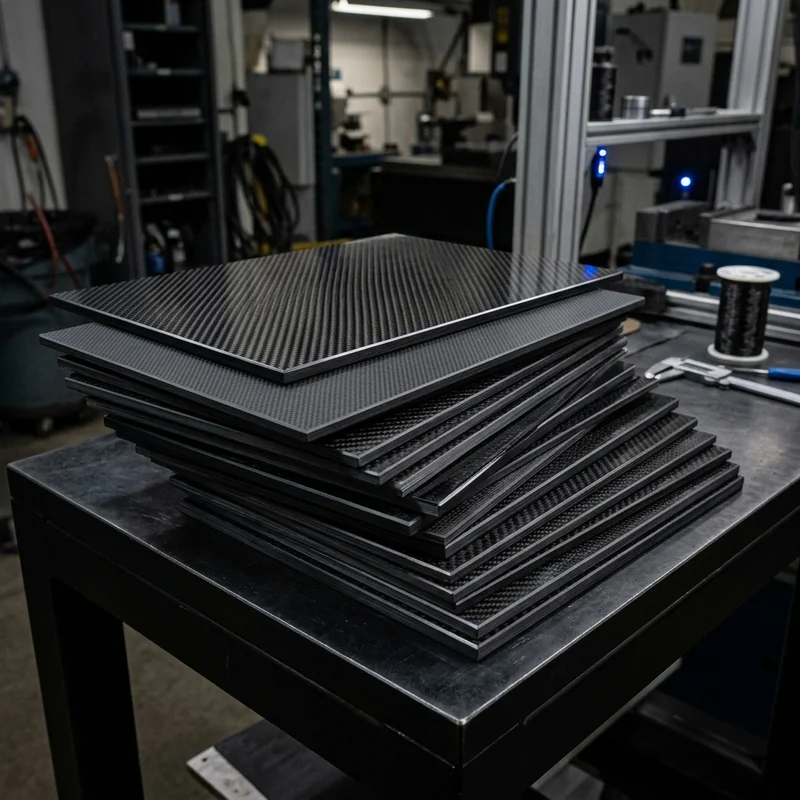
Carbon fiber standard plate-3k stripe
Lightweight, ultra-rigid standard sheets for drone fuselages, robot housings, facades and structural applications.

Carbon Fiber Plate — 3K Twill T700 1.5mm
Thin 1.5mm carbon fiber plate with 3K twill weave surface. Lightweight and stiff, commonly used for covers, panels, drone bodies, and applications requiring a premium aesthetic appearance.

Square Carbon Fiber Tube — 3K Twill T700
Square cross-section carbon fiber tube manufactured with 3K twill weave for torsional strength. Preferred for structural frames, trusses, and support columns where rectangular geometry offers design flexibility.

Carbon Fiber Plate — 3K Twill T700 3.0mm
Medium-thickness 3.0mm carbon fiber plate offering significantly higher load capacity while maintaining attractive 3K twill finish. Suitable for structural brackets, reinforcement plates, and load-bearing panels.
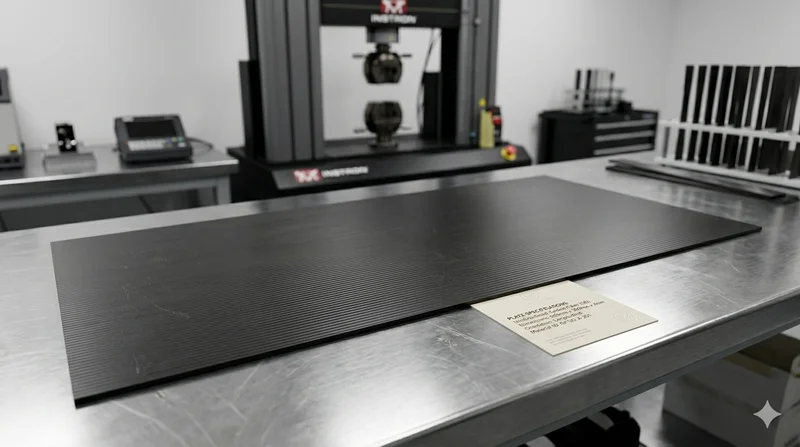
Carbon Fiber Plate — UD Unidirectional T700
Unidirectional carbon fiber plate with all fibers oriented in a single direction for maximum strength along the fiber axis. Essential for structural reinforcements, splints, and applications where load direction is predictable.