
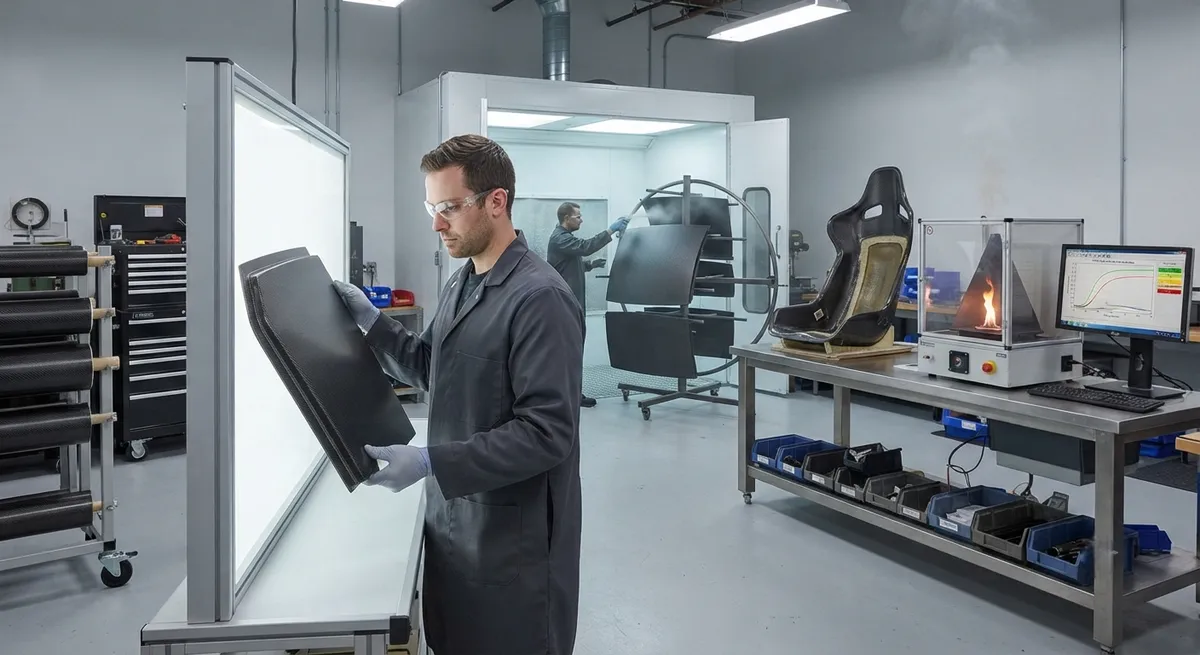
Carbon fiber composites combine high specific stiffness with weight savings and design freedom, which is why they are spreading from aerospace into railway car bodies, aircraft interiors, automotive interior panels, and battery enclosures for electric vehicles. Fire regulators, however,
Introduction
Carbon fiber composites combine high specific stiffness with weight savings and design freedom, which is why they are spreading from aerospace into railway car bodies, aircraft interiors, automotive interior panels, and battery enclosures for electric vehicles. Fire regulators, however, do not accept new materials without stringent proof of fire performance. European and Chinese railways require compliance with standards such as EN 45545-2; aircraft cabin interiors are tested against FAR 25.853 and its international equivalents; road vehicle interiors must pass tests such as FMVSS 302. This article examines the two dominant technical routes — flame-retardant chemistry inside the resin and intumescent protection systems on the surface — and the test standards that turn "fire-resistant" from a marketing claim into an auditable property.
One fact should be stated plainly at the start: carbon fiber itself does not readily ignite, but the epoxy, vinyl ester, or polyester resin in which it is embedded is combustible. The fire behavior of a carbon fiber composite is essentially the fire behavior of its resin matrix, moderated by fiber content and laminate thermal conductivity. Fire retardancy is therefore designed primarily at the resin level.
How Carbon Fiber Composites Behave in Fire
The fire performance of a composite is judged along three measurable axes, which certification tests use to accept or reject a material:
- Ignitability: how readily a sample ignites and self-extinguishes, measured in vertical or horizontal Bunsen burner tests.
- Heat release: the peak and total heat produced when the material burns, which drives fire spread in a compartment. Lower heat release means a slower-growing fire.
- Smoke and toxicity: smoke density and the concentration of toxic gases such as carbon monoxide and hydrogen cyanide, which determine whether passengers can escape.
Neat epoxy resin begins to decompose in the range of 350-450°C, releasing heat and volatile fuel. In a composite, the fibers remain intact far longer, but as the matrix decomposes the laminate loses stiffness and, critically, can delaminate: layers separate, and load-carrying capacity collapses. Fire-retardant strategy therefore has two goals: slow the ignition and heat release of the resin, and hold the laminate together long enough for passengers to evacuate.
Flame-Retardant Resin Additives
Retardancy is introduced directly into the matrix using several chemical families, each working through a different mechanism:
- Phosphorus-based systems (red phosphorus, ammonium polyphosphate, phosphonates): promote a carbon-rich char layer on the burning surface that insulates the underlying material, limits continuing fuel release, and reduces heat release. Phosphorus remains the preferred route for halogen-free composite flame retardancy.
- Metal hydroxides (aluminum hydroxide, magnesium hydroxide): decompose endothermically at 200-350°C, absorbing heat and releasing water vapor that dilutes flammable gases. They require high loadings of 40-60%, raising density and lowering mechanical performance.
- Halogenated retardants (brominated or chlorinated): very effective at low loading because they scavenge free radicals in the flame gas phase, but with smoke and recycling concerns they are increasingly restricted in rail and aviation specifications.
- Nanofillers & synergists (nanoclays, carbon nanotubes, silica): used at 1-5% loading to build a denser char, often reducing the amount of primary additive required.
The trade-off is real: flame-retardant additives can reduce flexural strength and interlaminar toughness, and can raise density or moisture absorption. A well-formulated system retains at least 70-90% of baseline mechanical properties while meeting the required fire class.
Intumescent Systems
The second protection layer works on a completely different principle. An intumescent coating expands when heated to 30-150 times its original bulk, forming a thick insulating foam char. This char layer absorbs heat, delays the substrate's temperature rise — often creating 15-60 minutes of protection depending on the coating thickness — and prevents the composite from reaching its decomposition temperature during the escape event.
- Intumescent coatings (0.5-3 mm thick): applied to finished surfaces of panels, doors, and partitions after molding. They are the most common route, are repairable, and leave the laminate chemistry untouched.
- Intumescent film interlayers: co-cured inside the laminate or bonded between plies, protecting internal surfaces that cannot be coated after assembly.
In railway projects, intumescent systems are often the decisive layer that lifts a standard structural laminate from a lower class to the HL1-HL3 hazard class the vehicle demands.
Comparing Fire-Retardant Strategies
The table below compares typical fire-retardancy routes for carbon fiber laminates on representative data (cone calorimeter at 50 kW/m²):
| Strategy | Typical Loading | UL 94 Result | Peak Heat Release (kW/m²) | Effect on Flexural Strength | Best Fit For |
|---|---|---|---|---|---|
| Unmodified epoxy baseline | — | HB to V-1 | 180-250 | Baseline | Low-fire-risk applications |
| Phosphorus additive | 10-15% | V-0 | 90-140 | -5% to -15% | Rail and aviation interiors, halogen-free requirements |
| Aluminum hydroxide (ATH) | 40-60% | V-0 | 100-160 | -15% to -25% | Cost-sensitive panels with thicker walls available |
| Phosphorus + nanofiller synergist | 10-15% + 1-3% | V-0 | 80-110 | -3% to -8% | Performance-critical structural parts |
| Intumescent coating over standard panel | 0.5-2 mm | V-0 surface barrier | Substrate char protected | Negligible (surface-only) | Retrofits and compartment barriers |
No single line is universally best; the selection balances fire class, mechanical retention, density, and processing cost.
Test Standards That Decide Compliance
The final arbiter is the test protocol. The major standards and typical acceptance levels are:
| Standard | Sector | What It Measures | Typical Acceptance Criterion |
|---|---|---|---|
| UL 94 (vertical burn) | Electronics, automotive, rail | Self-extinguishing time after ignition | V-0: stops within 10 s, no burning drips |
| EN 45545-2 (HL1-HL3) | European railways | Heat release, smoke density, toxicity, flame spread | Hazard level matched to train category |
| FAR 25.853 | Aircraft cabin interiors | Vertical burn rate, heat release, smoke | Self-extinguishing within 15 s |
| FMVSS 302 | Road vehicle interiors | Horizontal burn rate | Burn rate not exceeding 100 mm/min |
| ASTM E1354 (cone calorimeter) | Data generation for all sectors | Peak heat release, total heat, smoke | Application-specific limits |
Rail standards are generally the most demanding for composites: EN 45545-2 cuts deep on smoke and toxicity and, in higher hazard levels, requires component-scale testing in addition to coupon testing. Aviation combines small-burn tests with heat release panels that mirror an aircraft compartment.
Applications in Transportation
Fire-retardant carbon fiber composites are now established in these transport segments:
- Rail interiors: seat shells, door panels, luggage racks and ceiling panels meeting HL1-HL3, where thin carbon panels retain stiffness with minimal weight.
- Aircraft interiors: partition panels, seat structures, and cargo liners using phenolic or modified matrices with intumescent layers to satisfy FAR 25.853.
- Electric vehicle battery enclosures: flame-retardant laminates with intumescent barriers keep thermal-runaway heat out of the cabin, at 30-40% lower weight than equivalent steel housings.
- Commercial coaches and marine interiors: panels meeting FMV 302 flammability and smoke limits for public-transport interiors.
The common engineering thread: the fire requirement is satisfied at the materials level so the structural design remains open to the composite's weight and stiffness benefits.
Frequently Asked Questions
Does flame retardancy reduce the strength of carbon fiber composites?
It can, depending on the system. High loadings of metal hydroxides (40-60%) reduce flexural strength by 15-25% and raise density. Phosphorus-based systems work at 10-15% loading and typically retain 85-95% of baseline mechanical properties. Intumescent coatings applied to the surface protect the laminate with negligible effect on the laminate's own properties, because the matrix chemistry is unchanged. The design task is to pick the system that reaches the required fire class with the smallest mechanical penalty for the application.
What is the difference between an intumescent system and flame-retardant additives?
Flame-retardant additives are integral to the resin and act throughout the bulk, slowing ignition and reducing heat release wherever resin is exposed. An intumescent system is a separate thermal barrier on the surface or between plies; it swells under heat into insulating char, shielding the substrate for 15-60 minutes. The strongest designs combine both: a moderately modified matrix plus an intumescent surface layer, resisting both early ignition and prolonged heat attack.
How do fire-retardant composites compare with aluminum in a fire?
Aluminum does not burn easily, but its structural strength collapses above about 400°C, and thin aluminum structural elements can fail within 10-20 minutes of a sustained fire. Char-forming composites with intumescent protection maintain structural integrity for longer, because the char insulates and the fibers retain some residual strength. For structural parts that must survive a fire event, a fire-class composite is often the stronger choice, at the cost of higher material cost and the added requirement for certified additives.
Conclusion
Fire safety no longer disqualifies carbon fiber from transportation; it has become a solvable engineering requirement. The combination of a phosphorus-based formulation in the matrix and a thermal intumescent barrier allows rail, aviation, and road panels to meet the applicable standards — EN 45545, FAR 25.853, FMVSS 302 — without surrendering the material's mechanical advantages. The correct answer is reached by matching your target hazard class to the additive chemistry, layered protection, and mechanical budget for the load case.
YongXian supplies carbon fiber fabrics and engineering guidance for flame-retardant composite development, including materials suitable for intumescent coating and reactive matrix systems in transport interiors. Explore our carbon fiber product range or contact our engineering team to discuss a fire-class compliant program for your application.
Part of topic
Related Articles
- Carbon Fiber Drone Blades and Propellers: Stiffness, Balance and Noise Reduction
- Fiberglass Filament Wound Tubes: Cost-Effective Alternative to Carbon Fiber
- Filament Wound Epoxy Tube Design: Wall Thickness, Fiber Angle and Load Optimization
- Filament Wound Epoxy Tubes: Testing Standards and Quality Assurance
- Filament Wound Epoxy Tubes Manufacturing: Process and Quality Control
- Filament Wound Fiberglass Tube: Process Parameters and Performance vs Carbon Fiber
Interested in Our Products?
Contact our team for competitive pricing and technical specifications.
Get a QuoteRelated Products
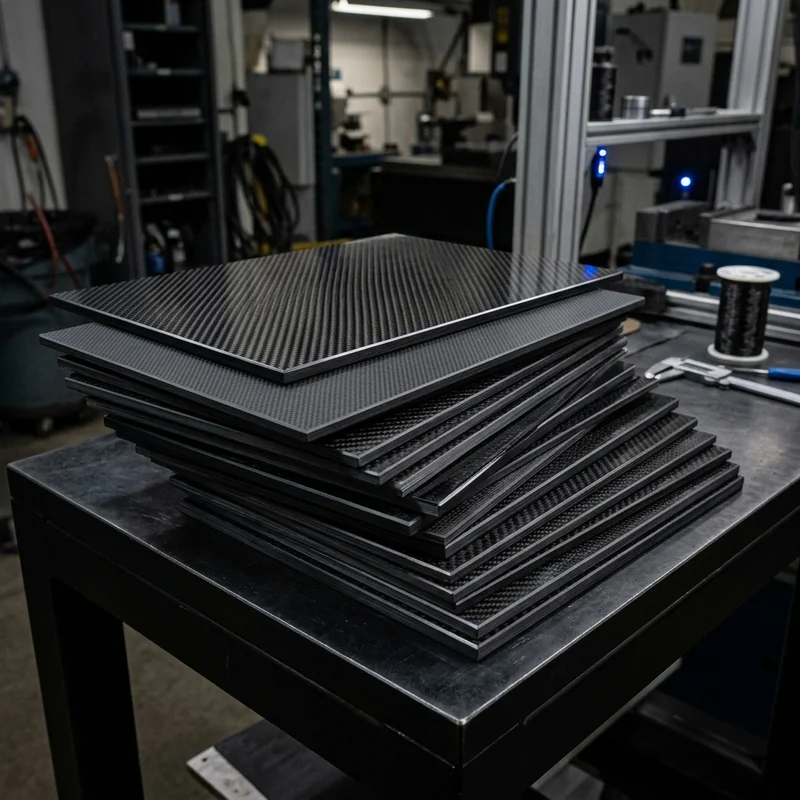
Carbon fiber standard plate-3k stripe
Lightweight, ultra-rigid standard sheets for drone fuselages, robot housings, facades and structural applications.

Carbon Fiber Plate — 3K Twill T700 3.0mm
Medium-thickness 3.0mm carbon fiber plate offering significantly higher load capacity while maintaining attractive 3K twill finish. Suitable for structural brackets, reinforcement plates, and load-bearing panels.
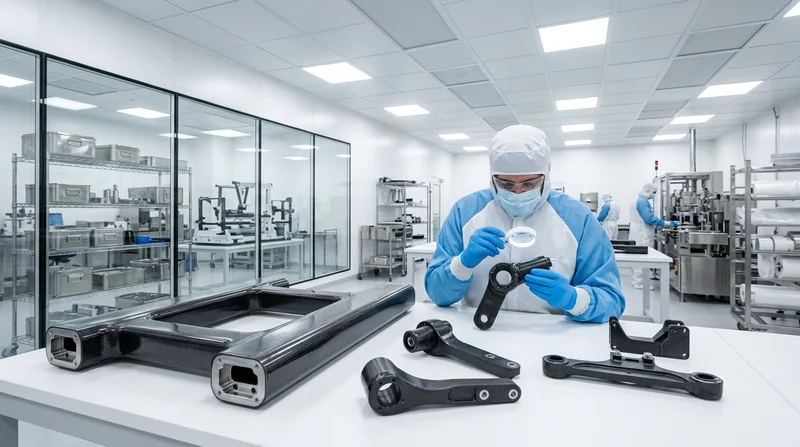
Custom Carbon Fiber Medical Device Components
Medical-grade carbon fiber components manufactured for imaging equipment, surgical instruments, and patient support systems. Carbon fiber's radiolucency (X-ray transparency) and high strength-to-weight ratio make it ideal for CT scanner beds, wheelchair frames, surgical robot arms, and MRI-compatible accessories. Biocompatible resin systems available.

Carbon Fiber Plate — 3K Twill T700 1.5mm
Thin 1.5mm carbon fiber plate with 3K twill weave surface. Lightweight and stiff, commonly used for covers, panels, drone bodies, and applications requiring a premium aesthetic appearance.
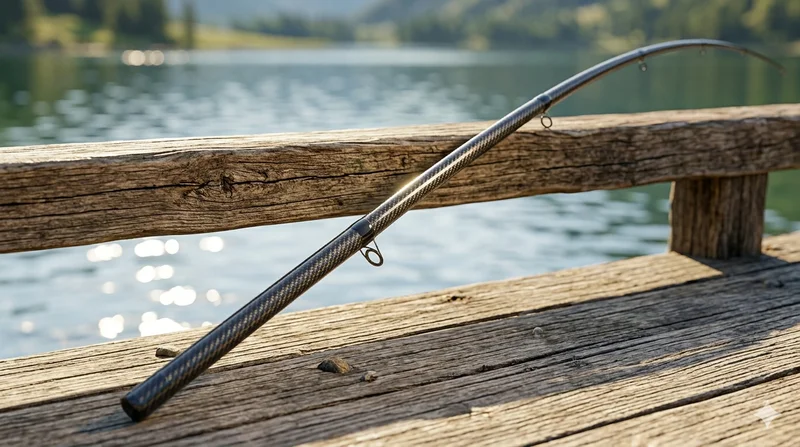
Carbon Fiber Fishing Rod Blank
High-quality carbon fiber fishing rod blank manufactured from multiple grades of Toray carbon fiber cloth. Available in a wide range of lengths, powers, and actions for freshwater and saltwater applications. Suitable for OEM rod building.