
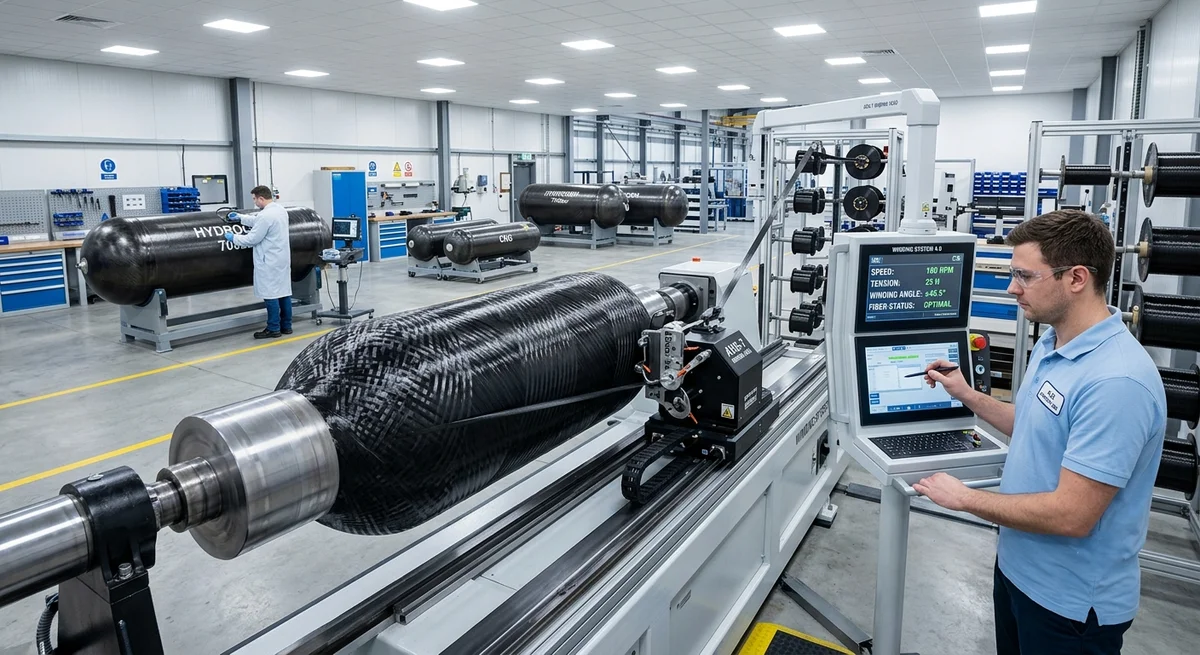
A technical deep-dive into carbon fiber filament winding process parameters for Type III and Type IV pressure vessels — winding patterns, tension control, cure optimization, and quality metrics.
Carbon Fiber Filament Winding: 2026 Process Engineering Guide
Filament winding is the primary manufacturing process for carbon fiber pressure vessels — Type III (aluminum liner + CF wrap) and Type IV (polymer liner + CF wrap). Global production of CF-wound pressure vessels reached 1.8 million units in 2025, consuming 8,500 tonnes of carbon fiber. With hydrogen storage (700 bar Type IV tanks) and CNG storage (250 bar Type III tanks) driving demand, 2026 consumption is projected at 10,200 tonnes.
Process Parameter Window for Type IV Hydrogen Tanks (700 bar)
| Parameter | Typical Range | Optimal Value | Effect on Vessel Performance |
|---|---|---|---|
| Winding tension (N per tow) | 5-25 | 12-18 (for 12K T700) | ↑tension = ↑FVF, ↑ fiber damage risk |
| Winding angle (helical, °) | 8-90 | 10-15 (dome), 85-90 (hoop) | ↓angle = ↑axial strength |
| Tow bandwidth (mm) | 3-12 | 6-8 | ↑bandwidth = ↑coverage uniformity |
| Fiber volume fraction (%) | 55-68 | 60-65 | ↑FVF = ↑burst pressure |
| Resin content (%) | 32-45 | 35-40 | Lower = higher FVF, harder wet-out |
| Cure temperature (°C) | 120-180 | 150-165 (epoxy) | ↑temp = ↑Tg, ↑thermal stress |
| Cure time (hours) | 2-8 | 4-6 | Trades rate for degree of cure |
| Gelation degree at wind-end (%) | 5-30 | 10-20 | Too low = fiber wash; too high = poor bond |
| Mandrel rotation speed (RPM) | 5-60 | 15-30 | ↑RPM = ↑productivity, ↑resin migration |
Winding Pattern Design
Three basic patterns are used in pressure vessel manufacturing:
- Helical winding (8-25°): Continuous fiber paths from dome to dome, providing axial strength. Pattern: ±α helical layers alternating. Number of circuits per layer: N = πD cos(α)/b.
- Hoop winding (85-90°): Circumferential layers for hoop strength. Pitch = bandwidth. Applied after helical layers or interleaved.
- Polar winding: Fiber passes over dome poles, used for spheres and short vessels. Requires careful dome contour design to prevent fiber bridging at polar opening.
Mechanical Properties of Wound Vessels
| Property | Type III (Al Liner + CF) | Type IV (Polymer Liner + CF) |
|---|---|---|
| Burst pressure (bar) — for 700 bar service | 2,100-2,600 | 2,000-2,500 |
| Burst-to-service pressure ratio | 3.0-3.7:1 | 2.85-3.6:1 |
| Cycle life (0-700 bar cycles to failure) | >15,000 | >11,000 |
| Weight (125 L, 700 bar tank) | 65-85 kg | 40-55 kg |
| Gravimetric capacity (kWh/kg) | 1.5-2.0 | 2.2-3.0 |
| Permeation rate (mg/L/hr) | <0.5 (metal liner) | <0.25 (with barrier layer) |
Defect Modes and Quality Control
| Defect Type | Cause | NDT Method | Acceptance Criteria (ISO 19881) |
|---|---|---|---|
| Fiber waviness | Tension variation, tow misalignment | Ultrasonic C-scan | Waviness amplitude <0.5 mm over 100 mm |
| Dry spots / voids | Insufficient resin, low wet-out | Thermography | Void content <2% by area |
| Gap / overlap variation | Traverse speed mismatch | Vision inspection | Gap <0.5 mm; overlap 0.95-1.05 |
| Delamination | Low interlayer bond | Tap test, ultrasonic | No delamination >25 mm |
| Fiber damage | High tension, sharp guides | Acoustic emission | AE events <5 during hydrotest hold |
| Dome thickness variation | Non-uniform deposition | UT thickness gauging | ±10% of nominal |
Q: What is the optimal winding tension for 700-bar Type IV hydrogen tanks using T700-12K?
A: Optimal tension is 12-18 N per tow. Below 10 N, FVF drops below 58%, reducing burst pressure by 8-12%. Above 20 N, filament damage causes 5-10% tensile strength reduction. Tension should be tapered: 15-18 N for initial helical layers, 12-15 N for hoop layers, 12 N for dome overwrap. In-process tension monitoring via load cells is standard for automated systems.
Q: How does cure cycle optimization affect burst pressure and cycle life?
A: A 2-step cure (120°C for 60 min gelation, then ramp to 165°C for 180 min full cure) produces 5-8% higher burst pressure than a single ramp to 165°C. The two-step process reduces exotherm-driven void formation (peak exotherm <10°C above setpoint) and achieves >97% degree of cure (DSC per ASTM E2160). Cycle life improves by 20-30%. Post-cure cooling should not exceed 2°C/min to prevent microcracking.
Q: What is the production rate and cost breakdown for filament-wound pressure vessels?
A: A modern 4-spindle CNC filament winder ($450K-650K) produces one 125 L Type IV tank every 35-50 minutes. Annual capacity: 4,000-7,000 tanks at 80% OEE. Cost per 125 L 700-bar tank: carbon fiber $380-520 (50-55%), polymer liner $60-90 (10-15%), resin $40-60 (6-8%), labor $30-50 (4-6%), quality/testing $25-40 (4-5%), overhead/profit $100-150 (15-20%). Total ex-works cost: $650-935 per tank. Production cost has declined 30% since 2020 due to automation and tow cost reduction (T700 now $22-28/kg vs $35-45/kg in 2020).
Part of topic
Related Articles
- Bio-Based Carbon Fiber Precursors: Lignin and Polyethylene for Low-Cost Production
- Large-Tow Carbon Fiber Cost Analysis: 48K vs 60K Price-Performance Comparison
- Carbon Fiber-Resin Interface Bonding: Surface Treatment and Coupling Agent Optimization
- Digital Twin for Carbon Fiber Manufacturing: Real-Time Process Monitoring and Defect Prevention
- Thermoplastic Carbon Fiber Welding for Automotive: Ultrasonic and Induction Welding Process Windows
- Large-Tow Carbon Fiber Wet Spinning: Process Optimization for 48K/60K Production Efficiency
Interested in Our Products?
Contact our team for competitive pricing and technical specifications.
Get a QuoteRelated Products
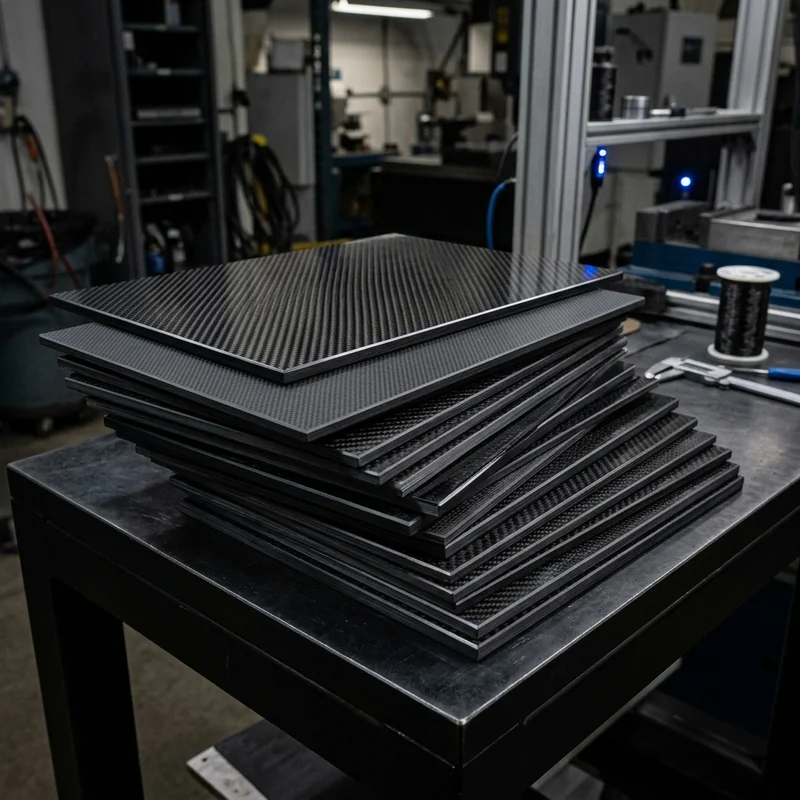
Carbon fiber standard plate-3k stripe
Lightweight, ultra-rigid standard sheets for drone fuselages, robot housings, facades and structural applications.

Carbon Fiber Plate — 3K Twill T700 1.5mm
Thin 1.5mm carbon fiber plate with 3K twill weave surface. Lightweight and stiff, commonly used for covers, panels, drone bodies, and applications requiring a premium aesthetic appearance.

Square Carbon Fiber Tube — 3K Twill T700
Square cross-section carbon fiber tube manufactured with 3K twill weave for torsional strength. Preferred for structural frames, trusses, and support columns where rectangular geometry offers design flexibility.

Carbon Fiber Plate — 3K Twill T700 3.0mm
Medium-thickness 3.0mm carbon fiber plate offering significantly higher load capacity while maintaining attractive 3K twill finish. Suitable for structural brackets, reinforcement plates, and load-bearing panels.
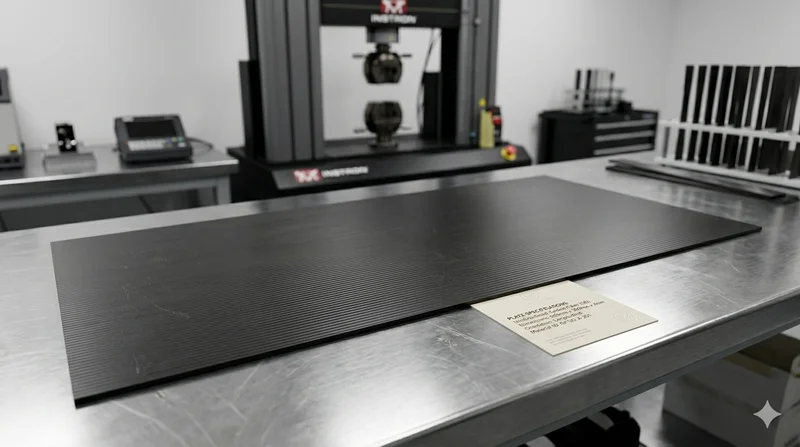
Carbon Fiber Plate — UD Unidirectional T700
Unidirectional carbon fiber plate with all fibers oriented in a single direction for maximum strength along the fiber axis. Essential for structural reinforcements, splints, and applications where load direction is predictable.