
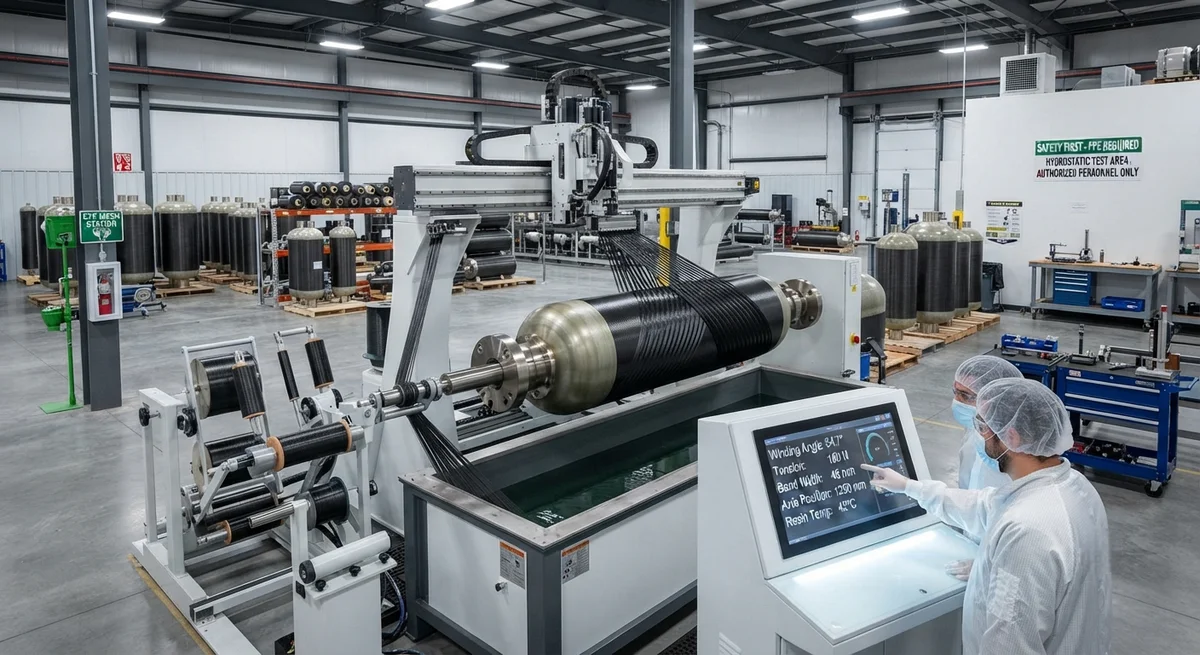
A comprehensive technical guide to international standards governing filament-wound carbon fiber pressure vessels — covering ISO 11119, ASME Section X, and DOT/CFR Title 49 requirements. Understand the certification pathways, design validation protocols, and quality assurance requirements for Type 3 and Type 4 composite pressure vessels across transportation, energy storage, and industrial gas applications.
Introduction to Composite Pressure Vessel Standards
The global transition toward cleaner energy storage and transportation systems has driven unprecedented demand for lightweight, high-pressure containment solutions. Carbon fiber filament-wound pressure vessels — classified as Type 3 (metal liner with full composite overwrap) and Type 4 (polymer liner with full composite overwrap) — have emerged as the preferred technology for compressed natural gas (CNG) storage in vehicles, hydrogen fuel cell storage at 350–700 bar, industrial gas transport tubes, and breathing air cylinders for firefighting and diving applications. However, the certification and regulatory landscape for these vessels is complex, involving multiple standards bodies, regional regulatory frameworks, and rigorous design validation protocols. The global composite pressure vessel market was valued at approximately $2.8 billion in 2025 and is projected to exceed $5.1 billion by 2032, growing at a CAGR of 8.9%, with filament-wound carbon fiber vessels accounting for over 55% of this market value.
For manufacturers and B2B buyers alike, navigating the compliance requirements of ISO 11119, ASME Section X (Boiler and Pressure Vessel Code), and DOT 49 CFR (Code of Federal Regulations, Title 49) is essential for market access across different jurisdictions. This guide provides a comprehensive technical comparison of these standards, covering design qualification, prototype testing, production quality assurance, periodic inspection intervals, and the emerging regulatory framework for hydrogen storage vessels under UN GTR No. 13 and the European EN 17339 standard.
ISO 11119: The International Framework
ISO 11119 — "Gas cylinders — Refillable composite gas cylinders and tubes" — is the most widely referenced international standard for composite pressure vessels, published in three parts covering different service conditions and liner types. ISO 11119-1 (Type 3, hoop-wrapped cylinders with seamless metal liners), ISO 11119-2 (Type 3, fully wrapped with load-sharing metal liners), and ISO 11119-3 (Type 4, fully wrapped with non-metallic liners) collectively define the design, manufacture, testing, and periodic inspection requirements for composite cylinders with water capacities up to 450 liters. The standard is recognized across the European Union (as EN ISO 11119), many Asian and African nations, and serves as the baseline for UN Model Regulations transport of dangerous goods.
Under ISO 11119-3, the design qualification process requires each cylinder design to pass a comprehensive set of prototype tests before series production can commence. Key requirements include a minimum burst pressure of 2.25 times the working pressure (design factor of 2.25 for Type 3 cylinders, 3.0 for Type 4 when used for hydrogen storage), accelerated stress rupture testing at elevated temperature (65°C at 1.25× working pressure for 1,000 hours minimum), and ambient temperature cycle tests (10,000–50,000 cycles depending on service classification). ISO 11119 also mandates extensive lot testing during production, including a burst test on one cylinder from every 200–400 cylinder production lot, with strict acceptance criteria requiring the burst pressure to exceed the minimum design burst pressure by at least 5%.
| Parameter | ISO 11119-2 (Type 3) | ISO 11119-3 (Type 4) | DOT 49 CFR §178 (Type 3/4) | ASME Section X Type 3 |
|---|---|---|---|---|
| Design Factor (Burst/Working Pressure) | 2.25 | 3.0 (H₂); 2.25 (other gases) | 3.0 (CNG); 2.25 (industrial) | 3.5 min |
| Hydraulic Proof Pressure | 1.5 × WP | 1.5 × WP | 1.5 × WP | 1.5 × MAWP |
| Fatigue Cycle Test (ambient) | 15,000 cycles (0–WP) | 15,000–50,000 cycles | 10,000–15,000 cycles | 50,000+ cycles |
| Accelerated Stress Rupture | 1.25 × WP @ 65°C × 1,000 h | 1.25 × WP @ 65°C × 1,000 h | 1.25 × WP @ 65°C × 1,000 h | Not separate — part of design qualification |
| Burst Test Minimum | 2.25 × WP (actual ≥ 2.36) | 3.0 × WP (actual ≥ 3.15) | 3.0 × WP (actual ≥ 3.15) | 3.5 × MAWP |
| Permeability Limit (methane, Type 4) | N/A | ≤0.25 mL/L·day at WP | ≤0.25 cc/L·day | Per ASME criteria |
| Lot Testing Frequency | 1 per 400 units | 1 per 200 units | 1 per 200 units | 1 per lot (defined by manufacturer) |
| Periodic Inspection Interval | 5 years (15 year max life) | 5 years (15–30 year max life) | 3–5 years (15–20 year max life) | 5 years (20+ year life typical) |
| Service Temperature Range | −40°C to +65°C | −40°C to +65°C | −40°C to +82°C | −40°C to +65°C |
ASME Section X: The U.S. Boiler and Pressure Vessel Code for Composites
The ASME Boiler and Pressure Vessel Code (BPVC) Section X — "Fiber-Reinforced Plastic Pressure Vessels" — is the definitive standard governing composite pressure vessel design and construction in the United States for stationary and certain transportable applications. Unlike ISO 11119 which is primarily focused on gas cylinders, ASME Section X covers a broader range of fiber-reinforced plastic vessels, including process equipment, chemical storage tanks, filters, and pressure vessels for stationary energy storage systems. The standard is organized into two main classes: Class I vessels (qualification through design-by-rule procedures) and Class II vessels (qualification through mandatory prototype testing and design-by-analysis). Class II is the relevant class for filament-wound carbon fiber pressure vessels, requiring each design to undergo prototype qualification testing including burst testing to 3.5 times the MAWP (maximum allowable working pressure) and cyclic fatigue testing for 50,000+ cycles.
One distinctive feature of ASME Section X is its requirement for an ASME-accredited Authorized Inspection Agency (AIA) to oversee the manufacturer's quality system. The manufacturer must hold a valid ASME Certificate of Authorization (typically "RP" — Reinforced Plastic stamp) and submit to annual audits. The design report must be certified by a registered Professional Engineer (PE) experienced in composite pressure vessel design. For hydrogen storage applications, ASME Section X is increasingly being used in conjunction with the newly published ASME BPVC Section VIII Division 3 alternative rules for high-pressure vessels (1,000–5,000 psi working pressure range).
The ASME Section X qualification matrix for filament-wound carbon fiber vessels covers six critical mechanical performance metrics. Each prototype vessel must demonstrate (1) burst pressure ≥ 3.5 × MAWP, (2) no leakage or structural damage after 50,000 cycles from 0 to MAWP at ambient temperature, (3) no failure after 100,000 cycles at 0.75 × MAWP for variable-load service, (4) accelerated stress rupture resistance at 2.7 × MAWP for 1,000 hours at 65°C, (5) impact resistance per ASME Section X Article RD-11.3 with a dropped-weight test at 24 J minimum, and (6) permeability not exceeding limits defined in Article RD-12 which vary by service fluid and liner type.
- Design Factor Requirements: ASME Section X mandates a minimum design factor of 3.5 for primary load-bearing composite layers — significantly higher than ISO 11119's 2.25–3.0. This conservative approach reflects the standard's origins in stationary industrial process equipment.
- Quality Assurance System: The ASME "RP" stamp requires documented quality manuals, material traceability (from fiber batch to finished vessel), welding procedures (for metal bosses/boss attachments), and nondestructive examination personnel qualified to ASNT SNT-TC-1A.
- Repair Procedures: ASME Section X permits limited repair of composite pressure vessels — a unique provision not found in ISO 11119 or DOT regulations — provided the repair procedure has been qualified through prototype testing.
- Stamp and Documentation: Each vessel receives an ASME nameplate with the "RP" stamp, MAWP designation, test pressure, and serial number. A manufacturer's data report is filed with the National Board of Boiler and Pressure Vessel Inspectors.
DOT/C.F.R. Title 49: Transportation Regulations
The U.S. Department of Transportation (DOT) regulations governing composite pressure vessels are codified in Title 49 of the Code of Federal Regulations (CFR), specifically Parts 107, 171–180 (Hazardous Materials Regulations, HMR). DOT 49 CFR §178.36–§178.38 and §178.68 specify the design, testing, and marking requirements for composite cylinders used in the transportation of hazardous materials, including CNG, hydrogen, compressed natural gas, and industrial gases by road, rail, and air. DOT compliance is mandatory for any composite cylinder offered for transportation in interstate commerce within the United States.
DOT regulations are notable for their strict requirements on cylinder marking (DOT 3FCM, DOT 4FCM, or DOT 4B designations depending on liner type and service), periodic requalification testing (hydrostatic retest every 3–5 years with maximum service life limited to 15–20 years depending on service type), and the prohibition of field repair. The DOT mandate that each cylinder design be originally qualified through an independent testing laboratory (e.g., the DOT-approved facility at Penn State University's Breazeale Nuclear Reactor Building) adds a significant gatekeeping element to the certification process. Recent updates to DOT 49 CFR (2024–2026 cycle) have increased the minimum design burst pressure for hydrogen storage cylinders from 2.25 to 3.0 × service pressure for Type 4 cylinders, aligning with ISO 11119-3 and facilitating international harmonization.
Comparative Manufacturing Quality Requirements
Regardless of the governing standard, filament-wound carbon fiber pressure vessel manufacturing requires rigorous process control across four critical domains. Fiber placement accuracy — the winding pattern, tension control (typically 2–10 N per tow depending on fiber count), and band width must be maintained within strict tolerances. Modern 6-axis CNC filament winding machines with robotic tension control achieve ±0.5° winding angle accuracy and ±1% tension uniformity across all tows. Resin chemistry management — including catalyst concentration, resin bath temperature, and gel time — is controlled through automated resin metering systems with continuous viscosity monitoring. Cure cycle parameters — temperature ramp rate, dwell time at cure temperature (typically 120–180°C for epoxy systems), and cooling rate — are recorded by the vessel's embedded thermocouples and verified against the qualified cure schedule. Nondestructive evaluation — including acoustic emission monitoring during proof testing, ultrasonic C-scan of critical winding zones, and in some cases computed tomography (CT) scanning for high-value hydrogen storage vessels — provides final quality confirmation.
Emerging Standards for Hydrogen Storage
The rapid growth of hydrogen fuel cell electric vehicles (FCEVs) and hydrogen refueling infrastructure has driven the development of dedicated standards for 350 bar and 700 bar Type 4 hydrogen storage vessels. UN Global Technical Regulation (GTR) No. 13 — "Hydrogen and Fuel Cell Vehicles" — establishes harmonized requirements for hydrogen container approval, incorporating a hydrogen-specific accelerated stress rupture test at 85°C (versus 65°C for CNG) to account for hydrogen embrittlement concerns in the liner and boss materials. In Europe, EN 17339 (released 2025) provides supplementary requirements for transportable hydrogen cylinders, including hydrogen permeation limits (≤0.105 mL/h per liter of water capacity at 700 bar), material compatibility testing (hydrogen exposure at 1,000 bar for 1,000 hours for liner materials), and enhanced fire resistance testing (2-minute fire exposure test at 800–1,100°C with automatic pressure relief device activation). The convergence of these standards toward a unified global framework is accelerating; the International Standards Organization's TC 58/SC 3/WG 25 is actively working on a new hydrogen-specific part of the ISO 11119 family, expected for publication in 2028.
Frequently Asked Questions
What is the difference between Type 3 and Type 4 composite pressure vessels?
Type 3 vessels have a seamless metal liner (typically 6061-T6 aluminum or 316L stainless steel) that carries approximately 30–40% of the pressure load, with a carbon fiber composite overwrap providing the remaining strength. Type 4 vessels use a non-metallic polymer liner (typically high-density polyethylene or polyamide) that serves only as a gas permeation barrier, with the composite overwrap carrying 100% of the structural load. Type 4 vessels are 20–35% lighter than Type 3 but have higher permeation requirements and higher manufacturing complexity.
Which standard should I use for hydrogen storage applications?
For stationary hydrogen storage at refueling stations, ASME Section X Type 3 (with an ASME "RP" stamp) is the preferred standard in the United States. For transportable hydrogen cylinders (in-vehicle storage), UN GTR No. 13 and ISO 11119-3 (Type 4 at 700 bar) are the emerging global benchmarks. European customers should additionally comply with EN 17339 for transportable cylinders. Most hydrogen certification bodies recommend a design factor of 3.0 or higher for Type 4 hydrogen vessels.
How long does it take to certify a new composite pressure vessel design?
The certification timeline varies by standard and complexity: ISO 11119 qualification typically takes 8–14 months from prototype fabrication to full certification; ASME Section X certification takes 12–18 months due to the required AIA involvement and PE-certified design report; DOT 49 CFR qualification takes 10–16 months including independent laboratory testing. The accelerated stress rupture test alone (1,000 hours at elevated temperature) imposes a minimum 6–8 week testing cycle regardless of standard. Total certification costs range from $150,000–$500,000 per design family, with hydrogen storage certification at the higher end due to additional material compatibility testing.
Part of topic
Related Articles
- Bio-Based Carbon Fiber Precursors: Lignin and Polyethylene for Low-Cost Production
- Large-Tow Carbon Fiber Cost Analysis: 48K vs 60K Price-Performance Comparison
- Carbon Fiber-Resin Interface Bonding: Surface Treatment and Coupling Agent Optimization
- Digital Twin for Carbon Fiber Manufacturing: Real-Time Process Monitoring and Defect Prevention
- Thermoplastic Carbon Fiber Welding for Automotive: Ultrasonic and Induction Welding Process Windows
- Large-Tow Carbon Fiber Wet Spinning: Process Optimization for 48K/60K Production Efficiency
Interested in Our Products?
Contact our team for competitive pricing and technical specifications.
Get a QuoteRelated Products
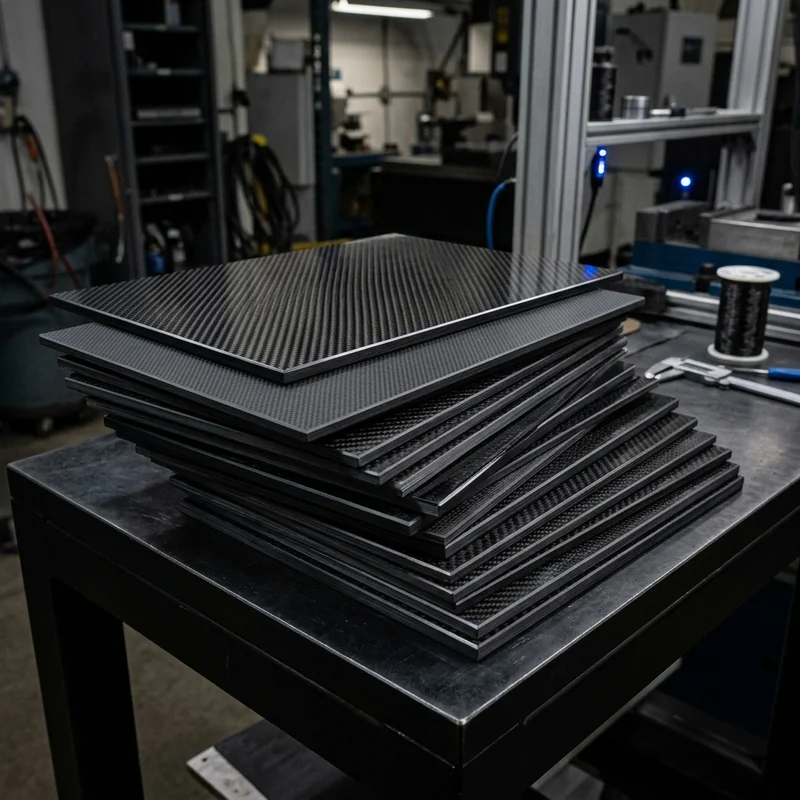
Carbon fiber standard plate-3k stripe
Lightweight, ultra-rigid standard sheets for drone fuselages, robot housings, facades and structural applications.

Carbon Fiber Plate — 3K Twill T700 1.5mm
Thin 1.5mm carbon fiber plate with 3K twill weave surface. Lightweight and stiff, commonly used for covers, panels, drone bodies, and applications requiring a premium aesthetic appearance.

Square Carbon Fiber Tube — 3K Twill T700
Square cross-section carbon fiber tube manufactured with 3K twill weave for torsional strength. Preferred for structural frames, trusses, and support columns where rectangular geometry offers design flexibility.

Carbon Fiber Plate — 3K Twill T700 3.0mm
Medium-thickness 3.0mm carbon fiber plate offering significantly higher load capacity while maintaining attractive 3K twill finish. Suitable for structural brackets, reinforcement plates, and load-bearing panels.
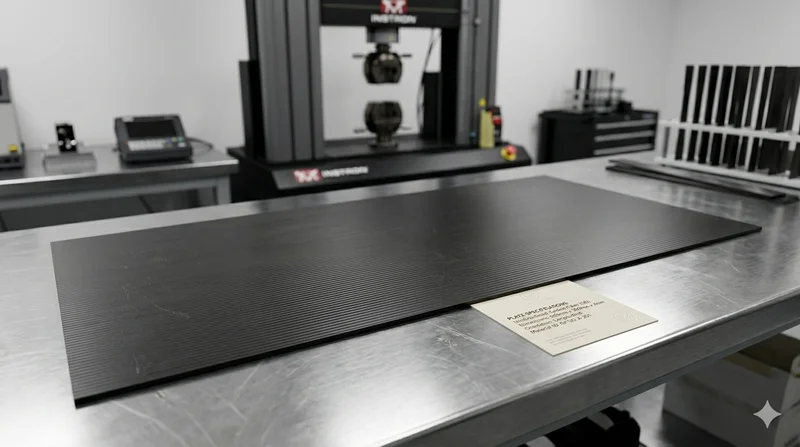
Carbon Fiber Plate — UD Unidirectional T700
Unidirectional carbon fiber plate with all fibers oriented in a single direction for maximum strength along the fiber axis. Essential for structural reinforcements, splints, and applications where load direction is predictable.