
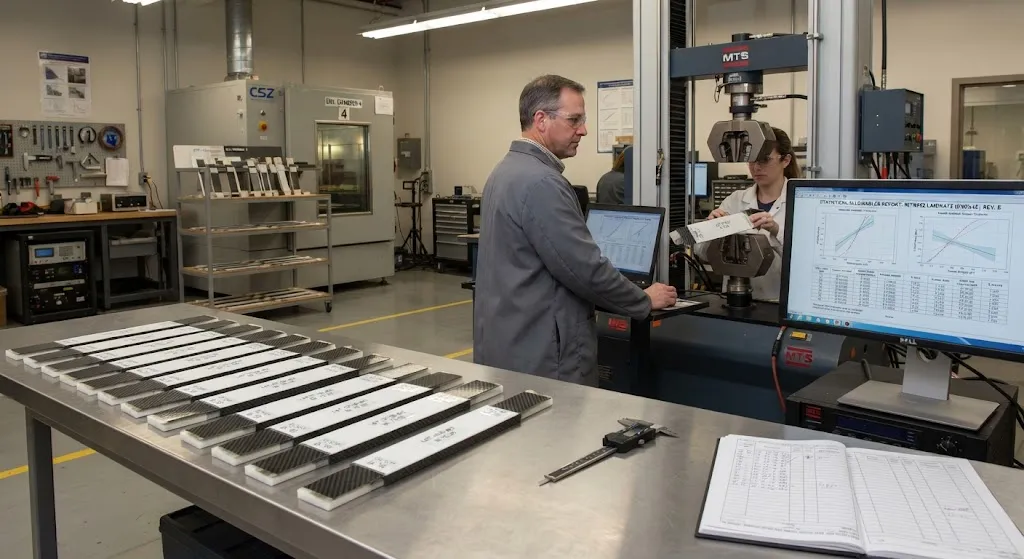
Toray's T1100G and T1200, Zhongfu Shenying's SYT80, and other ultra-high-strength fibers announced in recent years share a problem: their headline strength numbers — 7,000 to 8,000 MPa in tension — do not by themselves qualify them for use in certified aircraft structures. An aerospace
Introduction
Toray's T1100G and T1200, Zhongfu Shenying's SYT80, and other ultra-high-strength fibers announced in recent years share a problem: their headline strength numbers — 7,000 to 8,000 MPa in tension — do not by themselves qualify them for use in certified aircraft structures. An aerospace design engineer cannot design against a single data point; they design against statistically bounded properties that account for the variability of production fiber, batch to batch and lot to lot. The gate that every new fiber grade must pass is allowables qualification: a defined program of coupon testing and statistical analysis, governed by the CMH-17 handbook and accepted by certification authorities, that converts raw material data into certified design values.
This article explains how allowables are defined, how the statistical methodology works, what a realistic test matrix looks like for a new T1100/T1200-class fiber, and why this qualification is the decisive bottleneck for new fiber grades entering aerospace supply chains — the same bottleneck domestic Chinese fiber producers must clear to displace imported high-end fiber.
What Are A-Basis and B-Basis Allowables?
An allowable is a statistically defined material property value that an engineer can use in design with a known level of confidence. Two values matter in aerospace design:
- B-basis allowable: the value at which at least 90% of the population of material property values is expected to exceed, with 95% confidence. It is the default design value for most airframe structures.
- A-basis allowable: the value at which at least 99% of the population is expected to exceed, with 95% confidence. It is used for safety-critical, redundant-load-path structures where a lower probability of underestimating the material is required.
These definitions come from MIL-HDBK-17, now maintained as CMH-17 (Composite Materials Handbook). The statistical formulation assumes that test data follow a distribution — typically normal or Weibull — and the allowable is computed from the sample mean, standard deviation, and a factor that accounts for both the distribution tail and the sample size. The practical consequence is that a new fiber grade needs many more than a handful of test points: the uncertainty band narrows as the sample grows, and certification authorities require enough data to bound the lower tail with confidence.
The CMH-17 Methodology
CMH-17 volume 1, chapter 8 defines the framework for polymer-matrix composite material qualification. The methodology has three interlocking levels:
| Qualification Level | Scope | Data Required |
|---|---|---|
| Material qualification | New fiber/resin system entered into a materials database | Full allowables across all lamina properties, multiple batches |
| Statistical equivalency | Same material from a second source (e.g., new fiber producer) | Reduced test matrix compared against the qualified baseline |
| Batch-to-batch equivalency | New production batches from an approved supplier | Limited testing per batch, trending against qualified allowables |
For a new fiber grade, full material qualification is required, and its structure follows a standard path: define the material system (fiber, sizing, resin), produce representative panels, test a coupon matrix covering every lamina property of interest, pool the data across batches, fit the distribution, and compute A- and B-basis allowables for each property. The material then enters an approved materials database, and designers draw on those allowables until the database is updated.
The Coupon Test Matrix for a New Fiber Grade
The test matrix for a new unidirectional fiber grade is dominated by the standard lamina properties. For a T1100/T1200-class fiber with an aerospace-grade epoxy, a typical qualification program spans multiple lots of fiber, multiple resin batches, and a testing campaign covering the following properties:
- 0° tension and compression — the backbone properties, tested with ASTM D3039 and D3410 or D6641.
- 90° tension and compression — matrix-dominated, sensitive to interfacial quality.
- In-plane shear — ASTM D7078, capturing the shear response of the lamina.
- Open-hole tension and compression — notched behavior used directly in design.
- Bearing and filled-hole properties — for bolted joint design.
- Interlaminar fracture toughness (GIC, GIIC) — delamination resistance for thick laminates.
Each property is tested at multiple environmental conditions — room-temperature dry, elevated-temperature wet, and cold-temperature dry — because allowables are established for the design envelope, not a single condition. A realistic full qualification generates 2,000 to 4,000 coupons across all properties, conditions, and batches, which is why qualification timelines run 18 to 36 months and cost several million dollars for the full data package.
The Statistics Behind the Numbers
The statistical engine converts test data into allowables. The default approach fits a normal or two-parameter Weibull distribution to each property's data, checks goodness of fit, and computes the lower bound value. For a normal distribution, the B-basis value is approximately the mean minus k times the standard deviation, where k grows with the sample size and the desired confidence. For a Weibull distribution, the calculation uses the shape and scale parameters and the confidence level directly.
Data pooling is where fiber qualification gets demanding. Allowables are computed on pooled data across batches — which requires statistical verification that the batches belong to the same population. Between-batch variability is precisely what A- and B-basis values are meant to capture, so a new fiber producer must demonstrate consistent properties across production lots before the pooled data is accepted. For the new ultra-high-strength fibers, the challenge is sharpened by their novelty: limited historical data, evolving production processes, and batch populations that may not yet be statistically stable. The trend requirement also applies: since the T1200-class fibers were announced only recently, qualification programs must either rely on early production lots or await mature production volume.
Why Qualification Is the Competitive Bottleneck
For domestic Chinese fiber producers, allowables qualification is the decisive step between "we can make 8,000 MPa fiber" and "this fiber is approved for use in certified structures." The implications run deep:
| Stage | Typical Timeline | Gate to Pass |
|---|---|---|
| Fiber development and pilot production | 2-4 years | Stable, repeatable mechanical properties at pilot scale |
| Lamina allowables generation | 12-24 months | 2,000-4,000 coupons, multiple batches and environments |
| Statistical analysis and database entry | 6-12 months | Distribution fit, batch pooling, A-/B-basis computed |
| Subcomponent and component validation | 1-2 years | Design allowables confirmed at structural scale |
| Source approval by airframer | 6-18 months | Supplier audit, process control, long-term trending |
Even after allowables are computed, the airframer must approve the source: supplier quality systems, process control, and the long-term stability of properties across production batches. This is why new fiber grades take years to displace incumbents even when their headline properties are superior — the certification system is deliberately conservative, and it is the statistical evidence, not the marketing number, that unlocks the supply chain.
Frequently Asked Questions
What is the difference between A-basis and B-basis allowables?
B-basis is the value that at least 90% of the material population is expected to exceed, with 95% confidence, and it is the default design value for most airframe structures. A-basis is the value that at least 99% of the population is expected to exceed, with 95% confidence, and it is used for safety-critical, redundant-load-path structures where a lower probability of underestimating material strength is required. In practice A-basis values sit below B-basis values for the same material because they cut deeper into the lower tail of the property distribution. Both are computed from coupon test data with the statistical methodology defined in CMH-17.
How many test coupons are needed to qualify a new carbon fiber grade?
A full material qualification program for a new unidirectional fiber grade typically requires 2,000 to 4,000 coupons. This covers roughly ten lamina properties, each tested at multiple environmental conditions (room-temperature dry, elevated-temperature wet, cold-temperature dry), and each condition requires enough replicates for a statistically meaningful distribution — often 30 or more per batch, across multiple fiber and resin batches. The exact number depends on the material system, the intended applications, and the data requirements of the certification authority and the airframer's approved materials database.
Can a new fiber grade use equivalency testing instead of full qualification?
Yes, but only when a qualified baseline already exists. Statistical equivalency testing applies when a second source produces the same material system — for example, a new fiber producer making the same fiber grade and resin combination already qualified by another supplier. In that case a reduced test matrix is compared statistically against the qualified baseline data to demonstrate that the new source's properties are not lower. For an entirely new fiber grade, such as a new T1200-class fiber with no existing database entry, there is no baseline to compare against, and full material qualification is required. Batch-to-batch equivalency, with limited testing per new production lot, applies only after the material is already qualified and in the database.
Why do T1100 and T1200 fibers need allowables when their tensile strength is so high?
Because design does not use the mean or the headline value — it uses the statistically bounded lower tail. An 8,000 MPa mean tensile strength tells an engineer nothing about what the weakest production batch will deliver, especially for a fiber family with limited production history and evolving process control. The B-basis and A-basis values for a new ultra-high-strength fiber may sit substantially below the mean, and until that gap is quantified with data, the fiber cannot be certified for structures. High headline strength also brings a secondary challenge: these fibers are typically stiffer and more brittle, which affects compression, shear, and notched behavior — properties that must be measured, not assumed, before a designer can use them.
Conclusion
Allowables qualification is the statistical contract between a fiber producer and a certified structure. A-basis and B-basis values, computed from thousands of coupons by the CMH-17 methodology, translate raw fiber performance into design values an engineer can trust, and they are the gate that every new T1100/T1200-class fiber must pass before entering an aerospace supply chain. For new fiber producers, the path is long — 18 to 36 months of testing and analysis, source approval by airframers, and demonstrated batch consistency — but it is the only path that turns headline strength into certified revenue.
For design engineers and material specialists evaluating new ultra-high-strength fibers, the practical shortcut is a supplier with documented qualification data and batch-consistent product. Explore our carbon fiber sheet, fabric, and unidirectional laminate range with published mechanical properties, or contact our engineering team for material data sheets and qualification support.
Part of topic
Related Articles
- Filament Wound Epoxy Tubing: Selection Guide for Industrial and Aerospace Applications
- Filament Wound Epoxy Tubes Advantages: Over Metal and Pultruded Alternatives
- Carbon Fiber Tube Strength: Analysis Methods and Design Allowables
- Filament Wound Epoxy Tubes: Mechanical Properties and Material Data Sheets
- Carbon Fiber Drone Blades and Propellers: Stiffness, Balance and Noise Reduction
- Fiberglass Filament Wound Tubes: Cost-Effective Alternative to Carbon Fiber
Interested in Our Products?
Contact our team for competitive pricing and technical specifications.
Get a QuoteRelated Products
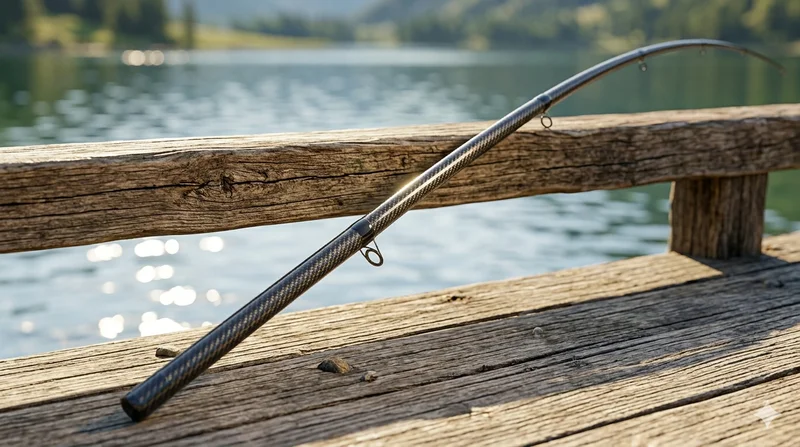
Carbon Fiber Fishing Rod Blank
High-quality carbon fiber fishing rod blank manufactured from multiple grades of Toray carbon fiber cloth. Available in a wide range of lengths, powers, and actions for freshwater and saltwater applications. Suitable for OEM rod building.

Carbon Fiber Plate — 3K Twill T700 1.5mm
Thin 1.5mm carbon fiber plate with 3K twill weave surface. Lightweight and stiff, commonly used for covers, panels, drone bodies, and applications requiring a premium aesthetic appearance.

Carbon Fiber Plate — 3K Twill T700 3.0mm
Medium-thickness 3.0mm carbon fiber plate offering significantly higher load capacity while maintaining attractive 3K twill finish. Suitable for structural brackets, reinforcement plates, and load-bearing panels.
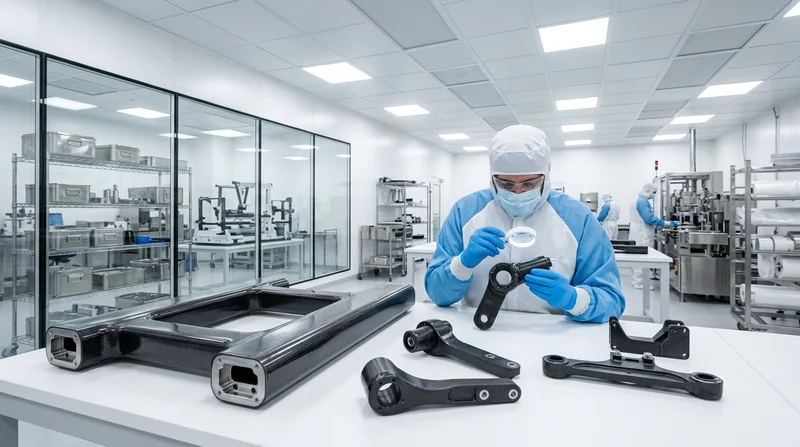
Custom Carbon Fiber Medical Device Components
Medical-grade carbon fiber components manufactured for imaging equipment, surgical instruments, and patient support systems. Carbon fiber's radiolucency (X-ray transparency) and high strength-to-weight ratio make it ideal for CT scanner beds, wheelchair frames, surgical robot arms, and MRI-compatible accessories. Biocompatible resin systems available.

Square Carbon Fiber Tube — 3K Twill T700
Square cross-section carbon fiber tube manufactured with 3K twill weave for torsional strength. Preferred for structural frames, trusses, and support columns where rectangular geometry offers design flexibility.