
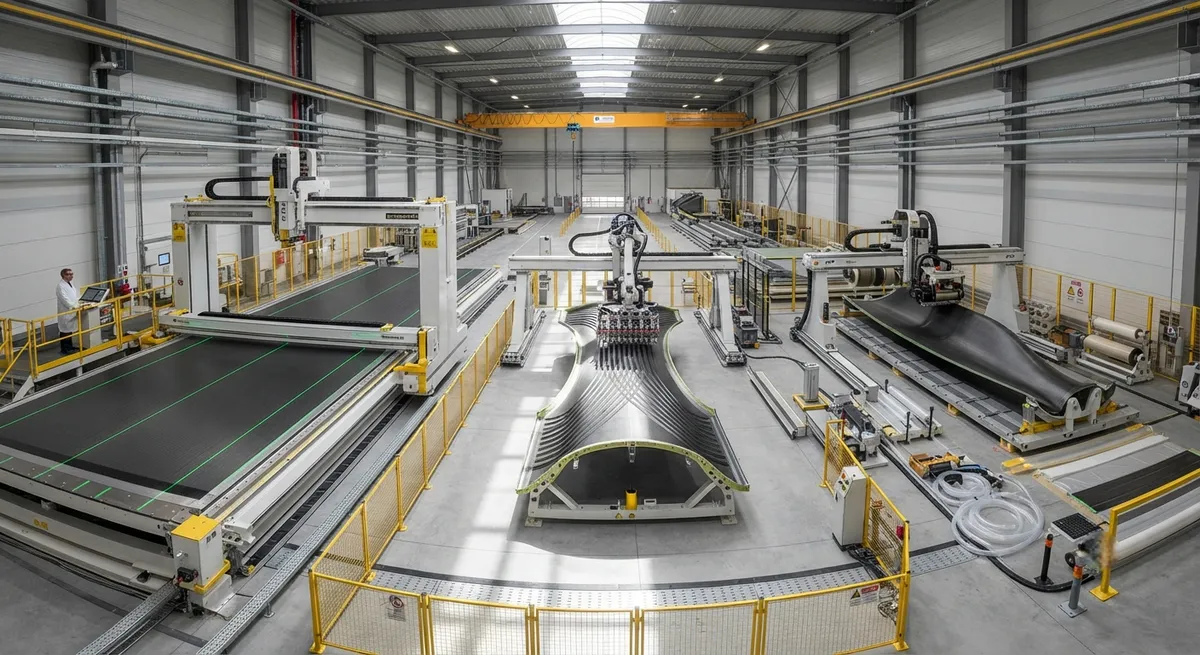
A detailed comparison of ATL, AFP, and Dry Fiber Placement technologies for aerospace composite manufacturing. Analysis covers deposition rates, material utilization (85–99%), capital equipment costs, and technology selection guidelines for production applications.
Overview of Automated Deposition Technologies
The aerospace industry's increasing adoption of large composite structures—from the Boeing 787 fuselage sections to the Airbus A350 wing covers—has driven continuous evolution in automated fiber deposition technologies. Three primary processes dominate the manufacturing landscape: Automated Tape Laying (ATL), Automated Fiber Placement (AFP), and the emerging Dry Fiber Placement (DFP) technology. Each system presents distinct advantages in terms of material utilization, deposition rate, and capital equipment cost that directly impact aerospace production economics.
Understanding the technical differences between these processes is critical for aerospace manufacturers selecting deposition technology for specific application requirements. This comparison evaluates each technology across multiple performance dimensions using current industry data from production-scale installations.
| Parameter | ATL (Automated Tape Laying) | AFP (Automated Fiber Placement) | DFP (Dry Fiber Placement) |
|---|---|---|---|
| Typical Material Width | 75–300 mm (3–12 in) | 3.2–12.7 mm (⅛–½ in) | 6.4–25.4 mm (¼–1 in) |
| Deposition Rate (kg/h) | 15–50 | 5–20 | 8–30 |
| Material Utilization Rate | 85–92% | 92–98% | 95–99% |
| Capital Equipment Cost ($M) | 2.0–4.5 | 1.5–3.5 | 1.8–3.8 |
| Layup Surface Curvature | Gentle only (R > 3 m) | Complex (R > 0.5 m) | Moderate (R > 1.0 m) |
| Tow Steering Capability | Limited | Excellent | Good |
| Post-Processing Required | Autoclave cure | Autoclave cure | Resin infusion + cure |
| Tooling Complexity | Moderate | High | Moderate-High |
| Operator Training (months) | 3–6 | 6–12 | 4–8 |
Automated Tape Laying (ATL)
ATL represents the most mature automated deposition technology, with industrial applications dating back to the 1970s. The process uses wide prepreg tape rolls (75–300 mm width) applied by a computer-controlled gantry or robotic head. The tape is fed from a spool through a heated compaction roller that applies the material to the tool surface while a backing film is removed and collected.
ATL systems excel in manufacturing large, gently curved components where the wide tape width provides high deposition rates. Typical applications include wing skins, fuselage panels, and spar caps. The primary limitation is geometric constraint—ATL cannot navigate tight radii or complex contours due to the wide tape format, which restricts in-plane curvature to approximately 3-meter minimum radius for standard systems.
Material utilization in ATL typically ranges from 85% to 92%, with waste generated primarily at panel edges where tape must be trimmed to match part contours. Modern ATL systems incorporate laser projection ply boundary verification and automated scrap management systems that have improved utilization by 5–8% compared to earlier generations. Deposition rates for production ATL systems range from 15 to 50 kg/h depending on material width and layup speed.
Automated Fiber Placement (AFP)
AFP technology uses multiple narrow tow bands (typically 3.2–12.7 mm width) applied simultaneously through a robotic placement head. The system can independently start, cut, and restart each tow, enabling precise ply shape definition and fiber orientation control. Modern AFP heads commonly handle 8 to 32 individual tows simultaneously, with some production systems operating 32 tows at deposition rates approaching 20 kg/h.
The key advantage of AFP lies in its ability to produce complex geometries with tight radii and variable thickness profiles. Tow steering—the controlled curvilinear placement of individual tows—enables load-optimized fiber paths that follow principal stress trajectories, significantly improving structural efficiency compared to conventional straight-fiber laminates. This capability has made AFP the preferred process for fuselage sections (Boeing 787, Airbus A350), engine fan cases, and complex stiffener geometries.
Material utilization for AFP reaches 92–98%, the highest among prepreg-based processes. The narrow tow format minimizes edge trim waste, and the cut-restart capability allows precise ply shape definition. However, the multiple tow end management adds system complexity and maintenance requirements. Gaps and overlaps between adjacent tows must be carefully managed, typically within ±0.5 mm tolerance, to prevent porosity or resin-rich zones in the cured laminate.
Dry Fiber Placement (DFP) — The Emerging Alternative
Dry Fiber Placement represents the newest entrant among automated deposition technologies, combining elements of AFP with dry fiber reinforcement and liquid resin infusion. Rather than using pre-impregnated (prepreg) material, DFP deposits dry carbon fiber tow that is subsequently infused with resin using vacuum-assisted resin transfer molding (VARTM) or similar infusion processes.
The fundamental advantage of DFP is material utilization approaching 99% because dry fiber tow is more forgiving of rework than prepreg material—misplaced tows can be readjusted before resin infusion without compromising material properties. Additionally, dry fiber offers unlimited room-temperature shelf life, eliminating the cold storage logistics and out-time tracking requirements that add 15–25% to prepreg material costs.
Deposition rates for current production DFP systems range from 8 to 30 kg/h, placing them between AFP and ATL in throughput. The process is particularly well-suited for very large structures (wind turbine blades, marine vessel hulls, large aerospace assemblies) where autoclave curing is impractical. Several OEMs are evaluating DFP for next-generation aircraft programs where the combination of high deposition rate and low tooling cost could reduce overall manufacturing cost by 20–30% compared to AFP-autoclave processing.
Comparative Cost Analysis
| Cost Factor | ATL | AFP | DFP |
|---|---|---|---|
| Capital Equipment ($M) | 2.0–4.5 | 1.5–3.5 | 1.8–3.8 |
| Material Cost Premium vs Prepreg | Baseline | +0–5% | −10–20% |
| Autoclave Cycle Cost ($/part) | $800–2,500 | $800–2,500 | $0 (out-of-autoclave) |
| Tooling Cost ($/part amortized) | $50–150 | $80–250 | $30–80 |
| Cold Storage Logistics (% total cost) | 15–25% | 15–25% | 0% |
| Total Manufacturing Cost (relative) | 1.0x (baseline) | 0.85–1.0x | 0.7–0.85x |
Technology Selection Guidelines
The optimal deposition technology depends on specific part geometry, production volume, and cost targets:
- Choose ATL for large, gently curved panels (wing skins, fuselage panels) at high production volumes where maximum deposition rate is prioritized over geometric complexity.
- Choose AFP for complex geometries requiring tow steering, ply drop-offs, and variable thickness profiles (fuselage sections, engine components, complex stiffeners).
- Choose DFP for very large structures where autoclave curing is impractical, or for programs where out-of-autoclave processing and reduced material costs are primary drivers.
- Consider hybrid approaches combining ATL (for flat/gentle areas) with AFP (for complex features) within a single manufacturing cell to optimize throughput and material utilization across the part.
Frequently Asked Questions
Which technology offers the highest deposition rate?
ATL currently offers the highest deposition rate at 15–50 kg/h, followed by DFP at 8–30 kg/h, and AFP at 5–20 kg/h. However, effective throughput must account for material utilization—AFP's higher utilization (92–98% vs ATL's 85–92%) means less material waste, which can make AFP more economical for complex geometries despite lower raw deposition rates.
Can dry fiber placement replace AFP for aerospace applications?
Not entirely. DFP is well-suited for large, primarily two-dimensional structures where out-of-autoclave processing offers cost advantages. However, AFP remains necessary for complex three-dimensional geometries requiring precise tow steering, aggressive ply drop-offs, and tight radius capability. Current aerospace certification frameworks are also more established for prepreg-autoclave processing, creating a regulatory inertia that favors AFP for safety-critical primary structures.
What is the capital investment required for transitioning from ATL to AFP or DFP?
Transitioning from ATL to AFP typically requires $1.5–3.5 million for a new AFP system plus associated tooling upgrades, totaling $2–5 million per deposition cell. Transitioning to DFP involves similar equipment costs ($1.8–3.8 million) plus resin infusion system integration ($200,000–500,000). The total investment is typically recovered within 2–4 years through improved material utilization, reduced autoclave energy costs, and elimination of cold storage logistics in the case of DFP.
Part of topic
Related Articles
- Bio-Based Carbon Fiber Precursors: Lignin and Polyethylene for Low-Cost Production
- Large-Tow Carbon Fiber Cost Analysis: 48K vs 60K Price-Performance Comparison
- Carbon Fiber-Resin Interface Bonding: Surface Treatment and Coupling Agent Optimization
- Digital Twin for Carbon Fiber Manufacturing: Real-Time Process Monitoring and Defect Prevention
- Thermoplastic Carbon Fiber Welding for Automotive: Ultrasonic and Induction Welding Process Windows
- Large-Tow Carbon Fiber Wet Spinning: Process Optimization for 48K/60K Production Efficiency
Interested in Our Products?
Contact our team for competitive pricing and technical specifications.
Get a QuoteRelated Products
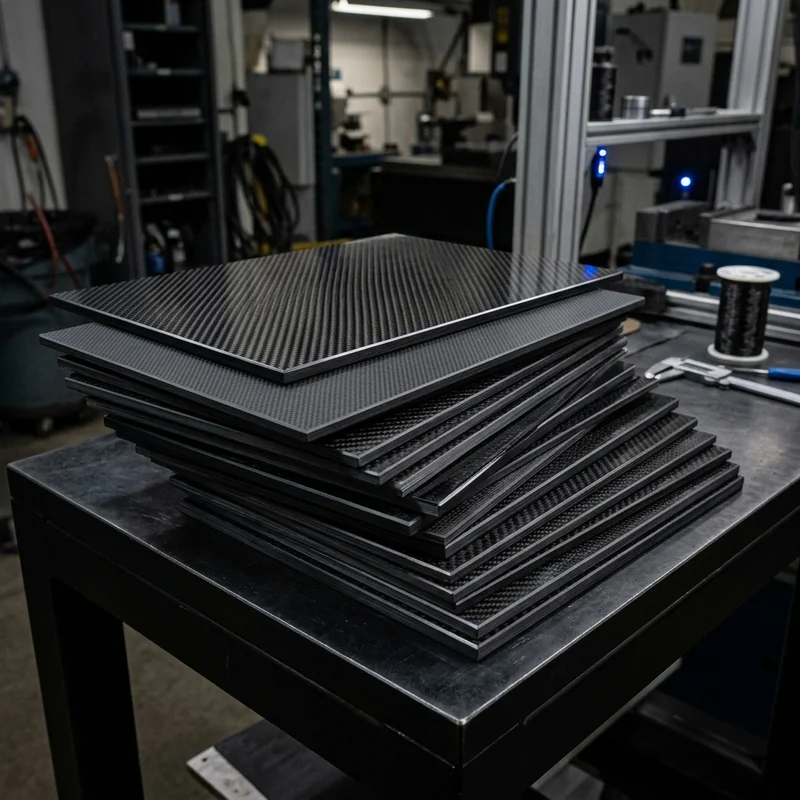
Carbon fiber standard plate-3k stripe
Lightweight, ultra-rigid standard sheets for drone fuselages, robot housings, facades and structural applications.

Carbon Fiber Plate — 3K Twill T700 3.0mm
Medium-thickness 3.0mm carbon fiber plate offering significantly higher load capacity while maintaining attractive 3K twill finish. Suitable for structural brackets, reinforcement plates, and load-bearing panels.

Carbon Fiber Plate — 3K Twill T700 1.5mm
Thin 1.5mm carbon fiber plate with 3K twill weave surface. Lightweight and stiff, commonly used for covers, panels, drone bodies, and applications requiring a premium aesthetic appearance.
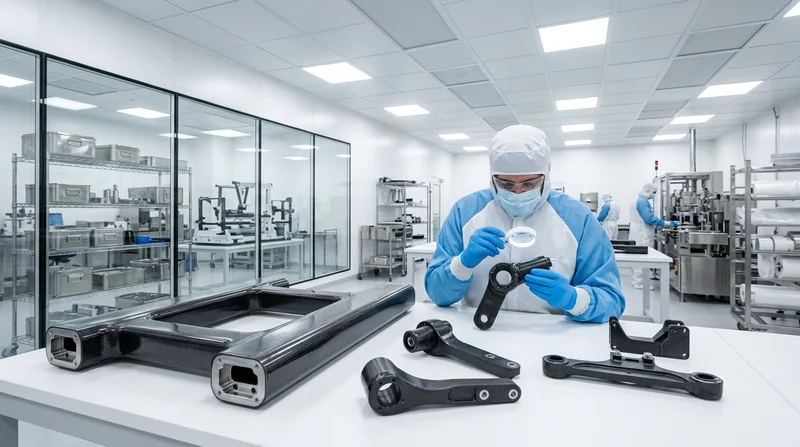
Custom Carbon Fiber Medical Device Components
Medical-grade carbon fiber components manufactured for imaging equipment, surgical instruments, and patient support systems. Carbon fiber's radiolucency (X-ray transparency) and high strength-to-weight ratio make it ideal for CT scanner beds, wheelchair frames, surgical robot arms, and MRI-compatible accessories. Biocompatible resin systems available.

Square Carbon Fiber Tube — 3K Twill T700
Square cross-section carbon fiber tube manufactured with 3K twill weave for torsional strength. Preferred for structural frames, trusses, and support columns where rectangular geometry offers design flexibility.