Carbon fiber nonwoven mat custom means the mat is built to your specification rather than selected from a stock list: areal weight, thickness, fiber length, blend, binder, porosity and roll format are set by the buyer. Nonwoven mat is the inexpensive, conformable face of carbon fiber — used for surf
Introduction
Carbon fiber nonwoven mat custom means the mat is built to your specification rather than selected from a stock list: areal weight, thickness, fiber length, blend, binder, porosity and roll format are set by the buyer. Nonwoven mat is the inexpensive, conformable face of carbon fiber — used for surface layers, flow media, insulation, friction linings and composite skins where a woven fabric would be too stiff or too costly. Because the material is made from chopped or reclaimed fiber rather than continuous tow, small changes in fiber length and binder shift permeability, drape and strength far more than they shift price, which makes custom mat a practical order for converters and molders alike.
This guide covers the parameters that matter, how they interact, and the commercial terms for a made-to-order run from a Chinese nonwoven producer. It is about building the mat, not slitting a stock roll to width; cutting a standard mat to size is a simpler, separate job.
What carbon fiber nonwoven mat custom covers
A mat specification is a set of six coupled decisions. Changing areal weight without touching fiber length or binder yields a mat that weighs right but drains resin at the wrong rate.
| Parameter | Standard supply | Custom range | Effect downstream |
|---|---|---|---|
| Areal weight | 30, 50, 100 g/m² | 15 to 400 g/m² | Resin uptake, thickness, surface texture |
| Thickness | 0.3 to 1.0 mm | 0.15 to 5 mm | Drape, loft, thermal resistance |
| Fiber length | 12 to 25 mm chopped | 3 to 60 mm, or milled | Formability, strength, surface finish |
| Fiber source | Virgin 12K chopped | Virgin, recycled, or blend | Cost, consistency, lot traceability |
| Binder | Polyester powder, 8 to 12% | Epoxy, polyester, PVA, 3 to 20% | Handling strength, resin compatibility |
| Roll format | 1 m wide, 50 m roll | 0.2 to 2.2 m wide, 10 to 200 m | Cut waste, line width, handling |
Two specifications are commonly confused: areal weight and thickness. A 100 g/m² mat can be lofted or calendered, and the versions differ in thickness by a factor of two at identical weight. If your process controls resin film thickness or mold closure, specify both numbers and the tolerance on each.
Areal weight and thickness: the core of carbon fiber nonwoven mat custom
Areal weight sets resin demand. A 30 g/m² surface veil wets out with a thin resin film and leaves the weave or layup underneath visible; a 300 g/m² mat absorbs several times its own weight in resin and builds bulk quickly, which suits tooling boards, insulation and thick laminates but adds weight and exotherm. When a molder asks for heavier mat to cut labor, the question is whether the resin can wet the full loft before gel time.
Thickness is controlled by needling or calendering, not by weight alone. Needle-punched mat is lofted, permeable and good for flow media and thermal barriers; calendered mat is dense, smoother and better for surface finish and friction parts. Specify the measurement method too — a thickness gauge under 2 kPa reads differently from one under 20 kPa, and the gap matters more than the number itself.
- Surface veil, 15 to 40 g/m²: improves finish and corrosion resistance without adding structural weight.
- Chopped strand mat, 50 to 150 g/m²: general laminating, hand layup, RTM skins.
- Needle-punched felt, 150 to 400 g/m²: flow media, insulation, thick conformable layers.
- Milled fiber mat, 100 to 300 g/m²: fine surface, low porosity, friction and sealing uses.
Ask for the areal weight tolerance, typically plus or minus 5 percent, and the thickness test method; without both, two suppliers can quote the same number and deliver mats that behave differently.
Binder, fiber blend and surface options
Binder holds the mat together before resin arrives. Polyester powder is the default because it is cheap and softens predictably; epoxy binder is chosen when the mat will be infused with epoxy and the buyer wants no incompatible interlayer; PVA is used where a water-soluble temporary bond is needed. Binder above 15 percent stiffens the mat and can lower interlaminar properties; below 5 percent sheds fiber on the line.
| Option | What it changes | Best fit |
|---|---|---|
| Epoxy powder binder | Compatibility with epoxy infusion | Aerospace and structural skins |
| Polyester binder | Low cost, general handling strength | Industrial laminates, tooling |
| PVA temporary binder | Water-soluble, minimal residue | Preforms washed before infusion |
| Recycled fiber blend | Lower cost, variable lot properties | Non-structural panels, insulation |
| Glass or aramid blend | Toughening, dielectric behavior | Impact skins, radomes |
Recycled content deserves an explicit decision. Recycled mat can cut fiber cost substantially, but tensile and permeability vary more between lots because fiber length and sizing are less controlled. Use it where the property is not structural, and ask for a lot-level data sheet rather than a generic one.
Applications that justify carbon fiber nonwoven mat custom
Custom mat pays when the process depends on permeability, drape or surface character that a stock mat cannot deliver.
- Surface veils: a 20 to 30 g/m² veil gives a resin-rich, pinhole-free finish over woven skins.
- Flow media in infusion: needle-punched mat with defined permeability distributes resin across large panels.
- Thermal insulation: lofted 200 to 400 g/m² felt insulates hot tooling and battery enclosures.
- Friction and sealing: dense calendered mat with milled fiber gives stable friction and low porosity.
- Tooling boards and backing: heavy mat builds thickness cheaply where strength is secondary.
Each use fixes a different parameter. A veil buyer should specify surface smoothness and pinhole count, not tensile strength; a flow media buyer should specify permeability and compressibility, not areal weight alone. Writing the function into the inquiry is what allows the producer to tune the right variable.
MOQ, pricing and lead time
Mat is made on a wet-laid or needle-punch line with a minimum economical run, so custom specification carries a floor even when the fiber is stock.
| Customization | MOQ | Setup charge | Indicative lead time |
|---|---|---|---|
| Width and roll length only | 100-200 kg | Low | 2-3 weeks |
| Areal weight change within line range | 200-300 kg | Low to moderate | 3-4 weeks |
| Binder change | 300-500 kg | Binder preparation | 4-5 weeks |
| Recycled or blended fiber | 500-1000 kg | Fiber lot sourcing | 4-6 weeks |
| Qualification lot | 20-50 kg | Sampling charge | 2-4 weeks |
Price follows fiber cost first, then areal weight (heavier mat consumes more fiber per square meter), then binder and finishing. Setup charges dominate small runs, so a 30 kg trial can cost two to three times more per kilogram than a 500 kg lot. Ask for the setup charge separately and ask which volume removes it.
Qualifying a custom mat lot
- Areal weight: cut three 100 cm² samples per roll and weigh; verify against the agreed tolerance.
- Thickness and loft: measure under the specified pressure at five points across the width.
- Binder content: burn-off test on two samples; confirm the percentage and that no incompatible binder was substituted.
- Permeability or wet-out: run a small infusion or droplet test at production resin viscosity.
- Handling: unroll and drape over a representative mold; check for shedding, cracking at the fold and binder flake-off.
Qualify on the process that will consume the mat. A mat that wets out in a cup test can still leave dry patches in a large panel because permeability and vacuum pressure interact, and a mat that drapes well flat can crack over a tight radius.
Frequently Asked Questions
What is the minimum order for carbon fiber nonwoven mat custom?
Width and roll-length changes usually start at 100 to 200 kg, areal weight changes at 200 to 300 kg, and binder changes at 300 to 500 kg because the binder system is prepared for a full run. Recycled or blended fiber raises the minimum to 500 to 1000 kg, while a 20 to 50 kg qualification lot is normally possible against a sampling charge.
Is heavier mat always stronger?
No. Areal weight adds fiber mass, but strength depends on fiber length, orientation and binder content. A 300 g/m² mat with short milled fiber can be weaker in tension than a 100 g/m² mat with longer chopped fiber, and excess binder can embrittle the layer. Specify the property you need, such as tensile or interlaminar strength, and let the producer adjust weight and fiber length together.
Can one roll combine different areal weights?
Not within a continuous roll, because the line runs one specification at a time. You can order multiple rolls with different weights in one lot, or ask for a graded roll only if the producer explicitly offers a splice — and then accept a marked transition zone. For most processes, separate rolls per weight are cleaner and avoid a hidden weak band in the laminate.
Conclusion
Carbon fiber nonwoven mat custom is a permeability and surface decision as much as a weight decision: fix areal weight and thickness with their tolerances, choose binder for the resin you will infuse, and qualify on the line that will run it. Setup charges are small compared with dry patches, resin-rich voids or a mat that sheds fiber at the cutter. To compare mat grades and custom options, browse the carbon fiber products catalog or contact the technical sales team with your process, resin system and annual volume, and you will receive a written specification and a trial plan.
Part of topic
Related Articles
- Carbon Fiber Sheet for Furniture: Design, Specs and Sourcing | YongXian
- Carbon Fiber Plate for Medical Device: Design, Specs and Sourcing | YongXian
- Carbon Fiber Sheet for Sporting Goods: Design, Specs and Sourcing | YongXian
- Carbon Fiber Sheet for Automotive Parts: Design, Specs and Sourcing | YongXian
- Carbon Fiber Rod for Fishing Rod Blank: Design, Specs and Sourcing | YongXian
- Carbon Fiber Plate for Robotics: Design, Specs and Sourcing | YongXian
Interested in Our Products?
Contact our team for competitive pricing and technical specifications.
Get a QuoteRelated Products
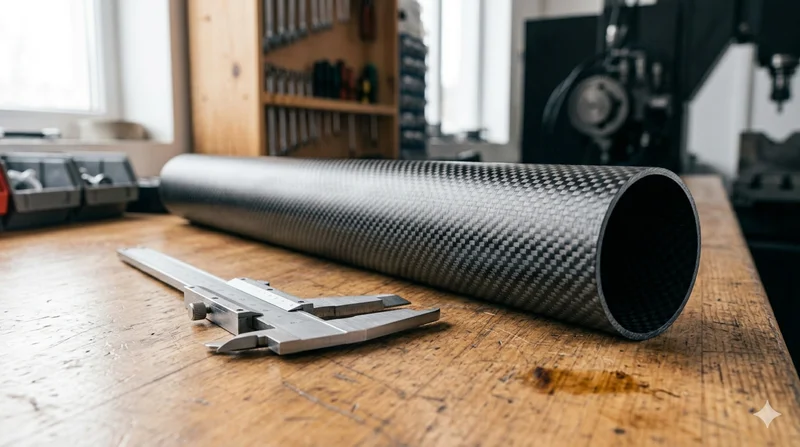
Round Carbon Fiber Tube — 3K Plain Weave T700
Standard round carbon fiber tube manufactured from Toray T700 grade fiber with 3K plain weave. Offers balanced strength and stiffness for general industrial applications including robotics, automation, sports equipment, and aerospace structures.
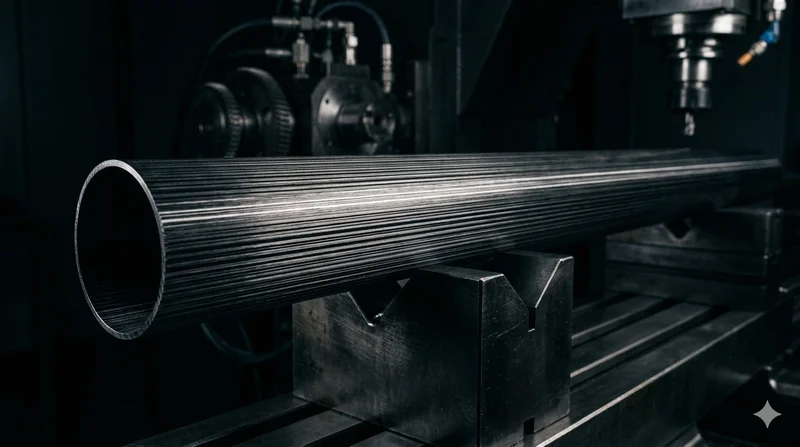
Round Carbon Fiber Tube — UD Unidirectional T700
Unidirectional (UD) round tube with all fibers aligned axially for maximum longitudinal stiffness. Ideal for applications requiring high bending rigidity with minimal weight, such as shafts, struts, and structural reinforcements.
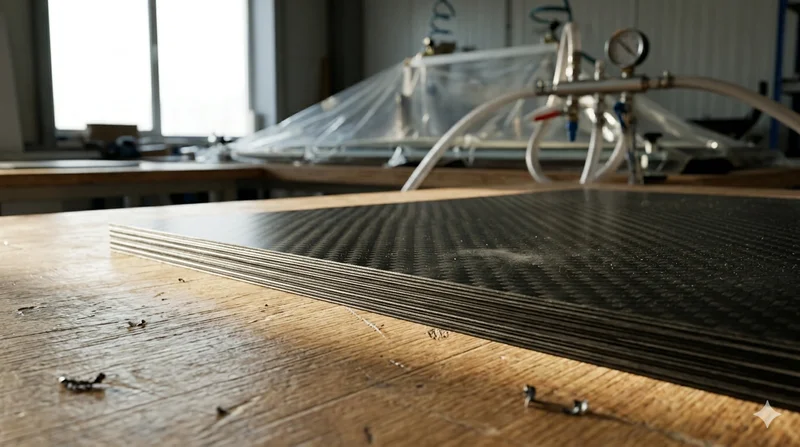
Carbon Fiber Plate — 3K Twill T700 3.0mm
Medium-thickness 3.0mm carbon fiber plate offering significantly higher load capacity while maintaining attractive 3K twill finish. Suitable for structural brackets, reinforcement plates, and load-bearing panels.
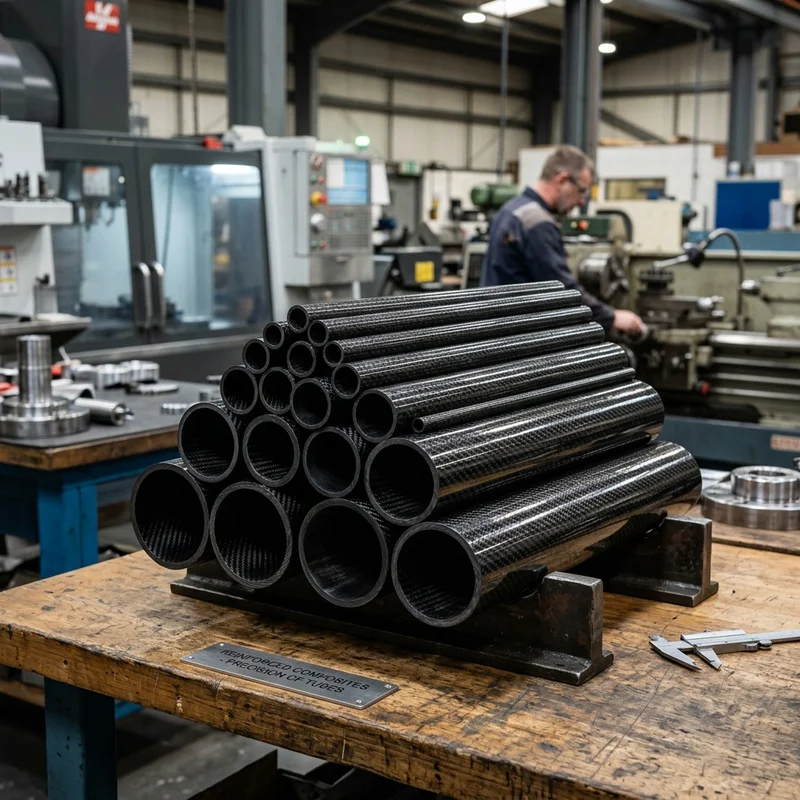
Round Carbon Fiber Tube — 3K Twill
Lightweight and ultra-stiff round tubes ideal for drone frames, robotics, and structural applications.
Carbon Fiber Plate — 3K Twill T700 1.5mm
Thin 1.5mm carbon fiber plate with 3K twill weave surface. Lightweight and stiff, commonly used for covers, panels, drone bodies, and applications requiring a premium aesthetic appearance.