
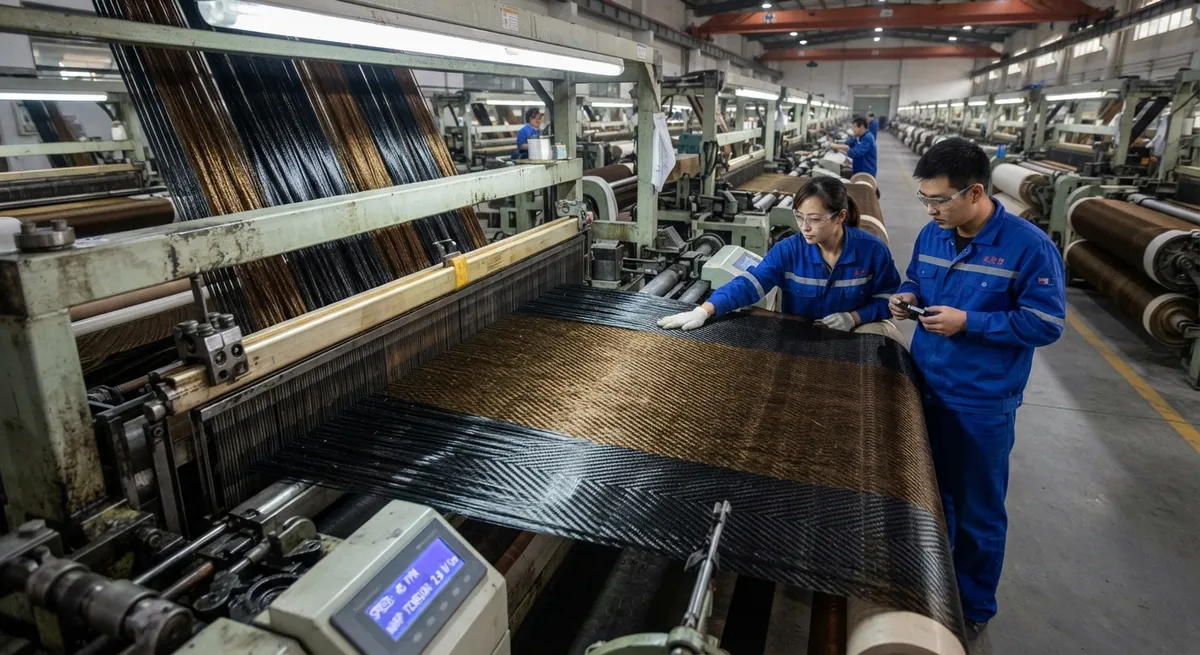
to Hybrid Woven Architectures The composites industry has long grappled with the tension between the exceptional mechanical properties of carbon fiber and its high material cost. Basalt f...
Introduction to Hybrid Woven Architectures
The composites industry has long grappled with the tension between the exceptional mechanical properties of carbon fiber and its high material cost. Basalt fiber — a continuous mineral fiber produced from volcanic basalt rock — offers an intriguing middle ground. With a tensile modulus of 85–95 GPa (compared to 230–400 GPa for standard carbon fiber) and a cost per kilogram roughly 40–60% lower than commercial-grade carbon fiber, basalt has emerged as a viable hybrid partner for structural applications where full carbon-fiber properties are not strictly required.
Hybrid woven fabrics combine carbon and basalt tows within a single reinforcement ply. Unlike ply-level stacking (discrete carbon and basalt layers), intraply hybridization at the tow level delivers more uniform stress transfer, reduced interlayer shear concentration, and superior damage tolerance. The resulting composite offers a balance of stiffness, strength, impact resistance, and cost that neither constituent achieves alone.
Material Properties Comparison
The table below compares the baseline mechanical properties of standard carbon fiber (3K and 12K tow varieties), basalt fiber, and E-glass fiber — the most common low-cost alternative — to establish the performance envelope within which hybrid fabrics operate.
| Property | Carbon Fiber (3K Tow) | Carbon Fiber (12K Tow) | Basalt Fiber | E-Glass Fiber |
|---|---|---|---|---|
| Tensile Strength (MPa) | 3,500–4,900 | 3,800–5,000 | 3,000–3,400 | 2,000–3,000 |
| Tensile Modulus (GPa) | 230–240 | 240–260 | 85–95 | 70–75 |
| Elongation at Break (%) | 1.5–2.0 | 1.6–2.1 | 3.0–3.2 | 4.5–4.8 |
| Density (g/cm³) | 1.78–1.80 | 1.78–1.80 | 2.60–2.70 | 2.55–2.60 |
| Filament Diameter (µm) | 7.0–7.5 | 7.0–7.5 | 13–20 | 17–20 |
| Relative Cost Index | 3.5–4.5 | 2.5–3.5 | 1.0 (baseline) | 0.7–0.9 |
| Service Temperature (°C) | 400–550 | 400–550 | 650–850 | 350–450 |
Note that basalt fiber offers a higher service temperature ceiling than carbon or glass — a meaningful advantage for fire-resistant structural applications. Its density is approximately 45% higher than carbon fiber, which must be accounted for in weight-sensitive designs.
Weave Architecture and Hybridization Strategies
Hybrid woven fabrics are produced on rapier or air-jet looms where carbon and basalt roving packages are alternately creeled. Several weave architectures have been characterized in the literature and in commercial production:
- Twill 2/2 Hybrid: Alternating carbon and basalt tows in both warp and weft directions. Provides the best balance of fabric stability and drapability. Typical carbon/basalt ratio: 50:50 by volume. Recommended for complex-curvature structural panels.
- Plain Weave Hybrid: Each tow alternates with the opposite fiber type at every intersection. Maximum hybrid uniformity, lowest crimp angle variation. Suitable for flat panels and thin-gauge laminates where surface finish is critical.
- Unidirectional (UD) Hybrid: Carbon tows in the primary load direction (warp), basalt tows in the secondary direction (weft). Optimizes stiffness-to-cost ratio for beams and stiffeners. Typical ratio: 70:30 carbon-to-basalt by volume.
- Stitched Multiaxial Hybrid: Non-crimped carbon and basalt layers stitched together with polyester thread. Superior in-plane properties with zero crimp. Best for high-performance structural applications where fabric drape is secondary to mechanical efficiency.
Mechanical Performance of Hybrid Laminates
Research by the European Structural Integrity Society (ESIS) and independent studies at research institutes in China and Germany have produced a consistent body of data on hybrid laminate performance. The key findings are summarized below.
For a 50:50 twill hybrid laminate (carbon-basalt) manufactured via vacuum-assisted resin transfer molding (VARTM) with epoxy resin system, typical mechanical properties relative to a full carbon-fiber baseline are:
| Property | Full Carbon Laminate | 50:50 Hybrid (Twill) | Retention (%) |
|---|---|---|---|
| Tensile Strength (MPa) | 620 | 510 | 82.3% |
| Tensile Modulus (GPa) | 58 | 44 | 75.9% |
| Flexural Strength (MPa) | 780 | 620 | 79.5% |
| Flexural Modulus (GPa) | 52 | 39 | 75.0% |
| Interlaminar Shear Strength (MPa) | 48 | 44 | 91.7% |
| Impact Energy (J, Charpy) | 18 | 26 | 144.4% |
| Relative Material Cost (/m²) | 1.00 | 0.58 | 42% savings |
The results reveal a non-linear relationship between fiber volume fraction and mechanical property retention. Impact energy absorption actually increases in the hybrid configuration — the basalt fiber's higher elongation to fracture (3.0–3.2%) relative to carbon (1.5–2.1%) allows the hybrid laminate to absorb more energy before catastrophic failure. This pseudo-ductile behavior is a critical advantage in crash-structures and impact-prone components.
Cost Analysis and ROI Considerations
From a procurement perspective, the decision to adopt hybrid woven fabrics hinges on three cost axes: raw material pricing, processing economics, and lifecycle performance.
Basalt fiber costs approximately $3.50–$5.50 per kilogram in commercial-grade continuous roving, compared to $8.00–$18.00 per kilogram for standard-modulus carbon fiber. At a 50:50 hybrid ratio by volume (approximately 42:58 by mass, given density differences), the raw material cost reduction is approximately 38–45% per square meter of fabric. When factoring in the improved damage tolerance — which reduces inspection frequency and repair cycles — the total cost of ownership advantage can exceed 50% over a 10-year service life.
Processing costs are comparable: hybrid fabrics can be cut, laid up, and infused using identical equipment and cycle times as full carbon fabrics, with no capital expenditure required for tooling or facility adaptation.
Application Domains
Hybrid basalt-carbon woven fabrics have demonstrated commercial viability across several structural sectors:
- Wind Turbine Blades: Hybrid spar caps and shear webs reduce blade cost by 25–35% while maintaining stiffness targets. The superior impact resistance of basalt improves lightning-strike damage tolerance.
- Marine Structures: Hull panels, bulkheads, and deck reinforcements benefit from basalt's natural seawater resistance and the hybrid's cost advantage over full carbon laminates.
- Automotive Components: Crash structures, floor pans, and battery enclosures in electric vehicles leverage the pseudo-ductile energy absorption of the carbon-basalt hybrid architecture.
- Infrastructure: Bridge decks, concrete reinforcement grids, and seismic retrofitting wraps where the combination of stiffness, corrosion resistance, and cost efficiency is decisive.
Frequently Asked Questions
Can basalt-carbon hybrid fabrics be processed using the same infusion systems as full carbon fabrics?
Yes. Hybrid woven fabrics are compatible with all common liquid composite molding processes including VARTM, resin transfer molding (RTM), and prepreg layup. No changes to injection pressure, resin chemistry, or cure cycle are required. The larger filament diameter of basalt fiber (13–20 µm vs. 7.0–7.5 µm for carbon) may slightly reduce fiber bed permeability, resulting in a 5–10% increase in fill time, which is manageable through minor vacuum pressure adjustments.
What is the recommended carbon-to-basalt ratio for stiffness-critical applications?
For applications where flexural modulus is the primary design driver, a 70:30 carbon-to-basalt volume ratio in a UD hybrid architecture is recommended. This configuration retains approximately 85% of the full carbon modulus at roughly 65% of the material cost. For strength-critical or impact-critical applications, the 50:50 twill hybrid offers a better balance of property retention and cost reduction.
How does the thermal expansion behavior of hybrid laminates compare to full carbon laminates?
Hybrid laminates exhibit a coefficient of thermal expansion (CTE) that is intermediate between the negative axial CTE of carbon (approximately −0.5 × 10⁻⁶/K) and the positive CTE of basalt (approximately 5.5 × 10⁻⁶/K). The specific CTE depends on the hybrid ratio and weave architecture but typically falls in the range of 2–4 × 10⁻⁶/K for balanced twill hybrids. This can be advantageous in applications where extreme low CTE creates thermal mismatch issues with metallic joining elements.
Part of topic
Related Articles
- Bio-Based Carbon Fiber Precursors: Lignin and Polyethylene for Low-Cost Production
- Large-Tow Carbon Fiber Cost Analysis: 48K vs 60K Price-Performance Comparison
- Carbon Fiber-Resin Interface Bonding: Surface Treatment and Coupling Agent Optimization
- Digital Twin for Carbon Fiber Manufacturing: Real-Time Process Monitoring and Defect Prevention
- Thermoplastic Carbon Fiber Welding for Automotive: Ultrasonic and Induction Welding Process Windows
- Large-Tow Carbon Fiber Wet Spinning: Process Optimization for 48K/60K Production Efficiency
Interested in Our Products?
Contact our team for competitive pricing and technical specifications.
Get a QuoteRelated Products
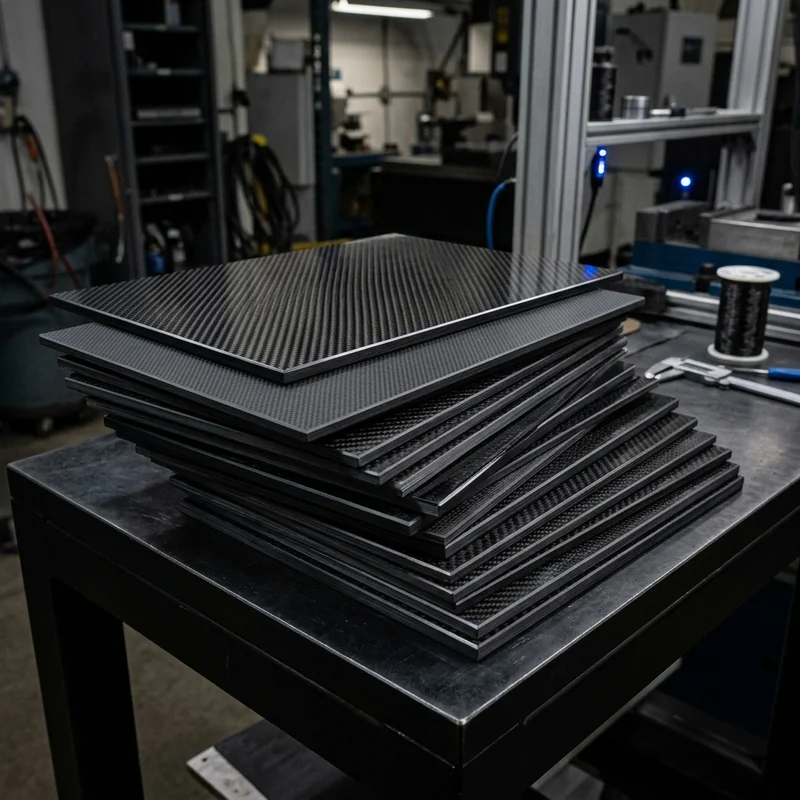
Carbon fiber standard plate-3k stripe
Lightweight, ultra-rigid standard sheets for drone fuselages, robot housings, facades and structural applications.
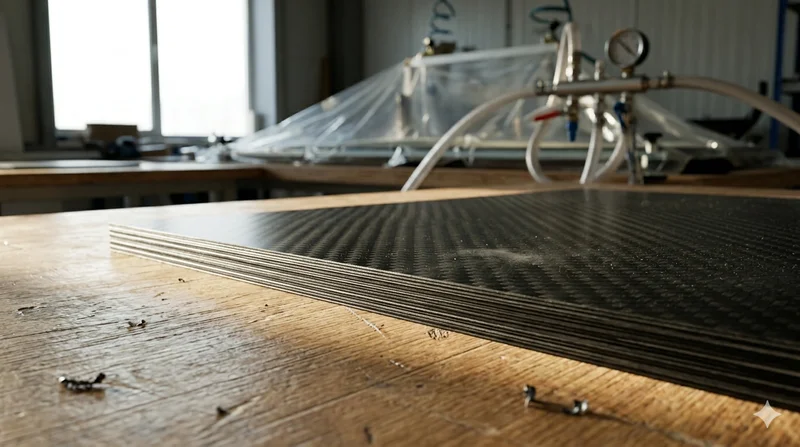
Carbon Fiber Plate — 3K Twill T700 3.0mm
Medium-thickness 3.0mm carbon fiber plate offering significantly higher load capacity while maintaining attractive 3K twill finish. Suitable for structural brackets, reinforcement plates, and load-bearing panels.

Carbon Fiber Plate — 3K Twill T700 1.5mm
Thin 1.5mm carbon fiber plate with 3K twill weave surface. Lightweight and stiff, commonly used for covers, panels, drone bodies, and applications requiring a premium aesthetic appearance.
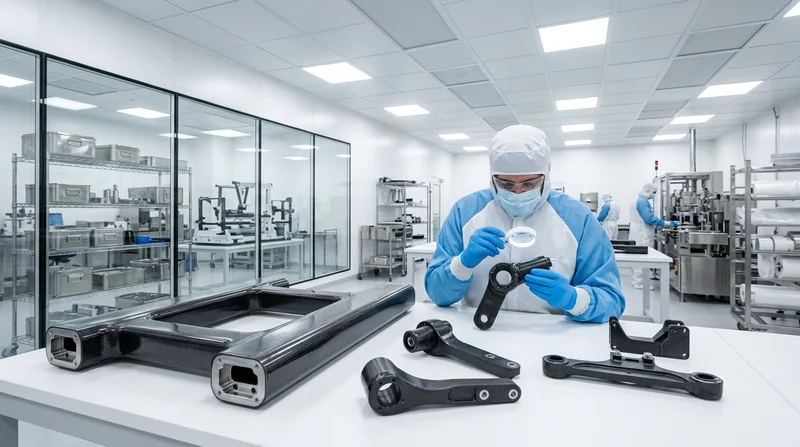
Custom Carbon Fiber Medical Device Components
Medical-grade carbon fiber components manufactured for imaging equipment, surgical instruments, and patient support systems. Carbon fiber's radiolucency (X-ray transparency) and high strength-to-weight ratio make it ideal for CT scanner beds, wheelchair frames, surgical robot arms, and MRI-compatible accessories. Biocompatible resin systems available.
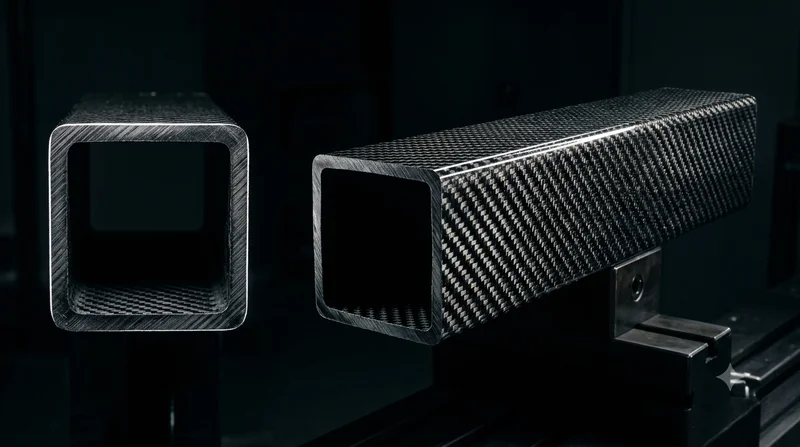
Square Carbon Fiber Tube — 3K Twill T700
Square cross-section carbon fiber tube manufactured with 3K twill weave for torsional strength. Preferred for structural frames, trusses, and support columns where rectangular geometry offers design flexibility.