
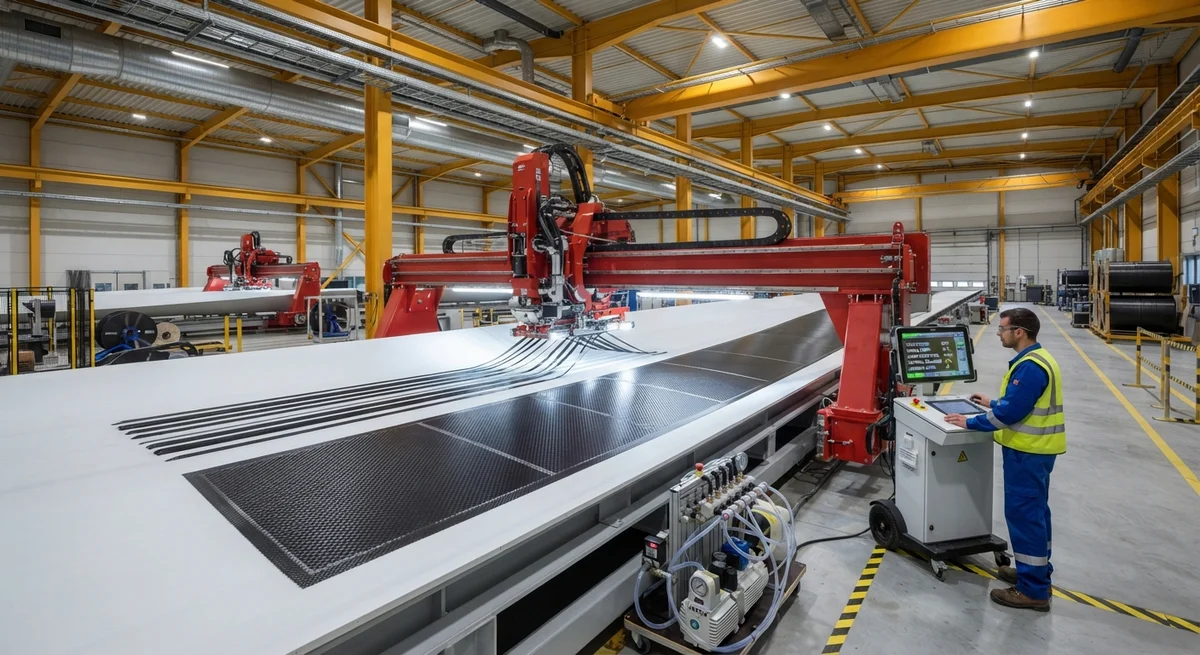
Automated dry fiber placement (ADFP) technology is transforming wind turbine blade manufacturing by dramatically reducing manual layup labor, cutting material waste from typical 25–35% to under 5%, and enabling production of longer, lighter blades for next-generation wind turbines. This article examines the technology's process parameters, cost advantages, and implementation considerations.
The global wind energy industry is on an unprecedented growth trajectory, with installed capacity projected to exceed 2,000 GW by 2030 according to the Global Wind Energy Council. At the heart of every wind turbine lie the blades—increasingly massive structures now exceeding 100 meters in length for offshore installations. Traditional blade manufacturing relies heavily on manual hand layup of glass and carbon fiber fabrics, a labor-intensive process that accounts for 30–40% of total blade production costs and generates material waste rates of 25–35%.
Automated dry fiber placement (ADFP) represents a paradigm shift in wind blade manufacturing. Unlike AFP systems used in aerospace, ADFP systems deposit dry carbon or glass fiber tows that are subsequently infused with resin through VARTM. This dry-fiber approach eliminates the expensive cold-chain logistics required for pre-preg materials, reduces material waste to below 5%, and enables layup rates 8–12 times faster than manual hand layup operations.
ADFP Process Fundamentals and Machine Architecture
An ADFP system consists of a multi-axis robotic gantry or articulated arm equipped with a placement head that feeds, cuts, and compacts dry fiber tows onto a mold surface. The placement head typically handles 12–32 individual fiber tows simultaneously and can deposit them at rates of 30–80 kg of fiber per hour. The key subsystems include a creel rack, tow delivery system with active tension control, laser-assisted tow placement and cutting unit with ±1 mm positioning accuracy, and a heated compaction roller that applies 200–800 N of compressive force at 40–80°C.
Dry fiber tows are coated with a binder system—typically 4–8% by weight of a low-melt epoxy powder that is partially activated during placement by the heated compaction roller. The optimal binder activation window for wind-grade epoxy systems is 65–85°C at the roller surface. ADFP systems with fiber steering capability allow tows to follow curvilinear paths, enabling load-optimized fiber architectures. Steered-fiber ADFP preforms have demonstrated a 12–18% improvement in blade flap-wise fatigue life.
Material Waste Reduction and Cost Implications
Material utilization rate for manual layup is 65–75%, meaning 25–35% of purchased fiber ends up as scrap. ADFP achieves net material utilization rates of 95–98%. For an 80-meter blade containing ~18 metric tons of glass fiber and ~2.5 tons of carbon fiber, waste reduction from 30% to 5% saves 5.4 tons of glass and 0.75 tons of carbon per blade—$16,000–$22,000 in direct material savings per blade.
Labor cost reduction is equally dramatic. Manual layup requires 25–40 skilled laminators consuming 180–300 person-hours per blade. A single ADFP gantry, operated by a technician and assistant, deposits the complete preform in 18–24 hours—an 8–12× labor productivity improvement. Labor cost drops from $6,100–$11,400 to $900–$1,500 per blade.
| Cost Parameter | Manual Hand Layup | Automated Dry Fiber Placement | Savings |
|---|---|---|---|
| Fiber Material Utilization Rate | 65–75% | 95–98% | +25–33% |
| Fiber Waste per Blade (metric tons) | 6.2 (glass) + 0.85 (carbon) | 0.9 (glass) + 0.12 (carbon) | 5.3 t glass + 0.73 t carbon |
| Direct Fiber Material Cost per Blade | $78,500–$95,500 | $58,200–$70,800 | ~$22,000 per blade |
| Direct Layup Labor per Blade (person-hours) | 180–300 | 18–24 | 85–87% labor reduction |
| Direct Layup Labor Cost per Blade | $6,100–$11,400 | $900–$1,500 | ~$8,000 per blade |
| Resin Consumption per Blade (kg) | 3,800–4,200 | 3,400–3,600 | ~500 kg reduction |
| Scrap Disposal Cost per Blade | $1,050–$2,500 | $160–$400 | ~$1,200 per blade |
| Capital Equipment Cost | $0 (existing manual tooling) | $3,000,000–$5,000,000 | Investment required |
| Annual Capacity per Factory | 400–600 blades | 450–650 blades | ~10% increase |
| Defect / Rework Rate | 4–8% | 1–3% | 50–70% reduction |
| Total Manufacturing Cost per Blade | $145,000–$175,000 | $108,000–$132,000 | 22–26% reduction |
Resin Infusion Compatibility and Quality Assurance
A critical consideration for ADFP adoption is compatibility with the resin infusion process. Binder applied as a discontinuous powder coating (4–6% by weight, 100–200 µm particle size) achieves the best flow characteristics, with in-plane permeability values of 1.5–3.5 × 10⁻¹⁰ m² for carbon fiber preforms at 55% fiber volume fraction. Quality assurance relies on infrared thermal cameras for in-process monitoring and ultrasonic phased-array inspection post-infusion.
Implementation Roadmap for Blade Manufacturers
- Phase 1 — Feasibility and material qualification (months 1–6): Select an ADFP system integrator and conduct coupon-level qualification of binder-coated fiber tows. Target: fiber volume fraction 54–58%, void content below 1.5%.
- Phase 2 — Pilot production of blade subcomponents (months 4–10): Deploy the ADFP system on a dedicated subcomponent mold, running 20–30 cycles to validate deposition speed and binder activation parameters.
- Phase 3 — Full blade preform qualification (months 9–16): Produce 5–10 full-size blade preforms and subject them to static and fatigue testing per IEC 61400-23.
- Phase 4 — Production scale-up (months 14–24): Install multi-gantry ADFP system with digital twin for real-time quality monitoring.
Frequently Asked Questions
How does ADFP compare to conventional AFP used in aerospace?
AFP uses pre-impregnated towpreg with limited shelf life stored at -18°C, while ADFP uses dry fiber tows stable at room temperature for 12+ months. AFP processes 8–16 tows at 5–15 kg/hour; ADFP handles 12–32 tows at 30–80 kg/hour. AFP requires autoclave curing; ADFP uses VARTM. For wind blade manufacturing, ADFP is the economically superior solution.
What are the main challenges in adopting ADFP for existing blade factories?
Three challenges dominate: (1) operator training—skilled technicians needed for composites, robotics, and infusion physics; (2) resin system re-qualification costing $150,000–$400,000; (3) preform handling—dry fiber preforms can be damaged during transfer from placement to infusion mold.
Can ADFP be used for both glass and carbon fiber components?
Yes, ADFP systems are compatible with both. Glass fiber ADFP deposits at 50–80 kg/hour with 400–800 N compaction force. Carbon fiber ADFP deposits at 30–50 kg/hour with 200–500 N compaction force. Hybrid glass-carbon preforms can be deposited in a single ADFP cycle.
Part of topic
Related Articles
- Bio-Based Carbon Fiber Precursors: Lignin and Polyethylene for Low-Cost Production
- Large-Tow Carbon Fiber Cost Analysis: 48K vs 60K Price-Performance Comparison
- Carbon Fiber-Resin Interface Bonding: Surface Treatment and Coupling Agent Optimization
- Digital Twin for Carbon Fiber Manufacturing: Real-Time Process Monitoring and Defect Prevention
- Thermoplastic Carbon Fiber Welding for Automotive: Ultrasonic and Induction Welding Process Windows
- Large-Tow Carbon Fiber Wet Spinning: Process Optimization for 48K/60K Production Efficiency
Interested in Our Products?
Contact our team for competitive pricing and technical specifications.
Get a QuoteRelated Products
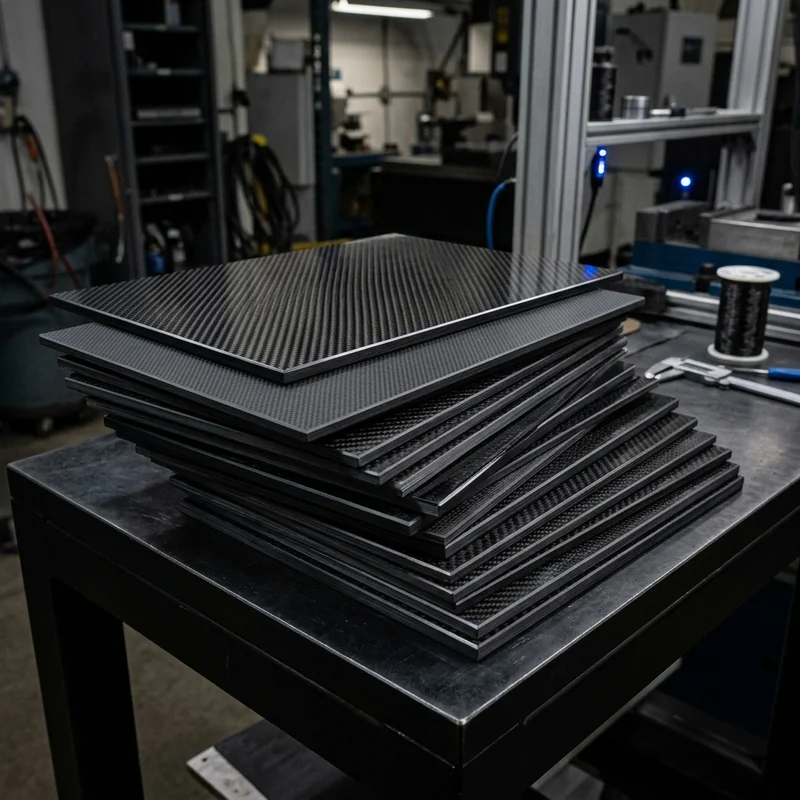
Carbon fiber standard plate-3k stripe
Lightweight, ultra-rigid standard sheets for drone fuselages, robot housings, facades and structural applications.

Carbon Fiber Plate — 3K Twill T700 1.5mm
Thin 1.5mm carbon fiber plate with 3K twill weave surface. Lightweight and stiff, commonly used for covers, panels, drone bodies, and applications requiring a premium aesthetic appearance.
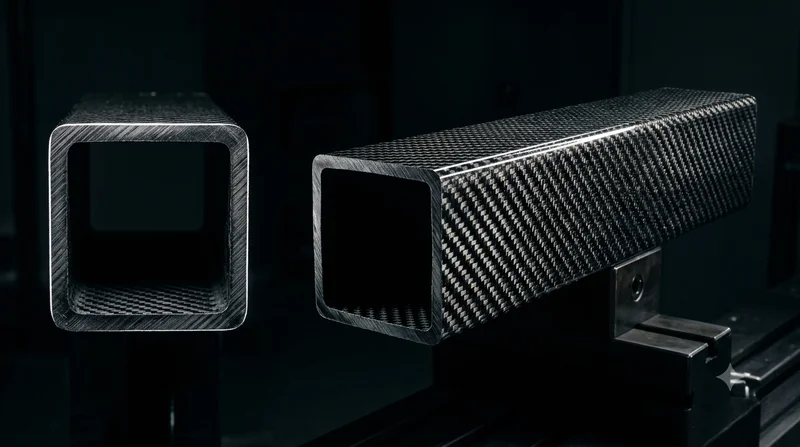
Square Carbon Fiber Tube — 3K Twill T700
Square cross-section carbon fiber tube manufactured with 3K twill weave for torsional strength. Preferred for structural frames, trusses, and support columns where rectangular geometry offers design flexibility.
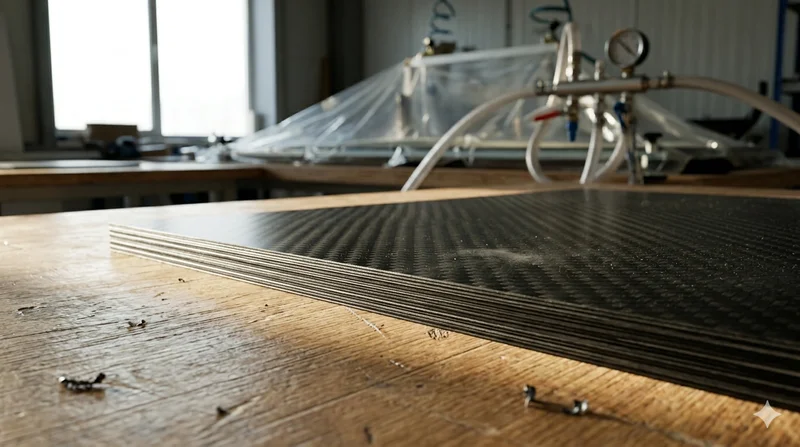
Carbon Fiber Plate — 3K Twill T700 3.0mm
Medium-thickness 3.0mm carbon fiber plate offering significantly higher load capacity while maintaining attractive 3K twill finish. Suitable for structural brackets, reinforcement plates, and load-bearing panels.
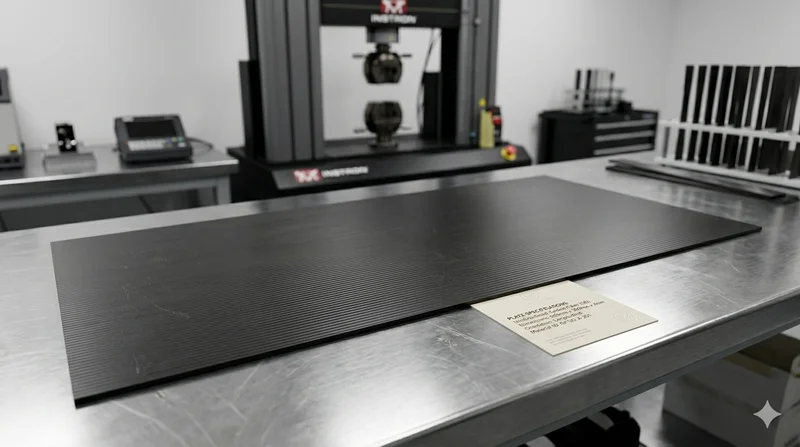
Carbon Fiber Plate — UD Unidirectional T700
Unidirectional carbon fiber plate with all fibers oriented in a single direction for maximum strength along the fiber axis. Essential for structural reinforcements, splints, and applications where load direction is predictable.