
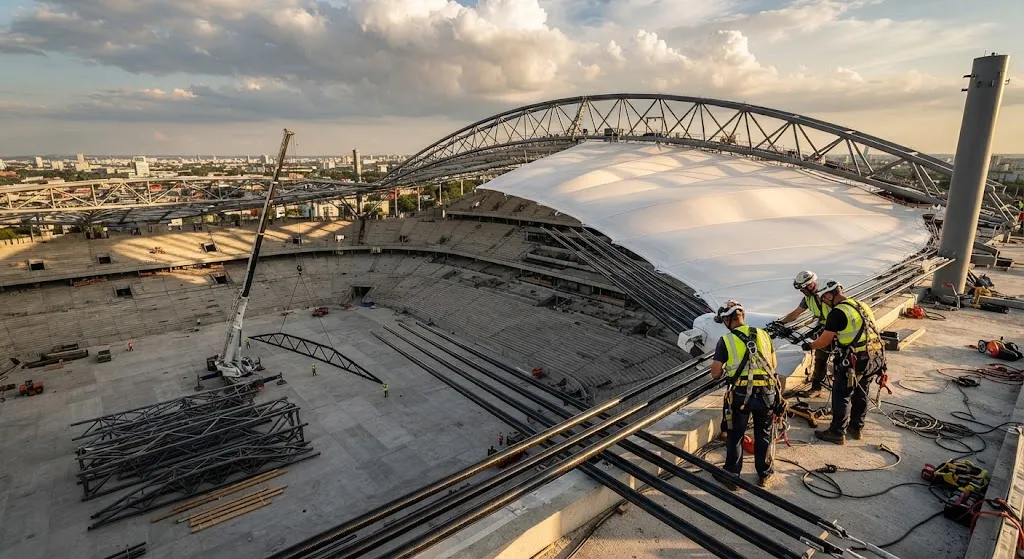
Architecture has been a late but enthusiastic adopter of carbon fiber. For decades carbon fiber reinforced polymer was associated with aerospace structures, racing cars and high-performance sporting goods, while buildings relied on steel, concrete and timber. That division is dissolving
Introduction
Architecture has been a late but enthusiastic adopter of carbon fiber. For decades carbon fiber reinforced polymer was associated with aerospace structures, racing cars and high-performance sporting goods, while buildings relied on steel, concrete and timber. That division is dissolving. Contemporary architecture demands roofs that span a hundred meters or more without intermediate columns, canopies that appear to float above public spaces, and structures that must be built quickly on constrained urban sites. Each of these challenges rewards a material family that combines tensile strength several times that of structural steel with a density roughly a fifth of it.
This article examines CFRP in architecture through two related applications: large-span roof structures, where CFRP cables, rods and lattice elements replace steel in the most weight-critical members, and tension membrane structures, where carbon fiber supports allow thin translucent membranes to span wide distances. It draws the structural logic, the material comparison behind it, and the practical considerations that architects and engineers face when specifying carbon fiber in building projects.
Why Roof Weight Dominates Structural Design
In a large-span roof, the weight of the structure itself is often the dominant load. A stadium roof spanning 200 meters must carry its own dead load, the cladding, wind uplift, snow where applicable and seismic forces in active regions. Because every kilogram of roof mass must be supported by columns and transmitted to foundations, reducing the dead load produces a cascade of savings: lighter main members, lighter columns, smaller foundations and reduced seismic mass. Steel is strong and well understood, but its density of 7.85 grams per cubic centimeter means that long-span members made of steel become heavy before they can carry a useful live load.
Carbon fiber enters this equation through its combination of specific strength and specific stiffness. High-modulus carbon fibers reach tensile strengths of 3,500 MPa and above while the composite density stays near 1.6 grams per cubic centimeter. A CFRP cable of equal capacity to a steel cable weighs roughly one fifth as much, which changes the economics of every element that supports it. Huge public structures — stadiums with retractable roofs, exhibition halls, transit stations — have adopted carbon fiber cables and rods where the weight saving is most valuable, and the same logic is applied to the hoisting and opening mechanisms of movable roofs.
Tension Membrane Structures and Their Supports
Tension membrane architecture uses thin translucent fabrics — commonly ETFE cushions or PTFE-coated fiberglass membranes — held in shape by a network of cables and masts. The membrane itself is extremely light, which is exactly why it is attractive over large areas, but its lightness concentrates all structural duty in the support network. Traditional steel cable nets work well but carry their own weight penalty, and in long free spans the steel mass can exceed the membrane mass several times over.
CFRP tension members solve this imbalance. A carbon fiber rod or cable with the same breaking load as a steel pendant is dramatically lighter, which reduces the load on masts, anchors and foundations. The material's corrosion resistance is especially valuable for membrane structures in coastal and marine settings, where salt-laden air attacks steel fittings and requires regular re-coating. Carbon fiber also exhibits excellent fatigue behavior — a meaningful advantage for membrane edges and cantilevers that oscillate in wind — and its low thermal expansion keeps pretension forces stable across seasonal temperature swings.
Retractable and movable roofing represents a fourth application where carbon fiber lightness is decisive. A retractable stadium roof must move its entire mass on rails and drive mechanisms, and every kilogram directly increases the cost, power and maintenance of the moving machinery. Carbon fiber panels and supporting lattice enable larger moving roof sections at the same drive capacity, or the same span with lighter, faster drive systems. The same argument applies to operable skylights, movable canopies and festive or temporary structures that must be dismantled and re-erected, where low weight translates directly into cheaper handling and transport.
Material Comparison at a Glance
The table below compares the properties that matter most to structural engineers selecting materials for roof and membrane support systems.
| Property | Steel (cable) | Aluminum | CFRP |
|---|---|---|---|
| Density (g/cm³) | 7.85 | 2.70 | 1.60 |
| Typical tensile strength (MPa) | 1,500-1,800 | 300-450 | 2,400-3,500 |
| Specific strength (relative) | 1.0 | 0.6-0.8 | 8-10 |
| Corrosion resistance | Low, needs coating | Moderate | Excellent |
| Fatigue performance | Good, weld-sensitive | Moderate | Excellent |
| Thermal expansion | Moderate | High | Very low |
Design and Specification Considerations
Specifying CFRP in architecture is different from specifying steel in several practical ways. Carbon fiber members are anisotropic and strong primarily along the fiber direction, so connections must be designed carefully — usually with bonded or clamped end terminations rather than bolted through-holes, which cut fibers and concentrate stress. Anchorage systems developed for CFRP stay cables in bridge engineering are now a proven reference point for building applications. Fire performance also requires attention: resin systems soften at high temperature, so architectural CFRP members are protected with intumescent coatings or fire-rated encapsulation where building codes require it.
Cost remains the principal barrier. Carbon fiber members cost more per kilogram than steel, so the economic case must be built on total cost: reduced foundation and substructure work, faster installation with lighter lifting equipment, lower long-term maintenance in corrosive environments, and the architectural freedom that steel mass would prohibit. As pultruded CFRP profiles and scaled cable production bring prices down, the material is moving from flagship structures toward mainstream long-span design.
Evidence is compounding in completed buildings. Tens of CFRP cable roof and canopy projects now stand across Europe and Asia, from transit stations to sports venues, and suppliers report a widening pipeline as engineering consultancies codify carbon fiber design guidance into standard practice. Each project contributes measured data on installation time, substructure savings and long-term behavior, which steadily lowers the perceived risk that held architects back a decade ago.
Key Factors Shaping Adoption
- Dead-load cascade: Every kilogram saved in the roof reduces column, foundation and seismic mass downstream.
- Specific strength: CFRP carries roughly five times the load of steel at one fifth the weight in the same application.
- Corrosion resistance: Coastal and marine membrane structures avoid re-coating cycles with CFRP supports.
- Fatigue and pretension stability: Low expansion and high fatigue life keep tension systems stable over decades.
- Installation logistics: Lighter members allow smaller cranes and faster assembly on constrained sites.
Frequently Asked Questions
How much weight can carbon fiber save in a roof structure?
A CFRP cable of equal breaking load to a steel cable typically weighs about one fifth as much. Because roof self-weight is inherently supported by columns and foundations, this saving cascades: lighter main members reduce column loads, which reduces foundation size, and in seismic regions lower roof mass directly lowers earthquake forces. Projects report meaningful reductions in substructure cost even when the members themselves cost more per kilogram.
Are carbon fiber structures safe in fire?
Carbon fiber itself does not burn readily, but the polymer matrix softens and loses strength above roughly 150-200 degrees Celsius. In architectural applications where building codes require fire resistance, CFRP members are protected with intumescent coatings or encapsulated in fire-rated materials so the carbon fiber stays below its critical temperature during a fire event. The design approach is analogous to protecting exposed structural steel and is well established by now.
Why are tension membrane roofs well suited to CFRP supports?
Tension membranes are extremely light, which concentrates structural load in the cable and mast network. Steel support nets carry their own weight penalty in long spans. CFRP tension members provide the same breaking load at a fraction of the weight, resist corrosion in coastal settings, tolerate repeated wind oscillation and keep pretension stable thanks to very low thermal expansion — all properties that match the demands of membrane architecture.
Conclusion
Carbon fiber is no longer a niche aerospace material in architecture. Large-span roofs and tension membrane structures now use CFRP cables, rods and trusses where weight dominates design, and every completed project adds evidence for the next one: lighter substructures, lower installation cost, corrosion-free long-term behavior and forms that would be impossible in steel. Architects and engineers who learn the design rules early — careful connections, fire protection, total-cost thinking — will be well positioned as carbon fiber continues to move into mainstream construction.
YongXian supplies carbon fiber cables, profiles, fabrics and reinforcement systems for structural and architectural projects. Explore our carbon fiber product range or contact our engineering team to discuss materials for your building or infrastructure project.
Related Articles
Interested in Our Products?
Contact our team for competitive pricing and technical specifications.
Get a QuoteRelated Products

Carbon Fiber Plate — 3K Twill T700 1.5mm
Thin 1.5mm carbon fiber plate with 3K twill weave surface. Lightweight and stiff, commonly used for covers, panels, drone bodies, and applications requiring a premium aesthetic appearance.
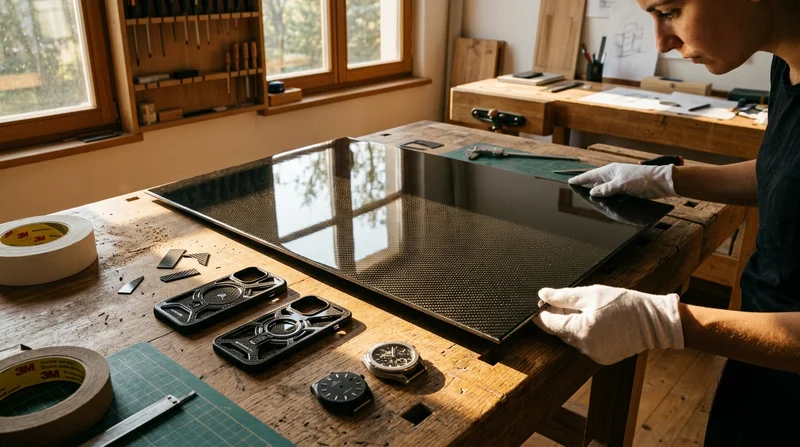
Carbon Fiber Plate — High-Gloss Decorative
High-gloss decorative carbon fiber plate with a mirror-like surface finish. The glossy coating enhances the visible 3K twill weave, creating a premium aesthetic for consumer-facing applications. Lightweight yet stiff, available in thin gauges for easy cutting and forming.
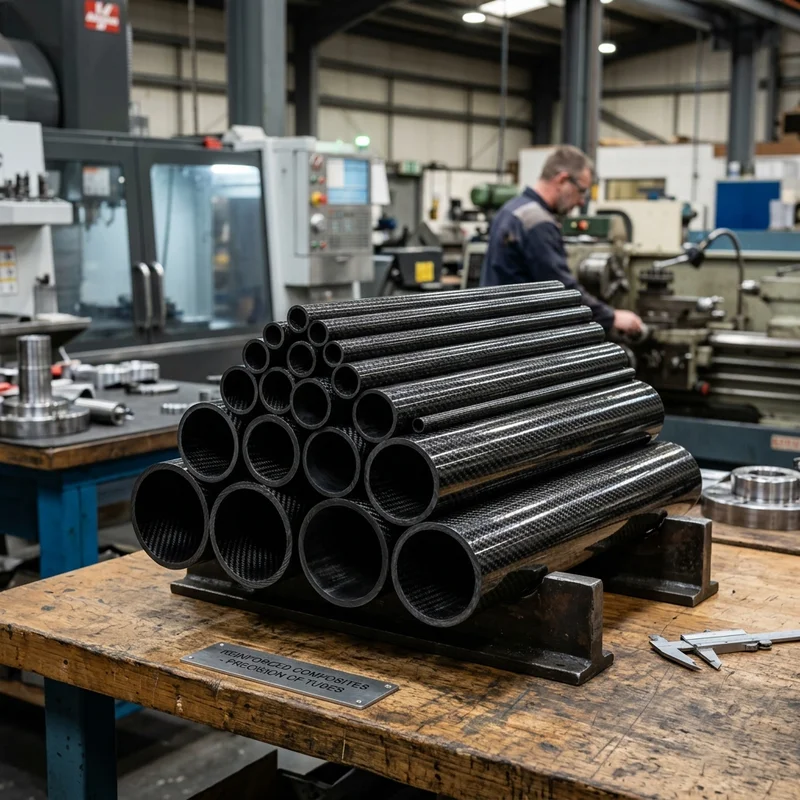
Round Carbon Fiber Tube — 3K Twill
Lightweight and ultra-stiff round tubes ideal for drone frames, robotics, and structural applications.
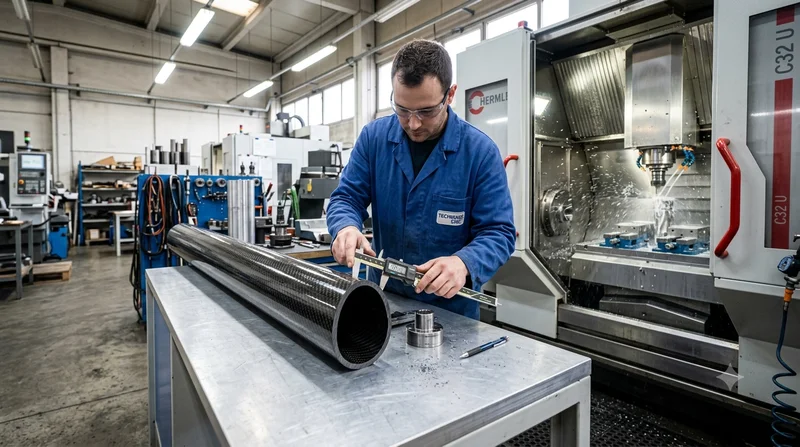
Oval/Streamline Carbon Fiber Tube
Streamline oval carbon fiber tube offering unique cross-section properties. Higher bending stiffness in the major axis direction while maintaining a slim profile. Perfect for aerodynamic applications and weight-optimized structures where space constraints demand non-round profiles.