
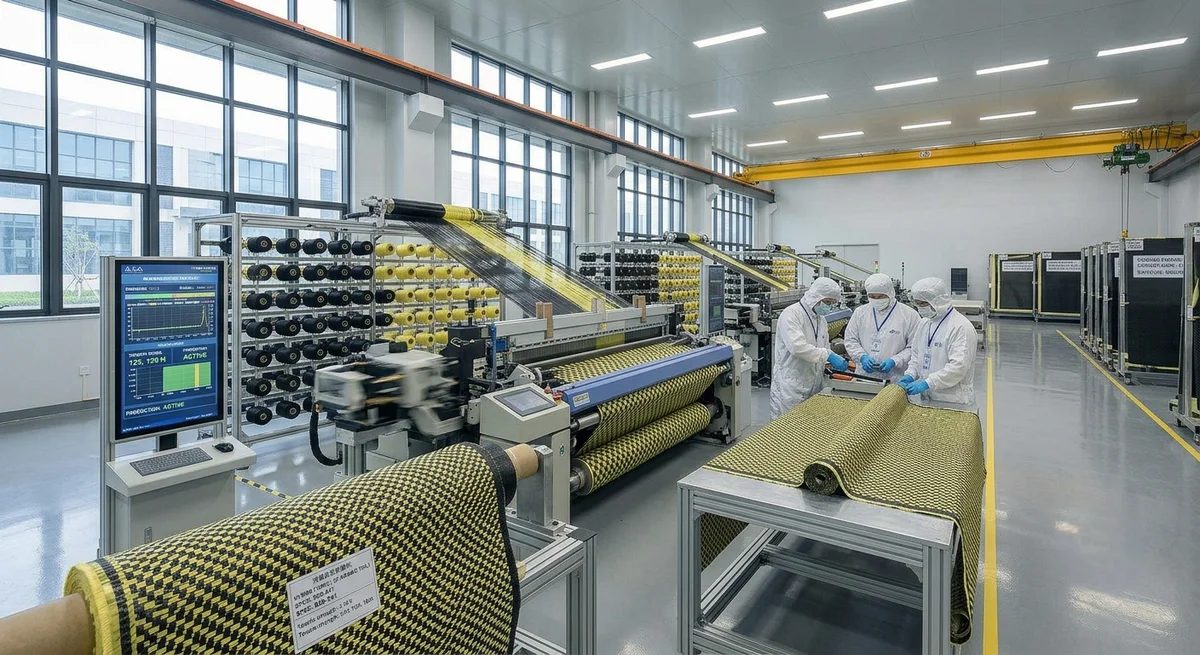
Carbon-aramid hybrid composites offer a compelling middle ground for B2B buyers — combining carbon fiber's stiffness with aramid's impact resistance at a lower cost than all-carbon laminates. This article covers mechanical data, hybridization strategies, and practical applications.
Carbon-Aramid Hybrids: The Engineer's Answer to the Toughness-Stiffness Tradeoff
In composite material selection, carbon fiber and aramid (Kevlar) occupy opposite ends of the toughness spectrum. Carbon fiber delivers exceptional stiffness (230–240 GPa tensile modulus) and compressive strength but exhibits low strain-to-failure (0.5–1.0%) and poor impact resistance. Aramid fiber, by contrast, offers outstanding toughness (3.0–4.0% elongation at break) and ballistic resistance but has only 60–80 GPa modulus and poor compressive strength. Hybridizing these fibers creates laminates that capture the best of both worlds — at a material cost typically 30–50% lower than all-carbon and 15–25% higher than all-aramid. This article provides B2B engineers and procurement professionals with the data needed to specify carbon-aramid hybrids with confidence.
Mechanical Property Comparison: Individual Fibers
| Property | Standard Modulus CF | Kevlar 29 (Aramid) | Kevlar 49 (Aramid) | Hybrid Advantage |
|---|---|---|---|---|
| Tensile strength (MPa) | 3,500–5,000 | 2,800–3,600 | 3,000–3,600 | Complementary load sharing |
| Tensile modulus (GPa) | 230–240 | 70–80 | 110–130 | CF dominates stiffness |
| Elongation at break (%) | 0.5–1.0 | 3.0–4.0 | 2.0–2.8 | Aramid provides ductility |
| Compressive strength (MPa) | 1,200–1,800 | 300–450 | 350–500 | CF carries compression |
| Impact energy (J, Charpy unnotched) | 5–15 | 40–60 | 35–50 | Aramid absorbs impact |
| Density (g/cm³) | 1.75–1.80 | 1.44–1.45 | 1.44–1.45 | Aramid reduces weight |
| Moisture absorption (%) | 0.05–0.10 | 3.5–7.0 | 1.0–3.0 | CF protects against humidity |
| UV degradation | Minimal | Moderate (yellowing) | Moderate (yellowing) | CF skin shields aramid |
Hybridization Strategies
There are four primary approaches to carbon-aramid hybridization, each suited to different load cases and cost targets:
| Strategy | Configuration | Typical Ratio | Cost vs All-CF | Toughness Improvement | Best Application |
|---|---|---|---|---|---|
| Sandwich (CF skin / Aramid core) | [0/90]₂(CF) / [±45]₄(Aramid) / [0/90]₂(CF) | 50/50 | −40% | +200% CAI | Helmet shells, armor |
| Interply (alternating CF/aramid plies) | [0ⱼCF/0ⱼAramid/90ⱼCF] alternating | 40/60 to 60/40 | −35% | +150% impact energy | Automotive body panels |
| Intermingled (CF and aramid in same fabric) | Hybrid weave, 2×2 twill or satin | 50/50 | −30% | +120% impact energy | Pressure vessels, ducts |
| Selective placement (CF in load path, aramid at impact zones) | Localized aramid patches in CF laminate | 20–30% aramid by volume | −20% | +80% impact in reinforced zones | Sports equipment, aerospace substructures |
Measured Hybrid Laminate Performance
| Property | All-CF Laminate | 50/50 Hybrid (Interply) | All-Aramid Laminate | Hybrid vs CF |
|---|---|---|---|---|
| Tensile modulus, 0° (GPa) | 125 | 88 | 55 | −30% vs CF (+60% vs aramid) |
| Tensile strength, 0° (MPa) | 1,800 | 1,420 | 1,100 | −21% vs CF (+29% vs aramid) |
| Compression strength (MPa) | 1,200 | 850 | 250 | −29% vs CF (+240% vs aramid) |
| CAI (MPa, 6.7 J/mm impact) | 180 | 320 | 410 | +78% vs CF (−22% vs aramid) |
| Open-hole tension (MPa) | 420 | 400 | 380 | Similar |
| Density (g/cm³) | 1.58 | 1.50 | 1.38 | −5% weight reduction |
| Material cost ($/kg, laminate) | $35–65 | $22–38 | $16–28 | −38% vs CF (+28% vs aramid) |
Key Advantages for B2B Applications
- Impact resistance vs all-carbon: The aramid phase absorbs 2–3× more impact energy than all-CF laminates of equivalent weight. Compression After Impact (CAI) values for 50/50 hybrids reach 320 MPa vs 180 MPa for all-CF — a 78% improvement that dramatically reduces the risk of invisible impact damage (BVID).
- Cost savings vs all-carbon: At 40–50% aramid content by volume, material cost drops 35–40% versus all-carbon laminates. For large components like vehicle panels or pressure vessels, this translates to significant per-unit savings.
- Weight advantage vs all-aramid: Carbon's higher specific stiffness (133 GPa/(g/cm³) vs 76–90 for aramid) means hybrid laminates achieve equivalent flexural stiffness at 15–20% less weight than all-aramid designs — critical for aerospace and high-performance automotive.
- Damping and vibration characteristics: Aramid fibers exhibit higher internal damping (tan δ = 0.02–0.04) compared to carbon (tan δ = 0.005–0.015). Hybrid laminates reduce vibration amplitudes by 30–50% in structural components such as robotic arms, drone frames, and machinery guards.
- Electrical properties: Aramid's electrical insulation combined with carbon's moderate conductivity allows designers to tailor EMI shielding and electrical grounding to specific laminate zones — particularly valuable for electronics enclosures and aerospace radomes.
Processing Considerations
Carbon-aramid hybrids introduce several manufacturing considerations:
- Cutting difficulty: Aramid fibers are notoriously difficult to cut — they fray and resist shear. Use diamond-coated tooling or abrasive waterjet cutting for hybrid fabrics. Standard composite scissors will produce fuzzy edges on aramid plies.
- Moisture management: Aramid absorbs 3.5–7.0% moisture by weight. Vacuum-dry aramid fabrics at 120°C for 2 hours before layup. Use moisture-resistant epoxy systems (F155, Cycom 823) to prevent bond-line degradation.
- UV protection: Aramid yellows and degrades under UV exposure. Design the outer plies as carbon fiber to shield the aramid core. For visible outer surfaces, apply a UV-resistant polyurethane topcoat.
- Hybrid fabric availability: Major suppliers including Toray, Hexcel, and Teijin stock pre-woven carbon-aramid hybrid fabrics (50/50 and 60/40 ratios in 2×2 twill and 5-harness satin weaves). Standard widths: 1.0m and 1.27m. Lead times: 4–8 weeks for stock weaves.
Industry Applications with Case Data
| Industry | Component | Hybrid Ratio | Key Benefit | Weight Reduction vs Metal |
|---|---|---|---|---|
| Automotive | Battery enclosure | 60% CF / 40% Aramid | Impact + fire resistance | 55% vs steel |
| Aerospace | Fan containment case | 30% CF / 70% Aramid | Ballistic energy absorption | 40% vs titanium |
| Defense | Ballistic helmet | 50% CF / 50% Aramid | Weight reduction + NIJ protection | 25% vs all-aramid |
| Sports | Racing bicycle rim | 70% CF / 30% Aramid | Impact resistance for potholes | 20% vs all-CF |
| Marine | Hull panel | 40% CF / 60% Aramid | Impact + fatigue resistance | 45% vs aluminum |
Cost Analysis: 10,000-Unit Production Run
| Cost Component | All-CF Part | Hybrid (50/50) | All-Aramid Part | Hybrid Savings vs CF |
|---|---|---|---|---|
| Raw material (per kg) | $48.00 | $30.00 | $22.00 | −37.5% |
| Fabric prepreg cost | $18.00 | $11.50 | $8.00 | −36.1% |
| Tooling amortization (10K units) | $4.50 | $4.50 | $4.50 | Same |
| Layup labor | $12.00 | $14.00 | $16.00 | +16.7% (cutting harder) |
| Molding + curing | $8.00 | $8.00 | $8.00 | Same |
| Finishing + inspection | $5.00 | $6.00 | $7.00 | +20% (edge finishing) |
| Total unit cost | $95.50 | $74.00 | $65.50 | −22.5% vs CF |
FAQ
Q: Can carbon-aramid hybrids be co-cured with all-carbon laminates?
A: Yes — carbon-aramid hybrid prepregs are compatible with standard 120–180°C epoxy cure cycles. The key difference is thermal expansion: aramid's CTE is −4 ×10⁻⁶/°C (longitudinal) vs carbon's near-zero. In thin laminates (<4 mm), this mismatch causes negligible warpage. For thicker sections (>6 mm), symmetric layup with balanced [CF/Aramid/CF] stacking is recommended to prevent thermal distortion. Resin systems should be selected for high toughness (toughened epoxies with ≥80 MPa·m¹/² fracture toughness) to handle the interfacial stresses between dissimilar fibers.
Q: How do hybrid composites perform in fire compared to all-carbon?
A: Aramid is inherently flame-resistant with a limiting oxygen index (LOI) of 28–30%, compared to carbon's LOI of 40–45% (carbon is non-flammable). However, aramid chars rather than melts, forming a protective carbonaceous layer that blocks heat transfer. In hybrid laminates, the aramid phase provides 2–3× longer burn-through resistance in fire tests (ASTM E119) compared to all-carbon laminates of equivalent thickness, because the char layer insulates the carbon plies from thermal degradation. For aerospace interiors, hybrid fabrics (40–50% aramid) are used to meet FAR 25.853 fire resistance requirements with 30–40% less intumescent coating weight.
Q: What is the maximum service temperature for carbon-aramid hybrids?
A: The limiting factor is the epoxy matrix, not the fibers. Standard epoxy systems (cured 120°C) have a service temperature of 80–100°C continuous. High-temperature epoxy systems (180°C cure) extend this to 150–180°C continuous. Aramid fiber itself degrades above 450°C (decomposition onset) but loses 30–40% of tensile strength at 200°C after 1,000 hours. For high-temperature applications (>200°C), bismaleimide (BMI) or polyimide resin systems should be used. Carbon fiber is thermally stable beyond 500°C in inert environments, so the resin system always sets the temperature ceiling in hybrid composites.
Q: How does galvanic corrosion risk compare between carbon-aramid hybrids and all-carbon?
A: Carbon fiber's cathodic potential (+0.3 to +0.5 V vs SCE) creates galvanic corrosion risk when coupled with aluminum or steel — this risk is identical in carbon-aramid hybrids because the carbon phase is electrically conductive. However, aramid's electrical insulation can be leveraged strategically: by placing aramid plies as a barrier layer between carbon and metal fasteners, galvanic current is disrupted, reducing corrosion rates by 60–80% compared to unprotected carbon-metal contact. This is one of the key advantages of hybrid designs for bolted or bonded metal-composite joints.
Future Trends (2026–2028)
- Graphene-enhanced aramid fibers: Teijin and DuPont are developing aramid fibers infused with 0.5–1.0 wt% graphene nanoplatelets, increasing interlaminar shear strength by 25–35% and reducing moisture absorption from 3.5% to below 1.5%.
- Recyclable resin systems: Dynamic covalent networks (vitrimers) are entering commercial scale for hybrid composites, enabling matrix recycling at 150–200°C. Hybrid carbon-aramid fabrics can be reclaimed and reused without fiber separation — the fibers remain intermingled and can be remolded into new hybrid parts.
- Automated fiber placement (AFP) with hybrid tow: AFP heads capable of laying carbon and aramid tows simultaneously are in beta testing (2026), reducing layup time for hybrid parts from 8 hours to 45 minutes for typical automotive panels.
- Digital twin optimization: Machine learning models trained on 10,000+ hybrid laminate configurations can now predict optimal fiber ratios for specific load spectra, reducing physical testing by 60–70%.
Related Articles
- Bio-Based Carbon Fiber Precursors: Lignin and Polyethylene for Low-Cost Production
- Large-Tow Carbon Fiber Cost Analysis: 48K vs 60K Price-Performance Comparison
- Carbon Fiber-Resin Interface Bonding: Surface Treatment and Coupling Agent Optimization
- Digital Twin for Carbon Fiber Manufacturing: Real-Time Process Monitoring and Defect Prevention
- Thermoplastic Carbon Fiber Welding for Automotive: Ultrasonic and Induction Welding Process Windows
- Large-Tow Carbon Fiber Wet Spinning: Process Optimization for 48K/60K Production Efficiency
Interested in Our Products?
Contact our team for competitive pricing and technical specifications.
Get a QuoteRelated Products
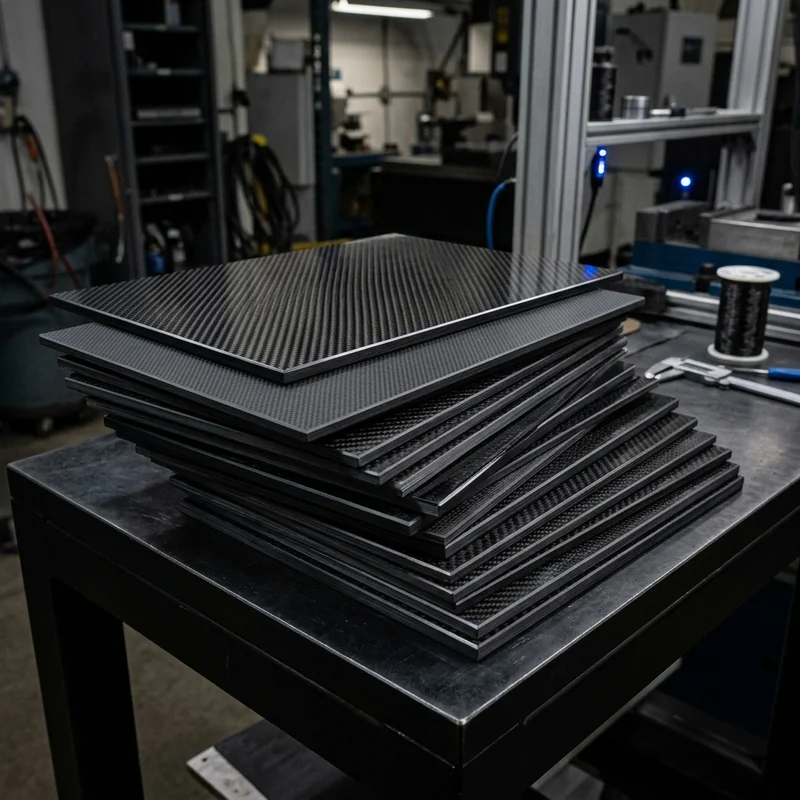
Carbon fiber standard plate-3k stripe
Lightweight, ultra-rigid standard sheets for drone fuselages, robot housings, facades and structural applications.

Carbon Fiber Plate — 3K Twill T700 1.5mm
Thin 1.5mm carbon fiber plate with 3K twill weave surface. Lightweight and stiff, commonly used for covers, panels, drone bodies, and applications requiring a premium aesthetic appearance.

Square Carbon Fiber Tube — 3K Twill T700
Square cross-section carbon fiber tube manufactured with 3K twill weave for torsional strength. Preferred for structural frames, trusses, and support columns where rectangular geometry offers design flexibility.

Carbon Fiber Plate — 3K Twill T700 3.0mm
Medium-thickness 3.0mm carbon fiber plate offering significantly higher load capacity while maintaining attractive 3K twill finish. Suitable for structural brackets, reinforcement plates, and load-bearing panels.
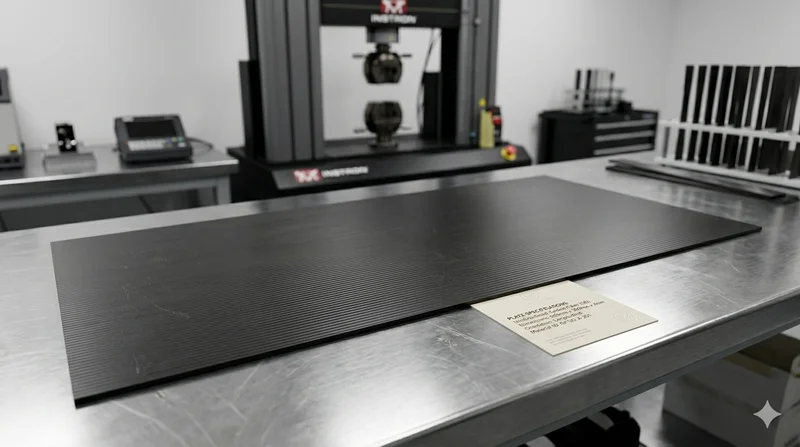
Carbon Fiber Plate — UD Unidirectional T700
Unidirectional carbon fiber plate with all fibers oriented in a single direction for maximum strength along the fiber axis. Essential for structural reinforcements, splints, and applications where load direction is predictable.