
Adhesive bonding has become the preferred joining method for carbon fiber composite structures in aerospace, automotive, and wind energy applications. Unlike mechanical fastening, which drills holes that cut load-bearing fibers and create local stress concentrations, adhesive bonding di
Introduction
Adhesive bonding has become the preferred joining method for carbon fiber composite structures in aerospace, automotive, and wind energy applications. Unlike mechanical fastening, which drills holes that cut load-bearing fibers and create local stress concentrations, adhesive bonding distributes load continuously across the joint area, preserves fiber continuity, and eliminates the most common source of fatigue failure in composite structures. A well-designed bonded joint can transfer 40-80% of the parent laminate's strength, versus 30-50% for a bolted joint in the same material, while saving between 10-25% of structural weight by removing fasteners, doublers, and plating lugs.
The paradox of adhesive bonding is that the adhesive itself is seldom the weak link. Research and field inspections consistently show that the vast majority of bonding failures initiate at or near the surface layer: contamination, inadequate surface roughening, moisture ingress, or an under-cured surface layer of resin. For safety-critical bonded parts, regulators and airworthiness authorities require manufacturing processes that control each of these variables. This article explains the surface preparation methods, bondline control techniques, and quality assurance framework that make bonded carbon fiber structures both strong and certifiable.
Why Surface Preparation Determines Bond Reliability
Adhesive bonding depends on adhesion at the molecular level. A structural epoxy adhesive typically develops lap-shear strength of 20-35 MPa against a properly prepared carbon fiber surface. If the same panel is bonded with only a peel-ply surface or contaminated with mold release, lap-shear strength can fall below 5 MPa — a degradation of more than 80%. The reasons are physical and chemical:
- Contamination: Mold release agents, silicone, fingerprint oils, cutting fluids, and shop dust all act as weak boundary layers. They sit between the adhesive and the laminate, and failure propagates cleanly through them.
- Excess resin (poor-ratio surface): An as-cured composite surface is resin-rich and often resin-starved at the fiber peaks. Bonding to a resin layer means bonding to material with lower cohesive strength than both the fibers and the adhesive; the joint then fails adhesively at low loads.
- Low surface energy: Bare epoxy surfaces have limited free energy, and the wetting of a viscous adhesive depends on surface energy. Roughening increases the effective bonding area and exposes carbon fibers, dramatically improving wetting and mechanical interlocking.
The practical rule in bonded production: the bond interface is tested by its weakest layer, and every square centimeter of the bondline counts.
Surface Preparation Methods Compared
Four methods dominate current aerospace and industrial production. The choice depends on the laminate system, geometry, contamination level, and whether the surface was protected during cure. The table below compares typical performance and process characteristics:
| Method | Typical Lap-Shear after Prep (MPa) | Surface Contamination Removal | Cycle Time per Panel | Automation / Repeatability | Key Drawback |
|---|---|---|---|---|---|
| Peel ply (nylon/polyester) co-cured or co-bonded | 25-35 (comparable to abrasion) | Moderate — removes contamination into the ply layer | Minimal added time; peeled in seconds | Excellent — uniform texture, no operator skill | Adds ply handling step; fine peel-ply residue must be removed |
| Abrasive blasting / sanding (P120-P240) | 30-40 | Good — removes resin-rich layer and contaminants | 5-20 min per m² | Manual, operator dependent | Risk of cutting load-bearing fibers if over-sanded |
| Atmospheric plasma / corona treatment | 20-35 (chemical activation) | Low — cleans surface, does not remove resin | 1-5 min per m² | High — robotic nozzle paths | Effects decay within hours; must bond within short time window |
| Laser ablation (pulsed, wavelength-matched) | 35-55 | Excellent — removes controlled resin depth, keeps fiber intact | Robotic, high repeatability | High — fully digital process | Capital cost of laser cell; process qualification effort |
In production, peel ply and mechanical abrasion remain the workhorses, supported by solvent or ultrasound-driven cleaning. Laser ablation is expanding in safety-critical aerospace application because it delivers the most reproducible, contamination-free surface and makes process verification straightforward: the ablated depth is measurable and documented digitally.
Bondline Control: Thickness, Pressure, and Cure
Even with a perfect surface, the bondline itself must be controlled. Bondline thickness is typically specified at 0.10-0.25 mm. Too thin (<0.05 mm) reduces the peel strength and leaves only a brittle speck of adhesive; too thick (>0.5 mm) increases adhesive strain under load and reduces joint strength. In structural assembly, bondline is controlled by:
- Bondline-gap schemes: Machine the parts to a near-match, and use shims, film adhesives, or carrier woven cloth to guarantee uniform gap. Film adhesives with a nylon or glass carrier are common in aircraft.
- Pressure control: Vacuum bagging provides 0.05-0.09 MPa, while autoclave provides 0.10-0.60 MPa. Higher pressure collapses porosity in the bondline and forces out trapped air but requires robust tooling and part support to avoid laminate deformation.
- Cure cycle control: Structural adhesives are cured at 120-180°C for 0.5-2 hours. Dwell time and temperature must be maintained within the adhesive manufacturer's tolerance; under-cure produces a soft, creep-prone bondline, while over-cure embrittles it.
Records of these parameters per-bond cycle are part of the required traceability for bonded structural parts.
Quality Assurance Framework for Bonded Structures
For aviation and other safety-regulated domains, bonding must be demonstrated before certification. The framework in airworthiness guidance (for example, guidance materials consistent with the topics of AC 21.26) requires an operator to:
- Classify the bond: Differentiate structural (safety-critical) bonding from non-structural, and apply the qualification level accordingly.
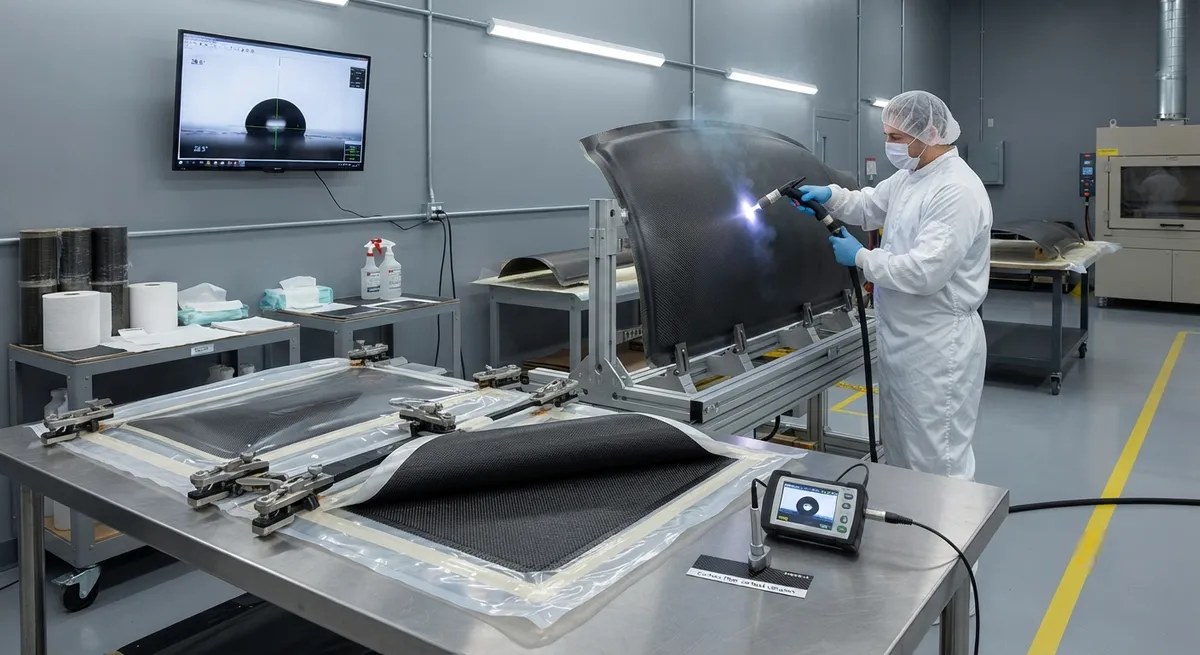
- Verify surface prep: Use a structured verification of splash-penetration dye or water-break test, contact-angle measurement, or a tape-pull test with documented acceptance limit, before adhesive application.
- Demonstrate with coupons: Use process-control coupons bonded in the same cycle as the production part; test them to lap-shear and/or peel. This is the primary airworthiness evidence for bonded joints.
- Inspect non-destructively: Ultrasonic inspection (automated tape lamination of probe scans, phased array) is used for bondline void detection; where certification limits inspection, the design must include supplementary mechanical fasteners—a principle called 'proven bonding' in the guidance.
- Keep No-Retreat documentation: Bonding records, prep data, cure charts, and coupon results must be retrievable in the maintenance/build documentation for traceability.
The underlying engineering logic: because a bonded joint cannot be visually inspected for quality reliably at a later time, the quality must be built into the process and proved through test coupons and NDT.
Frequently Asked Questions
Is adhesive bonding stronger than bolting carbon fiber composites?
For the same joint area, a correctly prepared adhesive bond typically transfers 40-80% of the laminate's load-bearing capacity while bolted joints transfer 30-60%. Adhesive bonding also removes stress concentrations at the holes and keeps the fibers continuous, which matters for fatigue. However, bolted joints remain preferred where the application needs a visible failure mode, removable parts, or structures stressed beyond the adhesive's temperature range. Many primary structures use hybrid joints: adhesive for the load path and a few fasteners as a fault-tolerant fallback.
How do I know if the surface has good adhesion after bonding?
Prior to bonding, the strongest verification you can do is a water-break or splash test on the surface: correctly prepared surfaces wet completely, while a contaminated or smooth surface forms droplets. Contact-angle measurement (target of 30° or less with the test liquid) is the quantified version. After bonding, the only real proof is a process coupon that went through the same prep and cure steps, plus NDT for defects. Surfaces peeled immediately before bonding are usually exempt from the splash verification, but they still require a controlled time window and cleanliness discipline.
What are the most common causes of adhesive bond failure in carbon fiber parts?
Field and laboratory studies rank the causes: (1) contamination of the surface before bonding (mold release, silicone, dust) causing premature adhesive failure; (2) improper surface texture — either too smooth (no mechanical interlock) or machined into the fibers; (3) excessive bondline thickness or voids from trapped air; (4) under-cure of the adhesive leaving a weak long-term bond; and (5) durability degradation from moisture ingressing into open bond edges. The first three avoidable by surface preparation and pressure control; the last two require careful cure and design edge protection.
Conclusion
Adhesive bonding is the joining method that gets the most out of carbon fiber structures, but only when the surface is prepared with discipline and intent. Removing the weak boundary layer, roughening to expose fiber, controlling bondline thickness, and verifying the prepared surface turn culprits — contamination, low surface energy, incomplete cure — into controlled process parameters. For projects where bonding touches safety it is mandatory to combine process control coupons with non-destructive testing, following the same logic as the certification guidance referenced in this article.
YongXian supplies carbon fiber fabrics, prepregs, and structural sheets for bonded assembly in aerospace and industrial programs, including surfaces optimized for co-cured and secondary bonding. Explore our carbon fiber product range or contact our engineering team to discuss partner surface preparation and bonding validation for your application.
Part of topic
Related Articles
- Carbon Fiber Drone Blades and Propellers: Stiffness, Balance and Noise Reduction
- Fiberglass Filament Wound Tubes: Cost-Effective Alternative to Carbon Fiber
- Filament Wound Epoxy Tube Design: Wall Thickness, Fiber Angle and Load Optimization
- Filament Wound Epoxy Tubes: Testing Standards and Quality Assurance
- Filament Wound Epoxy Tubes Manufacturing: Process and Quality Control
- Filament Wound Fiberglass Tube: Process Parameters and Performance vs Carbon Fiber
Interested in Our Products?
Contact our team for competitive pricing and technical specifications.
Get a QuoteRelated Products
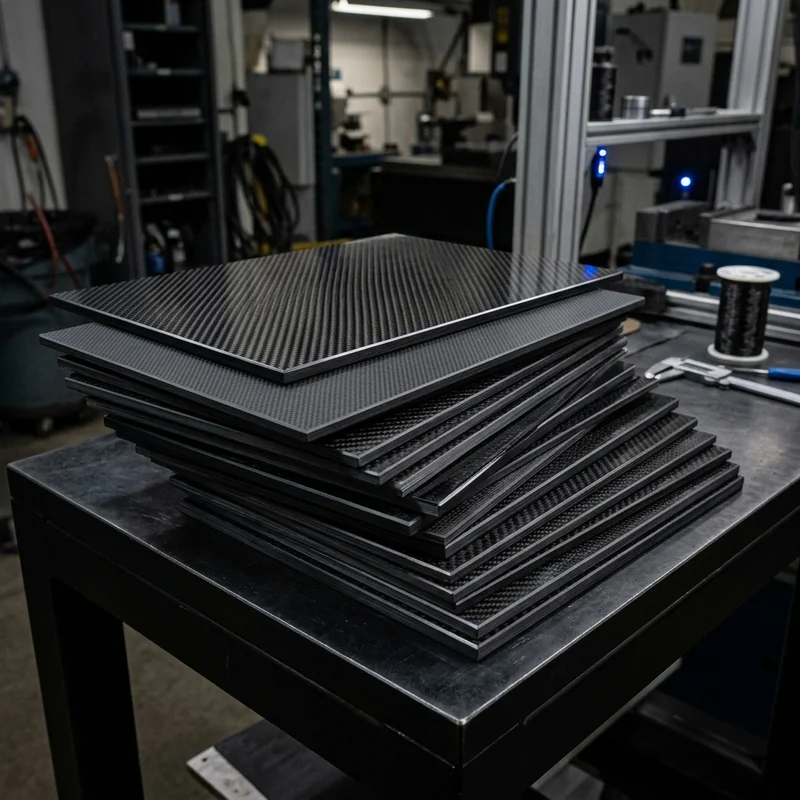
Carbon fiber standard plate-3k stripe
Lightweight, ultra-rigid standard sheets for drone fuselages, robot housings, facades and structural applications.

Carbon Fiber Plate — 3K Twill T700 3.0mm
Medium-thickness 3.0mm carbon fiber plate offering significantly higher load capacity while maintaining attractive 3K twill finish. Suitable for structural brackets, reinforcement plates, and load-bearing panels.
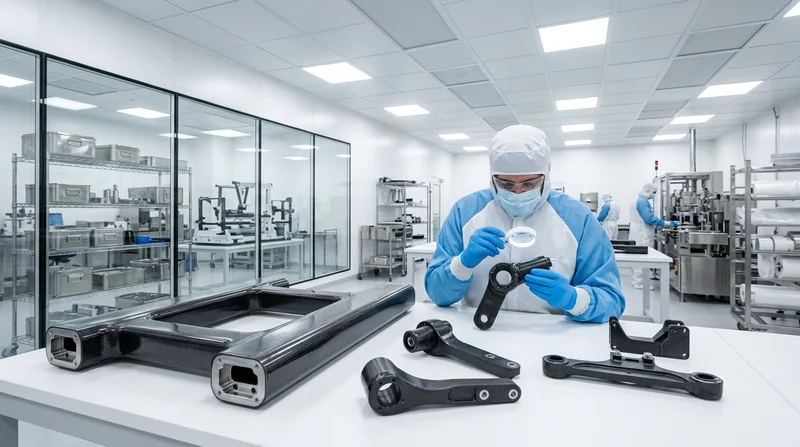
Custom Carbon Fiber Medical Device Components
Medical-grade carbon fiber components manufactured for imaging equipment, surgical instruments, and patient support systems. Carbon fiber's radiolucency (X-ray transparency) and high strength-to-weight ratio make it ideal for CT scanner beds, wheelchair frames, surgical robot arms, and MRI-compatible accessories. Biocompatible resin systems available.

Carbon Fiber Plate — 3K Twill T700 1.5mm
Thin 1.5mm carbon fiber plate with 3K twill weave surface. Lightweight and stiff, commonly used for covers, panels, drone bodies, and applications requiring a premium aesthetic appearance.
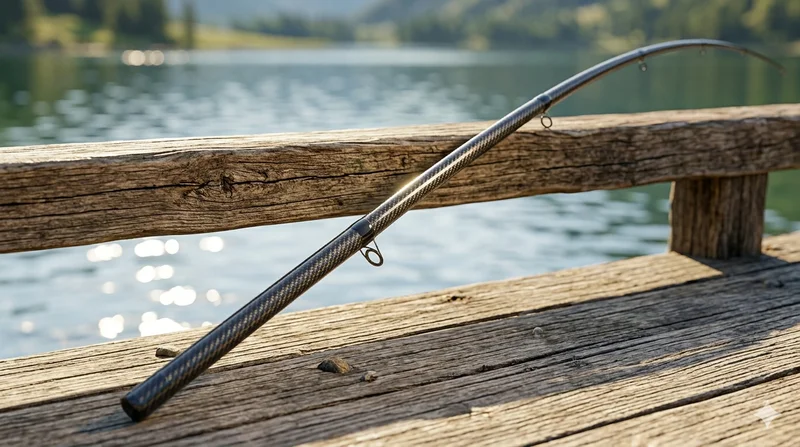
Carbon Fiber Fishing Rod Blank
High-quality carbon fiber fishing rod blank manufactured from multiple grades of Toray carbon fiber cloth. Available in a wide range of lengths, powers, and actions for freshwater and saltwater applications. Suitable for OEM rod building.