
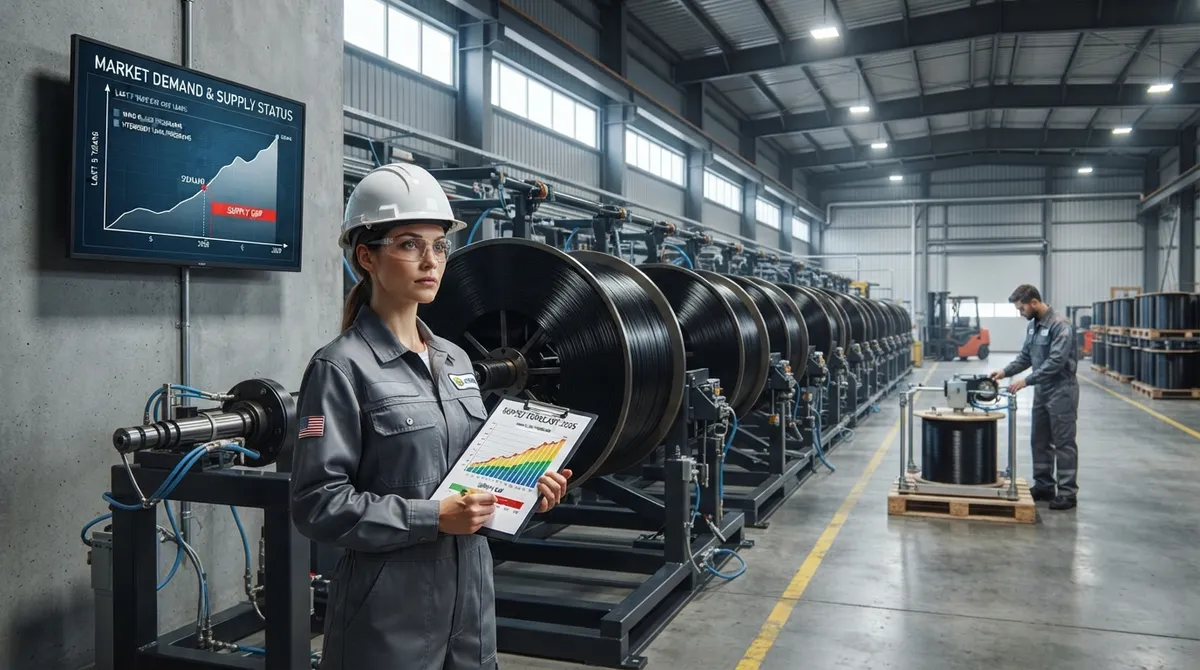
Large-tow carbon fiber — practical fiber sold as 48K, 50K, and 60K tows — is the workhorse of energy-transition structural applications. It is the specified reinforcement for large wind turbine spar caps and shear webs, the standard for high-pressure hydrogen storage vessels, and increa
Introduction
Large-tow carbon fiber — practical fiber sold as 48K, 50K, and 60K tows — is the workhorse of energy-transition structural applications. It is the specified reinforcement for large wind turbine spar caps and shear webs, the standard for high-pressure hydrogen storage vessels, and increasingly the default for automotive and industrial parts where cost per unit of performance matters as much as the property itself. In 2025 global large-tow capacity grew by roughly 6%, while demand in large-tow end markets grew by 11-13%; in 2026 the gap has begun to widen earlier than most forecasts suggested.
For procurement teams the consequence is tangible: lead times are stretching, suppliers are asking for multi-year commitments, and merchant tow prices are firming after the mid-2024 trough. This article explains where the imbalance comes from, why 2028 is the marker year for an acute phase, and — crucially — how wind and hydrogen buyers can secure supply before the window closes.
Why Large Tow: Economics First
Large-tow fiber wins on cost per kilogram. Processing 48K-60K tows means more filament per line, lower energy and labor per unit, and a typical merchant price 15-30% below equivalent small-tow standard-modulus grades. When conversion costs dominate — as they do in meter-long blade spars and thick-walled tank hoop layers — the saving is decisive. But the same economics creates fragility: large-tow lines are built for scale, carry fewer flexible grade swaps, and when a line is down for maintenance, temporary supply simply is not there.
- Wind blades: 50K tows in spar caps and shear webs — the single largest growth block for large-tow volume through 2030.
- Hydrogen vessels: Type IV tanks wound with high-tensile large-tow fiber in the hoop layers; per-tow price directly moves tank cost.
- Automotive and industrial: 50K and 60K fiber in compression-molded and pultruded parts where knockdown price outweighs the stiffness premium.
Why 2028 Is the Turning Point
Several forces converge on 2028. First, wind installed base is scheduled to pass the 1,200 GW mark by 2030, and blade size keeps climbing — larger blades consume more fiber per megawatt, so demand compounds faster than capacity. Second, hydrogen mobility programs are moving from pilots to repeat production, and each 20,000 tanks-equivalent program adds meaningful tow tonnage. Third, capacity additions announced in the 2024-2026 window land mostly in 2025-2027; after that the announced pipeline thins noticeably.
Analyst models show the supply-demand balance roughly clearing in 2025-2026, reaching toward balanced in 2027; from 2028 the implied deficit grows each year as demand compounds while zero announced capacity covers the run rate. This is why several OEMs already hold multi-year commitments past 2028 — the queue is visible to buyers who monitor it, even when the spot market still looks calm.
| Year | Announced capacity growth | Demand growth | Illustrative supply gap |
|---|---|---|---|
| 2025 | +8% | +11% | -3% |
| 2026 | +9% | +13% | -4% |
| 2027 | +7% | +12% | -5% |
| 2028 | +3% | +13% | -10% |
The table is illustrative, not a forecast: independent data sets differ on absolute numbers, but every published model shows the same shape — the gap widens sharply in 2028 and continues through 2030. Note that plant can switch grades, so the 'capacity' number is elastic; nonetheless, the structural band is consistent.
China and the Half of Global Capacity
China operates about half of the world's large-tow capacity, and an even larger share of newly announced brownfield and greenfield projects in the 2025-2027 period. That concentration is strategic for pricing — accessible, cost competitive Chinese production has pulled large-tow merchant prices down sharply, making wind and tank projects viable that would not have been at earlier pricing — but it is also a concentration of risk for buyers outside China. Export controls, tariff barriers, or domestic demand spikes can reassign capacity quickly.
The practical answer is diversification, not retreat: keep a committed Western or regional source, keep a qualified Asian stream, and maintain a qualification path with new producers so that the buyer is not hostage to a single country's supply line. Diversification does not aim to be equal to China's scale; it aims for redundancy and optionality in the tightening market.
A Strategic Sourcing Playbook for 2026-2030
- Contract long, commit volume: negotiate a 3-5 year forecast with minimum annual take, because merchant volumes get reassigned first in short windows.
- Qualify early, dual-grade: start material qualification 6-18 months before volume needs, and keep two distinct qualified large-tow grades in house.
- Use formula pricing: base contracts on an index formula (raw material and energy, plus supply-demand indices) instead of fixed spot numbers.
- Buy the right form: compare tow, roving, and prepreg conversion costs, because the same fiber in different form carries different price and supply dependency.
- Track announced capacity: question internally each quarter about what new plants actually start line, since announced capacity and operational capacity differ sharply.
Frequently Asked Questions
Why does the shortage become acute in 2028 specifically?
Because announced capacity lands mostly in 2025-2027, while wind and hydrogen demand compounds strongly each year. The models that clear the market in 2026-2027 return a widening deficit from 2028, and many OEMs already hold multi-year tows behind their 2028 procurement plans. It is equally a modelling and a scheduling event — the pipeline of new capacity after 2028 is thin.
How much of the shortage is China-dependence and how much is genuine overshoot?
China operates about half of capacity, but the shortage itself is structural: demand growth outruns capacity additions independent of region. The China factor is about reliability and control — a country adjust the supply — rather than the cause of the 2028 tightening. A buyer diversification strategy addresses both reasons: redundancy and schedule.
What should a wind or hydrogen buyer do right now?
Fix a multi-year base volume with a formula-linked price, top up with a qualified second source, start a dual protocol qualification with a new supplier instead of waiting, and review form conversion costs (tow vs roving vs prepreg) so that you buy the flexible form of supply is not the constraint.
Conclusion
The large-tow carbon fiber market is heading toward a structural shortage by 2028, and the buyers who protected volume early will hold the advantage. Contract long, qualify early, hold two sources and two grades, and govern price with an index formula. The cost of the insurance is preparation; the cost of waiting is supply at any price.
We supply qualified large-tow carbon fiber grades for wind and hydrogen applications with full traceability. Review our carbon fiber product range for wind blade and tank programs, or contact our engineering team to discuss a strategic supply agreement across 2026-2030.
Part of topic
Related Articles
- Carbon Fibre Sheet Supplier UK: Sourcing Options and Specification Checklist
- Carbon Fiber Sheets Near Me Suppliers: Local Stock vs Factory Direct
- Filament Wound Epoxy Tubes: Industry Standards and Compliance Requirements
- Carbon Fiber Dealers Near Me: What a Good Dealer Actually Adds
- Carbon Fiber Supplies Near Me: Local Sourcing Without Compromising Spec
- Carbon Fiber for Sale: Online Platforms and Direct Sales Channel Comparison
Interested in Our Products?
Contact our team for competitive pricing and technical specifications.
Get a QuoteRelated Products
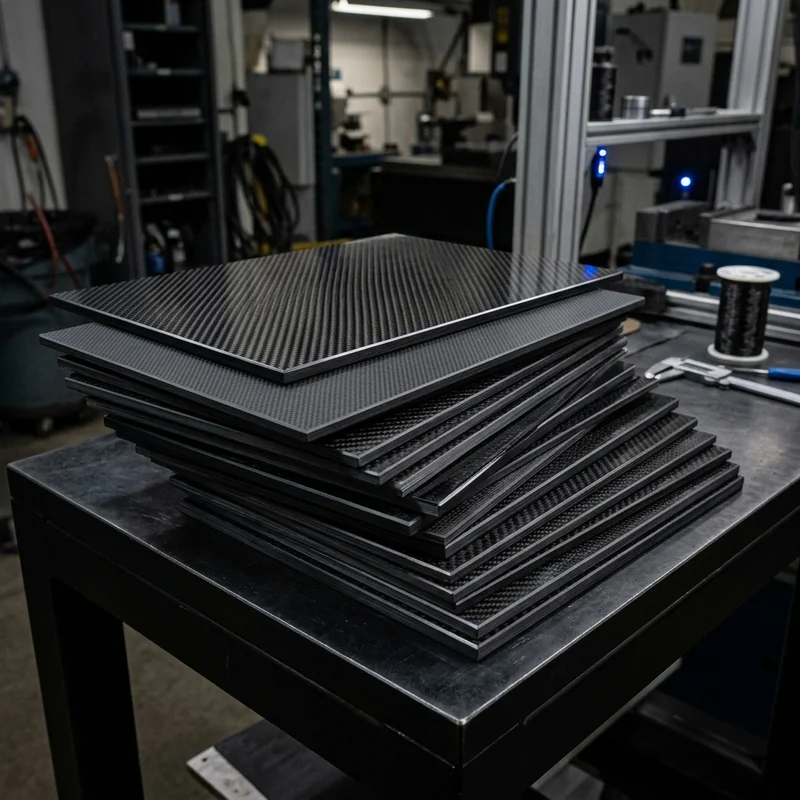
Carbon fiber standard plate-3k stripe
Lightweight, ultra-rigid standard sheets for drone fuselages, robot housings, facades and structural applications.

Carbon Fiber Plate — 3K Twill T700 3.0mm
Medium-thickness 3.0mm carbon fiber plate offering significantly higher load capacity while maintaining attractive 3K twill finish. Suitable for structural brackets, reinforcement plates, and load-bearing panels.
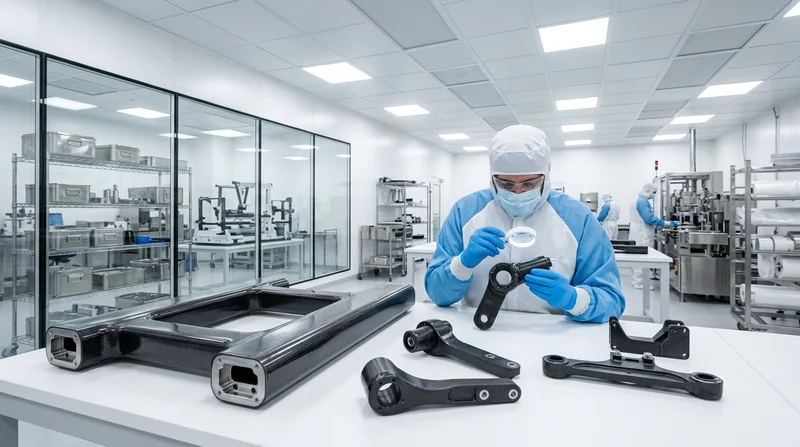
Custom Carbon Fiber Medical Device Components
Medical-grade carbon fiber components manufactured for imaging equipment, surgical instruments, and patient support systems. Carbon fiber's radiolucency (X-ray transparency) and high strength-to-weight ratio make it ideal for CT scanner beds, wheelchair frames, surgical robot arms, and MRI-compatible accessories. Biocompatible resin systems available.

Carbon Fiber Plate — 3K Twill T700 1.5mm
Thin 1.5mm carbon fiber plate with 3K twill weave surface. Lightweight and stiff, commonly used for covers, panels, drone bodies, and applications requiring a premium aesthetic appearance.
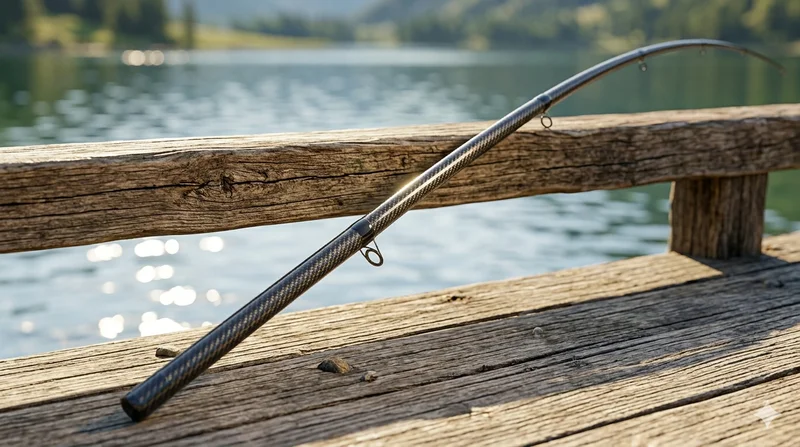
Carbon Fiber Fishing Rod Blank
High-quality carbon fiber fishing rod blank manufactured from multiple grades of Toray carbon fiber cloth. Available in a wide range of lengths, powers, and actions for freshwater and saltwater applications. Suitable for OEM rod building.