
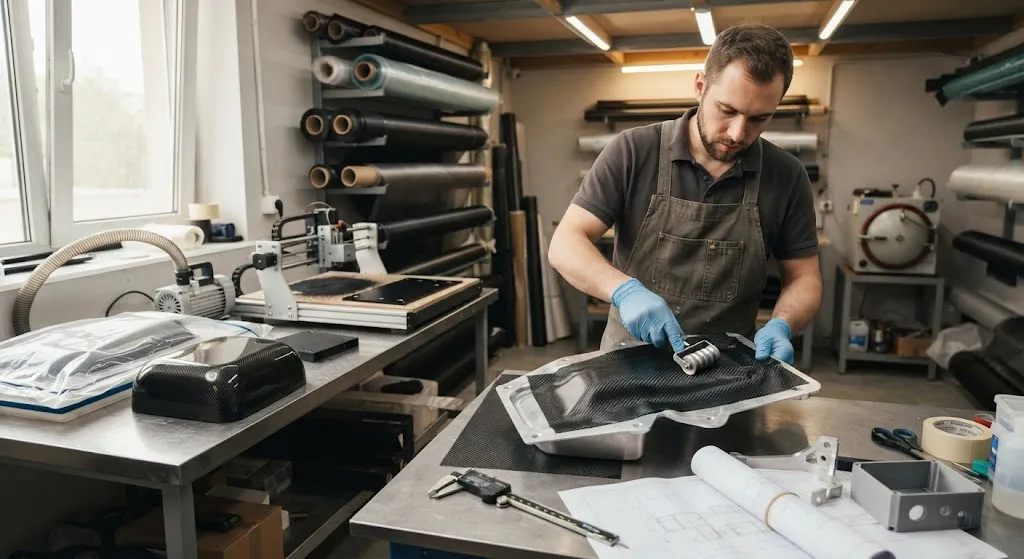
Custom carbon fiber fabrication near me is the search that starts when a prototype needs to become a part. Local fabrication shops combine layup, molding, machining and bonding into a single workflow, so you can iterate on a design in days instead of waiting weeks for offshore tooling. The trade-off
Introduction
Custom carbon fiber fabrication near me is the search that starts when a prototype needs to become a part. Local fabrication shops combine layup, molding, machining and bonding into a single workflow, so you can iterate on a design in days instead of waiting weeks for offshore tooling. The trade-off is that the result depends entirely on how well you choose and brief the shop.
This guide explains what a local custom carbon fiber fabrication shop actually does, the capabilities to compare before you commit, and the specification details that prevent the classic failures — warped panels, uneven surfaces and parts that do not fit. The same evaluation framework works whether you need one prototype or a production run.
What Custom Carbon Fiber Fabrication Near Me Covers
A full-service fabrication shop does more than mould a single part. It can take a 2D drawing or 3D model and deliver a finished assembly by combining several processes. The table below shows the core capabilities and where each one fits.
| Capability | Typical Use | Dimensional Tolerance | Relative Cost |
|---|---|---|---|
| Hand layup + vacuum bag | Prototype panels, housings, enclosures | ±0.5 mm | Low |
| Prepreg + autoclave molding | Structural parts, aerospace-grade items | ±0.1 mm | High |
| CNC machining of cured parts | Holes, edges, brackets, fittings | ±0.1 mm | Medium |
| Bonding and assembly | Multi-part structures, inserts, fixings | ±0.3 mm | Medium |
Hand layup with vacuum bagging is the entry point for most custom work. Fabric is placed on a tool, resin is applied, and a vacuum bag compresses the stack while it cures at room temperature or low heat. It suits panels, housings and low-volume parts where a mould exists or can be made cheaply.
Prepreg and autoclave molding is where custom carbon fiber fabrication near me delivers the highest quality. The shop cuts pre-impregnated fabric, lays it into a mould, and cures it under heat and pressure. The result is a dense laminate with predictable thickness and smooth surfaces on both faces — the grade used for structural and visibly finished parts.
CNC machining and bonding finish the job. Machining adds holes, slots and precise edges that moulding cannot produce, and bonding joins cured sub-parts into assemblies with structural adhesives. A shop that offers all four capabilities can deliver a finished bracket or housing instead of a bare laminate.
How to Evaluate a Custom Carbon Fiber Fabrication Shop
Not every local shop is equipped for your job, and the fastest way to waste money is choosing one on the strength of a website. Walk through these five checks before committing.
- Portfolio match: ask for parts similar to yours — similar size, surface finish and tolerance. Photos of cosmetic panels tell you nothing about structural capability.
- Tooling ownership: confirm whether the shop makes its own moulds or outsources them, and what tooling cost you should budget.
- Quality equipment: a usable shop has temperature-controlled cure capability, a vacuum pump, and measurement tools such as calipers, CMM or laser scanner.
- Process documentation: request a sample work order with ply schedule, cure cycle and inspection points. Written process records are the difference between repeatable and lucky.
- Lead time honesty: a realistic quote states the lead time for tooling separately from the lead time for parts, and flags material sourcing delays in advance.
For buyers in the United States, working with a custom carbon fiber fabrication shop that stocks domestic material and ships finished parts directly avoids double freight and import friction. Many custom carbon fiber fabrication suppliers also keep a fast-turn lane for nearby customers who need parts the next day.
The Near-Me Advantage for Prototypes and Iteration
Proximity pays off most during development, when designs change every few weeks. A local custom carbon fiber fabrication supplier lets you inspect parts on arrival, correct a drawing, and have the revised version in your hands within days. That iteration loop is the real reason the near-me search matters: it converts slow prototyping cycles into weekly releases.
- On-site inspection: visit the shop during a production run to see the actual layup and cure conditions rather than trusting photos.
- Faster revision cycles: a drawing change that takes two weeks round-trip to Asia can be turned around locally in two to three days.
- Lower freight risk: short domestic shipping reduces damage in transit and eliminates customs delays for urgent parts.
- Simpler warranty: a part that fails in service is returned, inspected and remade without international logistics.
When volume grows, many buyers keep the local shop for prototypes and tooling trials, then move steady production to a lower-cost offshore manufacturer once the design is frozen. The local relationship remains the quality anchor for the whole program.
Structuring Your First Fabrication Project
The shops that deliver reliable parts run every project in the same three phases. Phase one proves the tooling: the mould is made, a test laminate is cured, and dimensional measurements are checked against the drawing. Phase two is the prototype batch — a small number of parts that are inspected, fitted and signed off by you. Phase three releases production against the frozen drawing. Agree on this sequence in writing, and define what happens when a revision arrives mid-production: most shops allow one or two free drawing revisions during the prototype phase, then charge for tooling or program changes afterwards.
Set the acceptance criteria before the first part is made, not after. Define the critical dimensions and tolerances, the surface finish class, and the inspection evidence you expect with each delivery — typically a dimensional report, batch numbers and material certificates. A written specification signed by both sides converts disagreements about quality into a simple pass or fail check, and it protects you exactly as much as it protects the shop.
Frequently Asked Questions
How much does custom carbon fiber fabrication cost?
A simple vacuum-bagged panel can cost $50-150 per part at prototype quantities, while a prepreg autoclave part with tooling runs $200-800 depending on size and complexity. The mould is usually the largest single item: a basic flat tool costs a few hundred dollars, while a shaped production mould can reach several thousand. Ask for tooling and part costs quoted separately so you can compare shops fairly.
Can a local fabrication shop handle production volumes?
It depends on the process. Vacuum-bagged hand layup is labour-intensive and suits volumes up to a few hundred parts a year. If you need thousands, ask whether the shop offers press molding or resin transfer, or whether it can transfer the design to a higher-volume manufacturer. Many local shops act as the engineering bridge: they build the prototype, prove the process, and then hand off a validated production package.
What files should I send to a fabrication shop?
Send a STEP or IGES 3D model plus a 2D drawing with critical dimensions, tolerances and surface finish callouts. State the intended laminate: fiber grade, weave, ply count and thickness. If you do not know the laminate, tell the shop the load case and let them propose one. A clear file package prevents the two most common failures — wrong dimensions and wrong material assumptions.
How long does a typical custom fabrication order take?
Prototype lead times are usually 2-4 weeks including tooling, material and curing. Production repeats of an established part typically run 3-5 weeks depending on batch size. Rush options at a 25-50 percent surcharge are common for in-stock materials. The longest lead time item is usually the mould or the raw material, so start tooling conversations as early as possible.
Conclusion
Custom carbon fiber fabrication near me delivers its real value in the iteration loop: inspect, revise, rebuild, repeat — in days instead of months. Choose a shop with the right capability mix, verify its process records, and separate tooling cost from part cost when comparing quotes. Start with a prototype that proves both the part and the relationship.
YongXian provides custom carbon fiber fabrication for panels, housings and assemblies with prepreg, autoclave and CNC capability, plus global shipping from our production base. Browse our fabrication services or send us your drawing for a same-day assessment and a written quote.
Part of topic
Related Articles
Interested in Our Products?
Contact our team for competitive pricing and technical specifications.
Get a QuoteRelated Products

Carbon Fiber Plate — 3K Twill T700 3.0mm
Medium-thickness 3.0mm carbon fiber plate offering significantly higher load capacity while maintaining attractive 3K twill finish. Suitable for structural brackets, reinforcement plates, and load-bearing panels.

Carbon Fiber Plate — 3K Twill T700 1.5mm
Thin 1.5mm carbon fiber plate with 3K twill weave surface. Lightweight and stiff, commonly used for covers, panels, drone bodies, and applications requiring a premium aesthetic appearance.
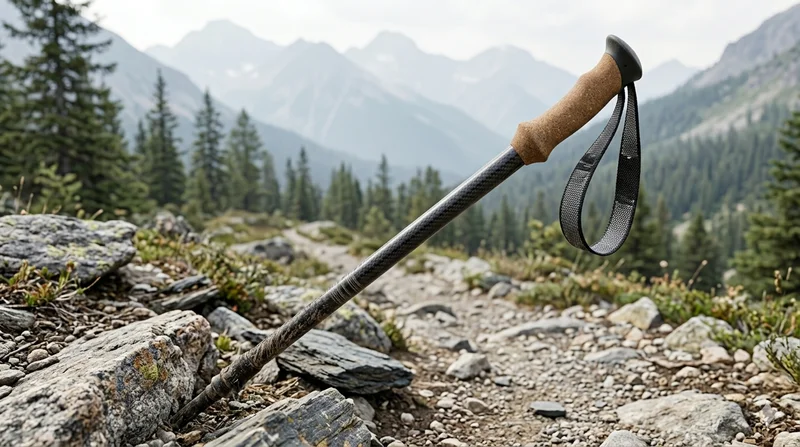
Carbon Fiber Trekking Pole
Lightweight carbon fiber trekking pole manufactured from high-grade carbon fiber tube. Weighs only 160g per pole while providing superior shock absorption and durability for hiking, trail running, and backpacking.
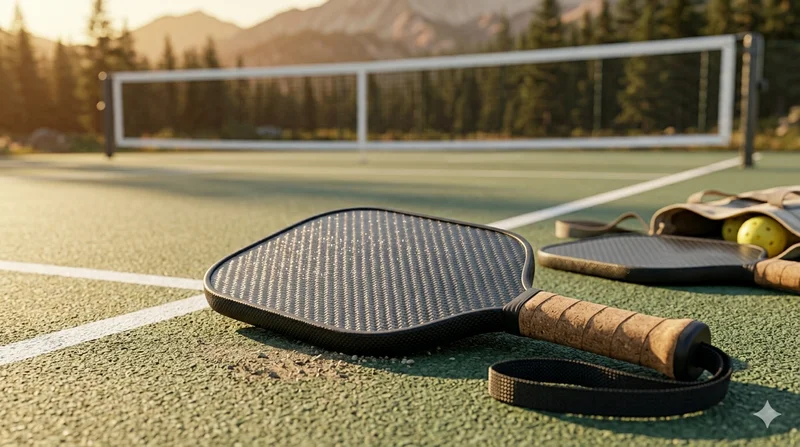
Carbon Fiber Pickleball Paddle
High-performance pickleball paddle with Toray T700 carbon fiber face and polypropylene honeycomb core. Delivers excellent power-to-weight ratio, spin generation, and vibration dampening for competitive play.

Square Carbon Fiber Tube — 3K Twill T700
Square cross-section carbon fiber tube manufactured with 3K twill weave for torsional strength. Preferred for structural frames, trusses, and support columns where rectangular geometry offers design flexibility.