
Anyone looking at carbon fiber tubes for sale will quickly notice that spec sheets look impressive: high tensile strengths, high moduli, and long lists of grades and diameters. The problem is that many of those numbers describe the fiber, not the tube, and fiber properties do not translate directly
Introduction
Anyone looking at carbon fiber tubes for sale will quickly notice that spec sheets look impressive: high tensile strengths, high moduli, and long lists of grades and diameters. The problem is that many of those numbers describe the fiber, not the tube, and fiber properties do not translate directly into the performance of a finished tube. This article explains which spec sheet fields actually matter when comparing carbon fiber tubes for sale, how to read them without being misled, and what to ask a supplier when the datasheet does not tell the full story. Understanding these fields is the difference between a tube that performs as designed and a tube that fails in service.
Carbon Fiber Tubes for Sale: Dimensions That Matter
The first group of fields is dimensional, and it is the group where mistakes are most common. A carbon fiber tube is defined by its outer diameter, inner diameter, and length, and the buyer must confirm all three rather than assuming a nominal size. A tube listed as 20 mm is almost always the outer diameter, but the wall thickness determines the inner diameter, and wall thicknesses vary between suppliers. Two tubes with the same 20 mm outer diameter can have inner diameters of 16 mm and 14 mm respectively, which changes the weight, the stiffness, and the fit with end fittings completely. Length is the third field: tubes are sold in stock lengths such as 500, 1,000, and 1,500 mm, and longer continuous tubes are made to order, so a buyer planning a 3 m spar must confirm whether the supplier can make a continuous tube or whether joints will be required.
| Field | What It Means | What to Check |
|---|---|---|
| Outer diameter | Nominal tube size, always the OD | Actual measured OD, not the name; tolerances vary by supplier |
| Wall thickness | Determines ID, weight, and stiffness | Nominal and tolerance; 1.5 mm and 2.0 mm walls are common but not interchangeable |
| Inner diameter | Matters for end fittings and inserts | Confirm the ID fits the bushing or insert before ordering |
| Length | Stock lengths vs. continuous made-to-order | Ask about maximum continuous length for spars and long members |
| Straightness | Deviation over a set length | Specified in mm/m; critical for shafts, guides, and masts |
Dimensional verification matters because carbon fiber tubes are made on mandrels, and the process has inherent tolerances. A reputable supplier states the tolerance on the OD, usually plus or minus 0.1 mm for precision tubes, and the wall thickness variation around the circumference. Buyers comparing carbon fiber tubes for sale should measure the received tube with a caliper and micrometer rather than trusting the label, because tube manufacturing is a process with real variation between batches.
Fiber Grade and Manufacturing Process
The fiber grade field tells the buyer what raw material went into the tube, but it needs to be read together with the manufacturing process. Standard-modulus T300 or T700 fiber is used for the majority of tube production, and high-modulus grades such as T800, M40, or M46 appear in aerospace and high-stiffness applications. The tensile modulus of the fiber is the headline number, but the tube's actual stiffness depends on the fiber volume fraction, which is set by the process. A pultruded tube with 65% fiber volume fraction is significantly stiffer than a filament-wound tube at the same diameter with 55%, even with identical fiber. The manufacturing process field therefore matters as much as the fiber grade.
- Pultrusion: continuous process, unidirectional fiber, highest stiffness and strength along the axis, consistent quality, standard choice for structural tubes.
- Filament winding: fibers laid at controlled angles, allows hoop strength and tailored properties, common for pressure and torsion applications.
- Roll-wrapped / prepreg: woven prepreg rolled over a mandrel, good surface finish, common for cosmetic and lighter-duty tubes.
- Braiding: braided fiber architecture, good torsion and impact behavior, often combined with a unidirectional core.
The practical rule is simple: for a tube that carries axial load or acts as a structural member, pultrusion is usually the right process; for pressure vessels and torsion-loaded shafts, filament winding wins. The spec sheet should state the process because it determines how the fiber is oriented and therefore how the tube behaves in each loading direction.
Wall Thickness Tolerance, Straightness, and Surface
Three quality fields separate production-grade tubes from hobby-grade tubes. Wall thickness tolerance matters because it drives weight consistency and stiffness consistency between tubes in a batch, and it matters for press-fit end fittings. A precision tube holds wall thickness to plus or minus 0.05 to 0.1 mm; a loose-tolerance tube can vary twice that. Straightness, measured as deviation in millimeters per meter, matters for shafts, guides, masts, and any application where the tube rotates or slides in a bearing. A straightness of 1 mm/m is typical for standard tubes, while precision shafts specify 0.5 mm/m or better. Surface condition matters for cosmetic applications and for bonding: pinholes, porosity, or a rough finish reduce bond strength and spoil the look of visible parts.
Buyers should ask for these three fields explicitly when they are not on the datasheet. A supplier that cannot state a wall thickness tolerance or a straightness figure is a supplier that does not control its process, and that is a strong signal to look elsewhere. The same applies to testing: a supplier offering carbon fiber tubes for sale with documented batch test data, including flexural modulus and compressive strength from actual tubes rather than fiber data, provides evidence that the process is controlled.
Carbon Fiber Tubes for Sale: Reading Load Ratings Correctly
The load rating fields are where datasheets are most easily misunderstood. Many spec sheets list tensile strength or modulus values that come from the fiber or from a flat laminate test coupon, not from the tube. The load a tube can actually carry depends on its cross-section, its wall thickness, the fiber volume fraction, and the failure mode, which can be compressive buckling rather than tensile fracture for thin-walled tubes. A useful comparison therefore uses the same geometry: the buyer compares tubes of the same outer diameter and wall thickness and asks for the flexural load or the compressive strength measured on a tube sample, not the fiber tensile strength. For a structural application, ask the supplier how the rated load was determined and whether it includes a safety factor.
- Compare like with like: same OD and wall thickness, or normalize the numbers to a common geometry.
- Ask for tube data, not fiber data: flexural modulus and strength from actual tube samples.
- Consider the failure mode: thin-walled tubes often fail by buckling, not material fracture.
- Confirm the safety factor: a rated load is only meaningful with a defined margin.
Reading load ratings correctly is the single most valuable habit when comparing carbon fiber tubes for sale, because it prevents both over-design and under-design. A tube chosen on fiber tensile strength alone can be dramatically over-specified for a compressive application and still buckle, or under-specified for a bending application because the datasheet ignored the geometry.
Frequently Asked Questions
Which spec sheet fields are most important for carbon fiber tubes?
The fields that determine fit and performance are the outer diameter and its tolerance, the wall thickness and its tolerance, the length and maximum continuous length, the straightness in millimeters per meter, the fiber grade, and the manufacturing process. These define whether the tube fits the end fittings, whether it has the right stiffness, and whether it will be straight enough for the application. Load ratings matter but must be read as tube data, not fiber data, and compared at the same geometry. Fields like surface finish matter for cosmetic and bonding applications.
How do I compare carbon fiber tubes from different suppliers?
Compare tubes of the same outer diameter and wall thickness, and ask each supplier for the same set of fields: dimensional tolerances, fiber volume fraction, manufacturing process, straightness, and load data measured on actual tube samples. Normalize the load numbers to a common geometry rather than comparing raw figures, and ask how each rated load was determined and what safety factor it carries. Price comparisons should use the same specifications, including tolerance class and test documentation, because a cheaper tube with loose tolerances can cost more in rework and scrap.
Why do two tubes with the same outer diameter perform differently?
Two tubes with the same outer diameter can differ in wall thickness, fiber volume fraction, manufacturing process, fiber grade, and straightness, and all of these change performance. A thinner wall reduces stiffness and load capacity and changes the inner diameter. A higher fiber volume fraction increases stiffness and strength. A pultruded tube with unidirectional fiber is stiffer along its axis than a filament-wound tube with angled fiber, and a high-modulus fiber grade raises modulus at higher cost. The outer diameter alone is the least informative field on the spec sheet; the combination of wall, process, and fiber data tells the real story.
Conclusion
Comparing carbon fiber tubes for sale comes down to reading a handful of fields correctly: dimensions with tolerances, fiber grade together with manufacturing process, straightness, and load data measured on tubes rather than fibers. These fields determine whether the tube fits the design, carries the load, and performs for its service life, while marketing numbers such as headline fiber strength contribute little to the selection decision. The buyers who get this right ask for tube-level test data, compare at the same geometry, and treat a supplier that cannot state tolerances as a supplier that does not control its process. That discipline turns a spec sheet into a reliable buying tool.
YongXian manufactures carbon fiber tubes for sale with controlled tolerances, documented process and batch data, and load testing on actual tube samples. Browse our carbon fiber tube range or contact our engineering team for tube-level datasheets and a quotation for your application.
Part of topic
Related Articles
- Carbon Fiber Sheets Near Me: Local Dealers and Quick Turnaround Procurement
- Carbon Fiber Tubes Near Me: Local Stock Availability and Same-Day Delivery Options
- Carbon Fiber Plate Orthotic: Lightweight Prosthetic and Medical Device Applications
- Carbon Fiber Sheets 6mm: Specifications, Load Ratings and Application Guide
- Carbon Fiber Rod Grips: Ergonomic Handle Design for Industrial and Sport Applications
- Carbon Fiber Propellers for Drones: Efficiency, Durability and Performance Optimization
Interested in Our Products?
Contact our team for competitive pricing and technical specifications.
Get a QuoteRelated Products

Carbon Fiber Plate — 3K Twill T700 3.0mm
Medium-thickness 3.0mm carbon fiber plate offering significantly higher load capacity while maintaining attractive 3K twill finish. Suitable for structural brackets, reinforcement plates, and load-bearing panels.

Carbon Fiber Plate — 3K Twill T700 1.5mm
Thin 1.5mm carbon fiber plate with 3K twill weave surface. Lightweight and stiff, commonly used for covers, panels, drone bodies, and applications requiring a premium aesthetic appearance.

Square Carbon Fiber Tube — 3K Twill T700
Square cross-section carbon fiber tube manufactured with 3K twill weave for torsional strength. Preferred for structural frames, trusses, and support columns where rectangular geometry offers design flexibility.
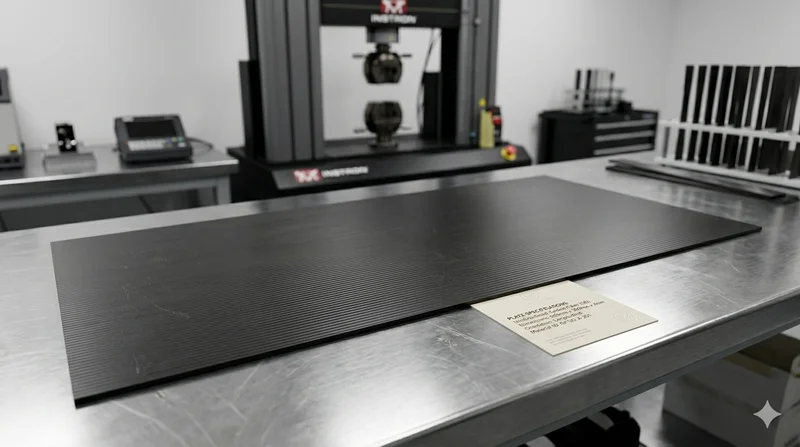
Carbon Fiber Plate — UD Unidirectional T700
Unidirectional carbon fiber plate with all fibers oriented in a single direction for maximum strength along the fiber axis. Essential for structural reinforcements, splints, and applications where load direction is predictable.
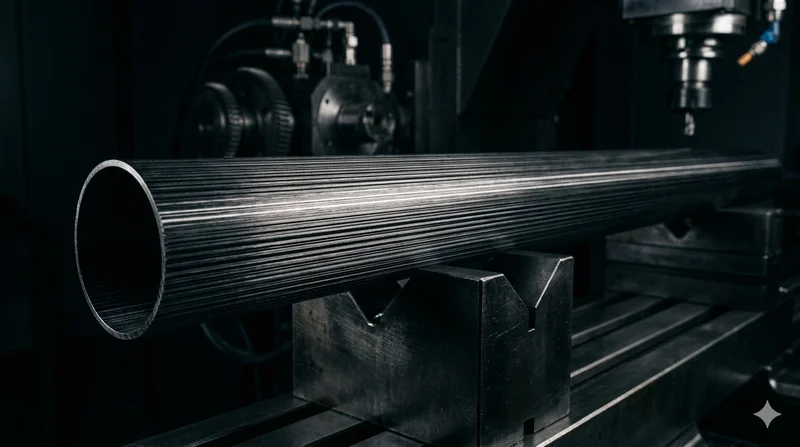
Round Carbon Fiber Tube — UD Unidirectional T700
Unidirectional (UD) round tube with all fibers aligned axially for maximum longitudinal stiffness. Ideal for applications requiring high bending rigidity with minimal weight, such as shafts, struts, and structural reinforcements.