A carbon fiber tapered tube custom program is a tooling decision before it is a price decision: the taper ratio, wall progression and mandrel define what the part can do, and the cut, bond and finish only preserve what the cure created. Off-the-shelf cones cover a few diameters; a custom program exi
Introduction
A carbon fiber tapered tube custom program is a tooling decision before it is a price decision: the taper ratio, wall progression and mandrel define what the part can do, and the cut, bond and finish only preserve what the cure created. Off-the-shelf cones cover a few diameters; a custom program exists because your mast, landing gear or robotic arm needs a transition that no catalog part carries — and because the supplier has to prove the geometry twice, once on the first article and again on every lot after it.
This guide covers what you can specify in a carbon fiber tapered tube custom order, how mandrel tooling and NRE shape MOQ and price, and the commercial terms — first article, price drivers and lead time — plus the questions that separate a real factory from a catalog reseller.
Carbon Fiber Tapered Tube Custom: What You Can Specify
Custom does not mean unlimited. A workable drawing fixes a small set of variables, and every one of them changes either the mandrel, the layup or the cure cycle. Suppliers price those changes, so the buyer who arrives with a clear variable list pays less than the buyer who iterates drawings during quoting.
| Variable | Typical custom range | What it changes | Cost impact |
|---|---|---|---|
| Taper ratio | 1.05:1 to 1.8:1 | Mandrel geometry | New mandrel, NRE |
| End diameters | 20-120 mm OD | Mandrel and die set | New mandrel, NRE |
| Wall schedule | 1.0-4.0 mm, stepped | Layup time, ply count | Linear on labor |
| Fiber schedule | 0/90, helical, woven skin | Material cost, stiffness | 10-25 percent on material |
| Length and end finish | 300-3000 mm, cut or bonded | Cut program, bonding | Per-piece finish cost |
The two columns that matter are the ones that trigger tooling: taper ratio and end diameters. If you can hold those and vary only wall schedule or length, you stay inside an existing mandrel family and skip the amortized tooling charge entirely.
Taper Ratio, Wall Progression and Mandrel Tooling
Design the mandrel before you design the layup. A steep taper saves weight at the tip but concentrates stress at the transition, and a wall that stays constant while the diameter shrinks quietly thickens the small end relative to its circumference. Fiber orientation follows the same logic: helical plies carry the axial load of a mast, while circumferential plies resist the crushing that a clamp applies at the joint.
- Fix the mandrel first: sign the taper ratio and both end diameters before quoting — every change after tooling cut re-opens NRE.
- Wall at both ends: state wall at the large end and the small end separately; one number for a taper hides the progression your joint must carry.
- Transition radius: blend the taper over at least 50 mm where the tube enters a socket; a sharp step is where fatigue cracks start.
- Ply orientation plan: 0/90 degrees for stiffness-driven tubes, helical (plus or minus 45 degrees) where torsion or bending reversal dominates.
- Deflection at stated load: put the acceptance number on the drawing — millimeters of tip travel at a defined force and length.
Ask your supplier whether the mandrel is steel, plated aluminum or composite, because that choice decides how many cycles the tool holds before taper drifts beyond tolerance.
Buy Carbon Fiber Tapered Tube: MOQ, NRE and Lead Time
When you buy carbon fiber tapered tube under a custom program, the invoice has three layers: NRE for tooling and engineering, piece price for the series, and inspection cost for the first article. Splitting them in the quotation lets you compare offers; blending them hides which supplier actually owns the tooling.
| Program stage | MOQ | Lead time | What you pay for |
|---|---|---|---|
| Engineering sample | 3-5 pcs | 2-3 weeks | Drawing validation, no series tooling |
| First article with new mandrel | 10-20 pcs | 4-6 weeks | NRE, mandrel cut, layup trial |
| Series production | 100-300 pcs | 3-5 weeks | Amortized tooling, stable cure cycle |
| Cut-to-size add-on | 50-150 pcs | +1-2 weeks | Cut program, chamfer, sanding |
Payment for first orders is typically 30 percent deposit against 70 percent before shipment, or an irrevocable letter of credit above roughly 30,000 USD. NRE is usually charged once per mandrel and credited back against a stated series volume — get that rebate clause in writing before the first transfer.
Carbon Fiber Tapered Tube Custom China: Factory Capability Check
A carbon fiber tapered tube custom China search mixes factories that own mandrels and curing ovens with trading companies that forward drawings to anonymous workshops. For a custom program the difference is decisive: only the party that owns the tooling can hold taper across lots, re-cut a drifted mandrel and sign the first-article report.
Three questions separate them on a first call: who owns the mandrels, can you audit the last five first-article reports, and which oven and cure schedule will run your part? Factories answer with tooling numbers and process sheets; traders answer with photographs. Both can ship on time — only one can re-cut a bad batch without finding a new workshop.
Frequently Asked Questions
What MOQ applies to a carbon fiber tapered tube custom order?
Engineering samples run 3 to 5 pieces. A first article with a new mandrel typically takes 10 to 20 pieces while the layup and cure cycle settle. Series production starts around 100 to 300 pieces once the tooling is validated. If you can reuse an existing mandrel family, those thresholds drop by roughly half because no new tooling must be amortized.
Who owns the mandrel and the first-article report?
In most contracts the supplier owns the mandrel and charges NRE for it, while you own the approved drawing and the dimensional report. Confirm both points in writing: supplier ownership lets them reuse the tool for you later, and your ownership of the report prevents a second factory from quietly shifting tolerances. Ask for the mandrel serial number on the first-article paperwork.
How long from approved drawing to first series shipment?
Plan four to six weeks for the first article when a mandrel must be cut, then three to five weeks for the first series lot after approval. Revisions to taper or end diameters restart the mandrel step, which is why the drawing should be signed before tooling begins. Cut-to-size finishing adds one to two weeks on top of the series schedule.
Conclusion
The right carbon fiber tapered tube custom supplier sells a signed tooling plan and a first-article report, not a per-piece price: taper ratio, wall at both ends, mandrel ownership and the deflection acceptance number are the four items that decide whether your program stays on schedule. Fix those first, then compare quotes.
YongXian runs carbon fiber tapered tube custom programs with lot traceability and export documentation. Browse our carbon fiber tube range or send your taper drawing and annual volume for a quotation.
Part of topic
Related Articles
- Carbon Fiber Telescopic Tube Custom: Specs, MOQ and Lead Time
- Carbon Fiber Hexagon Tube Custom: Specs, MOQ and Lead Time
- Carbon Fiber Oval Tube Custom: Specs, MOQ and Lead Time
- Carbon Fiber Square Tube Custom: Specs, MOQ and Lead Time
- Carbon Fiber Rod Custom: Specs, MOQ and Lead Time
- Carbon Fiber Plate Repair Service: Specs, MOQ and Lead Time
Interested in Our Products?
Contact our team for competitive pricing and technical specifications.
Get a QuoteRelated Products
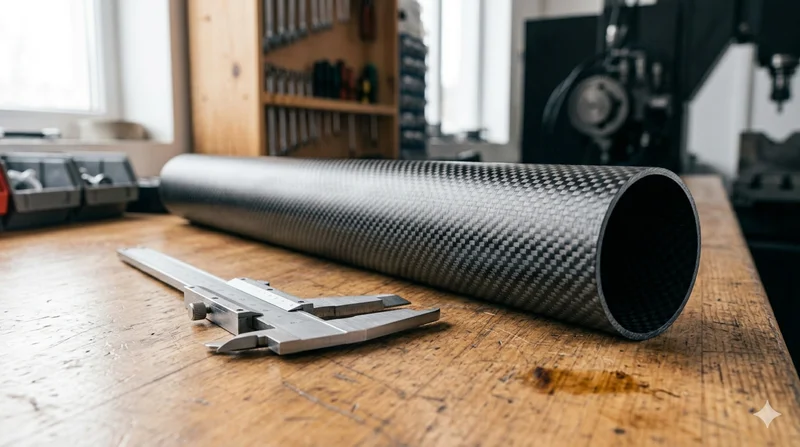
Round Carbon Fiber Tube — 3K Plain Weave T700
Standard round carbon fiber tube manufactured from Toray T700 grade fiber with 3K plain weave. Offers balanced strength and stiffness for general industrial applications including robotics, automation, sports equipment, and aerospace structures.
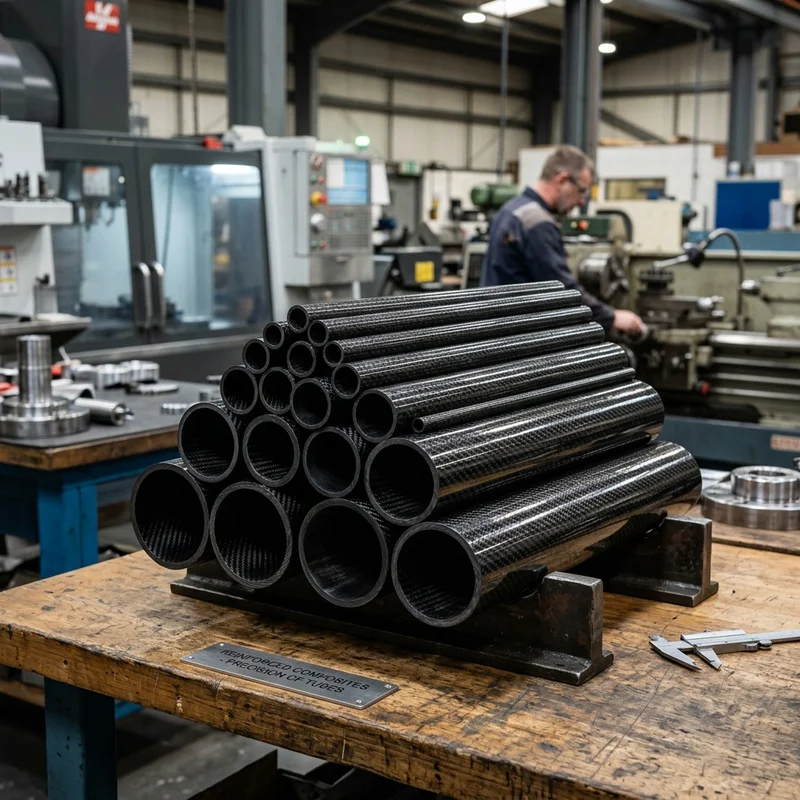
Round Carbon Fiber Tube — 3K Twill
Lightweight and ultra-stiff round tubes ideal for drone frames, robotics, and structural applications.
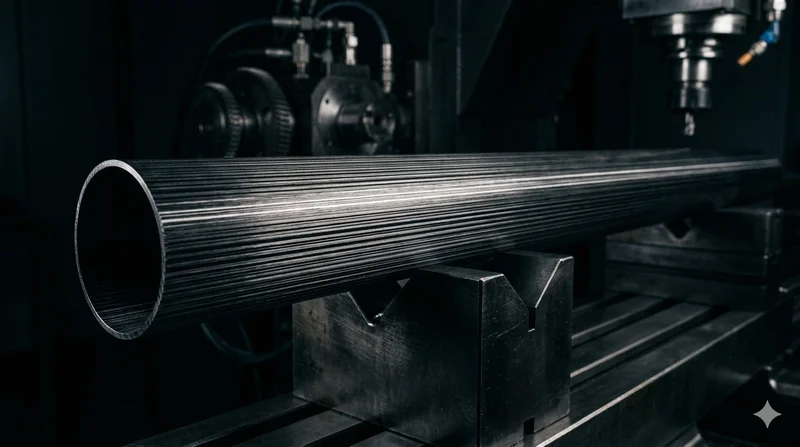
Round Carbon Fiber Tube — UD Unidirectional T700
Unidirectional (UD) round tube with all fibers aligned axially for maximum longitudinal stiffness. Ideal for applications requiring high bending rigidity with minimal weight, such as shafts, struts, and structural reinforcements.
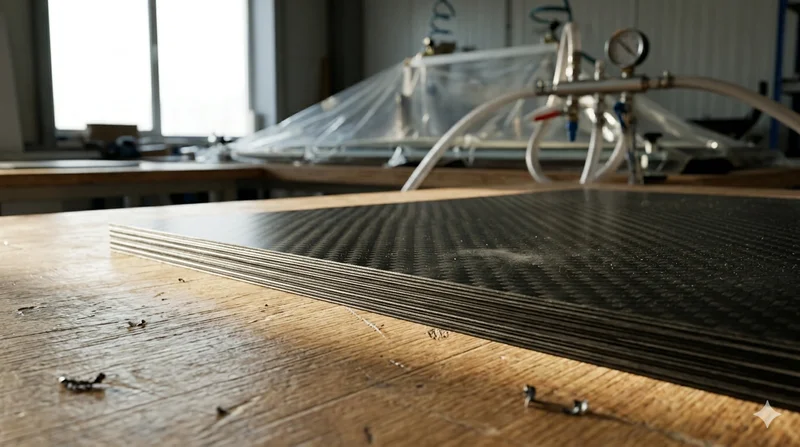
Carbon Fiber Plate — 3K Twill T700 3.0mm
Medium-thickness 3.0mm carbon fiber plate offering significantly higher load capacity while maintaining attractive 3K twill finish. Suitable for structural brackets, reinforcement plates, and load-bearing panels.
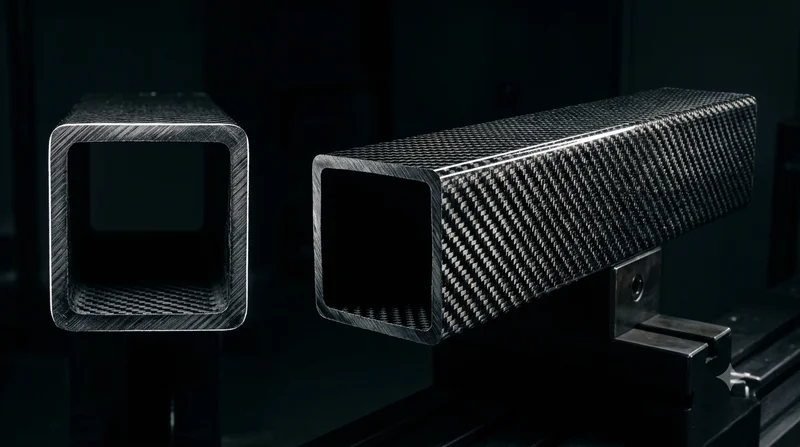
Square Carbon Fiber Tube — 3K Twill T700
Square cross-section carbon fiber tube manufactured with 3K twill weave for torsional strength. Preferred for structural frames, trusses, and support columns where rectangular geometry offers design flexibility.