Choosing a carbon fiber tube MOQ supplier is a critical step for buyers moving from prototype to production. Minimum order quantity determines how much capital you tie up in inventory, how quickly you can validate a design, and whether a supplier relationship is viable for your business size. This g
Introduction
Choosing a carbon fiber tube MOQ supplier is a critical step for buyers moving from prototype to production. Minimum order quantity determines how much capital you tie up in inventory, how quickly you can validate a design, and whether a supplier relationship is viable for your business size. This guide explains realistic MOQ ranges for round, square, and custom-profile carbon fiber tubes, breaks down the cost drivers behind those minimums, and gives you practical tactics to negotiate smaller trial orders with a carbon fiber tube supplier or carbon fiber tube manufacturers.
Carbon fiber tubes are made by roll wrapping, filament winding, or pultrusion. Each process has its own setup costs, mandrel requirements, and cure schedules. That means MOQ is not a single number you can compare across suppliers without context. Understanding the process behind your tube helps you ask the right questions and find a carbon fiber tube for sale on terms that match your project stage.
Typical MOQ by Carbon Fiber Tube Type and Process
Minimum order quantities vary widely depending on how the tube is made and how much customization is involved. The table below gives practical ranges you will encounter when sourcing from carbon fiber tube manufacturers.
| Tube Type / Process | Typical Diameter Range | Typical MOQ | Key Driver |
|---|---|---|---|
| Roll-Wrapped Round Tube | 6-60 mm OD | 50-200 pcs | Mandrel prep and wrap labor per size |
| Filament-Wound Round Tube | 20-200 mm OD | 30-100 pcs | Winding program setup and mandrel count |
| Pultruded Round/Square Tube | 10-100 mm | 100-500 m or 100-300 pcs | Die setup and continuous run economics |
| Square/Rectangular Tube | 10x10-60x60 mm | 50-150 pcs | Lower demand; dedicated mandrel sizes |
| Custom Tapered or Oval Tube | Per drawing | 30-100 pcs | Custom mandrel fabrication required |
| Cut-to-Length Stock Tube | Stock OD/ID | 10-50 pcs | Minimal setup; cutting and deburring only |
Stock tubes with standard diameters and wall thicknesses carry the lowest MOQ. Once you request a non-standard inner diameter, a specific layup schedule, or a tight straightness tolerance, the carbon fiber tube MOQ supplier must dedicate tooling and time, and the minimum rises accordingly.
What Drives MOQ at a Carbon Fiber Tube Supplier
MOQ is a reflection of production economics, not a negotiating trick. Knowing the main drivers lets you target the right levers when discussing terms with carbon fiber tube manufacturers.
- Mandrel availability: Each tube size needs a matching mandrel. If the supplier does not have your exact ID, they must machine or source one, and they will amortize that cost over a minimum run.
- Process setup: Roll wrapping requires cut patterns and layup schedules; filament winding needs a programmed path; pultrusion requires a heated die. Setup time is similar for 20 or 200 pieces.
- Material yield: Prepreg offcuts and resin waste are proportionally higher on small runs, raising the effective material cost per tube.
- Finishing and inspection: Sanding, cutting, centerless grinding, and dimensional checks have per-batch overhead that does not shrink with quantity.
When you ask a carbon fiber tube supplier for a quote, describe your application, load case, and annual volume. Suppliers are more flexible on MOQ when they can see a path to repeat orders.
How to Evaluate a Carbon Fiber Tube MOQ Supplier
Price and MOQ matter, but they are not the only criteria. A reliable carbon fiber tube MOQ supplier should also demonstrate process control and clear communication.
- Process transparency: The supplier should state whether your tube is roll-wrapped, filament-wound, or pultruded, and explain why that process fits your spec.
- Dimensional capability: Ask for tolerance ranges on OD, ID, wall thickness, straightness, and length. A capable shop publishes these numbers up front.
- Material traceability: Request fiber grade (T300, T700, etc.), resin system, and batch documentation for critical applications.
- Sample policy: A confident carbon fiber tube supplier will offer paid samples or a pilot run before locking you into a production MOQ.
- Lead time clarity: Confirm whether the quoted lead time includes mandrel prep, curing, post-machining, and inspection.
Use a short pilot order to validate roundness, surface finish, and straightness before committing to a larger volume. This reduces risk on both sides.
Negotiation Tactics to Lower MOQ
If the quoted minimum is higher than your current need, you still have room to negotiate. These tactics are commonly accepted by carbon fiber tube manufacturers:
- Choose a stock mandrel: Aligning your ID to an existing mandrel often cuts MOQ by half because no tooling investment is needed.
- Accept standard lengths: Ordering 1000 mm or 1200 mm stock lengths and cutting in-house removes the supplier's cutting setup cost.
- Combine sizes in one run: If you need two diameters, ask to batch them together to meet the supplier's minimum area or weight.
- Offer a blanket commitment: Agree to an annual volume with scheduled releases. The supplier gets planning security; you get smaller deliveries.
- Pay a setup surcharge: For a true one-off, some suppliers will run below MOQ if you cover the setup and scrap cost explicitly.
Frequently Asked Questions
What is a reasonable MOQ when buying from a carbon fiber tube MOQ supplier for the first time?
For stock-size roll-wrapped tubes, many suppliers accept 50 to 100 pieces for a first order. Custom diameters, special layups, or tight tolerances often push the minimum to 100 to 200 pieces. Cut-to-length service from existing stock can go as low as 10 to 20 pieces, but the per-meter price will be higher.
Can I find a carbon fiber tube for sale with no minimum order?
Retail distributors and online storefronts sometimes sell single tubes with no MOQ, but they usually carry limited sizes and standard modulus only. For custom ID, wall thickness, or layup, you will need to work directly with carbon fiber tube manufacturers who set MOQs to cover setup costs.
Does a lower MOQ mean lower quality from carbon fiber tube manufacturers?
Not necessarily. MOQ reflects production economics, not quality capability. However, very small runs can skip process optimization. To protect quality, request material certificates, dimensional inspection reports, and a first-article sample regardless of order size.
Conclusion
The right carbon fiber tube MOQ supplier balances flexible minimums with consistent process control. Stock mandrels, standard lengths, and blanket commitments are the fastest ways to reduce your entry quantity without sacrificing quality. Before you place a production order, validate a pilot batch for dimensions, surface finish, and straightness. If you are comparing carbon fiber tube manufacturers for your next project, explore our carbon fiber tube range or contact our team for a tiered quote matched to your diameter, length, and volume requirements.
Part of topic
Related Articles
- Carbon Fiber Tube Lead Time: Factors, Benchmarks and Planning
- Carbon Fiber Sheet Lead Time: Factors, Benchmarks and Planning
- Carbon Fiber Sheet Minimum Order Quantity: Suppliers, Quantities and Tips
- Carbon Fiber Rod Wholesale Price: Market Benchmarks and Drivers
- Carbon Fiber Plate Wholesale Price: Market Benchmarks and Drivers
- Carbon Fiber Tube Wholesale Price: Market Benchmarks and Drivers
Interested in Our Products?
Contact our team for competitive pricing and technical specifications.
Get a QuoteRelated Products
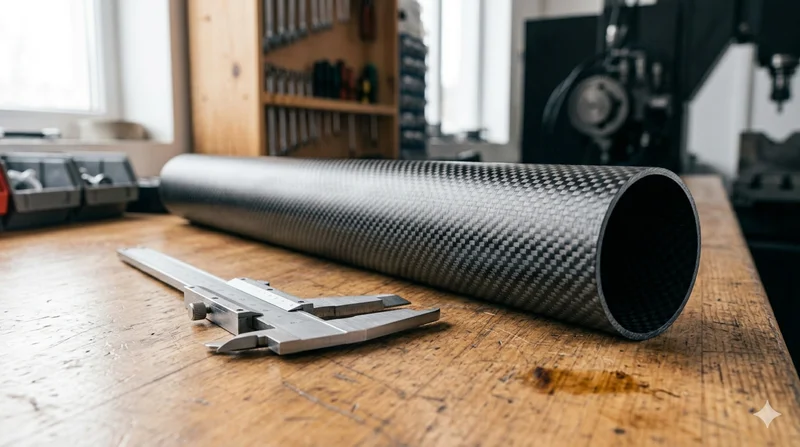
Round Carbon Fiber Tube — 3K Plain Weave T700
Standard round carbon fiber tube manufactured from Toray T700 grade fiber with 3K plain weave. Offers balanced strength and stiffness for general industrial applications including robotics, automation, sports equipment, and aerospace structures.
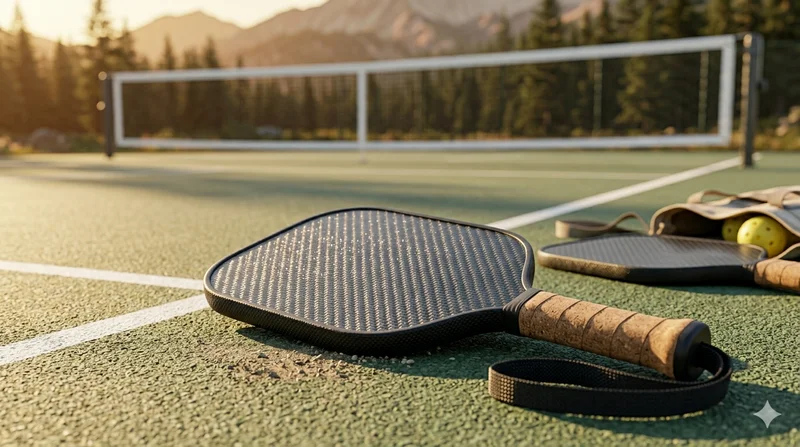
Carbon Fiber Pickleball Paddle
High-performance pickleball paddle with Toray T700 carbon fiber face and polypropylene honeycomb core. Delivers excellent power-to-weight ratio, spin generation, and vibration dampening for competitive play.
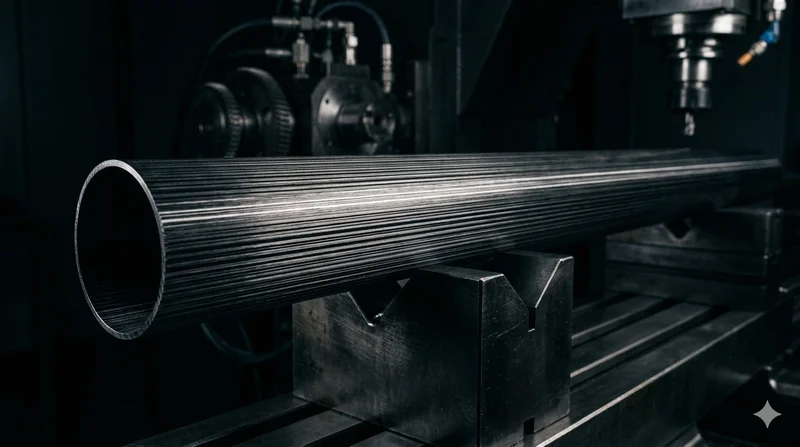
Round Carbon Fiber Tube — UD Unidirectional T700
Unidirectional (UD) round tube with all fibers aligned axially for maximum longitudinal stiffness. Ideal for applications requiring high bending rigidity with minimal weight, such as shafts, struts, and structural reinforcements.
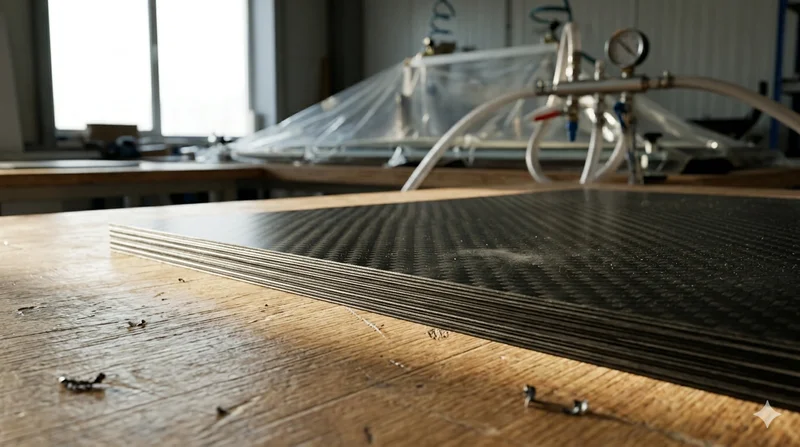
Carbon Fiber Plate — 3K Twill T700 3.0mm
Medium-thickness 3.0mm carbon fiber plate offering significantly higher load capacity while maintaining attractive 3K twill finish. Suitable for structural brackets, reinforcement plates, and load-bearing panels.
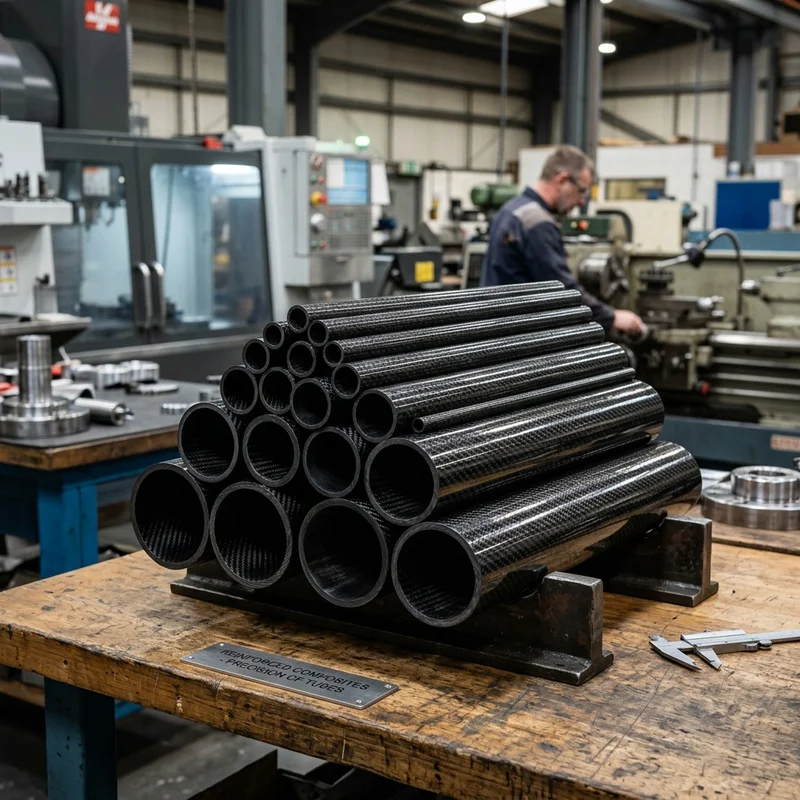
Round Carbon Fiber Tube — 3K Twill
Lightweight and ultra-stiff round tubes ideal for drone frames, robotics, and structural applications.