
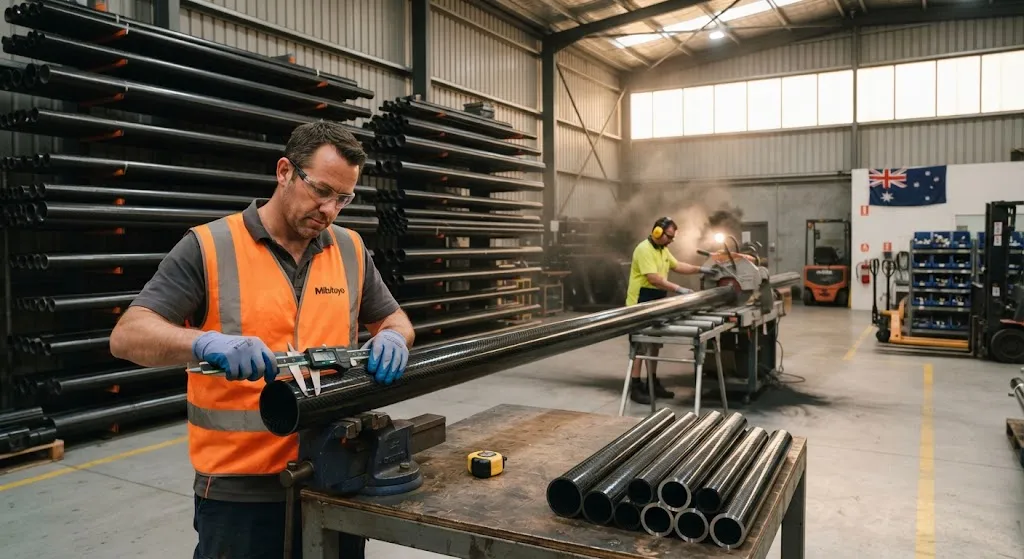
When Australian engineers search for carbon fiber tube Australia, they usually need one of two things: a small quantity of precision tube for a prototype or repair, or a production volume of consistent, certified tube for an ongoing program. The local market serves both, but it sits in a specific po
Introduction
When Australian engineers search for carbon fiber tube Australia, they usually need one of two things: a small quantity of precision tube for a prototype or repair, or a production volume of consistent, certified tube for an ongoing program. The local market serves both, but it sits in a specific position — a handful of Australian distributors and fabricators offer value-added cutting, machining, and kitting, while most raw tube stock is imported from Asia, Europe, or North America. Understanding how that supply chain works determines whether your project ships on time, meets its stiffness targets, and stays within budget.
This guide covers the Australian applications driving demand, the local-versus-import trade-off, the specifications you must specify, typical lead times and costs, and the quality checks that separate a reliable carbon fiber tube supplier from a one-off trader.
Carbon Fiber Tube Australia: Why Demand Is Growing
Australian industry has shifted toward composites wherever weight, corrosion, or fatigue resistance gives a measurable return. Carbon fiber tubes now appear across several sectors:
- Aerospace and defence: UAV airframes, antenna masts, and structural struts where the combination of stiffness and low mass trims fuel burn or extends endurance. Australian aerospace programs and the sovereign defence build-up under AUKUS have accelerated local qualification of composite components.
- Mining and heavy industry: Sampling rods, inspection poles, and cable management booms that must survive abrasion and chemical exposure. The corrosion resistance of carbon fiber tube eliminates the maintenance cycles that steel or aluminium equivalents require in harsh mineral-processing environments.
- Motorsport and performance vehicles: Roll cages, driveshafts, and suspension links where engineers accept a premium price for a 40-60% weight reduction over steel.
- Marine and coastal infrastructure: Masts, rigging, and pontoon structures exposed to saltwater, where galvanic corrosion rules out some metals and makes carbon fiber the practical choice.
- Industrial automation and robotics: Linear-motion shafts and lightweight end-effector arms that reduce inertia and allow faster cycle times.
The common thread is that each sector values the same properties — high specific stiffness, fatigue endurance, and corrosion resistance — but buys in very different volumes and with very different certification requirements.
Local Supply Versus Import: The Trade-Off
Buying carbon fiber tube in Australia means choosing between local distributors and direct import. The table below summarises the practical differences:
| Factor | Local Australian Distributor | Direct Import (Asia/Europe) |
|---|---|---|
| Lead time | 1-5 business days for stocked sizes | 4-10 weeks including freight and customs |
| Minimum order | Low — single tubes or small kits | High — volume needed to justify freight |
| Custom machining | Cutting, drilling, and kitting in-country | Limited unless negotiated with the factory |
| Unit price | Higher, typically 20-40% above factory price | Lower at volume, before freight and duties |
| Quality assurance | Supplier inspects incoming stock, often to a documented spec | You rely on the factory's QC and your own incoming inspection |
| Support and traceability | Local contact, batch records, and material data sheets available quickly | Communication lags and time-zone delays for claims or queries |
For prototyping, repairs, and short production runs, a local distributor usually wins on total cost once freight, customs, and risk of a rejected batch are counted. For steady production volumes above a few hundred meters per year, direct import from a qualified factory typically delivers 20-40% savings, provided your quality system can absorb incoming inspection and the longer lead time.
Specifications to Define When Buying
Whichever route you choose, the same specifications determine whether the tube performs. A written specification protects both buyer and supplier:
| Parameter | Typical Range | Why It Matters |
|---|---|---|
| Outside diameter | 3-150 mm standard; larger on request | Sets fit with fittings, bearings, and housings |
| Wall thickness | 0.5-5.0 mm, or made-to-measure | Determines bending stiffness and buckling resistance |
| Fibre grade | T300, T700, or T800 | Higher modulus grades raise stiffness per unit mass at higher cost |
| Layup architecture | Unidirectional, woven, or combination | UD maximises axial stiffness; woven adds hoop strength and impact resistance |
| Straightness | 0.1-1.0 mm per metre, specified | Critical for drive shafts and linear-motion applications |
| Surface finish | Glossy, matte, or painted | Affects UV protection, aesthetics, and bondability |
Two details are frequently missed. First, straightness is a measurable specification, not a given — a tube that is straight enough for a flagpole can be useless as a driveshaft. Second, tolerances on diameter should be agreed against a specific standard or against mating hardware, because carbon fiber tube is manufactured with a mandrel and surface finish varies more than machined metal.
How to Buy Carbon Fiber Tube in Australia
A practical buying process for Australian engineers looks like this:
- Define the loading case first: Axial load, bending, torsion, and buckling drive the diameter, wall thickness, and layup. Suppliers quote accurately when the load case is written down.
- Check stock before custom: Standard pultruded and roll-wrapped tubes are stocked by Australian distributors in common diameters; custom mandrel-wrapped or filament-wound tube adds weeks and minimum quantities.
- Ask for material data sheets and batch records: A credible supplier can produce both without hesitation. For aerospace or defence work, request certification traceability to the fibre lot.
- Specify straightness and tolerance in writing: This is the single most common source of rejected carbon fiber tube in Australian industry.
- Confirm freight and handling: Long tubes ship on dedicated carriers; a 3-metre tube folded in half is scrap. Ask how the supplier packs and delivers.
- Plan for incoming inspection: Measure diameter, wall thickness, and straightness on receipt and record the results against the specification.
If your requirement is a small precision quantity, most Australian distributors offer value-added cutting and drilling that lets you receive a ready-to-assemble component rather than raw stock. If you need production volume, compare at least two qualified suppliers on total landed cost, not unit price alone.
Frequently Asked Questions
Where can I buy carbon fiber tube in Australia near me?
Australian distributors of carbon fiber tube are concentrated around Sydney, Melbourne, and Brisbane, with several operating national freight services from a single warehouse. "Near me" is rarely a constraint because tube ships economically within Australia when packed correctly. The practical questions are lead time, whether the distributor stocks the diameter you need, and whether they offer cutting and machining in-country. Search for composite material distributors serving your state, confirm stock availability by phone, and ask for a material data sheet before ordering. For short lead times, a distributor with local stock is almost always faster than importing, even when the distributor itself sources from overseas.
How much does carbon fiber tube cost in Australia?
Pricing depends on diameter, wall thickness, fibre grade, and volume. A common 25 mm outside diameter, 2 mm wall T700 tube typically ranges from AUD 40-90 per metre at small quantities through Australian distributors, falling to AUD 25-50 at volume. Imported factory pricing is usually 20-40% lower before freight, customs duty, and GST. Larger diameters, high-modulus fibres, and tight straightness tolerances each add a premium. Always request pricing per metre including GST and freight to your door, because quoted ex-works prices understate the true landed cost in Australia.
Can Australian suppliers meet aerospace or defence specifications?
Yes, but verify the specific certification level rather than assuming it. Australian distributors can supply aerospace-grade carbon fiber tube with batch traceability, material data sheets, and inspection documentation, and several support defence programs with the documentation required for structural applications. The key is to specify the standard you need — for example a recognised aerospace material specification or your own purchase specification with defined acceptance criteria — and to confirm the supplier can deliver the accompanying paperwork, not just the tube. For flight-critical parts, expect a documented quality system and additional incoming inspection on your side.
Conclusion
Buying carbon fiber tube in Australia is straightforward once the supply chain is understood: local distributors win on lead time, flexibility, and support for prototypes and short runs, while direct import wins on unit cost at steady production volume. Either way, the specifications that determine success — diameter, wall thickness, fibre grade, layup, straightness, and tolerances — must be written down and verified on receipt.
For Australian engineers evaluating supply options, the practical next step is to compare a local distributor's stock and value-added services against an import quote on total landed cost. Explore our carbon fiber tube and rod range, which supports custom diameters and layups for Australian and international programs, or contact our technical team for specification advice and sourcing support.
Part of topic
Related Articles
Interested in Our Products?
Contact our team for competitive pricing and technical specifications.
Get a QuoteRelated Products

Carbon Fiber Plate — 3K Twill T700 3.0mm
Medium-thickness 3.0mm carbon fiber plate offering significantly higher load capacity while maintaining attractive 3K twill finish. Suitable for structural brackets, reinforcement plates, and load-bearing panels.

Carbon Fiber Plate — 3K Twill T700 1.5mm
Thin 1.5mm carbon fiber plate with 3K twill weave surface. Lightweight and stiff, commonly used for covers, panels, drone bodies, and applications requiring a premium aesthetic appearance.
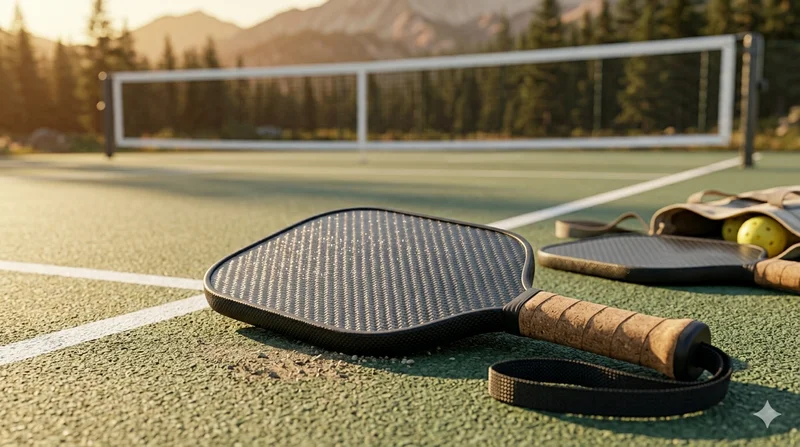
Carbon Fiber Pickleball Paddle
High-performance pickleball paddle with Toray T700 carbon fiber face and polypropylene honeycomb core. Delivers excellent power-to-weight ratio, spin generation, and vibration dampening for competitive play.

Square Carbon Fiber Tube — 3K Twill T700
Square cross-section carbon fiber tube manufactured with 3K twill weave for torsional strength. Preferred for structural frames, trusses, and support columns where rectangular geometry offers design flexibility.
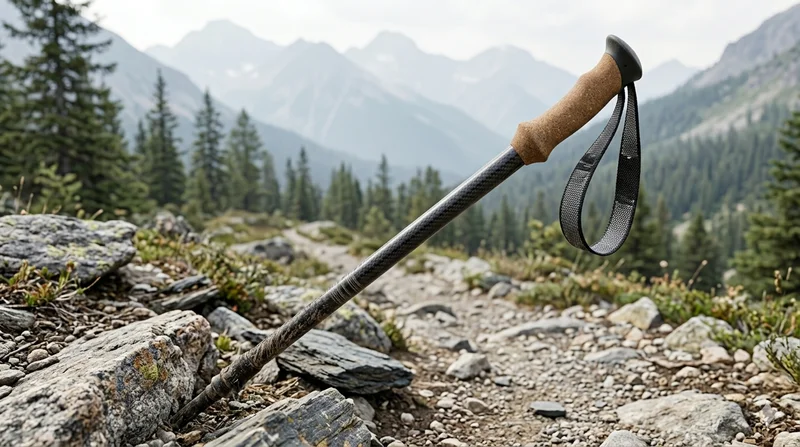
Carbon Fiber Trekking Pole
Lightweight carbon fiber trekking pole manufactured from high-grade carbon fiber tube. Weighs only 160g per pole while providing superior shock absorption and durability for hiking, trail running, and backpacking.