
Carbon fiber sheet thickness is the one dimension that quietly decides how a panel performs. Double the thickness and bending stiffness rises roughly eight-fold, while weight only doubles, so carbon fiber sheet thickness is the first number to get right when designing a bracket, a base plate or a dr
Introduction
Carbon fiber sheet thickness is the one dimension that quietly decides how a panel performs. Double the thickness and bending stiffness rises roughly eight-fold, while weight only doubles, so carbon fiber sheet thickness is the first number to get right when designing a bracket, a base plate or a drone arm. This guide explains what carbon fiber sheet thickness refers to on a cured laminate, which sizes are standard, how thickness is built up from plies, and how to select a thickness against stiffness, weight and cost targets.
Few topics generate more back-and-forth between buyer and supplier, because three different figures are all called "thickness": the nominal design value, the cured thickness measured on the finished panel, and the tolerance band around it. Understanding the gap between them is the difference between a panel that fits its assembly first time and one that needs rework.
What Carbon Fiber Sheet Thickness Actually Means
On a datasheet, carbon fiber sheet thickness usually refers to the cured laminate measured under a defined contact load, not the thickness of the press platen gap or of the dry fabric stack. Because a laminate consolidates during cure, the finished part is thinner than the sum of its dry plies.
- Nominal thickness: The design target, for example 2.0 mm. It is the value printed on a drawing and used in calculations.
- Cured ply thickness: The thickness each ply contributes after cure, typically 0.10 to 0.30 mm depending on fabric areal weight and resin content.
- Tolerance: The permitted band around nominal, commonly plus or minus 5 to 10 percent for moulded sheet and tighter for ground plate.
Measuring with a micrometer at several points across a panel is the standard method. Calipers can compress a soft surface and read low, so contact pressure matters, and a single reading at one edge tells nothing about flatness.
Standard Carbon Fiber Sheet Thickness Sizes
Most suppliers hold a standard ladder of thicknesses rather than a continuous range, because each size corresponds to a fixed ply stack and moulding cycle. The table below gives typical values for solid carbon fiber laminate:
| Nominal thickness | Typical ply count | Areal weight, kg/m² | Common use |
|---|---|---|---|
| 0.5 mm | 3-5 | 0.8-0.95 | Skin panels, gaskets |
| 1.0 mm | 6-8 | 1.6-1.9 | Drone frames, covers |
| 1.5 mm | 9-12 | 2.4-2.85 | RC structures, brackets |
| 2.0 mm | 12-16 | 3.2-3.8 | Base plates, arms |
| 3.0 mm | 18-24 | 4.8-5.7 | Structural plates, jigs |
| 5.0 mm | 30-40 | 8.0-9.5 | Heavy tooling, machine parts |
| 10.0 mm | 60-80 | 16-19 | Moulds, autoclave tooling |
The mass figures assume a laminate density of about 1.55 to 1.60 grams per cubic centimetre, so carbon fiber sheet thickness and carbon fiber sheet density together give the panel weight directly. Buyers who need a precise weight should ask for density and thickness on the same datasheet.
How Ply Count Builds Carbon Fiber Sheet Thickness
For thin laminates, carbon fiber sheet thickness is built up rather than machined. A designer sets the cured ply thickness from the chosen prepreg, then multiplies by the number of plies to reach the target:
- Choose the prepreg: A 200 g/m² carbon fiber sheet material typically cures to about 0.20 mm per ply at 60 percent fiber volume.
- Set the stack: A 2.0 mm target divided by 0.20 mm per ply gives ten plies before tolerance.
- Balance the layup: Symmetric and balanced stacking prevents warping; an odd ply count forces an asymmetric, warp-prone panel.
- Confirm after cure: Measure the cured laminate, because resin bleed and tooling pressure can shift the result by several percent.
Above roughly 3 mm, suppliers often move from pure laminated sheet to a thicker cured plate that may be ground to final thickness. That is why thick sizes carry a tighter flatness specification and a higher cost per kilogram.
Selecting Carbon Fiber Sheet Thickness for Stiffness and Weight
Thickness dominates bending stiffness far more than material grade does. Bending stiffness scales with the thickness cubed, so going from 2.0 mm to 3.0 mm raises stiffness by a factor of about 3.4 while adding only 50 percent to the mass. A thicker standard-modulus sheet is therefore often lighter overall than a thinner high-modulus panel of equal stiffness, and usually cheaper.
The practical selection order is stiffness target first, then thickness to meet it, then grade to fine-tune weight and cost. A sheet that is too thin will deflect perceptibly under load long before it fails, which is a serviceability problem rather than a strength problem. Carbon fiber sheet cutting to an undersized thickness is therefore more often a redesign trigger than a repair.
A useful rule of thumb is to size the sheet for the deflection limit first and then confirm that the resulting bending stress leaves an adequate margin, because a panel that is too flexible fails its function long before it fails structurally. Since stiffness rises with the cube of thickness and only linearly with modulus, a modest thickness increase usually beats an expensive grade upgrade when a part flexes too much. The reverse holds when a part is already stiff enough and weight-critical, because there a higher-modulus sheet can save mass at constant thickness. For assemblies with several stacked components, thickness tolerances also accumulate, so a panel near the top of its band can close a gap that a panel near the bottom leaves open; specifying a centred nominal and a symmetric tolerance avoids that surprise.
Tolerance, Flatness and Quality Control
Thickness tolerance and flatness travel together on carbon fiber sheet. A panel pressed between flat platens holds a uniform thickness and a flat surface, while a hand-laid part can wander by ten percent and bow slightly. For precision assemblies, specify both a thickness tolerance and a flatness limit, and state the measurement method so that supplier and inspector agree. Where a plate is ground after cure, thickness tolerance can be held to plus or minus 0.05 mm, at the cost of extra processing.
Frequently Asked Questions
What is the standard thickness of carbon fiber sheet?
There is no single standard, but most suppliers stock a ladder that includes 0.5, 1.0, 1.5, 2.0, 3.0, 5.0 and 10.0 mm. The most common structural sizes are 2.0 mm and 3.0 mm. Custom thicknesses are made by changing the ply count, so any value from about 0.5 to 10 mm can be produced, though non-standard sizes usually carry a minimum order quantity.
Is carbon fiber sheet thickness measured before or after curing?
Carbon fiber sheet thickness is quoted as the cured laminate thickness, because cure consolidation reduces the stack. A ten-ply, 200 g/m² laminate with a 2.0 mm nominal may measure 1.90 to 2.05 mm after curing, depending on resin content and tooling pressure. Always confirm whether a specification refers to nominal design thickness or the measured cured value, and ask for the tolerance band.
How much stiffness does doubling carbon fiber sheet thickness add?
For a simple plate in bending, stiffness is proportional to the thickness cubed, so doubling thickness raises stiffness by roughly eight times while doubling weight. That trade-off is why thickness is adjusted before fiber grade when a panel flexes too much. Oversizing thickness increases weight linearly, so the goal is the thinnest sheet that meets the stiffness and deflection limit, not the stiffest sheet available.
Conclusion
Carbon fiber sheet thickness is not a single measurement but a relationship between nominal design, cured ply build-up and tolerance. Standard sizes run from 0.5 to 10 millimetres, each tied to a fixed ply stack, and thickness is the lever that moves bending stiffness fastest because stiffness rises with the cube of thickness while weight rises linearly. Getting carbon fiber sheet thickness right early avoids the two costly mistakes of over-weighting a panel and under-stiffening it.
If you need carbon fiber sheets supplied to a defined thickness, tolerance and surface finish, browse our carbon fiber sheet and plate range, or contact our team for datasheets and thickness selection support.
Part of topic
Related Articles
- Carbon Fiber Sheet Cutting: Methods, Tools and Edge Quality
- Carbon Fiber Tube Strength Calculator: How to Size Tubes for Real Loads
- Carbon Fiber Sheet Molding Compound: Process, Properties and Applications
- Carbon Fiber Sheet Density: Areal Weight, Fiber Volume and Laminate Density
- Carbon Fiber Tube Cutting: Clean Square-End Techniques for Production
- Carbon Fiber Plate Cutting: CNC, Waterjet and Hand Routing Compared
Interested in Our Products?
Contact our team for competitive pricing and technical specifications.
Get a QuoteRelated Products

Carbon Fiber Plate — 3K Twill T700 3.0mm
Medium-thickness 3.0mm carbon fiber plate offering significantly higher load capacity while maintaining attractive 3K twill finish. Suitable for structural brackets, reinforcement plates, and load-bearing panels.

Carbon Fiber Plate — 3K Twill T700 1.5mm
Thin 1.5mm carbon fiber plate with 3K twill weave surface. Lightweight and stiff, commonly used for covers, panels, drone bodies, and applications requiring a premium aesthetic appearance.

Square Carbon Fiber Tube — 3K Twill T700
Square cross-section carbon fiber tube manufactured with 3K twill weave for torsional strength. Preferred for structural frames, trusses, and support columns where rectangular geometry offers design flexibility.
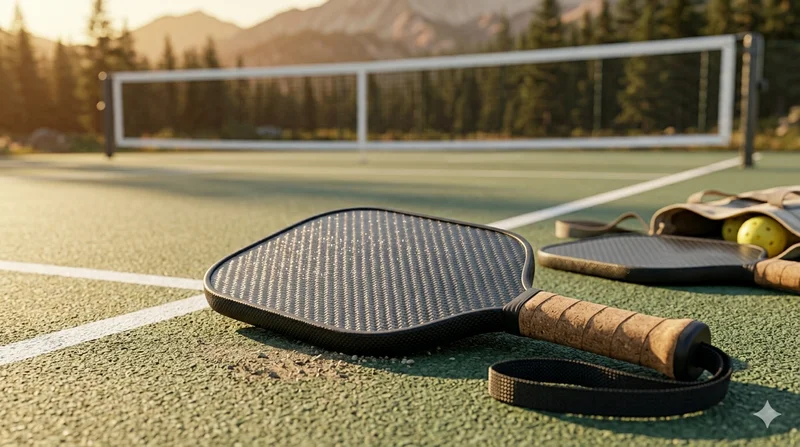
Carbon Fiber Pickleball Paddle
High-performance pickleball paddle with Toray T700 carbon fiber face and polypropylene honeycomb core. Delivers excellent power-to-weight ratio, spin generation, and vibration dampening for competitive play.
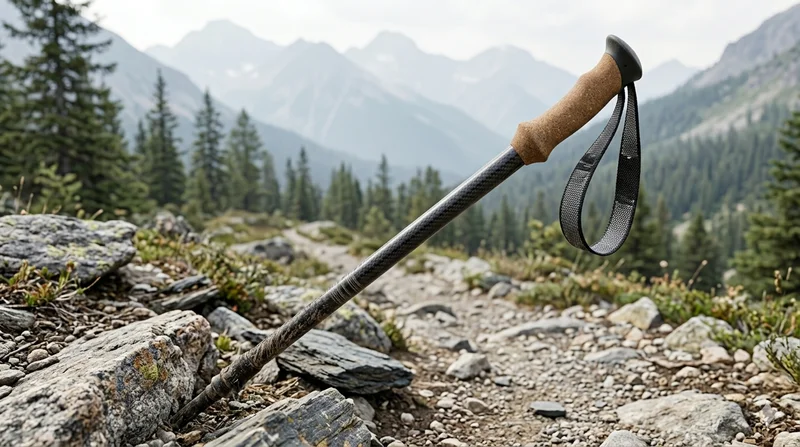
Carbon Fiber Trekking Pole
Lightweight carbon fiber trekking pole manufactured from high-grade carbon fiber tube. Weighs only 160g per pole while providing superior shock absorption and durability for hiking, trail running, and backpacking.