
Carbon fiber sheet density is the property that decides how much a panel weighs for its volume, and yet the same phrase is used for three different measurements. A supplier may quote the density of the bare fibre, the areal weight of the fabric in grams per square metre, or the density of the cured
Introduction
Carbon fiber sheet density is the property that decides how much a panel weighs for its volume, and yet the same phrase is used for three different measurements. A supplier may quote the density of the bare fibre, the areal weight of the fabric in grams per square metre, or the density of the cured laminate in grams per cubic centimetre. Confusing them leads to parts that are heavier than expected or panels that come in under the stiffness target. This guide sets out what carbon fiber sheet density actually measures, how the figures are calculated and measured, and how to use them when specifying a sheet.
A cured carbon fiber sheet or plate typically has a density between 1.4 and 1.9 grams per cubic centimetre, with autoclave prepreg laminates clustering around 1.55 to 1.60. That range is wide because density depends on fibre grade, resin content, fibre volume fraction and void level. Understanding which of those levers is in play is what turns a density figure from a number into a design decision.
What Carbon Fiber Sheet Density Actually Measures
Three measures travel under the name carbon fiber sheet density, and a specification is only usable if it says which one it means:
- Fibre density: The density of the carbon fibre itself, independent of resin. Standard modulus fibre sits near 1.80 grams per cubic centimetre, and high-modulus grades can be slightly higher or lower.
- Areal weight: The mass of material per unit area, quoted in grams per square metre, used for fabric and prepreg. It is a two-dimensional figure, not a density in the strict sense.
- Laminate density: The density of the cured sheet, which blends fibre and resin and falls in the 1.4 to 1.9 grams per cubic centimetre band.
The distinction matters because a buyer who asks for a "lighter sheet" may need a lower areal weight, a lower laminate density, or simply a thinner panel. Each lever has a different cost and a different effect on stiffness. Establishing which measure is meant is the first step in any sensible specification.
Areal Weight vs Laminate Density
The table below contrasts the two figures that are most often mixed up, using typical values for a standard-modulus carbon fibre sheet:
| Measure | Unit | Typical Value | What It Describes |
|---|---|---|---|
| Fibre density | g/cm³ | 1.80 | Bare carbon fibre |
| Fabric areal weight | g/m² | 200-300 | Dry fabric per unit area |
| Prepreg areal weight | g/m² | 330-500 | Fibre plus uncured resin |
| Laminate density | g/cm³ | 1.55-1.60 | Cured autoclave sheet |
| Cured sheet mass | kg/m² | 1.6-1.9 | 1 mm sheet, per unit area |
A common error is to treat areal weight as a density. A fabric with a 200 gram per square metre areal weight says nothing about its thickness until it is laid up and cured; once cured at a typical fibre volume fraction, that fabric becomes part of a laminate with a density and a thickness, and only then does a mass per unit area for the finished sheet become meaningful. A datasheet that reports carbon fiber sheet thickness next to density lets a buyer work out the mass of a finished panel directly. Prepreg areal weight includes resin, so it is always higher than the dry fibre areal weight it came from.
Calculating Carbon Fiber Sheet Density with the Rule of Mixtures
The carbon fiber sheet density of a cured laminate can be predicted before a part is made using the rule of mixtures. In words, the composite density equals the fibre volume fraction multiplied by the fibre density, plus the matrix volume fraction multiplied by the matrix density. With a fibre density near 1.80, an epoxy matrix near 1.20 and a fibre volume fraction of 0.60, the predicted laminate density is about 1.56 grams per cubic centimetre. At a fibre volume fraction of 0.50 it rises only slightly, and at 0.70 it approaches 1.62.
Because the fibre is denser than the resin, a higher fibre volume fraction nudges laminate density up even as it improves stiffness and strength. That is why two sheets of the same thickness can weigh differently: the one with more fibre and less resin is denser, but it is also stiffer, so the extra mass buys performance. The rule of mixtures also lets a designer reverse the calculation and infer an approximate fibre volume fraction from a measured laminate density, which is a quick sanity check when a datasheet looks optimistic.
Fiber Volume Fraction and Void Content
Density and fibre volume fraction are tied together by void content. The theoretical density from the rule of mixtures assumes a perfect laminate with no voids. The measured density is what the sheet actually weighs for its volume, and the gap between them reveals the void level:
- Fibre volume fraction: The share of the laminate volume occupied by fibre, commonly 50 to 65 percent in structural laminates and measured by matrix digestion or ignition loss.
- Theoretical density: Calculated from fibre and matrix densities and their volume fractions, assuming no voids.
- Measured density: Obtained by water displacement, which captures the real, voided laminate.
- Void content: Estimated as one minus the ratio of measured to theoretical density; aerospace laminates are usually held below 2 percent.
Water displacement, the basis of the standard test method for density of plastics by displacement, is the reference method for measured density, and matrix digestion is the reference method for fibre volume fraction. When a measured density comes in well below the theoretical value, the difference is usually voids or trapped air, not a different fibre. Keeping void content low is what keeps a laminate close to its design density and its design mechanical properties at the same time.
Why Carbon Fiber Sheet Density Matters in Design
In lightweight design, density is the denominator of every specific property. Specific stiffness, the ratio of modulus to density, and specific strength, the ratio of strength to density, decide whether a carbon fiber sheet beats aluminium or steel for a given application. Because carbon fiber sheet density is roughly a quarter that of steel and about 60 percent that of aluminium, a carbon sheet can be far stiffer per kilogram even when its absolute modulus is matched. That is the core argument for carbon fiber in aerospace, motorsport and high-end consumer products.
Density also drives practical choices. A lower-density laminate is easier to handle and faster to assemble, and it reduces the mass that secondary structures must carry. At the same time, density cannot be pushed down without limit: below a sensible fibre volume fraction the sheet loses stiffness faster than it loses weight, so the specific stiffness falls. The design target is not the lightest possible sheet but the sheet with the best specific properties at the required thickness and the required stiffness. A carbon fiber sheet material datasheet that reports density, areal weight, thickness and fibre volume fraction together gives a designer everything needed to make that trade-off honestly.
Frequently Asked Questions
What is the density of a carbon fiber sheet?
A cured carbon fiber sheet or plate typically has a density between 1.4 and 1.9 grams per cubic centimetre, with autoclave prepreg laminates usually clustering around 1.55 to 1.60. The exact carbon fiber sheet density depends on the fibre grade, the resin system, the fibre volume fraction and the void content. Bare carbon fibre itself is denser, near 1.80 grams per cubic centimetre, so a finished sheet is generally slightly lighter per unit volume than the fibre it contains.
How do I calculate carbon fiber sheet density?
Use the rule of mixtures: laminate density equals fibre volume fraction times fibre density plus matrix volume fraction times matrix density. With a fibre density of 1.80, an epoxy density of 1.20 and a fibre volume fraction of 0.60, the predicted density is about 1.56 grams per cubic centimetre. You can also measure it by water displacement and compare the result with the theoretical value; any shortfall points to voids. For a carbon fiber plate density figure, confirm whether the datasheet means the cured laminate or the bare fibre.
How does areal weight relate to carbon fiber sheet density?
Areal weight is the mass of fabric or prepreg per unit area, quoted in grams per square metre, and it is not a density. Prepreg areal weight includes resin, so it is higher than the dry fibre areal weight it was made from. Once laid up and cured, a fabric of a given areal weight becomes part of a laminate that has a true density and a thickness. To find the mass of a finished sheet per unit area, multiply its laminate density by its thickness.
Conclusion
Carbon fiber sheet density is not one number but three: the density of the bare fibre near 1.80 grams per cubic centimetre, the areal weight of fabric or prepreg in grams per square metre, and the density of the cured laminate between 1.4 and 1.9. The rule of mixtures links laminate density to fibre volume fraction, and the gap between measured and theoretical density reveals void content. Reading those figures together, rather than in isolation, is what lets a designer choose a sheet for specific stiffness and specific strength instead of paying for mass that does no work.
If you need carbon fiber sheets supplied with clear density, areal weight, thickness and fibre volume data, browse our carbon fiber sheet and plate range, or contact our team for material datasheets and specification support.
Part of topic
Related Articles
- Carbon Fiber Sheet Cutting: Methods, Tools and Edge Quality
- Carbon Fiber Tube Strength Calculator: How to Size Tubes for Real Loads
- Carbon Fiber Sheet Thickness: Standard Sizes and Selection Criteria
- Carbon Fiber Sheet Molding Compound: Process, Properties and Applications
- Carbon Fiber Tube Cutting: Clean Square-End Techniques for Production
- Carbon Fiber Plate Cutting: CNC, Waterjet and Hand Routing Compared
Interested in Our Products?
Contact our team for competitive pricing and technical specifications.
Get a QuoteRelated Products

Carbon Fiber Plate — 3K Twill T700 3.0mm
Medium-thickness 3.0mm carbon fiber plate offering significantly higher load capacity while maintaining attractive 3K twill finish. Suitable for structural brackets, reinforcement plates, and load-bearing panels.

Carbon Fiber Plate — 3K Twill T700 1.5mm
Thin 1.5mm carbon fiber plate with 3K twill weave surface. Lightweight and stiff, commonly used for covers, panels, drone bodies, and applications requiring a premium aesthetic appearance.

Square Carbon Fiber Tube — 3K Twill T700
Square cross-section carbon fiber tube manufactured with 3K twill weave for torsional strength. Preferred for structural frames, trusses, and support columns where rectangular geometry offers design flexibility.
Carbon Fiber Pickleball Paddle
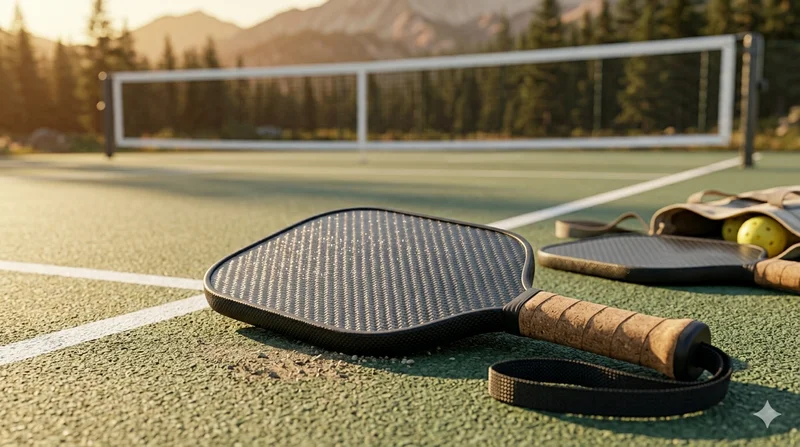
High-performance pickleball paddle with Toray T700 carbon fiber face and polypropylene honeycomb core. Delivers excellent power-to-weight ratio, spin generation, and vibration dampening for competitive play.

Carbon Fiber Trekking Pole
Lightweight carbon fiber trekking pole manufactured from high-grade carbon fiber tube. Weighs only 160g per pole while providing superior shock absorption and durability for hiking, trail running, and backpacking.