
Carbon fiber sheet cutting is one of the few workshop operations where the material actively fights the tool. The fibers are harder than most cutting edges, the dust is conductive and a health hazard, and the wrong feed or speed delaminates the very edge the part depends on. This guide explains what
Introduction
Carbon fiber sheet cutting is one of the few workshop operations where the material actively fights the tool. The fibers are harder than most cutting edges, the dust is conductive and a health hazard, and the wrong feed or speed delaminates the very edge the part depends on. This guide explains what makes carbon fiber sheet cutting different from metal cutting, compares the main methods on the criteria that matter, and sets out the tooling, dust control and method selection that turn a rough cut into a production-ready edge.
Because carbon fiber sheet thickness often ranges from 0.5 mm skins to 10 mm plates, and because a shop may cut a single prototype or ten thousand parts, there is no single best method. The right choice is the one that matches edge quality, thickness and volume to the job.
Why Carbon Fiber Sheet Cutting Is Different from Metal Cutting
Three properties separate carbon fiber from aluminium or steel and reshape every cutting decision:
- Abrasiveness: Carbon fiber is harder than high-speed steel, so it wears cutting edges quickly and demands diamond or carbide tooling.
- Anisotropy and brittleness: The laminate is strong along the fibers but weak between plies, so a tool that pushes instead of shears will delaminate and chip the edge.
- Conductive dust: Carbon dust conducts electricity and irritates the lungs, so dust extraction and sealed motors are mandatory, not optional.
The practical consequence is that carbon fiber sheet machining rewards sharp, coated tools, high surface speed, controlled feed and continuous extraction, while punishing the cutting conditions that would be perfectly safe on a metal part.
Carbon Fiber Sheet Cutting Methods Compared
Five method families cover almost all carbon fiber work. The table below compares them on the factors that decide a purchase:
| Method | Typical kerf | Edge quality | Best for |
|---|---|---|---|
| CNC router, diamond burr | 0.5-3 mm | Good, clean with climb cut | Flat sheets, holes, complex outlines |
| Abrasive waterjet | 0.8-1.2 mm | Very good, no heat | Thick plate, heat-sensitive parts |
| Diamond abrasive saw | 2-4 mm | Good, straight cuts | Straight trims, tubes, thick stock |
| Laser cutting | 0.2-0.5 mm | Charred edge, heat affected zone | Thin sheet, simple geometry |
| Hand tools, carbide grit | 1-3 mm | Fair, needs finishing | One-off trims, field repairs |
CNC routing and waterjet dominate production carbon fiber sheet cutting because both deliver a clean edge without the heat damage that plagues lasers on epoxy laminates. Waterjet leaves a slightly tapered kerf and needs a garnet abrasive supply, while routing is faster for nested flat parts and easier to automate.
Tooling and Parameters for Clean Carbon Fiber Sheet Cutting
The difference between a chipped edge and a finished edge lies in the tool and the parameters, not the machine size:
- Tool material: Polycrystalline diamond or diamond-coated carbide; uncoated high-speed steel dulls within centimetres.
- Geometry: Diamond-cut burrs or compression bits, which shear the top and bottom plies inward and prevent fraying.
- Surface speed: High, typically 100-300 m/min, to cut fibers rather than push them.
- Feed per tooth: A moderate chip load keeps the edge engaged; too light a pass rubs and burns the resin.
- Climb cutting: Reduces delamination on the finished edge and is preferred for visible faces.
Carbon fiber sheet cutting on a router also benefits from a sacrificial backing board and from vacuum or double-sided tape hold-down, because a part that moves mid-cut produces both a bad edge and a broken tool.
Managing Dust, Heat and Delamination
Three failure modes recur in carbon fiber sheet cutting, and each has a specific countermeasure. Delamination appears as a whitened, frayed edge and comes from a dull tool or an aggressive axial cut; it is fixed by sharp diamond tooling and a compression geometry. Resin burning appears as a brown edge and comes from excessive rubbing speed at low feed; it is fixed by increasing the chip load. Dust is the third and the most important for safety: a sealed spindle, local extraction at the cut point and a HEPA-rated vacuum keep airborne carbon fiber out of the operator's lungs, and grounded extraction prevents the static build-up that conductive dust can cause.
Choosing a Method by Thickness and Volume
Carbon fiber sheet thickness and production volume together point to a method. Thin skins under 2 mm cut cleanly on a router or with carbide hand tools, and a laser may suit very thin decorative trims despite the charred edge. Carbon fiber plate cutting from 2 to 10 mm is the natural territory of CNC routing for flat nested parts and of waterjet where heat or thickness makes routing risky. For a single prototype, hand cutting with a diamond blade followed by edge sanding is often faster than programming a machine, while for repeat production the investment in diamond burrs and fixtures pays back within a few dozen parts.
Cost rarely follows the cutting method alone. A router or waterjet job is dominated by programming and fixturing for a handful of parts and by machine time for a large run, so the same method can be expensive at quantity one and cheap at quantity one thousand. Adding a finishing operation, such as edge sanding or sealing a machined carbon edge, changes the labour content more than the cutting itself, and a part that arrives at assembly with a frayed edge costs more to fix than it saved to cut. The method decision is therefore best made together with the tolerance and edge-finish call rather than before it, because a cheap cut that fails inspection is the most expensive option of all. For a job that mixes both, routing the bulk and hand-finishing the tight corners often balances cost against edge quality.
Frequently Asked Questions
What is the best way to cut carbon fiber sheet?
For flat sheets in production, a CNC router with a diamond-cut burr or a compression bit gives the best balance of speed, edge quality and cost. Abrasive waterjet is better for thick plate and heat-sensitive parts, and hand diamond tools are best for one-offs. Across all methods the essentials are the same: sharp diamond or carbide tooling, high surface speed, controlled feed, a backing board and dust extraction.
Can a laser cutter cut carbon fiber sheet?
A laser can cut thin carbon fiber sheet, but it leaves a charred, heat-affected edge and produces fine conductive dust and fumes. The heat can degrade the epoxy matrix and weaken the edge, so laser cutting suits thin decorative or non-structural parts rather than structural components. For anything load-bearing, routing or waterjet is preferred because both produce a clean mechanical edge without thermal damage.
How do I avoid delamination when cutting carbon fiber sheet?
Use sharp polycrystalline diamond or diamond-coated tooling, cut with a compression or diamond-cut geometry, take a moderate chip load and use climb cutting on visible faces. Support the part with a sacrificial backing board and hold it rigidly so it cannot lift. A dull tool and a very light rubbing pass are the two most common causes of a whitened, delaminated edge in carbon fiber sheet cutting.
Conclusion
Carbon fiber sheet cutting rewards a method chosen to match the material rather than the convenience of the machine room. CNC routing and waterjet give the cleanest production edges, laser suits thin non-structural trims, and hand diamond tools remain the fastest route for a single part. In every case the edge quality comes down to sharp diamond or carbide tooling, high surface speed, a controlled feed and disciplined dust extraction, all of which also protect the operator from conductive carbon dust.
If you need carbon fiber sheets cut to size or supplied ready for your own carbon fiber sheet machining, browse our carbon fiber sheet and plate range, or contact our team to discuss cutting, tolerance and edge-quality requirements.
Part of topic
Related Articles
- Carbon Fiber Tube Strength Calculator: How to Size Tubes for Real Loads
- Carbon Fiber Sheet Thickness: Standard Sizes and Selection Criteria
- Carbon Fiber Sheet Molding Compound: Process, Properties and Applications
- Carbon Fiber Sheet Density: Areal Weight, Fiber Volume and Laminate Density
- Carbon Fiber Tube Cutting: Clean Square-End Techniques for Production
- Carbon Fiber Plate Cutting: CNC, Waterjet and Hand Routing Compared
Interested in Our Products?
Contact our team for competitive pricing and technical specifications.
Get a QuoteRelated Products
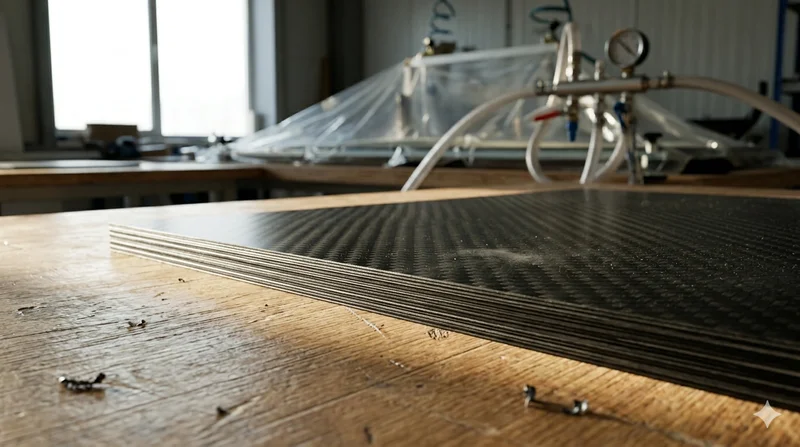
Carbon Fiber Plate — 3K Twill T700 3.0mm
Medium-thickness 3.0mm carbon fiber plate offering significantly higher load capacity while maintaining attractive 3K twill finish. Suitable for structural brackets, reinforcement plates, and load-bearing panels.
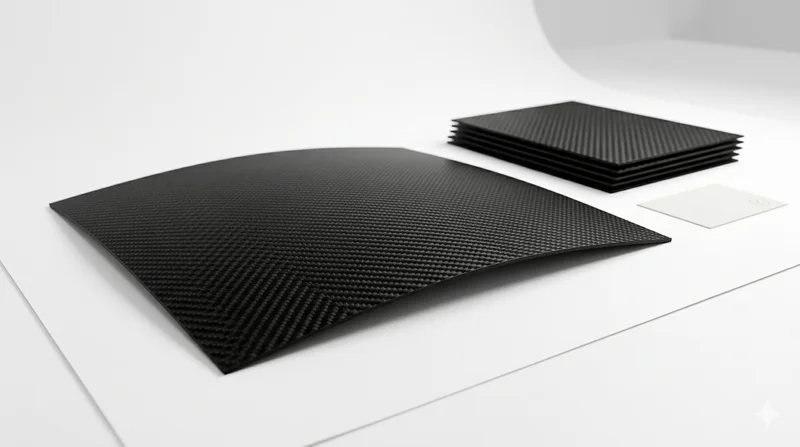
Carbon Fiber Plate — 3K Twill T700 1.5mm
Thin 1.5mm carbon fiber plate with 3K twill weave surface. Lightweight and stiff, commonly used for covers, panels, drone bodies, and applications requiring a premium aesthetic appearance.
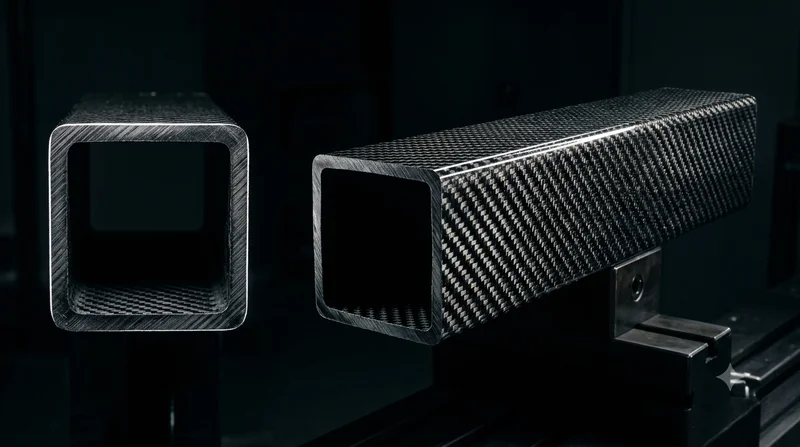
Square Carbon Fiber Tube — 3K Twill T700
Square cross-section carbon fiber tube manufactured with 3K twill weave for torsional strength. Preferred for structural frames, trusses, and support columns where rectangular geometry offers design flexibility.
Carbon Fiber Pickleball Paddle
High-performance pickleball paddle with Toray T700 carbon fiber face and polypropylene honeycomb core. Delivers excellent power-to-weight ratio, spin generation, and vibration dampening for competitive play.
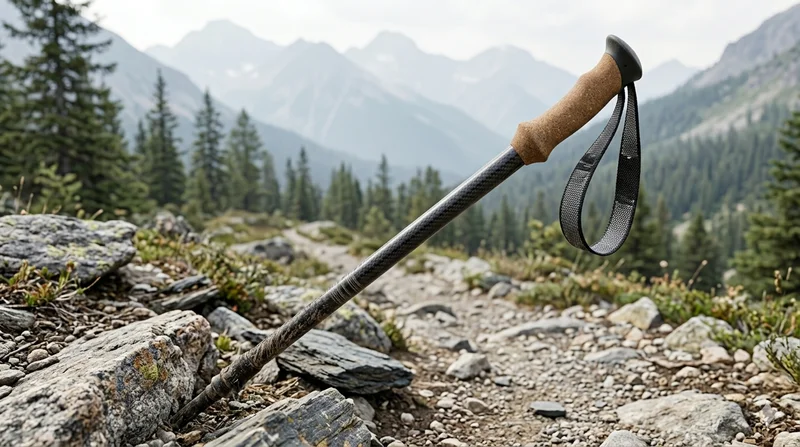
Carbon Fiber Trekking Pole
Lightweight carbon fiber trekking pole manufactured from high-grade carbon fiber tube. Weighs only 160g per pole while providing superior shock absorption and durability for hiking, trail running, and backpacking.