
Carbon fiber sheets 6mm thick occupy a specific place in the composite materials range: thick enough to carry real structural loads without support structures, yet light enough to replace metal panels at a fraction of the weight. A 6mm carbon fiber sheet is manufactured as a laminate of woven or uni
Introduction
Carbon fiber sheets 6mm thick occupy a specific place in the composite materials range: thick enough to carry real structural loads without support structures, yet light enough to replace metal panels at a fraction of the weight. A 6mm carbon fiber sheet is manufactured as a laminate of woven or unidirectional plies, typically 30-40 layers, consolidated under heat and pressure to reach a fiber volume fraction of 55-65%. The result is a rigid panel with tensile strength approaching that of steel while weighing roughly one-fifth as much.
This guide explains the specifications buyers should check when ordering carbon fiber sheets 6mm, the mechanical properties and load ratings that govern design, how the sheet is fabricated and machined, and the applications where a 6mm panel is the right engineering choice.
Specifications of Carbon Fiber Sheets 6mm
Specifying carbon fiber sheets 6mm requires defining material, dimensions, and tolerances in terms that both the manufacturer and the quality inspector can verify. The table below summarizes the key specification parameters:
| Parameter | Typical Specification | Verification Method |
|---|---|---|
| Thickness | 6.0 mm ± 0.2 mm | Micrometer measurement at specified points |
| Fiber type | T300, T700, or T800 carbon fiber, 3K-12K tow | Material certificate from the fiber supplier |
| Reinforcement architecture | Plain or twill weave fabric, or unidirectional plies | Layup record and ply count |
| Fiber volume fraction | 55-65% | Acid digestion or burn-off test per ASTM D3171 |
| Resin system | Epoxy, glass transition temperature 120-180°C | DSC measurement per ASTM E1356 |
| Panel dimensions | Standard 1,000 × 1,000 mm, 1,000 × 2,000 mm, or custom | Measuring tape and squareness check |
| Surface finish | Glossy tool-side, matte bag-side, or painted | Visual inspection |
Two specifications deserve special attention. First, the fiber volume fraction directly controls mechanical performance — a 55% and a 65% laminate of the same fiber will differ measurably in modulus and strength. Second, thickness tolerance matters in machined parts because a ±0.2 mm variation changes the fit in a CNC fixture or mating assembly. Buyers should confirm whether the tolerance applies to the as-molded panel or after surface machining.
Mechanical Properties and Load Ratings
The load capacity of carbon fiber sheets 6mm depends on fiber type, laminate architecture, and loading direction. A quasi-isotropic laminate made from T700 woven fabric is the most common configuration, and its properties are representative of what buyers can expect:
| Property | 6mm Carbon Fiber Sheet (T700 QI) | 6mm Aluminum Plate (6061-T6) | 6mm Steel Plate (A36) |
|---|---|---|---|
| Tensile strength | 600-800 MPa | 310 MPa (yield) | 400-550 MPa (yield) |
| Tensile modulus | 55-70 GPa | 68.9 GPa | 200 GPa |
| Flexural strength | 700-900 MPa | Not typically rated | Not typically rated |
| Density | 1.55-1.60 g/cm³ | 2.70 g/cm³ | 7.85 g/cm³ |
| Weight (1 × 1 m panel) | 9.3-9.6 kg | 16.2 kg | 47.1 kg |
| Impact resistance | Moderate, absorbs energy locally | Good, ductile deformation | Good, ductile deformation |
Two design implications follow. First, a 6mm carbon fiber sheet offers roughly twice the tensile strength of aluminum at about 60% of the weight, which makes it attractive for load-bearing panels and brackets. Second, the modulus is comparable to aluminum but only one-third of steel, so stiffness-critical designs with 6mm carbon sheet may require thicker panels or ribbed construction where an equivalent steel plate would not. Load ratings should always be derived from the laminate data sheet, never from fiber datasheet values alone, because the matrix and ply architecture reduce the achievable strength below raw fiber performance.
Applications for Carbon Fiber Sheets 6mm
Carbon fiber sheets 6mm are specified in applications where a panel must carry load, resist vibration, or save weight without a supporting frame. Typical uses include:
- Aerospace and drone structures: Equipment mounting plates, battery box partitions, and payload decks where stiffness and weight are critical.
- Industrial machinery: Guard panels, machine bases, and stiffener plates that need dimensional stability and corrosion resistance in production environments.
- Automotive and motorsport: Floor panels, firewall plates, and bracket systems where a 6mm composite replaces steel with a large weight saving.
- Marine and offshore: Deck plates, equipment mounts, and corrosion-resistant panels for saltwater service.
- Medical and robotics: Table tops, base plates, and link arms requiring high stiffness-to-weight ratio and clean, machinable edges.
The common thread is a panel that must be structural in its own right. Where a thin 2-3mm laminate would need a frame or backing structure, a 6mm CFRP sheet carries the load directly, simplifying assembly and reducing part count. For the same reason, a 6mm composite panel is a common starting point for CNC-machined carbon fiber parts, because it allows features such as tapped holes, pockets, and steps to be machined into the thickness of the material.
Fabrication and Machining Considerations
Carbon fiber sheets 6mm can be machined with standard composite tooling, but the process differs from metalworking. Carbide or diamond-coated tools are required because the abrasive fibers wear high-speed steel quickly. Waterjet cutting is the cleanest method for profiles, leaving no heat-affected zone, while CNC routing and drilling are used for features with tight tolerances. Tapped holes are possible but should use thread-forming inserts or potted metal threaded inserts for repeated assembly, because composite threads strip more easily than metal threads under repeated load. A thick carbon fiber plate in 6mm thickness is stiff enough to hold machined features without deformation or edge fraying.
- Cutting: Waterjet or carbide-tipped saws for straight cuts; waterjet or CNC routing for complex profiles.
- Drilling: Use diamond-coated drills with backing support to prevent exit-side delamination; specify a peel-ply surface if drilling quality is critical.
- Edge finishing: Seal machined edges with thin CA glue or epoxy to prevent fiber wicking and delamination in wet service.
- Joining: Bonding is preferred over bolting for load transfer; for bolted joints, use oversize washers and potted inserts to spread the bearing load.
Thermal considerations also matter. Carbon fiber has a low coefficient of thermal expansion, roughly 1-2 × 10⁻⁶/°C in-plane, so a 6mm sheet maintains its dimensions across temperature changes far better than aluminum. This property is valuable in precision machinery and optical mounting applications, but it also means that bolting a carbon panel to a metal structure requires slotted holes or expansion provisions to accommodate differential thermal movement.
Frequently Asked Questions
How much weight does a 6mm carbon fiber sheet save compared with steel?
A 1,000 × 1,000 mm panel of 6mm carbon fiber sheet weighs approximately 9.3-9.6 kg, compared with 47.1 kg for a steel plate of the same dimensions and 16.2 kg for aluminum. Against steel, the saving is roughly 80%; against aluminum, roughly 40%. The weight comparison is meaningful only when the carbon laminate's strength and stiffness meet the design requirement — for equivalent strength in a simple tensile member, the carbon sheet will typically be one-third to one-half the weight of steel.
Can a 6mm carbon fiber sheet be used for a load-bearing floor or platform?
Yes, provided the panel is supported and the load is within the laminate's rated capacity. A 6mm quasi-isotropic carbon panel has a flexural strength of roughly 700-900 MPa, which is far beyond what most pedestrian or equipment platforms require, so the governing check is usually deflection rather than strength. For unsupported spans, ribbed or sandwich construction with a 6mm face sheet on each side is a more efficient design than a single thick laminate. Engineers should calculate the deflection for the actual span and load, using the laminate's flexural modulus, before specifying the panel thickness.
What surface finish options are available for 6mm carbon fiber sheet?
Standard options include a glossy tool-side surface that replicates the mold surface, a matte bag-side surface, and painted or clear-coated finishes for cosmetic applications. For machined parts, the as-molded surface is typically retained on the visible faces while machined edges are sealed. If the panel will be bonded or painted, specify a peel-ply surface on the bond side for a consistent, contamination-free finish. Cosmetic aerospace-grade finishes add cost and lead time, so buyers should specify finish based on whether the surface is functional, semi-cosmetic, or show-grade.
Conclusion
Carbon fiber sheets 6mm provide a practical balance of strength, stiffness, weight, and machinability that makes them the right choice for load-bearing panels, machined structural parts, and weight-critical equipment across aerospace, industrial, automotive, and marine applications. The specification process is straightforward when the load case and dimensional tolerances are defined first, and the mechanical data in this guide provides a sound baseline for initial sizing.
YongXian supplies carbon fiber sheets 6mm and other thicknesses in standard and custom panel sizes, with material certificates, thickness verification, and precision machining available. Browse our carbon fiber sheet and plate products or contact our engineering team for laminate data, load calculations, and a quotation for your application.
Part of topic
Related Articles
- Carbon Fiber Tubes for Sale: Spec Sheet Fields That Actually Matter
- Carbon Fiber Sheets Near Me: Local Dealers and Quick Turnaround Procurement
- Carbon Fiber Tubes Near Me: Local Stock Availability and Same-Day Delivery Options
- Carbon Fiber Plate Orthotic: Lightweight Prosthetic and Medical Device Applications
- Carbon Fiber Rod Grips: Ergonomic Handle Design for Industrial and Sport Applications
- Carbon Fiber Propellers for Drones: Efficiency, Durability and Performance Optimization
Interested in Our Products?
Contact our team for competitive pricing and technical specifications.
Get a QuoteRelated Products

Carbon Fiber Plate — 3K Twill T700 3.0mm
Medium-thickness 3.0mm carbon fiber plate offering significantly higher load capacity while maintaining attractive 3K twill finish. Suitable for structural brackets, reinforcement plates, and load-bearing panels.

Carbon Fiber Plate — 3K Twill T700 1.5mm
Thin 1.5mm carbon fiber plate with 3K twill weave surface. Lightweight and stiff, commonly used for covers, panels, drone bodies, and applications requiring a premium aesthetic appearance.

Square Carbon Fiber Tube — 3K Twill T700
Square cross-section carbon fiber tube manufactured with 3K twill weave for torsional strength. Preferred for structural frames, trusses, and support columns where rectangular geometry offers design flexibility.
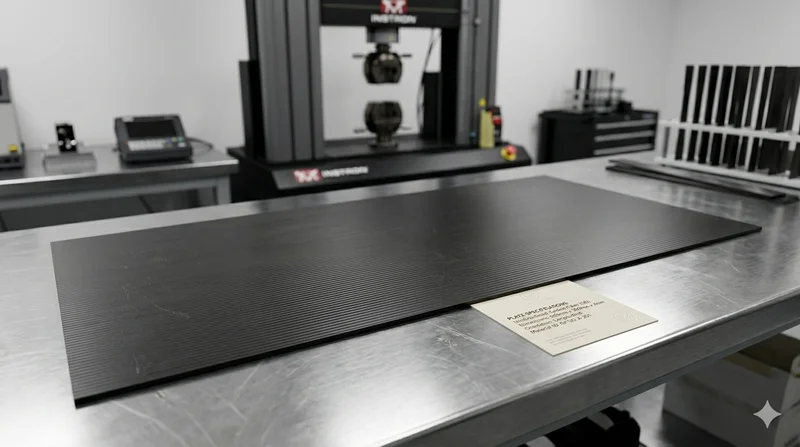
Carbon Fiber Plate — UD Unidirectional T700
Unidirectional carbon fiber plate with all fibers oriented in a single direction for maximum strength along the fiber axis. Essential for structural reinforcements, splints, and applications where load direction is predictable.
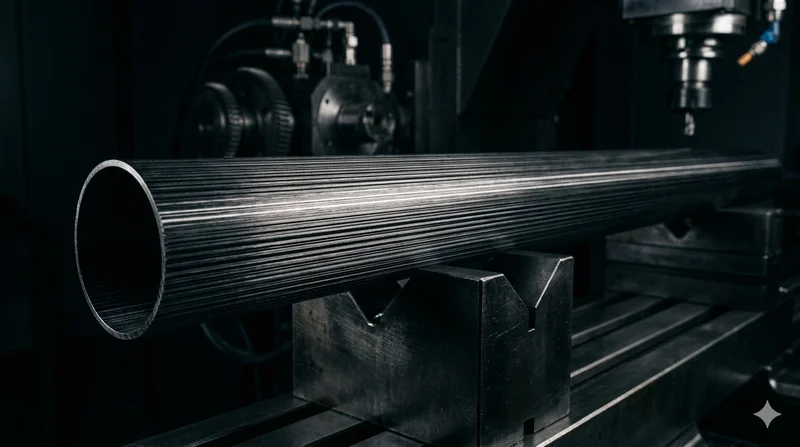
Round Carbon Fiber Tube — UD Unidirectional T700
Unidirectional (UD) round tube with all fibers aligned axially for maximum longitudinal stiffness. Ideal for applications requiring high bending rigidity with minimal weight, such as shafts, struts, and structural reinforcements.