
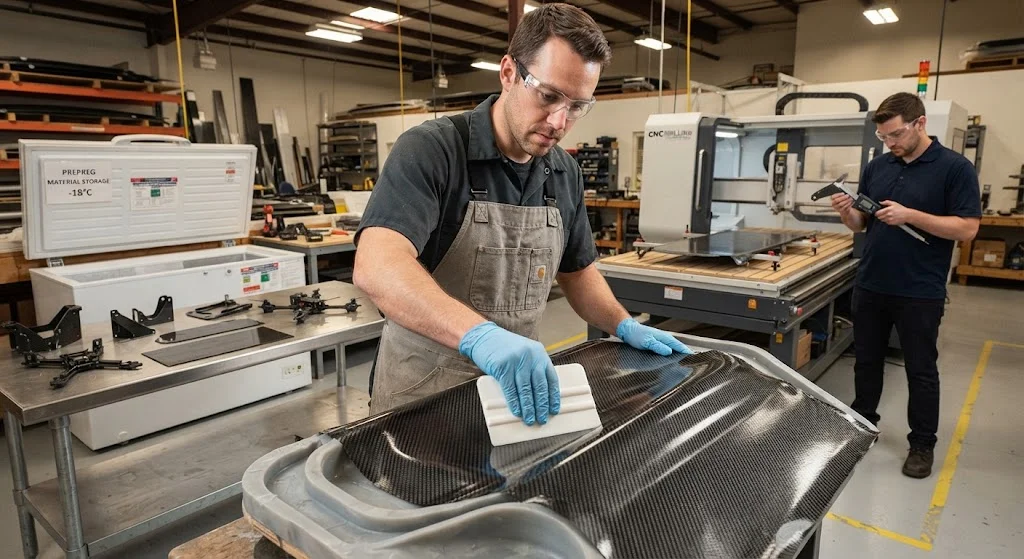
When engineers and product teams search for custom carbon fiber parts near me, they are usually looking for a fabricator that can turn a CAD model into a finished composite component — not a raw fiber supplier. The search reflects a practical need: a prototype bracket, a reinforced panel, a housing,
Introduction
When engineers and product teams search for custom carbon fiber parts near me, they are usually looking for a fabricator that can turn a CAD model into a finished composite component — not a raw fiber supplier. The search reflects a practical need: a prototype bracket, a reinforced panel, a housing, or a small production run that needs hands-on iteration, quick turnaround, and the ability to walk into a shop and discuss the part face to face. What they often do not realize is how much the answer depends on the type of part, the volume, and the cure process the shop uses.
This guide explains what local custom carbon fiber parts shops actually offer, when a nearby fabricator is the right choice versus an overseas manufacturer, and how to evaluate a supplier so you avoid paying prototype prices for production quality — or vice versa.
What "Near Me" Really Means for Custom Carbon Fiber Parts
The custom carbon fiber parts near me search almost always leads to one of three types of businesses, and knowing which one you are dealing with matters more than its distance from your office:
- Composite fabrication shops: Small and medium businesses that lay up prepreg or wet-laminate carbon fiber, cure parts in ovens or autoclaves, and finish them with CNC trimming. These are the shops that can actually make a custom part to your drawing.
- Machine shops with composite capability: CNC machining centers that cut carbon fiber plate, tube, and rod stock into finished parts. They are excellent for parts that are machined from flat plate, but they do not lay up molded parts with complex geometry.
- Distributors and resellers: Companies that sell carbon fiber sheet, cloth, and consumables. They can help with materials and sometimes offer cutting services, but they do not manufacture custom parts.
For a molded or laminated part with curves, draft angles, or bonded inserts, you need the first category. For a bracket machined from plate, the second category can deliver faster and cheaper. Confusing the two is the most common reason a "near me" project goes over budget.
When a Local Fabricator Beats an Overseas Supplier
Distance is not automatically a disadvantage, but several scenarios strongly favor a nearby custom carbon fiber parts shop:
| Scenario | Local fabricator | Overseas manufacturer |
|---|---|---|
| Prototype iteration (3-10 parts) | 2-4 weeks per iteration, in-person fit checks | 6-10 weeks including tooling and freight |
| Tooling development | Cheap soft tooling (RTV, foam) for fast changes | Hard steel or aluminum tooling, slower to modify |
| Small production (10-100 parts) | Higher unit cost but no freight or import risk | Lower unit cost, but MOQ and shipping add friction |
| Repair and retrofit | Ideal — shop can measure, fit, and test on site | Impractical for one-off repairs |
| Volume production (1,000+ parts) | Usually not cost-competitive | Strong advantage in labor and tooling cost |
The dividing line is roughly 100-200 parts per year. Below that, the benefits of a local shop — fast iteration, no shipping damage, direct communication, and the ability to adjust the design in person — usually outweigh the higher unit price. Above that, the labor cost advantage of an overseas CFRP manufacturer becomes difficult to ignore, especially for parts with simple geometry that ship well.
How to Evaluate a Custom Carbon Fiber Parts Shop Near You
Not every shop that advertises carbon fiber work can produce aerospace-quality laminates. Before you commit, verify five things:
- Cure process: Autoclave curing produces void contents around 1-2 percent and is required for structural aerospace parts; oven-cured parts run 2-5 percent voids and are fine for many industrial and cosmetic applications. Ask which process they use and whether it matches your load case.
- Material control: Prepreg must be stored frozen and tracked against out-time. A shop that cannot tell you its freezer log, resin batch number, or fiber lot cannot guarantee consistent mechanical properties.
- CNC and inspection capability: Trimming, drilling, and inspection with CMM or coordinate measuring tools separate production-quality parts from hand-finished prototypes. Check whether they can hold the tolerances on your drawing.
- Certifications: AS9100 for aerospace, ISO 9001 for general industrial, and NADCAP for specialized processes. For non-critical parts, a clean quality manual and sample parts may be enough.
- References and samples: Ask for parts they have made for customers in your industry, and inspect surface finish, fiber alignment, and edge quality. A glossy surface hides little — the back side of the part tells the real story.
Ask for a written quotation that separates tooling, material, labor, and finishing. Shops that quote a single lump sum often hide iteration costs that appear later as change orders.
Good shops give design feedback before they quote. A fabricator that points out draft angles, ply-drop locations, or bonding surfaces that will drive cost is showing engineering judgment worth paying for. Ask how they handle design changes after tooling begins, and whether they work from your CAD files directly or need a drawing package. The best signal of a smooth project is a shop that asks about your load case, environmental exposure, and production volume before it talks about price — that conversation tells you they understand the material and will catch problems before they become change orders.
Typical Costs and Lead Times for Custom Carbon Fiber Parts
Realistic budgeting starts with understanding where the money goes. For a typical small-batch custom carbon fiber part, expect the following ranges:
| Cost element | Typical range | Notes |
|---|---|---|
| Soft tooling (prototype) | $300-1,500 | RTV silicone or machined foam, reused for a few parts |
| Hard tooling (production) | $2,000-15,000 | Aluminum or steel molds, amortized across the run |
| Per-part cost (10-100 pcs) | $80-400 | Depends on size, ply count, and finishing |
| Prepreg material | $40-120 per kg | T700-grade, freezer-stored, with batch traceability |
| CNC trimming and finishing | $20-80 per part | Holes, edge tolerance, and surface prep |
Lead times follow a predictable pattern: prototype parts 2-4 weeks after design freeze, production tooling 3-6 weeks, and the first production batch 4-8 weeks from tooling approval. If a shop promises a finished production part in under two weeks, ask what corners are being cut — usually material out-time or skipped inspection.
Frequently Asked Questions
How much do custom carbon fiber parts cost?
For small batches of 10-100 parts, plan on $80-400 per part plus tooling of $300-15,000 depending on whether you need soft prototype tooling or a hard production mold. The total for a typical prototype program — tooling plus 10 parts — lands in the $3,000-8,000 range at a US or European fabricator. Overseas suppliers can cut the per-part cost by 40-60 percent at higher volumes, but freight, import duties, and longer iteration cycles eat into the saving.
Do local carbon fiber shops need aerospace certification?
Only if your part is flight-critical or your customer requires it. AS9100 certification signals disciplined process control and is mandatory for most aerospace work. For automotive, marine, medical, and industrial parts, ISO 9001 plus demonstrated process control is usually sufficient. The certification matters less than the cure process and inspection capability matching your load case.
Can a local shop match OEM surface finish?
Yes, with the right tooling and finishing steps. Class-A automotive finishes require hard tooling, high-gloss gel coats or paint, and careful demolding — expect higher tooling costs and longer cycles. Many cosmetic parts use a clear coat over the carbon weave, which hides minor porosity only if the laminate is properly consolidated. Ask to see finished samples before approving tooling.
How fast can I get a custom carbon fiber prototype?
A realistic prototype timeline is 2-4 weeks from design freeze at a local shop: one week for tooling, one week for layup and cure, and one week for trimming and inspection. Wet layup over soft tooling can reach 1-2 weeks for simple flat or gently curved parts, but at the cost of higher void content and less consistent thickness.
Conclusion
Finding a shop for custom carbon fiber parts near me comes down to matching the supplier's process to your part's requirements. Prototypes, repairs, and small production runs benefit from a local fabricator with autoclave or oven curing, CNC finishing, and honest material control; high-volume programs belong with a CFRP manufacturer that can amortize tooling and labor. Verify the cure process, inspect samples, and demand a line-item quotation before committing.
Whether you work with a local shop or an overseas partner, you still need quality raw material and engineering support. Browse our carbon fiber products or contact our engineering team for material specifications, fabrication guidance, and supply options for your custom carbon fiber parts program.
Part of topic
Related Articles
Interested in Our Products?
Contact our team for competitive pricing and technical specifications.
Get a QuoteRelated Products
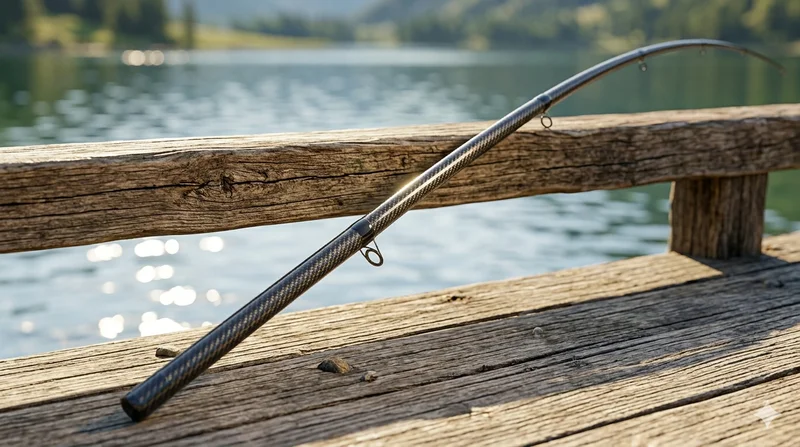
Carbon Fiber Fishing Rod Blank
High-quality carbon fiber fishing rod blank manufactured from multiple grades of Toray carbon fiber cloth. Available in a wide range of lengths, powers, and actions for freshwater and saltwater applications. Suitable for OEM rod building.
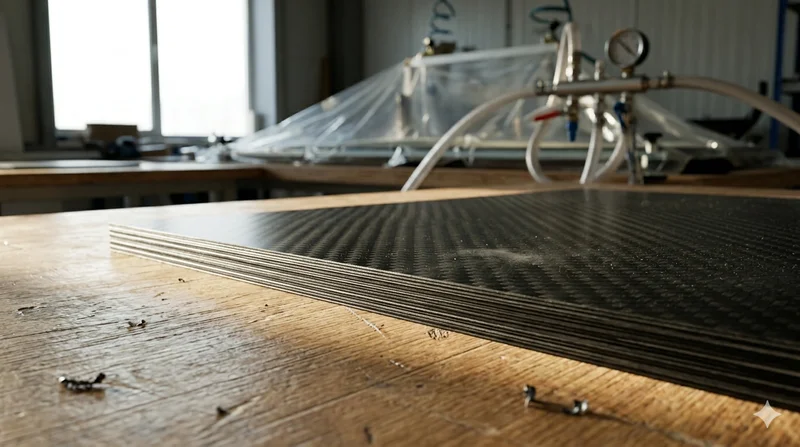
Carbon Fiber Plate — 3K Twill T700 3.0mm
Medium-thickness 3.0mm carbon fiber plate offering significantly higher load capacity while maintaining attractive 3K twill finish. Suitable for structural brackets, reinforcement plates, and load-bearing panels.
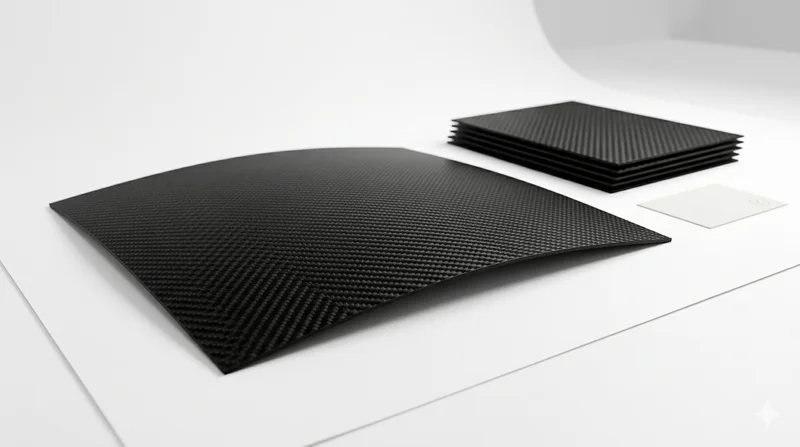
Carbon Fiber Plate — 3K Twill T700 1.5mm
Thin 1.5mm carbon fiber plate with 3K twill weave surface. Lightweight and stiff, commonly used for covers, panels, drone bodies, and applications requiring a premium aesthetic appearance.
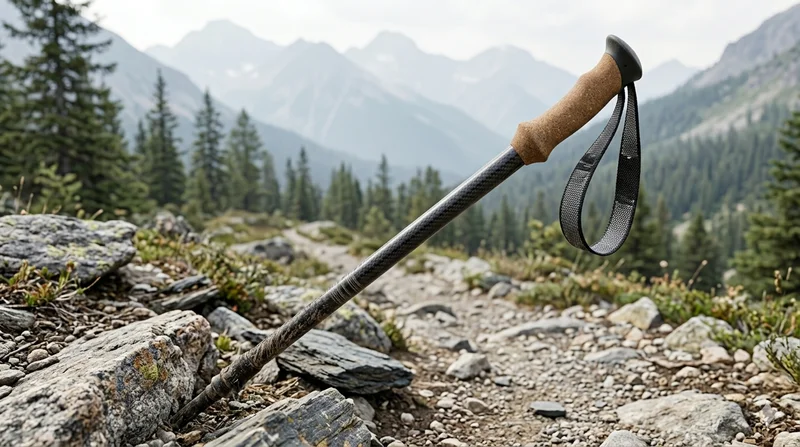
Carbon Fiber Trekking Pole
Lightweight carbon fiber trekking pole manufactured from high-grade carbon fiber tube. Weighs only 160g per pole while providing superior shock absorption and durability for hiking, trail running, and backpacking.
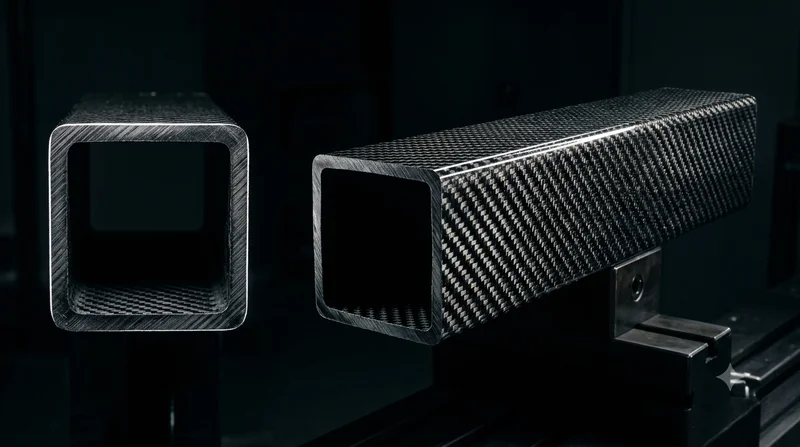
Square Carbon Fiber Tube — 3K Twill T700
Square cross-section carbon fiber tube manufactured with 3K twill weave for torsional strength. Preferred for structural frames, trusses, and support columns where rectangular geometry offers design flexibility.