
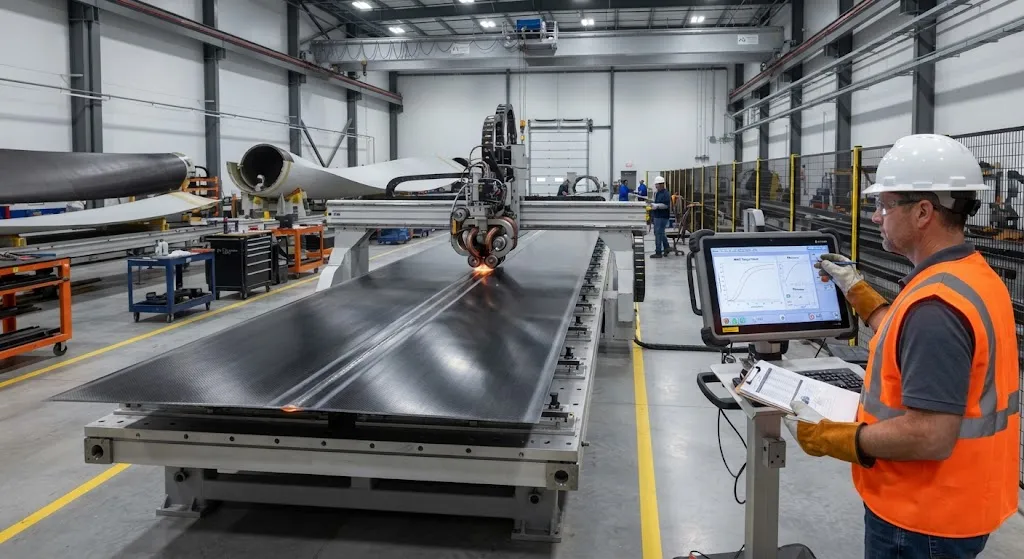
The spar cap is the structural backbone of a wind turbine blade: a thick carbon or glass fiber laminate running along the blade length that carries most of the bending load. For blades above 80 meters, spar caps are typically manufactured from thermoset epoxy prepreg or infuse with carb
Introduction
The spar cap is the structural backbone of a wind turbine blade: a thick carbon or glass fiber laminate running along the blade length that carries most of the bending load. For blades above 80 meters, spar caps are typically manufactured from thermoset epoxy prepreg or infuse with carbon fiber, requiring long oven or autoclave cure cycles that last 6-12 hours and dominate the blade's production lead time. They are also essentially impossible to recycle at end of life, because the cured thermoset matrix cannot be re-melted or re-formed.
Thermoplastic composite spar caps change both constraints at once. Low-melt polyether ether ketone (PEEK), polyether ketone ketone (PEKK), and glass-reinforced polypropylene (PP) laminates can be consolidated in minutes rather than hours, and two half-shell spar caps can be joined by welding — induction welding, resistance welding, or ultrasonic welding — without adhesives or mechanical fasteners. Siemens Gamesa and LM Wind Power have both piloted thermoplastic welding on 115-meter-class blade prototypes, reporting cycle-time reductions near 30 percent. With the European Union's 2026/718 regulation requiring 70 percent recyclability of blade mass, welded thermoplastic architecture is moving from research demonstrator to commercial evaluation.
Why the Wind Industry Is Moving Toward Welded Thermoplastic Spar Caps
Three forces are converging on thermoplastic spar cap technology. First, blade length is climbing past 115 meters, and longer blades amplify the cost of every hour spent in an oven or autoclave. Second, the EU 2026/718 End-of-Life Vehicles and waste framework measures, together with national wind-recycling mandates in Germany and the Netherlands, require blade materials to be recoverable; thermoset blades today are downcycled or landfilled at rates above 90 percent. Third, welding eliminates the adhesive bond lines that are among the most inspected and most failure-prone joints in a blade structure.
A welded thermoplastic spar cap replaces the conventional sequence — cut and lay prepreg plies, bag the stack, cure for up to 12 hours, then bond the cured cap to the blade shell with a thick adhesive — with a continuous process: consolidate the thermoplastic laminate in a heated press or via automated fiber placement with in-situ consolidation, then weld two cap halves together and weld the assembly to the spar web. The final joint is a fusion bond between chemically identical materials, with no adhesive interface and no mechanical fastener stress concentrations.
Welding Processes for Spar Cap Joints
Three welding technologies dominate spar cap joining, each with a different heating mechanism and production profile:
- Induction welding: An alternating electromagnetic field heats a susceptor — a fine metal mesh or a ferromagnetic particle layer — embedded in the weld interface. Heating is fast and localized, weld times of 2-5 minutes per meter are typical, and the process is well suited to long, straight spar cap joints.
- Resistance welding: A resistive heating element, usually a stainless steel mesh, carries current between two electrodes pressed against the joint. It offers simple equipment and precise temperature control, at the cost of leaving the heating element embedded in the joint.
- Ultrasonic welding: High-frequency mechanical vibration generates heat by intermolecular friction at the interface. Weld cycles are measured in seconds, but energy directors are required, and the process is better suited to smaller or localized joints than to full-length spar cap seams.
All three processes share a common physics: heat the interface above the matrix melt temperature, apply pressure to consolidate, and cool under load so the polymer chains recrystallize across the joint line. The melt-and-consolidate cycle takes minutes rather than the hours of thermoset cure.
Cycle-Time and Cost Comparison
The commercial case for welding rests on measurable cycle-time and cost data from pilot production. The table below compares representative manufacturing routes for a 115-meter-class blade spar cap:
| Process Route | Consolidation Time | Joint Method | Total Spar Cap Cycle | Recyclability |
|---|---|---|---|---|
| Thermoset epoxy prepreg + autoclave | 6-12 hours | Adhesive bond | 10-14 hours | Under 10% by mass |
| Thermoset infusion + oven cure | 4-8 hours | Adhesive bond | 8-10 hours | Under 10% by mass |
| Thermoplastic AFP with in-situ consolidation | None (deposition is consolidation) | — | 2-4 hours per cap half | 70-100% by mass |
| Thermoplastic laminate + induction or resistance welding | 1-3 minutes per weld meter | Fusion weld | 4-6 hours total for both halves | 70-100% by mass |
The 30 percent cycle-time reduction reported in pilot programs comes from eliminating the long cure step and the adhesive bonding step: a single integrated welding line replaces oven scheduling, adhesive mixing, and bond cure. Material cost is the counterweight — thermoplastic matrices cost 2-4 times more than epoxy — but the welding route eliminates consumables such as vacuum bagging, breather cloth, and adhesive film, and it removes the oven footprint from the blade factory floor.
Recyclability Under EU 2026/718
Regulatory pressure is the decisive driver. The EU rule family around 2026/718 sets a 70 percent recyclability target for blade mass, and member-state wind-recycling laws in Germany and the Netherlands already require blade producers to demonstrate end-of-life routes for new models. A welded thermoplastic spar cap satisfies a full recyclability chain: at end of life, the blade is shredded, the thermoplastic matrix is re-melted, and the recovered carbon fiber can be re-impregnated into new compound or remanufactured sheet molding compound. Siemens Gamesa and LM Wind Power both cite this recyclability chain, alongside cycle time, as the reason their pilot blades use welded thermoplastic architecture.
Welded joints also enhance repairability during service. A damaged thermoplastic spar cap can be re-welded or over-molded in the field with portable induction tools, whereas a cracked thermoset bond line typically requires grinding out and rebonding with fresh adhesive. For a fleet where blades are already being retired before their design life due to leading-edge erosion and structural damage, repairability directly extends operational life and defers recycling cost.
Quality Assurance for Fusion Welds
Fusion welds demand a verification framework different from adhesive bonds. Acceptable weld quality depends on three controllable variables — interface temperature, consolidation pressure, and cooling rate — and production cells monitor them in real time via embedded thermocouples, infrared cameras, and platen load cells. Nondestructive inspection then confirms the joint: phased-array ultrasonic testing detects voids, kissing bonds, and porosity along the weld line, while shear-wave testing verifies fusion depth across the full laminate thickness.
Process documentation follows the NADCAP-style composite quality model: every weld is recorded with a time-temperature-pressure trace archived against the blade serial number, and peel or lap-shear coupons are cut from sacrificial tabs welded alongside production caps in the same run. This gives certification authorities the traceability needed to approve welded joints in fatigue-critical primary structure — the same rigor that already governs induction-welded thermoplastic ducts and stringers in aerospace programs.
Cost and Supply Considerations
- Thermoplastic composites (PEEK/PEKK tape) cost approximately 60-80 euros per kilogram versus 20-40 euros for aerospace-grade epoxy prepreg, so spar cap material cost rises by 1.5-2x; the payback comes from cycle time, labor, and floor space.
- Induction welding capital equipment ranges from 0.5-2 million euros depending on blade length and automation level, amortized against the oven and autoclave investment it replaces.
- Carbon fiber recovered from thermoplastic blades retains 85-95 percent of virgin modulus, making the recycling stream economically meaningful for towpreg and molding compound markets.
- Supply of thermoplastic unidirectional tape for 115-meter blades is consolidating around a handful of producers, and early blade-makers are locking multi-year supply agreements to secure weld-grade material.
Frequently Asked Questions
How much faster is thermoplastic welding compared to bonding a conventional thermoset spar cap?
Pilot programs report total spar cap manufacturing cycle reductions near 30 percent. The consolidation step shrinks from 6-12 hours of oven or autoclave cure to minutes per weld, and the separate adhesive bonding step disappears entirely because the cap halves and the cap-to-web joints are fusion welded. On a 115-meter blade line, the saving is measured in hours per blade — the difference between one blade per mold per day and a faster turnaround.
Are induction, resistance, and ultrasonic welding all suitable for spar caps?
Induction welding is the most common choice for long spar cap seams because heating is fast, localized, and controllable over meter-scale joints; resistance welding is a lower-capital alternative with the trade-off that the heating mesh remains embedded in the joint. Ultrasonic welding is fast but best suited to smaller joints, so it appears in gluing fixtures and secondary structures rather than full-length spar cap seams. All three produce a genuine melt-fusion bond and are inspectable by ultrasonic testing.
How does EU 2026/718 change wind blade recyclability requirements?
The regulation framework sets a 70 percent recyclability target for blade mass and is reinforced by national mandates in Germany and the Netherlands that require demonstrated end-of-life routes for new blade models. Thermoset blades are hard to recycle because the cured matrix cannot be re-melted; welded thermoplastic blades can be shredded and the matrix re-melted, recovering carbon fiber with near-virgin modulus. That is why both major blade OEMs build their compliance strategy around thermoplastic architecture.
Conclusion
Thermoplastic welded spar caps convert the wind blade's longest and most expensive manufacturing step — thermoset cure — into a minutes-long fusion-weld operation, delivering the roughly 30 percent cycle-time reduction reported in Siemens Gamesa and LM Wind Power pilot programs while opening a 70 percent recyclability route required by EU 2026/718. The technology is no longer a laboratory concept: weld quality is verifiable with production ultrasonic inspection, supply of weld-grade thermoplastic tape is industrializing, and the first 115-meter-class blades using welded architecture are flying today.
For blade manufacturers evaluating this transition, the practical starting points are material qualification, welding cell design, and weld inspection planning. Explore our carbon fiber reinforcement range, including towpreg and thermoplastic-compatible formats for spar cap and weld-joint applications, or contact our engineering team to discuss qualification data for your next blade program.
Part of topic
Related Articles
- Filament Wound FRP Pipe: Complete Guide
- Filament Wound Epoxy Tubes: Complete Guide
- Pultruded Carbon Fibre Rods: Cross-Sectional Properties and Standard Sizes
- Carbon Fiber Tube Fittings and Connectors: Joining Solutions for Structural Assemblies
- Carbon Fiber Plate Insert: Threaded Insert Design for Composite Structures
- Filament Wound Epoxy Tubing: Selection Guide for Industrial and Aerospace Applications
Interested in Our Products?
Contact our team for competitive pricing and technical specifications.
Get a QuoteRelated Products
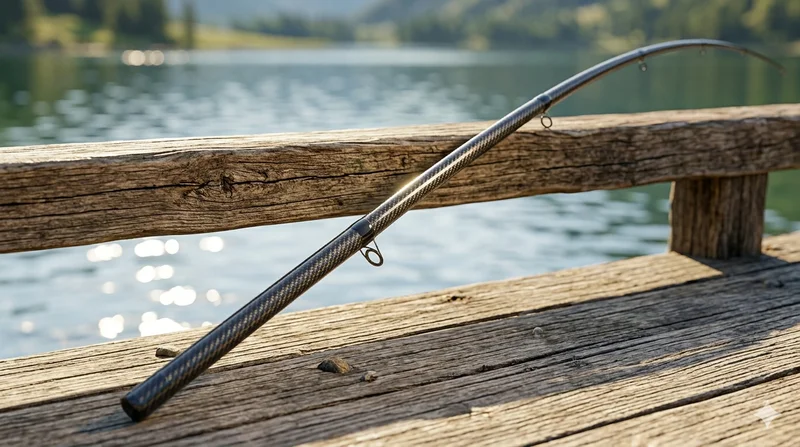
Carbon Fiber Fishing Rod Blank
High-quality carbon fiber fishing rod blank manufactured from multiple grades of Toray carbon fiber cloth. Available in a wide range of lengths, powers, and actions for freshwater and saltwater applications. Suitable for OEM rod building.
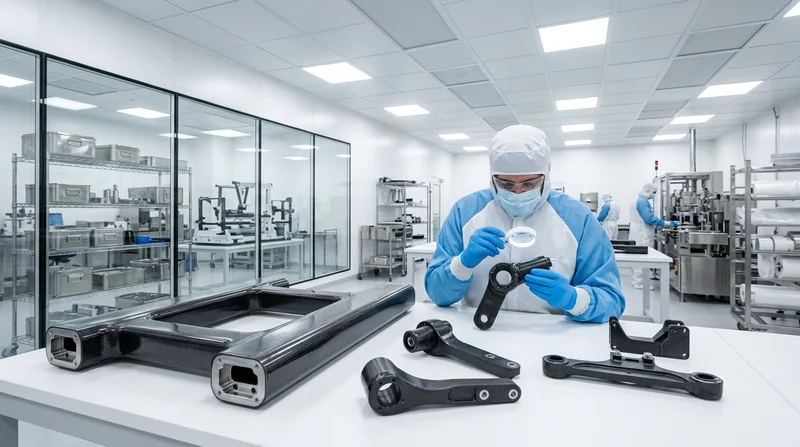
Custom Carbon Fiber Medical Device Components
Medical-grade carbon fiber components manufactured for imaging equipment, surgical instruments, and patient support systems. Carbon fiber's radiolucency (X-ray transparency) and high strength-to-weight ratio make it ideal for CT scanner beds, wheelchair frames, surgical robot arms, and MRI-compatible accessories. Biocompatible resin systems available.

Carbon Fiber Plate — 3K Twill T700 1.5mm
Thin 1.5mm carbon fiber plate with 3K twill weave surface. Lightweight and stiff, commonly used for covers, panels, drone bodies, and applications requiring a premium aesthetic appearance.

Square Carbon Fiber Tube — 3K Twill T700
Square cross-section carbon fiber tube manufactured with 3K twill weave for torsional strength. Preferred for structural frames, trusses, and support columns where rectangular geometry offers design flexibility.
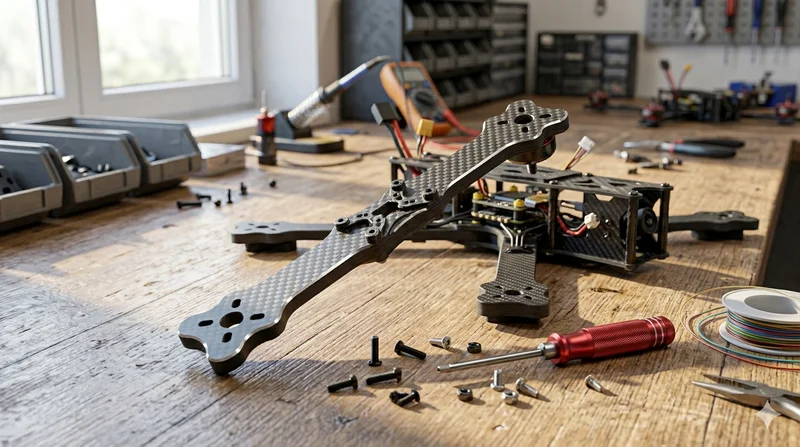
Carbon Fiber Drone Arm
Precision-molded carbon fiber drone arm combining unidirectional fiber for stiffness and woven layers for torsional strength. Designed for FPV, photography, and industrial drone platforms. Each arm is CNC-machined to exact specifications.