
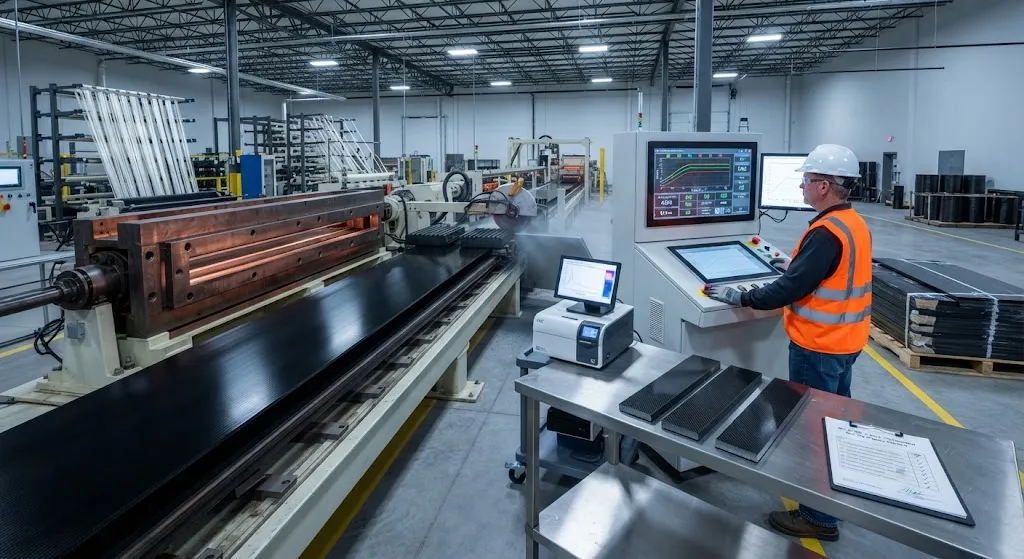
Pultruded carbon fiber plates have displaced prepreg layup as the dominant process for wind turbine spar caps, and the reason is economic: a pultrusion line converts carbon fiber tow into finished plate at speeds of 0.3-1.5 meters per minute with a fraction of the labor of hand layup, w
Introduction
Pultruded carbon fiber plates have displaced prepreg layup as the dominant process for wind turbine spar caps, and the reason is economic: a pultrusion line converts carbon fiber tow into finished plate at speeds of 0.3-1.5 meters per minute with a fraction of the labor of hand layup, while achieving fiber volume fractions above 65%. The switch has been rapid across the wind industry, with manufacturers such as Kineco Exel commissioning dedicated carbon pultrusion capacity in India to supply IEC 61400-5 certified spar cap material. But pultrusion is not a forgiving process. Cure kinetics, pulling force, and die temperature interact continuously, and a drift of a few degrees in the die can silently change the degree of cure of every plate produced in that shift.
This article explains the three pillars of pultrusion process control for wind-grade carbon plates: the cure kinetics that determine how fast the resin can be pulled through the die, the pulling force signal that reveals what is happening inside the die in real time, and the IEC 61400-5 quality framework that translates process data into certified mechanical performance. For engineers sourcing spar cap material or setting up their own lines, these parameters separate material that passes full-section testing from material that fails at the fifth meter.
Why Spar Caps Moved to Pultrusion
Wind turbine spar caps carry most of the flapwise bending load of the blade, and blade lengths above 80 meters have made carbon fiber economically necessary in the cap. Three manufacturing routes compete:
- Prepreg layup and autoclave cure: the historical baseline, offering excellent quality control but slow cycles, high energy cost, and labor-intensive layup that is hard to scale for blades in the 90-120 meter class.
- Vacuum-assisted resin infusion over dry fiber stacks: lower tooling cost than autoclave but limited fiber volume fraction and slower production, with porosity risk in thick cap sections.
- Pultruded carbon plates bonded into the blade shell: the current industry standard, where 4-8 mm thick plates are produced continuously, cut to length, and adhesively bonded into the shell during blade assembly.
Pultrusion wins on fiber volume fraction, consistency, and throughput. A typical line produces 50-200 kilograms of plate per hour, and the process is intrinsically repeatable because every meter of plate passes through the same heated die under the same conditions. The challenge is keeping those conditions inside tight windows over hours of continuous production.
Cure Kinetics and the Die Temperature Window
The resin system in wind-grade pultrusion is a filled epoxy formulated for fast cure at elevated temperature, typically with a glass transition temperature above 120 degrees Celsius after post-cure. The cure kinetics follow an Arrhenius relationship: the rate of reaction roughly doubles for every 10 degree rise in temperature, but the reaction is exothermic, so die temperature and resin temperature couple with each other. Too cold, and the plate exits undercured with a degree of cure below 90%; too hot, and the exotherm in the center of a thick plate can exceed the resin degradation temperature, producing voids and internal stress.
Production lines manage this with multiple independently controlled heating zones along the die length. A typical 1.5-2.5 meter die is divided into four to six zones, with temperature rising from 100-130 degrees Celsius at the inlet toward 150-180 degrees at the final zone. The set points are determined by differential scanning calorimetry (DSC) studies of the actual resin batch, because the cure kinetics of a filled epoxy vary with filler loading, hardener content, and batch age. When a resin lot is replaced, the temperature profile must be revalidated; plants that skip this step see sudden porosity or stiffness scatter.
| Process parameter | Typical window | Primary control lever |
|---|---|---|
| Die temperature, inlet zone | 100-130 °C | Heater power, resin gel time |
| Die temperature, final zone | 150-180 °C | Degree of cure at exit |
| Pulling speed | 0.3-1.5 m/min | Line tension, cure completion |
| Degree of cure at exit | 85-95% (target) | DSC spot checks, zone set points |
| Fiber volume fraction | 65-70% | Tow count, resin bath level |
| Resin bath temperature | 30-45 °C | Viscosity, wet-out quality |
Pulling Force as a Real-Time Process Signal
Pulling force is the most information-rich signal on a pultrusion line because it integrates every fault inside the die. Steady-state force reflects the balance of resin viscosity, die surface friction, and fiber compaction; a sudden rise of 20-30% typically indicates the resin gelling early inside the die, often because the inlet zone is running hot. A slow creep upward over hours signals resin accumulation on the die surface, the precursor to die cleaning stops. Force spikes correlate with tow breaks or resin starvation, both of which create hidden voids in the plate that surface later as porosity in ultrasonic testing.
Modern lines instrument the puller with load cells recording force continuously, and the trend line is the operator's primary diagnostic. Automated systems compare current force against the established baseline for the current speed and resin lot, and flag excursions beyond a band of roughly plus or minus 10%. Some plants correlate force signature with plate quality: low steady-state force at the same speed usually means the die is running too hot or the resin is over-accelerated, both of which degrade the final mechanical properties even when the plate looks clean.
The IEC 61400-5 Quality Framework
IEC 61400-5, published for wind turbine blades, defines the material qualification and quality assurance requirements for carbon spar cap plates. For pultruded material, the standard requires a documented process control plan that links every production parameter to a mechanical acceptance test. Key elements include:
- Full-section mechanical testing: plates must pass tensile, compressive, and interlaminar shear tests on full cross-section specimens, not reduced coupons, because the fiber distribution across the thickness is part of the qualification.
- Physical property verification: fiber volume fraction by acid digestion, void content by microscopy or computed tomography, and glass transition temperature by dynamic mechanical analysis, verified at defined intervals.
- Process parameter traceability: the plant must record die temperatures, pulling speed, pulling force, and resin batch for every production lot, so that any nonconforming plate can be traced to its process conditions.
- Statistical process control: acceptance is based on A-basis or B-basis allowable calculations, requiring a statistically valid sample size and demonstrated consistency between lots.
Plants such as Kineco Exel's Banda facility were set up explicitly around this framework, with the pultrusion line, testing laboratory, and quality system designed together rather than bolted on afterward. The practical consequence for buyers is simple: ask for the process control plan and the full-section test data before approving a supplier, not after a batch fails in blade production.
Common Defects and Their Process Roots
Most spar cap plate defects can be traced to a small set of process causes, which makes pultrusion quality control manageable:
- Centerline porosity: the exotherm in a thick plate outruns the heat transfer to the die surface, boiling volatiles in the core. Controlled by slower pulling speed and a gentler final-zone temperature ramp.
- Surface cracking: rapid cooling at the die exit creates tensile surface stress. Controlled by exit cooling rate and post-cure handling.
- Warpage and bow: asymmetric heating or uneven tension across the tow bundle. Controlled by zone balance and die alignment.
- Void streaks from tow breaks: a broken tow leaves a dry zone that wicks resin unevenly. Detected by pulling force spikes and confirmed by ultrasonic scanning.
Frequently Asked Questions
What degree of cure is required for pultruded wind spar cap plates?
IEC 61400-5 qualified spar cap material is typically required to exit the die with a degree of cure of 85-95%, measured by differential scanning calorimetry, and to reach a glass transition temperature above 120 degrees Celsius after the recommended post-cure cycle. Undercured plate has lower strength and creeps under sustained bending load; overcured plate from an excessive exotherm can be brittle with microcracking. The cure window is validated for each resin lot, which is why DSC testing is part of the incoming material control plan.
Why is pulling force monitored continuously in carbon pultrusion?
Pulling force is the only signal that sees inside the die in real time. Every fault mode, from early resin gelation to tow breaks, to resin buildup on the die wall, changes the force profile before it changes the visible quality of the plate. Continuous monitoring with load cells lets operators catch these faults within minutes instead of discovering them days later in ultrasonic or mechanical testing, when the affected lot is already cut and bonded into a blade shell.
How does fiber volume fraction affect spar cap mechanical properties?
Spar cap stiffness and compressive strength scale directly with fiber volume fraction. An increase from 60% to 68% fiber volume raises the longitudinal modulus of a carbon plate by roughly 10-12%, which is why pultruded caps can be thinner than infused caps at the same blade design load. But higher fiber volume leaves less resin to transfer load between fibers, so interlaminar shear strength falls if the process pushes fiber content too far. The 65-70% window balances stiffness against interlaminar integrity.
Conclusion
Pultrusion has become the manufacturing backbone of the modern wind blade spar cap because it combines high fiber volume fraction with the repeatability of a continuous process. That repeatability is not automatic, however: it is earned through disciplined control of cure kinetics, vigilant monitoring of pulling force, and a quality system built around IEC 61400-5 from the first day of production. Buyers of spar cap material should verify the process control plan and full-section test data, because the difference between a certified and an uncertified plate line is exactly the difference between a blade that survives 20 years and one that does not.
For manufacturers and blade designers evaluating carbon fiber plate supply, the practical checklist covers cure profile validation per resin lot, continuous force trending, and statistical acceptance testing. Explore our pultruded carbon fiber plate and structural profile range, or contact our engineering team to discuss qualification testing and supply for your spar cap program.
Part of topic
Related Articles
- Pultruded Carbon Fibre Rods: Cross-Sectional Properties and Standard Sizes
- Carbon Fiber Tube Fittings and Connectors: Joining Solutions for Structural Assemblies
- Carbon Fiber Plate Insert: Threaded Insert Design for Composite Structures
- Filament Wound Epoxy Tubing: Selection Guide for Industrial and Aerospace Applications
- Filament Wound Epoxy Tubes Advantages: Over Metal and Pultruded Alternatives
- Carbon Fiber Tube Strength: Analysis Methods and Design Allowables
Interested in Our Products?
Contact our team for competitive pricing and technical specifications.
Get a QuoteRelated Products
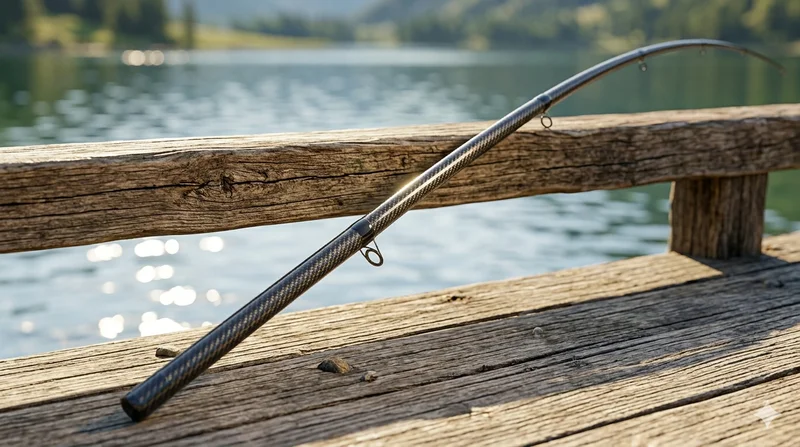
Carbon Fiber Fishing Rod Blank
High-quality carbon fiber fishing rod blank manufactured from multiple grades of Toray carbon fiber cloth. Available in a wide range of lengths, powers, and actions for freshwater and saltwater applications. Suitable for OEM rod building.

Carbon Fiber Plate — 3K Twill T700 1.5mm
Thin 1.5mm carbon fiber plate with 3K twill weave surface. Lightweight and stiff, commonly used for covers, panels, drone bodies, and applications requiring a premium aesthetic appearance.
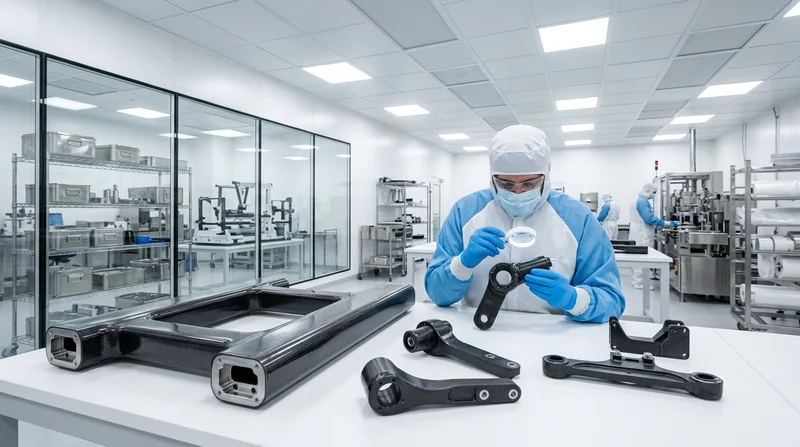
Custom Carbon Fiber Medical Device Components
Medical-grade carbon fiber components manufactured for imaging equipment, surgical instruments, and patient support systems. Carbon fiber's radiolucency (X-ray transparency) and high strength-to-weight ratio make it ideal for CT scanner beds, wheelchair frames, surgical robot arms, and MRI-compatible accessories. Biocompatible resin systems available.
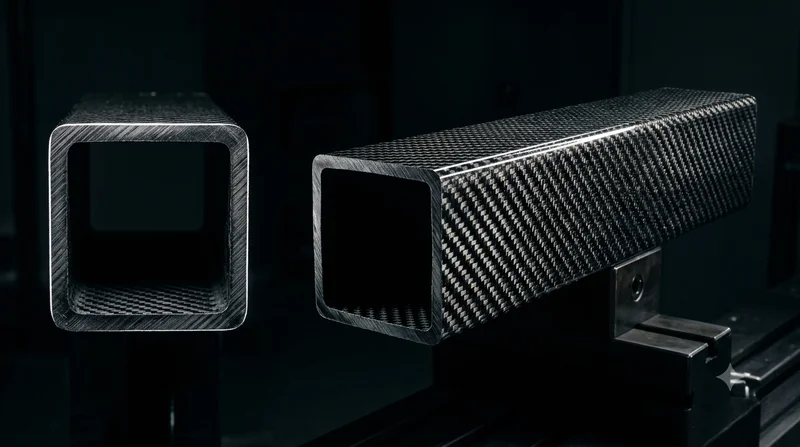
Square Carbon Fiber Tube — 3K Twill T700
Square cross-section carbon fiber tube manufactured with 3K twill weave for torsional strength. Preferred for structural frames, trusses, and support columns where rectangular geometry offers design flexibility.
Carbon Fiber Drone Arm
Precision-molded carbon fiber drone arm combining unidirectional fiber for stiffness and woven layers for torsional strength. Designed for FPV, photography, and industrial drone platforms. Each arm is CNC-machined to exact specifications.