
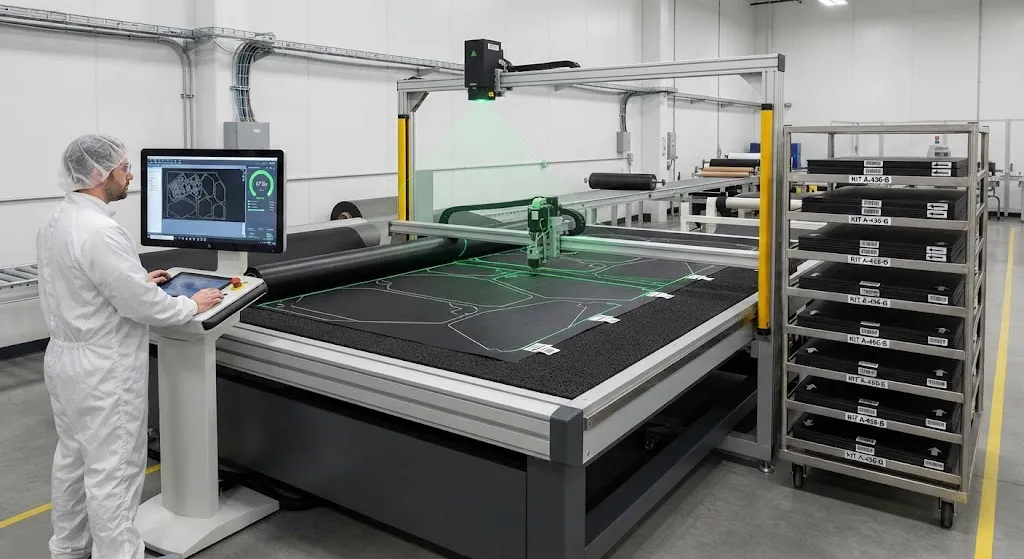
In high-rate composite production — drone fuselages, automotive body panels, wind blade spar caps, aerospace skins — the cutting room is where material cost is won or lost. Prepreg and dry reinforcement fabric typically account for 40-60 percent of a composite part's cost, and the cutti
Introduction
In high-rate composite production — drone fuselages, automotive body panels, wind blade spar caps, aerospace skins — the cutting room is where material cost is won or lost. Prepreg and dry reinforcement fabric typically account for 40-60 percent of a composite part's cost, and the cutting process determines how much of that expensive material reaches the mold. Poor nesting wastes 20-40 percent of purchased material as trim scrap, and uncoordinated kitting leaves operators waiting, parts mislabeled, and work-in-progress piling up between stations.
Automated ply cutting and kitting address both halves of this problem. Nesting optimization software packs hundreds of plies onto each roll or sheet and maximizes fabric utilization from roughly 65-75 percent to 85-95 percent, while automated kitting assembles each part's complete ply set — cut, labeled and sequenced — before it reaches the layup station. Together these systems reduce material waste and factory cost by 10-15 percent and shorten throughput time through the cutting room by 30-50 percent. This article explains how nesting algorithms work, compares cutting table technologies, and maps the kitting workflows that make high-rate programs economically viable.
Why Cutting Utilization Drives Factory Economics
At production rates measured in thousands of parts per year, the cutting room becomes a strategic cost center. Material arriving as roll goods or sheets is converted to plies, and every square meter of trim scrap is money lost. Three factors determine how much waste a cutting operation generates:
- Nesting efficiency: how tightly plies are packed within the available roll or sheet area, influenced by ply geometry, orientation constraints, and the ability to rotate and mirror parts.
- Orientation constraints: load-bearing plies must follow the local fiber direction defined by the design; the more constrained the orientation, the harder it is to achieve high utilization.
- Consumption losses: edge trim, end-of-roll remnants, and defects that force a section of material to be discarded.
For an aerospace-grade prepreg costing 80-200 dollars per kilogram, a utilization difference of 10 percentage points can shift annual material spend by hundreds of thousands of dollars on a single program. This is why leading programs treat nesting as a design-phase activity with dedicated software and process engineers, not as an afterthought in the cutting room.
How Nesting Optimization Works
Nesting software solves a 2D packing problem: arrange all required plies on minimal material area while respecting fiber orientation, ply quality rules, and grain or fabric directional properties. Modern systems combine three algorithmic approaches:
- Heuristic placement: plies are placed sequentially using rules such as largest-first and boundary-guided packing. Fast and robust for hundreds of plies, this is the workhorse of production nesting.
- Metaheuristic search: simulated annealing and genetic algorithms perturb complete placements to escape local optima, typically recovering an additional 2-5 percent utilization on complex nests.
- Common-line cutting: adjacent plies sharing a straight or curved edge are placed so that one knife pass cuts both boundaries simultaneously. This cuts cutting time by 15-30 percent and reduces knife wear, in addition to tightening the pack.
Advanced systems nest across multiple rolls or sheets at once, allocate material for the next shift's requirements, and feed the resulting layout directly to the cutting table controller. Utilization gains compound with repetition: a program producing 50,000 plies per year from 65 percent nesting to 92 percent nesting keeps more than 7,500 square meters of material out of the waste bin.
Cutting Table Technologies
The nesting layout is only as good as the machine that executes it. Three cutting technologies dominate composite ply cutting, each with a distinct cost-performance profile:
| Technology | Typical Speed | Cut Quality | Material Compatibility | Relative Capital Cost |
|---|---|---|---|---|
| Oscillating knife | 60-90 m/min | Good; fiber fraying on tight radii | Woven fabrics, most dry reinforcements | Low to medium |
| Ultrasonic knife | 40-70 m/min | Excellent; sealed cut edges, less dust | Prepreg, UD tapes, fiberglass, resilient plies | Medium to high |
| Laser cutting | 30-50 m/min | Excellent edges; heat-affected zone risk | Dry fabrics, films; not standard prepreg | High |
| Waterjet (process) | 3-10 m/min | Excellent; wet, edge sealing needed | Thick laminates, metal hybrids | High |
Oscillating and ultrasonic knives cover the vast majority of production ply cutting. Ultrasonic tables are preferred for prepreg and large ply counts because the vibrating blade cuts cleanly without dragging tacky resin, while oscillating systems remain cost-effective for dry fabrics and lower volumes. Most high-rate installations use ultrasonic tables with automated marker handling to keep feeding pace with cutting speed.
Kitting: From Plies to Ready-to-Layup Kits
Cutting utilization only matters if the right plies reach the right part at the right time. Kitting closes the loop by organizing cut plies into per-part kits:
- Auto-labeling: each ply is labeled with part number, ply number, orientation and kit ID as it is cut, using inkjet or bar-code markers integrated into the table.
- Sequenced stacking: plies are stacked in layup order — first ply on top — so the operator works through the kit without re-sorting, cutting set-up time by up to 50 percent.
- Laser projection verification: at the layup table, laser projectors overlay the ply outline on the tool, letting operators confirm part and orientation before placement and catching kit errors in seconds.
- Digital traceability: kit contents, material batch, cut time and operator are logged to the production database, providing full genealogy for quality records.
Kitting shifts labor from skilled layup technicians fumbling with ply stacks to a controlled material-flow process. On a drone fuselage program running 40,000 kits per year, automated kitting with sequence numbering reduced average kit preparation from 25 minutes to 9 minutes, and mislabeled or missing plies dropped from 2.1 percent to 0.3 percent of kits.
Material Flow and Factory Integration
Cutting and kitting operate as one station in a larger material flow, and high-rate programs integrate them with the surrounding logistics:
| Factory Stage | Traditional Practice | With Automated Cutting and Kitting | Improvement |
|---|---|---|---|
| Material intake | Manual roll tracking | Bar-coded rolls, FIFO storage, automated retrieval | Traceability, zero lost stock |
| Cutting room | Hand cutting with templates | Nested CNC cutting, 85-95% utilization | 20-40% less waste |
| Kit dispatch | Parts gathered at layup | Pre-built kits delivered to station | 50% less operator waiting |
| Layup | Operator finds and sorts plies | Sequenced stack plus laser verification | 30% faster layup |
| WIP tracking | Paper records | Real-time digital kit status | Full genealogy |
The measurable result on high-rate programs is a cutting room that is no longer a bottleneck: utilization gains deliver 10-15 percent lower material and factory cost, and the cutting-kitting station feeds layup cells a steady, error-free stream of kits.
Selecting a System for Your Program
Choosing the right cutting and kitting configuration depends on material form, ply count and production rate. Programs cutting mostly unidirectional tape or thin woven laminates for drones and automotive parts gain the most from ultrasonic tables with common-line nesting. Programs with thick prepreg stacks or large aerospace skins should prioritize table width, marker handling and integration with automated ply transfer. Dry-fabric programs producing high volumes — wind spar caps, pultrusion feedstock — may prefer oscillating knife systems with stack cutting of multiple material layers. In every case, nesting software should be selected together with the table, since utilization performance is jointly determined by algorithm capability and machine accuracy.
Frequently Asked Questions
How much material can nesting optimization realistically save?
Expect a utilization improvement of 15-25 percentage points moving from manual template cutting to optimized nested CNC cutting: typical manual operations achieve 65-75 percent utilization, while good nesting software reaches 85-95 percent. Common-line cutting adds roughly 1-3 percentage points on top of packed nesting while reducing cutting time. The financial impact scales with material cost and volume — for an aerospace-grade prepreg at 80-200 dollars per kilogram, a 15 percentage point gain on a program consuming 10 tons of material per year is worth roughly 120-300 thousand dollars annually. Achieving the top of the range requires orientation discipline: designs that respect standard ply angles nest substantially better than designs with many arbitrary orientations.
What are the drawbacks of common-line cutting?
Common-line cutting shares one knife pass between adjacent plies, which saves time but imposes constraints. First, shared edges are only possible when two plies have matching straight or gently curved boundaries, so it cannot be applied everywhere; pairs of round or irregular parts rarely offer common lines. Second, when cuts fail or the blade dulls mid-nest, a defect on a shared edge affects both parts, so users may need to re-cut the full nest rather than one ply. Third, tight common-line packs leave minimal clearance, which can complicate automated pick-up of individual plies. In practice, systems evaluate each nest for common-line candidates and apply it selectively, weighting time savings against risk for each program's quality requirements.
Is automated kitting worth it for low-volume or job-shop production?
For low volumes below roughly 1,000 kits per year, full automated kitting is usually hard to justify: label printers, laser projection and digital traceability systems carry fixed costs, while manual kitting overhead remains small. The economics change rapidly above that threshold, and most manufacturers adopt at least lightweight kitting — auto-labeling with bar codes and sequenced stacking — even at moderate volumes, because mislabeled plies are disproportionately expensive to fix at the layup station. Job shops producing many different part numbers per day benefit from digital kit tracking even without full automation, since it replaces time-consuming paper records. The pragmatic approach is to phase capability in: start with labeled, sequenced kits, and add projection verification and full traceability as volume grows.
Conclusion
Automated ply cutting and kitting transform the cutting room from a cost drain into a material-flow engine. Nesting optimization raises fabric utilization from 65-75 percent to 85-95 percent, common-line cutting shortens cutting time by 15-30 percent, and kitting with auto-labeling, sequenced stacking and laser verification eliminates the errors and waiting that plague manual processes. For high-rate programs — drones, automotive, wind, aerospace skins — these gains compound into the 10-15 percent factory-cost reduction that often separates viable programs from cash-burning prototypes.
For manufacturing engineers scaling production, the selection logic runs from material form to table technology to nesting software, with kitting depth matched to volume. Explore our carbon fiber fabrics, prepregs and reinforcement range, or contact our engineering team to discuss material supply and process support for your cutting and layup program.
Related Articles
- Filament Wound FRP Pipe: Complete Guide
- Filament Wound Epoxy Tubes: Complete Guide
- Pultruded Carbon Fibre Rods: Cross-Sectional Properties and Standard Sizes
- Carbon Fiber Tube Fittings and Connectors: Joining Solutions for Structural Assemblies
- Carbon Fiber Plate Insert: Threaded Insert Design for Composite Structures
- Filament Wound Epoxy Tubing: Selection Guide for Industrial and Aerospace Applications
Interested in Our Products?
Contact our team for competitive pricing and technical specifications.
Get a QuoteRelated Products

Carbon Fiber Fishing Rod Blank
High-quality carbon fiber fishing rod blank manufactured from multiple grades of Toray carbon fiber cloth. Available in a wide range of lengths, powers, and actions for freshwater and saltwater applications. Suitable for OEM rod building.
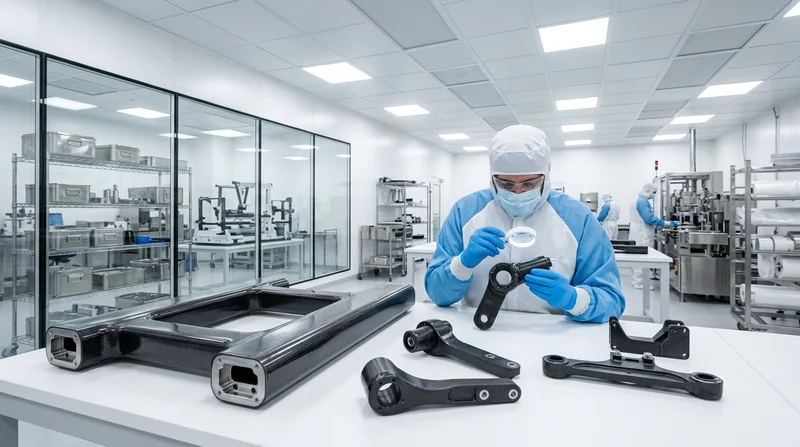
Custom Carbon Fiber Medical Device Components
Medical-grade carbon fiber components manufactured for imaging equipment, surgical instruments, and patient support systems. Carbon fiber's radiolucency (X-ray transparency) and high strength-to-weight ratio make it ideal for CT scanner beds, wheelchair frames, surgical robot arms, and MRI-compatible accessories. Biocompatible resin systems available.

Carbon Fiber Plate — 3K Twill T700 1.5mm
Thin 1.5mm carbon fiber plate with 3K twill weave surface. Lightweight and stiff, commonly used for covers, panels, drone bodies, and applications requiring a premium aesthetic appearance.

Square Carbon Fiber Tube — 3K Twill T700
Square cross-section carbon fiber tube manufactured with 3K twill weave for torsional strength. Preferred for structural frames, trusses, and support columns where rectangular geometry offers design flexibility.
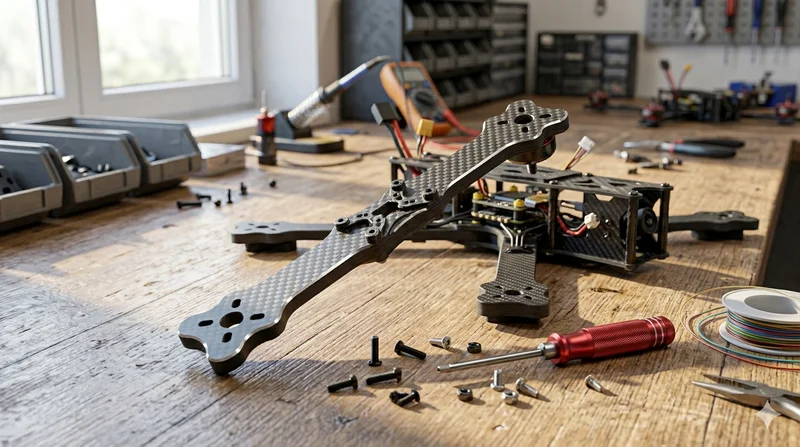
Carbon Fiber Drone Arm
Precision-molded carbon fiber drone arm combining unidirectional fiber for stiffness and woven layers for torsional strength. Designed for FPV, photography, and industrial drone platforms. Each arm is CNC-machined to exact specifications.