
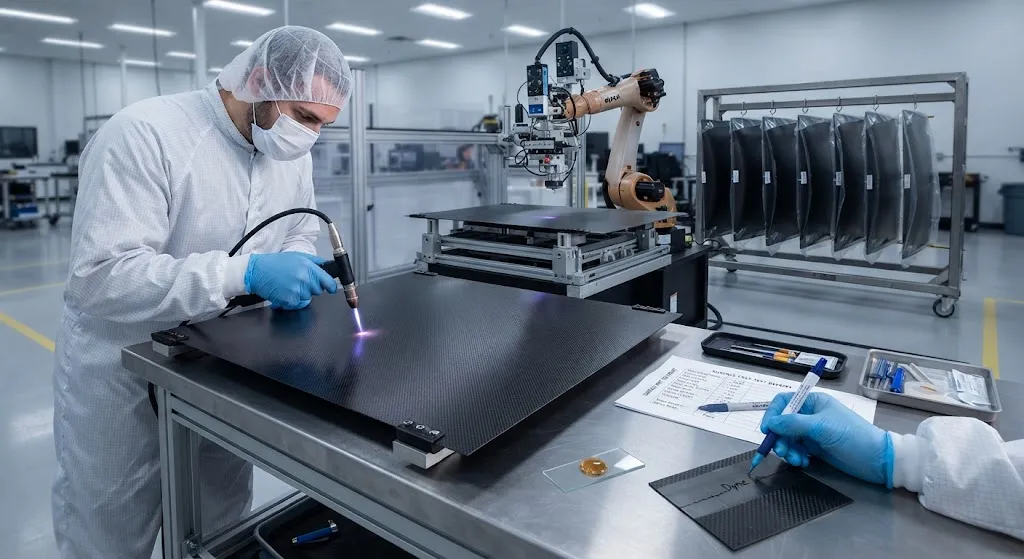
Adhesive bonding has become the preferred joining method for carbon fiber reinforced polymer (CFRP) structures because it eliminates fastener holes, spreads load over large areas, and avoids the fiber damage caused by drilling. But a bonded joint is only as strong as its weakest interfa
Introduction
Adhesive bonding has become the preferred joining method for carbon fiber reinforced polymer (CFRP) structures because it eliminates fastener holes, spreads load over large areas, and avoids the fiber damage caused by drilling. But a bonded joint is only as strong as its weakest interface, and the CFRP surface as it comes from the mold is almost never ready for adhesive application. Mold release agents, fluoropolymer peel ply residue, hydrocarbon contamination and moisture together form a weak boundary layer that forces adhesive failure at fractions of the laminate's potential strength.
Plasma surface treatment solves this problem in seconds without solvents, abrasives or primers. A plasma discharge cleans the surface, introduces polar functional groups, and micro-etches the polymer matrix, raising surface energy from roughly 35-40 mJ/m² to more than 60 mJ/m² and typically increasing lap shear strength by 60-100 percent compared with untreated surfaces. This article explains how plasma treatment works, compares atmospheric and low-pressure systems, quantifies the gains against alternative pretreatments, and lays out the process controls needed for production bonding.
Why Bonded CFRP Joints Fail Without Surface Treatment
CFRP parts are cured against tooling coated with release agents, and the resin-rich surface skin that forms during cure is smooth, low-energy and chemically inert. Adhesives wet such surfaces poorly, and the interface becomes the failure point long before the adhesive or the laminate reaches its design load. Three failure mechanisms dominate untreated joints:
- Weak boundary layer: silicone and fluoropolymer release agents, amine blush from out-of-life prepreg, and airborne hydrocarbons remain on the surface and separate from the bulk material under load.
- Poor wetting: an adhesive with surface tension above the substrate's critical surface energy beads up instead of spreading, leaving microscopic voids that initiate cracks at the interface.
- Absence of mechanical interlock: a smooth cured skin offers no topography for the adhesive to grip, so even a well-wetted joint carries load only through secondary chemical bonds.
The consequence is adhesive failure — separation cleanly at the interface — with joint strengths of 12-18 MPa in typical lap shear tests. Production-quality bonds target cohesive failure inside the adhesive layer, which requires surface preparation that simultaneously cleans, activates and roughens the substrate.
How Plasma Surface Treatment Works
Plasma is an ionized gas containing electrons, ions, radicals, excited molecules and ultraviolet radiation, generated by applying an electric field to a gas such as air, argon, nitrogen or a nitrogen-oxygen mixture. When this reactive mixture contacts a CFRP surface, three mechanisms act in combination:
- Cleaning: energetic species and UV light break down organic contamination into volatile products that are pumped or swept away, removing the weak boundary layer without solvent waste.
- Chemical activation: oxygen radicals react with the epoxy matrix to form polar groups — carbonyl, hydroxyl and carboxyl — that raise the surface energy above the wetting threshold of structural adhesives. Water contact angle typically drops from 70-80 degrees to below 20-30 degrees.
- Micro-roughening: the discharge etches the resin-rich skin on a sub-micrometer scale, creating anchoring topography while leaving the underlying carbon fibers untouched.
The treated surface remains active for a limited time because polar groups re-orient and re-contaminate as the surface ages, which is why plasma treatment is normally scheduled immediately before bonding.
Atmospheric vs Low-Pressure Plasma
Two plasma configurations are used in composite production, and the choice depends on part size, throughput and bonding quality requirements:
| Parameter | Atmospheric Plasma | Low-Pressure Plasma |
|---|---|---|
| Operating pressure | Ambient, open to shop floor | Vacuum chamber, 0.1-1 mbar |
| Process type | In-line, continuous, localized | Batch, entire part at once |
| Typical treatment time | Seconds per area | 5-30 minutes per batch |
| Uniformity and edge reach | Good on flat and gently curved surfaces | Excellent, including complex 3D geometry |
| Activation decay control | Higher re-contamination risk | Longer-lasting activation |
| Capital cost | Low, $50-150k | Higher, $150-500k plus vacuum system |
| Best fit | Large panels, in-line repair patches | Small parts, critical joints, qualification programs |
Atmospheric systems — dielectric barrier discharge and plasma jets — suit large structures that cannot fit in a vacuum chamber, such as wind turbine blade shells and aircraft fuselage panels. Low-pressure systems deliver the most uniform and strongest activation and are preferred where bond integrity is flight-critical or where surface geometry is complex.
Plasma vs Alternative Pretreatments
Surface preparation for composite bonding has historically relied on peel ply, grit blasting and solvent wipe, with laser ablation growing recently. The table below compares typical lap shear strength retention and process characteristics on epoxy-based CFRP:
| Treatment | Contact Angle (deg) | Lap Shear vs Untreated | Process Time | Key Limitation |
|---|---|---|---|---|
| Untreated | 70-80 | Baseline | — | Adhesive failure |
| Solvent wipe | 60-70 | +10-25% | Minutes | Leaves weak boundary layer |
| Grit blasting | 50-60 | +20-40% | Manual | Dust, fiber damage risk, operator dependent |
| Peel ply | 45-55 | +30-50% | Mold step | Contamination from peel ply residues |
| Atmospheric plasma | 15-25 | +60-100% | Seconds | Short activation lifetime |
| Low-pressure plasma | 5-20 | +80-120% | Batch minutes | Chamber size limits |
| Laser ablation | 10-20 | +80-120% | Automated | High capital cost |
Plasma offers the best combination of bond strength gain, process speed and environmental cleanliness for most production applications. Where the highest strengths are required, low-pressure plasma and laser ablation converge on similar performance, and the decision comes down to capital cost and automation fit.
Process Parameters and Quality Control
Plasma treatment is only as reliable as the process control around it. Key parameters that determine activation quality include gas composition, discharge power, nozzle-to-surface distance, traverse speed and number of passes for atmospheric systems, and pressure, power and exposure time for batch systems. The activation decays with time — polar groups re-orient within hours and re-contamination accelerates in humid air — so bonding should occur within 24-72 hours of treatment, and the interval must be included in the process specification.
Production quality control relies on two levels of verification. In-process checks use dyne pens or contact angle measurement to confirm surface energy above the adhesive's wetting threshold, typically 50-60 mJ/m². Periodic qualification couples lap shear and wedge test specimens with documented treatment parameters, following aerospace standards such as those required by NADCAP accreditation. Water break testing gives a quick shop-floor pass-fail, but quantitative contact angle measurement is preferred for critical joints.
Production Applications
Plasma surface treatment is now standard practice across several composite manufacturing sectors:
- Aerospace bonded repairs: field and depot repair patches are bonded to fuselage and wing skins after plasma activation, replacing slow, chemical-intensive surface preparation with a dry process that takes minutes.
- Stringer-to-skin and doubler bonding: large co-bonded and secondary-bonded structures use plasma to achieve cohesive failure across the entire bondline.
- Wind turbine blades: blade shell halves and spar caps are bonded with adhesives after atmospheric plasma treatment of the bond flanges, improving joint reliability in a low-cost, high-volume environment.
- Automotive structural bonding: CFRP body panels and crash structures bonded with toughened adhesives benefit from plasma activation before the adhesive is applied in robotic cells.
- Sandwich panels and interior components: plasma activation improves bonding of skins to honeycomb cores and simplifies integration of metallic and composite inserts.
Frequently Asked Questions
How long does plasma activation last on a CFRP surface?
Activation decays over time as polar functional groups re-orient and the surface re-contaminates. In clean, dry conditions the surface typically remains bondable for 24-72 hours, but the safe interval shrinks in humid or dusty environments, sometimes to a few hours. The practical rule is to bond as soon as possible after treatment, and to verify surface energy with contact angle or dyne pen checks at the bonding station if any delay occurs. Process specifications for critical joints define a maximum open time, beyond which treatment must be repeated.
Does plasma treatment damage the carbon fibers or the laminate?
At the power levels used for surface activation, plasma only affects the resin-rich surface layer, etching the matrix on a sub-micrometer scale without cutting or degrading carbon fibers. The discharge does not penetrate the laminate, and mechanical properties of the substrate — stiffness, strength and fatigue — are unaffected. Over-treatment with excessive power or prolonged exposure can over-etch the resin and leave a powdery oxidized layer, so parameters should be qualified with test coupons before production release. Grit blasting, by contrast, can nick and fracture surface fibers, which is one reason plasma is preferred for thin-skinned structures.
Can plasma treatment completely replace peel ply and grit blasting?
In most secondary bonding applications, yes. Plasma removes the weak boundary layer, activates the surface and provides micro-topography, achieving cohesive failure that peel ply and grit blasting alone rarely deliver. However, three situations still warrant the older methods: first, bonded repair of field equipment where no power source or plasma unit is available; second, surfaces that arrive heavily contaminated, where a solvent wipe before plasma improves the result; and third, certain high-temperature or toughened resin systems where the bonding qualification data base is built around peel ply preparation. Where plasma is introduced, qualification testing should demonstrate equivalent or better performance against the existing baseline before production changeover.
Conclusion
Plasma surface treatment converts the weakest part of a bonded composite joint — the interface — into a controlled, reproducible surface that delivers cohesive failure and full adhesive strength. Atmospheric systems bring this capability to large structures at low capital cost, while low-pressure systems provide the uniformity and activation lifetime required for flight-critical joints. Combined gains of 60-120 percent in lap shear strength, elimination of solvent and abrasive waste, and treatment times measured in seconds make plasma the rational choice for aerospace, wind energy, automotive and marine bonding lines.
For engineers qualifying a bonding process, the decision points are system configuration, activation lifetime management and process control documentation. Explore our carbon fiber prepreg and laminate range, or contact our engineering team to discuss surface preparation and material qualification for your bonded structure program.
Part of topic
Related Articles
- Filament Wound FRP Pipe: Complete Guide
- Filament Wound Epoxy Tubes: Complete Guide
- Pultruded Carbon Fibre Rods: Cross-Sectional Properties and Standard Sizes
- Carbon Fiber Tube Fittings and Connectors: Joining Solutions for Structural Assemblies
- Carbon Fiber Plate Insert: Threaded Insert Design for Composite Structures
- Filament Wound Epoxy Tubing: Selection Guide for Industrial and Aerospace Applications
Interested in Our Products?
Contact our team for competitive pricing and technical specifications.
Get a QuoteRelated Products
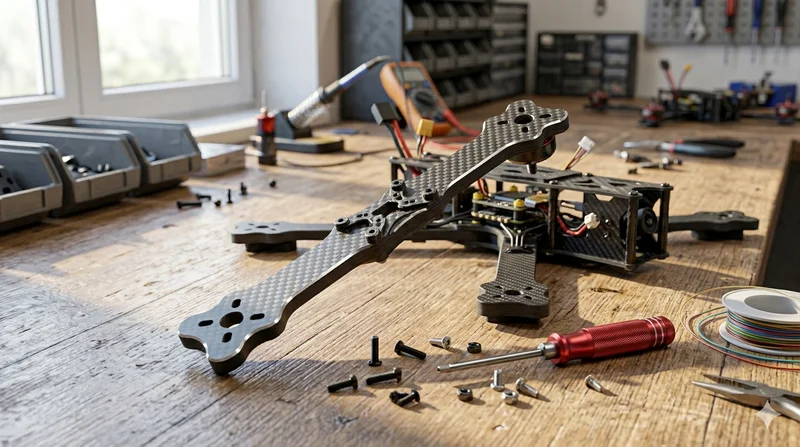
Carbon Fiber Drone Arm
Precision-molded carbon fiber drone arm combining unidirectional fiber for stiffness and woven layers for torsional strength. Designed for FPV, photography, and industrial drone platforms. Each arm is CNC-machined to exact specifications.
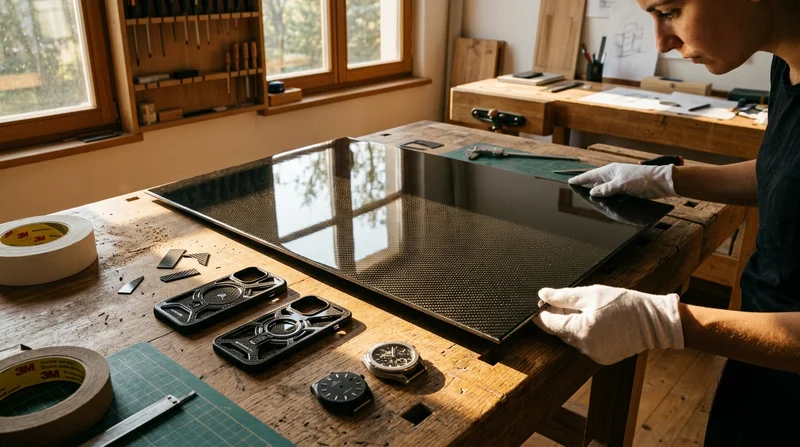
Carbon Fiber Plate — High-Gloss Decorative
High-gloss decorative carbon fiber plate with a mirror-like surface finish. The glossy coating enhances the visible 3K twill weave, creating a premium aesthetic for consumer-facing applications. Lightweight yet stiff, available in thin gauges for easy cutting and forming.