
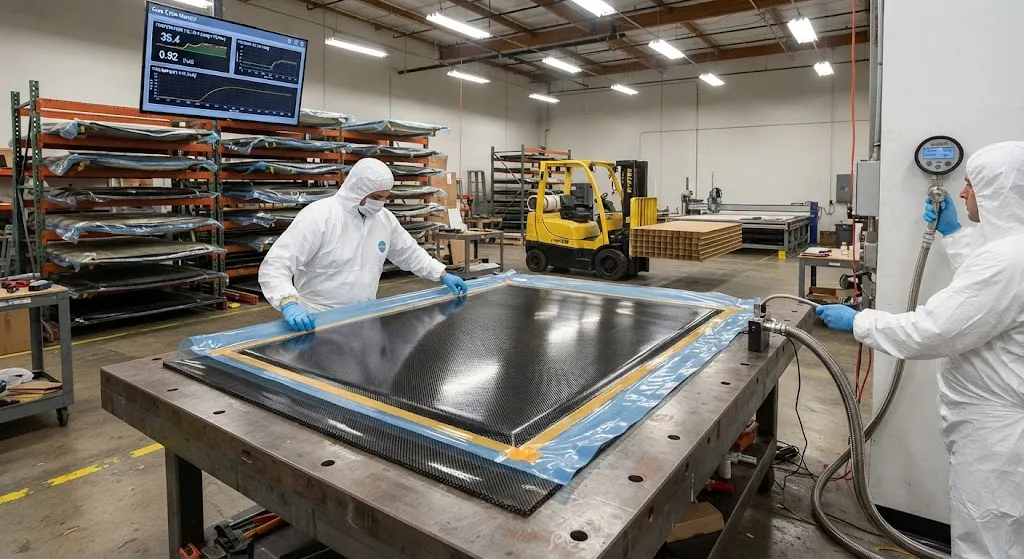
Autoclaves have shaped the aerospace composites industry for four decades, but they are also its most expensive bottleneck. A large autoclave costs millions of dollars, consumes enormous energy, and limits part dimensions to the envelope of the vessel. Widebody aircraft programs need wi
Introduction
Autoclaves have shaped the aerospace composites industry for four decades, but they are also its most expensive bottleneck. A large autoclave costs millions of dollars, consumes enormous energy, and limits part dimensions to the envelope of the vessel. Widebody aircraft programs need wing covers and fuselage panels that stretch beyond the practical size of even the largest production autoclaves, and every production rate increase competes for oven and autoclave capacity. Out-of-autoclave prepregs — materials cured in a vacuum bag under atmospheric pressure — are the industry's answer: parts as large as a vacuum bag can be, at void levels that approach autoclave quality.
Adopting OoA materials for primary structures is a certification exercise as much as a manufacturing decision. The qualification process must prove to authorities and customers that the material system is consistent, that its mechanical properties support the design allowables, and that the cured quality — especially porosity — stays within limits across real production variation. This article walks through how OoA prepregs work, the technical hurdles in qualifying them, and the statistical pathway from screening tests to A-basis allowables for primary structure certification.
How Out-of-Autoclave Prepregs Work
Conventional prepreg systems are designed to cure under several bars of autoclave pressure, which squeezes air and volatiles out of the laminate. An OoA prepreg must achieve the same low void content with only the roughly one bar of pressure available from vacuum bagging. It does this through a partially advanced resin chemistry: the resin B-stages to a point where the preform contains an engineered network of microscopic air channels. During the vacuum hold, air and moisture are drawn out through these channels before the resin gels; once gelled, the channels close and the laminate cures to a dense, low-porosity part.
The practical result is that OoA laminates routinely achieve void content below one percent in flat and gently curved panels, approaching the quality of autoclave-cured parts. The trade-off is processing discipline. Vacuum integrity is everything: a leaking baglet, an excessive ramp rate that cures the surface before the interior evacuates, or an inadequate vacuum hold time all trap air and produce porosity. Process control systems that monitor vacuum level, temperature uniformity and ramp rates are therefore central to OoA production, just as pressure control is central to autoclave curing.
OoA materials entered airframes through secondary structures — fairings, control surfaces and interior panels — where the certification burden is lighter. That experience base enables the move to primary structures: the same material system, process controls and inspection rigor are already qualified, and the primary-structure campaign concentrates on the additional tests, environmental conditions and statistical basis values required for flight-critical load paths. Airframers describe this as a staged adoption whose pace varies with program risk tolerance and part size.
The Qualification Challenge for Primary Structures
Certifying a material for primary structures requires demonstrating that its properties are reliable across batch variation, manufacturing tolerances and environmental exposure. The established framework — documented in composite handbooks such as CMH-17 and reflected in airworthiness guidance — organizes the effort in two layers: material qualification, which establishes the performance of the material system as produced by the supplier, and allowables development, which converts test data into statistically defined design values used across the airframe.
Porosity deserves special attention in an OoA campaign because it is the failure mode the process must guard against. Porosity degrades compressive strength and interlaminar shear most severely, and inspection methods such as ultrasonic C-scan and micrographic cross-sections are used both for development programs and for production quality control. Qualification testing therefore pairs mechanical testing with a rigorous porosity control strategy, and production parts typically carry defined acceptance thresholds tied to design analysis.
Batch-to-batch consistency is the statistical foundation of any qualification, and it deserves extra attention for OoA materials because the process window is narrower than autoclave curing. A material lot that cures acceptably in development may behave differently when resin age, fiber batch or bagging practice drift, and the qualification matrix is designed to capture that variation rather than hide it. Auditors and airframers therefore look for documented process capability: vacuum integrity records, temperature uniformity surveys, moisture control at layup and a supplier quality system that ties every delivered panel to its material and process history.
From Screening to A-Basis Allowables
A typical qualification pathway proceeds through screened stages. Initial screening evaluates candidate resin systems with small coupons — lap shear, short-beam strength and micrographic void checks — to select materials that cure acceptably at vacuum pressure. The selected system then enters a full qualification matrix that spans multiple material batches, environmental conditions and test types, generating the statistically based values used in design.
Statistical basis values follow well-defined rules. An A-basis value is the strength level exceeded by 99 percent of the population with 95 percent confidence, while a B-basis value is exceeded by 90 percent of the population with 95 percent confidence. Primary structural design commonly uses B-basis values for typical airframe sizing, with A-basis retained for critical load conditions. Achieving these values requires testing across the environmental envelope — room temperature dry, elevated temperature wet, and cold conditions — because matrix-dominated properties such as compression and shear change substantially with temperature and moisture content.
Tests That Define an OoA Material System
The table below lists the mechanical tests that anchor a typical OoA qualification campaign, alongside the properties they establish.
| Test | Property Established | Standard Reference |
|---|---|---|
| Uniaxial tension | Fiber-dominated tensile strength and modulus | ASTM D3039 |
| Compression after impact | Damage tolerance with impact damage | ASTM D7136/D7137 |
| Open-hole compression | Strength with a stress-raising hole | ASTM D6484 |
| In-plane shear | Matrix-dominated shear response | ASTM D3518 |
| Interlaminar shear | Layer-to-layer shear strength | ASTM D2344 |
| Density and fiber content | Consolidation and fiber volume fraction | ASTM D792/D3171 |
Key Steps in an OoA Certification Pathway
- Material screening: Small-coupon trials confirm that a candidate resin system cures to low void content under vacuum bag pressure alone.
- Process definition: Vacuum hold time, ramp rates and temperature uniformity are documented and held as production controls.
- Multi-batch testing: The qualification matrix spans at least several material batches to capture real supplier variation.
- Environmental envelope: Tests run at room temperature dry, elevated temperature wet and cold conditions to bound service behavior.
- Statistical analysis: A-basis and B-basis values are computed with defined reliability and confidence levels.
- Acceptance criteria: Production parts carry porosity and quality limits tied to the design analysis.
Frequently Asked Questions
How close is OoA part quality to autoclave quality?
OoA laminates typically achieve void content below one percent, approaching autoclave quality in flat and gently curved panels. The qualification program verifies this through ultrasonic inspection and micrographic sectioning across multiple batches. The main caveat is process discipline: vacuum integrity, temperature uniformity and ramp control determine whether a given part actually reaches the low porosity the material system is capable of, which is why automated process monitoring is central to OoA production.
What is the difference between A-basis and B-basis allowables?
An A-basis value is the strength exceeded by 99 percent of the material population with 95 percent confidence; a B-basis value is exceeded by 90 percent with 95 percent confidence. B-basis is commonly used for typical airframe sizing, while A-basis is retained for critical load conditions. The statistical rules ensure the design allowables are conservative relative to real batch-to-batch variation, which is why multi-batch qualification testing matters.
Why is porosity a special concern for OoA materials?
Porosity is the failure mode that OoA processing must defeat, because only vacuum pressure is available to consolidate the laminate. Porosity degrades compressive strength and interlaminar shear most severely. Qualification campaigns combat it with a defined vacuum hold and ramp policy, ultrasonic and micrographic verification, and production acceptance thresholds tied to design analysis — so parts prove low porosity before they are released for assembly.
Conclusion
Out-of-autoclave prepregs have matured from a research curiosity into a qualification-ready production material. Their process economics — no autoclave capital, lower energy, part size limited only by vacuum bagging equipment — matter most for the large structures at the edge of autoclave capacity, and their certification pathway is now a well-understood exercise combining material screening, multi-batch mechanical testing, environmental coverage and statistical analysis. Companies that build the process discipline and test campaign into their capability early will be the suppliers qualified to serve the next generation of widebody and large-part programs.
YongXian supplies carbon fiber fabrics, prepregs and process materials for aerospace and industrial composite manufacturing. Explore our carbon fiber product range or contact our engineering team to discuss materials and process support for your qualification program.
Part of topic
Related Articles
- How Are Carbon Fiber Parts Made: Complete Guide
- Filament Wound Tube: Complete Guide
- Filament Wound FRP Pipe: Complete Guide
- Filament Wound Epoxy Tubes: Complete Guide
- Pultruded Carbon Fibre Rods: Cross-Sectional Properties and Standard Sizes
- Carbon Fiber Tube Fittings and Connectors: Joining Solutions for Structural Assemblies
Interested in Custom Carbon Fiber Products?
Contact our team for competitive pricing and technical specifications.
Get a QuoteRelated Products
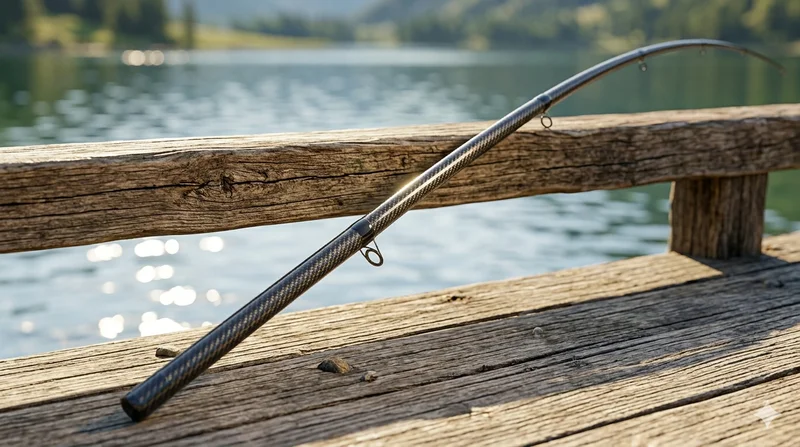
Carbon Fiber Fishing Rod Blank
High-quality carbon fiber fishing rod blank manufactured from multiple grades of Toray carbon fiber cloth. Available in a wide range of lengths, powers, and actions for freshwater and saltwater applications. Suitable for OEM rod building.
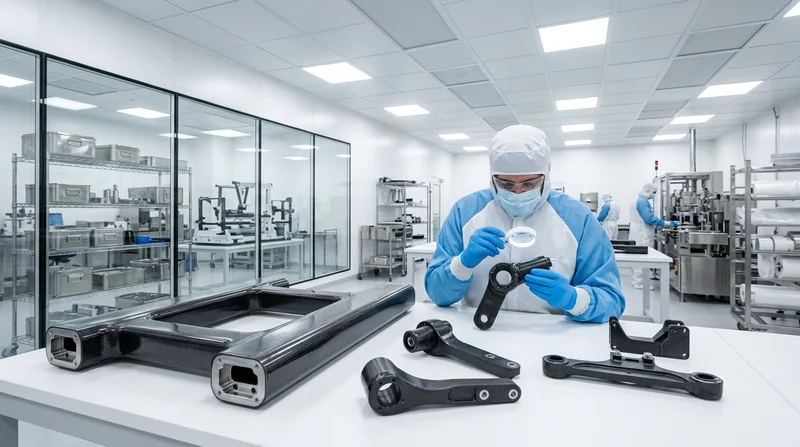
Custom Carbon Fiber Medical Device Components
Medical-grade carbon fiber components manufactured for imaging equipment, surgical instruments, and patient support systems. Carbon fiber's radiolucency (X-ray transparency) and high strength-to-weight ratio make it ideal for CT scanner beds, wheelchair frames, surgical robot arms, and MRI-compatible accessories. Biocompatible resin systems available.
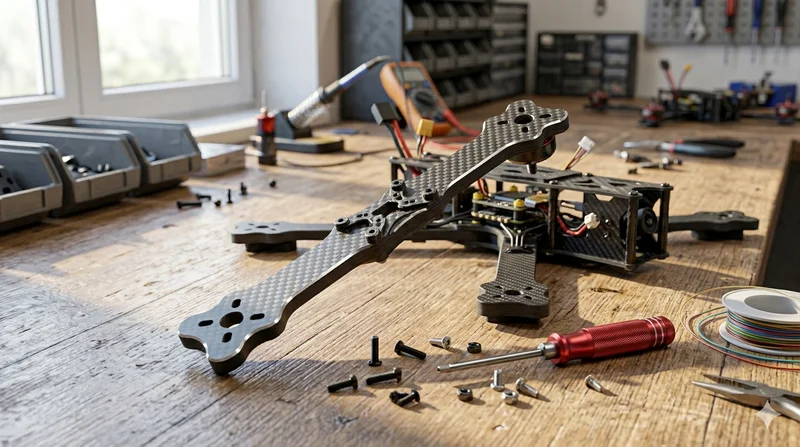
Carbon Fiber Drone Arm
Precision-molded carbon fiber drone arm combining unidirectional fiber for stiffness and woven layers for torsional strength. Designed for FPV, photography, and industrial drone platforms. Each arm is CNC-machined to exact specifications.
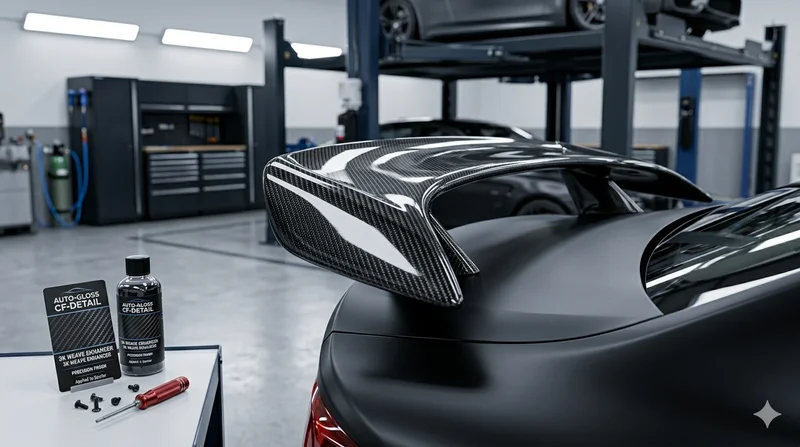
Carbon Fiber Automotive Spoiler
Automotive-grade carbon fiber spoiler manufactured using autoclave-cured pre-preg technology. Each spoiler is vacuum-bagged and oven-cured for optimal fiber-to-resin ratio, strength, and a flawless cosmetic finish.
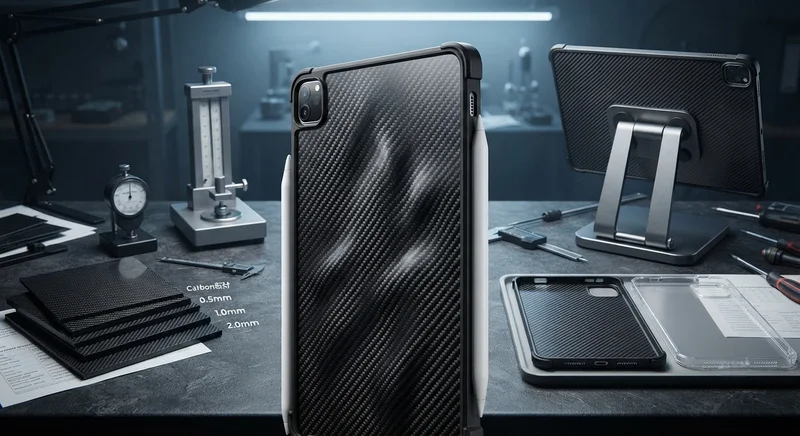
Carbon Fiber Tablet Case — Ultra-Light Protective Shell
Lightweight carbon fiber protective case for tablets and iPads. Molded from T700 3K prepreg with reinforced corner protection. Adds minimal weight while providing superior rigidity and drop protection compared to polycarbonate or silicone cases. Ideal for field workers, enterprise deployments, and professionals requiring durable tablet protection.