
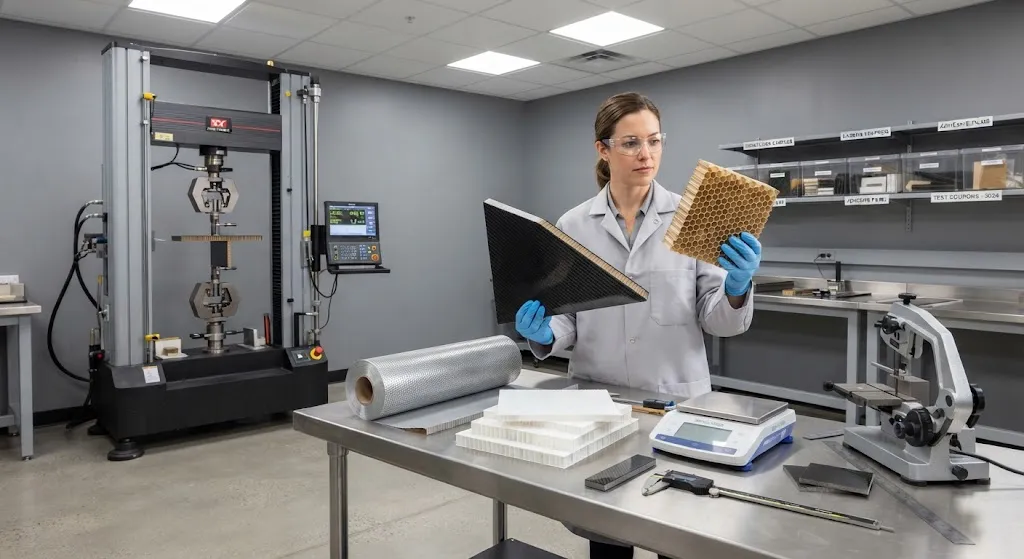
Sandwich panels are the backbone of modern lightweight structures: two thin carbon fiber facesheets separated by a lightweight core multiply bending stiffness while keeping mass low. The core is far from a passive spacer — it carries shear loads, resists crushing, stabilizes the faceshe
Introduction
Sandwich panels are the backbone of modern lightweight structures: two thin carbon fiber facesheets separated by a lightweight core multiply bending stiffness while keeping mass low. The core is far from a passive spacer — it carries shear loads, resists crushing, stabilizes the facesheets against buckling, and often governs the panel's fire behavior and cost. Choosing between Nomex, aluminum, and thermoplastic honeycomb cores is one of the most common engineering decisions in composite design, yet the wrong choice surfaces only after parts are built and tested.
This guide compares the three core families with concrete data on density, mechanical properties, service temperature, flammability, moisture behavior, and price. It then provides a selection framework that walks through the questions every designer should answer before committing to a core: what loads the panel sees, what temperature and fire ratings apply, how humid the environment is, and how many panels will be produced.
How Honeycomb Core Works
A honeycomb core is a cellular structure of hexagonal cells made by expanding or corrugating thin sheet material and bonding the cell walls at their nodes. Two geometric parameters dominate performance: cell size and core density. Smaller cells put more wall material per unit area, raising compressive and shear strength but adding cost and weight; higher density does the same by thickening the walls themselves.
For engineering purposes, three properties matter most. Compressive strength resists facesheet indentation and crushing under local loads. Shear strength in the two in-plane directions (typically called L and W, along and across the ribbon direction) governs how the panel transfers load between facesheets. And the core-to-facesheet bond — usually a film adhesive — transfers every load into the core; a panel fails at the bond line long before the core itself if adhesive selection or surface preparation is wrong.
Core Material Comparison at a Glance
| Property | Nomex (aramid paper) | Aluminum | Thermoplastic (PP/PET/PEI) |
|---|---|---|---|
| Typical density range | 29-144 kg/m³ | 32-130 kg/m³ | 50-160 kg/m³ |
| Continuous service temperature | Up to 180°C | Up to 200°C+ | 80-150°C (grade dependent) |
| Flammability / FST | Excellent, self-extinguishing | Non-combustible, high thermal conduction | Additives required; PEI naturally FST |
| Moisture resistance | Moderate; absorbs some moisture | Excellent; corrosion risk with carbon | Excellent; near-zero absorption |
| Relative cost | High | Moderate | Low to moderate |
| Typical use | Aircraft interiors, radomes, marine | Primary structure, floors, bulkheads | Transport, building panels, tooling |
The table collapses the trade space into one view. Nomex wins where fire safety and weight meet; aluminum wins where strength-to-weight and cost matter most; thermoplastics win where price, moisture, and formability dominate. Real applications rarely sit purely in one column — hybrid designs and density choices blur the boundaries.
Nomex Honeycomb: The Aerospace Fire Standard
Nomex honeycomb is made from aramid paper dipped in phenolic resin. The phenolic coating delivers the property that made Nomex the default in aircraft interiors: it self-extinguishes, produces low smoke and low heat release, and passes the fire test regimes applied to cabin structures. At typical densities of 29-48 kg/m³ it is light enough for interior panels, yet strong enough for floor panels and galleys at higher densities.
Nomex advantages extend beyond fire: excellent fatigue behavior, good damage tolerance because the aramid paper yields rather than fractures, and compatibility with phenolic, epoxy, and thermoplastic facesheets. The weaknesses are cost — aramid paper is expensive — and moisture: aramid absorbs water, which raises weight, lowers mechanical properties, and can freeze-expand in aircraft service. Designers manage this with drainage holes, seals, and venting, but it remains the core's main operational constraint.
Aluminum Honeycomb: Strength Per Kilogram
Aluminum honeycomb offers the highest strength-to-weight ratio of the three families at equal density, with shear strengths roughly 1.5-2 times those of aramid cores of similar weight. It is the workhorse of primary aircraft structure — flight deck floors, cargo compartment floors, bulkheads, and control surfaces — and of satellite panels, where its dimensional stability and predictable modulus are valued.
- Corrosion caution: bare aluminum cells corrode in humid or salt environments; a corrosion-inhibiting primer and sealed edges are mandatory in marine or tropical service.
- Galvanic risk with carbon: die-cut or reinforced core touching carbon fiber facesheets creates a galvanic couple; a fiberglass isolation layer between core and facesheet breaks the circuit.
- Forming limits: aluminum core can be machined and densified locally but does not thermoform to compound curves the way polymer cores do; contours are achieved by machining or by slicing and splicing.
- Thermal behavior: high thermal conduction is an asset for heat-spreading panels but a drawback where insulation is required; it also strengthens the thermal path for fire penetration.
Mechanically, aluminum honeycomb is unforgiving of manufacturing sloppiness: cell walls crush and buckle with little warning, facesheet bonding requires precise adhesive film placement and surface activation, and repair is difficult once a cell wall is damaged. These traits reward disciplined processing and favor applications with high load density over cost-critical consumer panels.
Thermoplastic Honeycomb: Low Cost and Formability
Thermoplastic honeycomb — polypropylene (PP), PET, and engineering grades such as PEI — has become the default in transport and building panels because it combines low price, near-zero moisture absorption, good impact toughness, and true thermoformability. PP and PET cores can be curved into complex shapes with simple heating, bonded with thermoplastic or reactive adhesives, and recycled at end of life, which increasingly matters for automotive and construction sustainability targets.
The trade-offs are equally clear. Service temperature is the hard limit: PP cores creep well below 100°C, PET extends to roughly 150°C, and only engineering thermoplastics like PEI approach aerospace temperature capability. Flammability needs formulation work — flame-retardant additives or inherently FST polymers — before the core enters fire-rated assemblies. And mechanical properties at equal density run below aluminum and aramid, so heavily loaded structure still favors the traditional cores.
Selection Framework: Six Questions
- What temperature will the panel see? Above 180°C rules out aramid and all commodity thermoplastics; aluminum or PEI/copolyimide take over.
- Does the application have a fire, smoke, and toxicity (FST) requirement? Aircraft and public transport interiors push toward Nomex or intrinsically FST thermoplastics; untreated PP/PET is out.
- What is the operating humidity environment? Marine and tropical use favors thermoplastics or sealed aluminum; aramid needs moisture management.
- Is the panel structural or semi-structural? Loaded floors and bulkheads warrant aluminum or high-density Nomex; decorative and insulation panels take low-density thermoplastics.
- Will the panel be flat or curved? Compound curvature favors thermoformable thermoplastic cores; flat or single-curved panels can use any family economically.
- What is the production volume and cost target? High volume and tight cost targets push toward PP/PET honeycomb; aerospace certification and low volume justify Nomex or aluminum.
Working through these questions in order converges quickly: most aircraft interior panels land on Nomex, most primary aircraft and satellite structure on aluminum, and most transport, marine, and building panels on thermoplastics. The framework also exposes the rare cases — cryogenic insulation systems, supersonic skins, thermal management panels — where the data sheets must be consulted cell by cell.
Frequently Asked Questions
Why is Nomex honeycomb used so widely in aircraft interiors despite its cost?
Because fire regulation, not raw material price, dominates interior material choice. Aviation rules require cabin panels to self-extinguish with low smoke and heat release, and Nomex with phenolic coating passes these tests at the low densities that keep weight down. No commodity thermoplastic matched that combination for decades, and even today, engineered FST thermoplastics cost nearly as much as aramid while offering less mechanical history. The cost premium is the price of certification certainty and verified fire data, which program risk managers readily pay for cabin structure.
Can aluminum honeycomb be used directly against carbon fiber facesheets?
Only with an isolation layer. Aluminum and carbon fiber form a galvanic couple in the presence of moisture, and the aluminum cell walls corrode rapidly where they touch the carbon facesheet or where moisture bridges the two. Standard practice is a thin fiberglass isolation ply between the core and the carbon facesheet, sealed edges, and corrosion-inhibiting primer on the core itself. Where weight or cost rules out the isolation layer, aramid or thermoplastic cores are the safer choice.
What is the cheapest honeycomb core that still performs well in sandwich panels?
Polypropylene honeycomb is generally the lowest-cost core on the market, followed by PET. Both offer good impact toughness, water resistance, and formability, and both drop in price substantially at high production volumes. The catch is temperature: PP creeps below 100°C and PET around 150°C, so these cores suit interior, marine, RV, and building panels rather than hot or heavily loaded aerospace structure. For buyers weighing first cost against lifecycle, thermoplastic cores also win on repair economics and recyclability.
Conclusion
Honeycomb core selection is a balancing act across four constraints — mechanical performance, temperature and fire rating, environmental resistance, and cost — and no single material wins all four. Nomex remains the reference for fire-critical aerospace interiors; aluminum for primary structure where strength per kilogram rules; thermoplastics for cost-sensitive, formable, moisture-tolerant panels. The selection framework in this article narrows the field to one or two candidates quickly, after which the decision rests on verified datasheet values and — for certification programs — test coupons from the actual core batch.
For sandwich panel designers and buyers, pairing the right core with the right carbon fiber facesheets and adhesive completes the system. Explore our carbon fiber products for facesheets and sandwich panel skins, or contact our engineering team for core selection and panel design support.
Part of topic
Related Articles
- Pultruded Carbon Fibre Rods: Cross-Sectional Properties and Standard Sizes
- Carbon Fiber Tube Fittings and Connectors: Joining Solutions for Structural Assemblies
- Carbon Fiber Plate Insert: Threaded Insert Design for Composite Structures
- Filament Wound Epoxy Tubing: Selection Guide for Industrial and Aerospace Applications
- Filament Wound Epoxy Tubes Advantages: Over Metal and Pultruded Alternatives
- Carbon Fiber Tube Strength: Analysis Methods and Design Allowables
Interested in Our Products?
Contact our team for competitive pricing and technical specifications.
Get a QuoteRelated Products
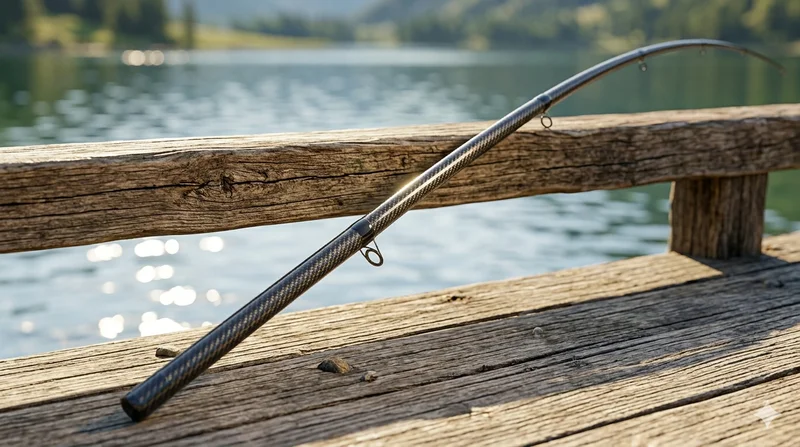
Carbon Fiber Fishing Rod Blank
High-quality carbon fiber fishing rod blank manufactured from multiple grades of Toray carbon fiber cloth. Available in a wide range of lengths, powers, and actions for freshwater and saltwater applications. Suitable for OEM rod building.

Carbon Fiber Plate — 3K Twill T700 1.5mm
Thin 1.5mm carbon fiber plate with 3K twill weave surface. Lightweight and stiff, commonly used for covers, panels, drone bodies, and applications requiring a premium aesthetic appearance.
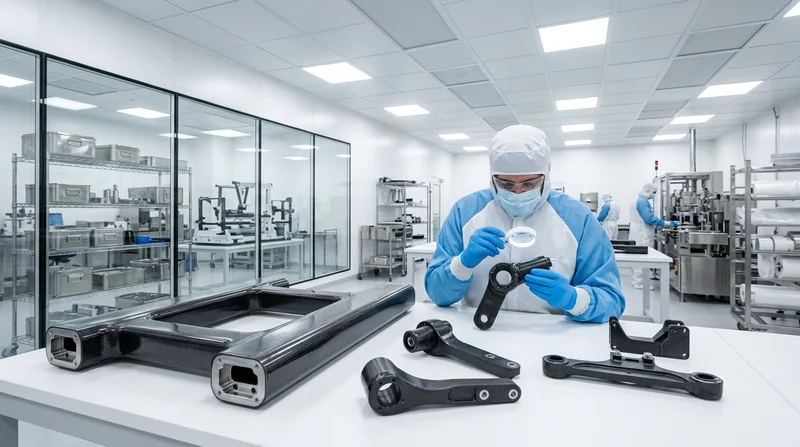
Custom Carbon Fiber Medical Device Components
Medical-grade carbon fiber components manufactured for imaging equipment, surgical instruments, and patient support systems. Carbon fiber's radiolucency (X-ray transparency) and high strength-to-weight ratio make it ideal for CT scanner beds, wheelchair frames, surgical robot arms, and MRI-compatible accessories. Biocompatible resin systems available.

Square Carbon Fiber Tube — 3K Twill T700
Square cross-section carbon fiber tube manufactured with 3K twill weave for torsional strength. Preferred for structural frames, trusses, and support columns where rectangular geometry offers design flexibility.
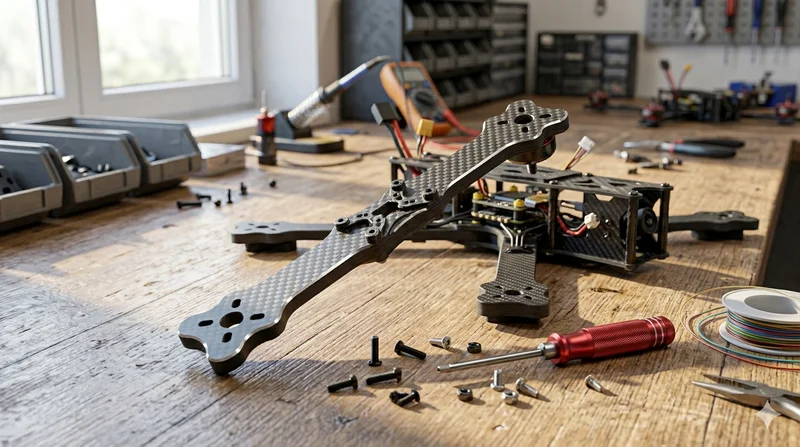
Carbon Fiber Drone Arm
Precision-molded carbon fiber drone arm combining unidirectional fiber for stiffness and woven layers for torsional strength. Designed for FPV, photography, and industrial drone platforms. Each arm is CNC-machined to exact specifications.