Selecting a carbon fiber tube factory begins with four numbers: outside diameter, wall thickness, length and tolerance class. Everything else, from layup to surface finish and price, follows from those four. A supplier that quotes before asking for them is quoting a guess. This guide explains what a
Introduction
Selecting a carbon fiber tube factory begins with four numbers: outside diameter, wall thickness, length and tolerance class. Everything else, from layup to surface finish and price, follows from those four. A supplier that quotes before asking for them is quoting a guess. This guide explains what a carbon fiber tube factory actually produces, how the main processes differ, what MOQ and lead times look like in 2026, and which incoming checks stop a marginal lot before it reaches your assembly cell.
Tube is not a commodity. A pultruded tube and a roll-wrapped tube with the same outside diameter can differ by 40 percent in hoop strength and by a factor of three in concentricity. Buyers who compare only dollars per metre pay again in scrap, rework and line stoppages. The specification has to be written around the process that will make the part, not the other way round.
What a carbon fiber tube factory actually makes
Four processes cover almost every tube sold commercially. Each sets a different ceiling on geometry, surface quality and cost, and a competent carbon fiber tube factory will say which of them your drawing actually needs before it quotes.
| Process | Typical OD | Wall thickness | OD tolerance | Best fit |
|---|---|---|---|---|
| Pultrusion | 3-150 mm | 1.0-5.0 mm | ±0.10 mm | Long straight structural tube, high volume |
| Roll wrapping | 6-100 mm | 0.5-3.0 mm | ±0.05 mm | Cosmetic finish, tight concentricity, small batches |
| Filament winding | 20-300 mm | 2.0-10.0 mm | ±0.30 mm | Pressure duty, high hoop load, tapered sections |
| Bladder molding | Shaped sections | 0.8-3.0 mm | ±0.20 mm | Contours, frames, complex joints |
Pultrusion pulls continuous tow through a heated die, so the fibre runs almost entirely along the axis and the wall is uniform by construction. Roll wrapping lays prepreg around a mandrel and gives the tightest concentricity, which is why telescoping and cosmetic tubes come from that route. Filament winding trades surface quality for hoop strength. Bladder molding is the only one of the four that handles a genuinely three-dimensional shape.
Choosing a carbon fiber tube factory in China
China hosts the largest concentration of tube capacity in the world, and the range runs from integrated mills that carbonise their own tow to workshops that only wrap and sand. These checks separate them quickly.
- Ask which process the quote assumes: a price without a named process cannot be compared with another offer, because pultrusion and roll wrapping price differently at every volume.
- Request the wall tolerance, not just the OD tolerance: wall variation drives weight and bending stiffness, and many quotations quietly leave it open.
- Ask for the fibre volume fraction and test method: 55 to 62 percent by acid digestion or burn-off is normal for structural tube; a factory that cannot state the method is guessing.
- Confirm whether tooling is in-house: dies and mandrels made on site shorten rework cycles when a dimension drifts.
- Verify a live reference: ask for a customer shipping the same diameter and wall in the last six months, not a logo wall.
Language and time zone are secondary to process discipline, but they matter for rework speed. A factory that answers a tolerance question with a drawing marked up in your own units will usually close a non-conformance faster than one that replies with a price list.
MOQ, pricing and lead time to buy carbon fiber tube
Commercial terms move more than technical ones. Use this table as a sanity check when you buy carbon fiber tube against several quotes.
| Order type | MOQ | Indicative lead time |
|---|---|---|
| Stock pultruded tube, standard wall | 20-100 m | 1-2 weeks |
| Custom OD or wall, existing die | 100-300 m | 3-5 weeks |
| Roll-wrapped cosmetic tube | 200-500 pieces | 4-6 weeks |
| New die or mandrel plus first lot | 500-1,000 m | 8-12 weeks |
| Qualification lot | 5-20 m | 1-2 weeks plus testing |
Price is set by fibre grade first, wall and diameter second, volume third. A high-strength grade such as T700 class typically costs 30 to 60 percent more than a standard grade at the same geometry, and thin walls below 1 mm add cost because the mandrel and the layup both slow down. Freight is rarely the deciding term for tube, because the material is light; packing quality decides whether the ends arrive round.
Watch for two pricing traps. First, a quotation per kilogram rather than per metre hides the wall variation that actually changes your part weight. Second, a very low price on a cosmetic tube often means a sanded and clear-coated pultrusion rather than a wrapped laminate, which looks similar on a sample and behaves differently under bending.
Quality checks before the first shipment
Run these on the qualification lot, then keep the first three as routine incoming inspection.
- Dimensional grid: measure OD and wall at three stations along the length and at four clock positions, and record the worst case rather than the average.
- Straightness: roll the tube on a granite plate and read the gap under a straight edge; 0.5 mm per metre is a common acceptance limit for structural tube.
- Fibre volume and void content: ask for acid digestion or burn-off data per lot, plus void content from microscopy on the first article.
- Mechanical witness: three-point bending or short-beam shear on coupons cut from the same lot, compared with the certificate values.
- End finish: check for frayed fibres, delamination at the cut and burrs inside the bore, which cause failures later at the joint.
ISO 9001 tells you the process is documented; it does not prove the tubes in the crate match the tubes you approved. Keep the first-article report with the lot certificate, and repeat the dimensional grid on every delivery, because wall drift appears gradually and is easy to miss on a single sample.
Frequently Asked Questions
Is a pultruded tube weaker than a roll-wrapped tube?
Not weaker, differently strong. Pultrusion puts most fibre along the axis, which gives excellent longitudinal stiffness and tensile strength but low hoop strength, so it is a poor choice for clamped or pressurised joints. Roll wrapping lets plies run at any angle, so it can carry hoop load and resist crushing, at a higher cost per metre.
What MOQ should I expect from a carbon fiber tube factory?
Stock pultruded tube often starts at 20 to 100 metres, because the line runs continuously and short runs waste die time. Custom roll-wrapped tube is usually quoted in pieces, with 200 to 500 as a typical minimum. A new die or mandrel pushes the minimum to several hundred metres and adds eight to twelve weeks.
Can a factory cut tubes to length and machine holes?
Yes, most factories offer cut-to-length, chamfers, slots and drilled holes, and doing it in-house avoids the delamination that dull tooling causes at a secondary shop. Specify the hole diameter, edge distance and whether the hole must be reamed, and ask for the machining method, because diamond tooling and dust extraction separate a clean bore from a frayed one.
Conclusion
A carbon fiber tube factory is judged on four things: whether it names the process behind the price, whether it controls wall as tightly as OD, whether its MOQ and lead time match your launch plan, and whether it can show lot-level test data rather than a certificate on a wall. Put those four in your RFQ before you compare money. To review diameters, walls and layups side by side, browse the carbon fiber tube catalog or send your drawing to the technical sales team with annual volume and tolerance class, and you will get a process recommendation with a written specification, not just a number.
Part of topic
Related Articles
- Carbon Fiber Rod Wholesale Price: Market Benchmarks and Drivers
- Carbon Fiber Plate Wholesale Price: Market Benchmarks and Drivers
- Carbon Fiber Tube Wholesale Price: Market Benchmarks and Drivers
- Carbon Fiber Sheet Wholesale Price: Market Benchmarks and Drivers
- Carbon Fiber Rod Distributor: Stock, Pricing, and Sourcing Guide
- Carbon Fiber Tube Distributor: Stock, Pricing, and Sourcing Guide
Interested in Our Products?
Contact our team for competitive pricing and technical specifications.
Get a QuoteRelated Products

Round Carbon Fiber Tube — 3K Plain Weave T700
Standard round carbon fiber tube manufactured from Toray T700 grade fiber with 3K plain weave. Offers balanced strength and stiffness for general industrial applications including robotics, automation, sports equipment, and aerospace structures.

Carbon Fiber Pickleball Paddle
High-performance pickleball paddle with Toray T700 carbon fiber face and polypropylene honeycomb core. Delivers excellent power-to-weight ratio, spin generation, and vibration dampening for competitive play.
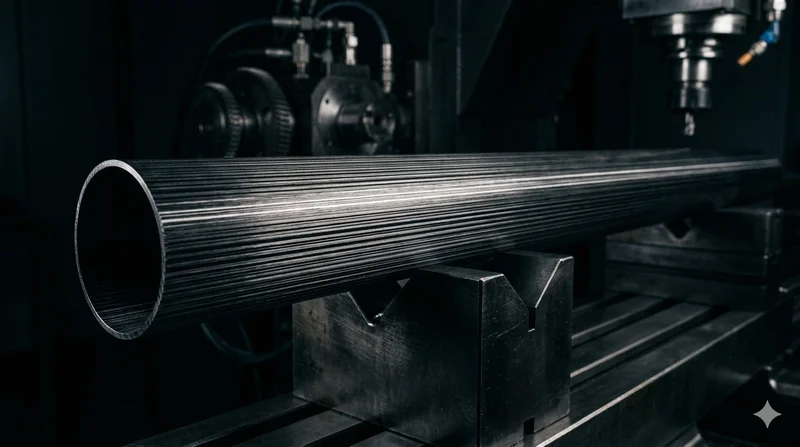
Round Carbon Fiber Tube — UD Unidirectional T700
Unidirectional (UD) round tube with all fibers aligned axially for maximum longitudinal stiffness. Ideal for applications requiring high bending rigidity with minimal weight, such as shafts, struts, and structural reinforcements.

Custom Carbon Fiber Bicycle Frame
Full-custom carbon fiber bicycle frame manufactured to your geometry specifications. We produce road, gravel, mountain, and track frames using high-modulus carbon fiber layups optimized for each riding discipline. Monocoque construction with internal cable routing, available with disc or rim brake mounts.
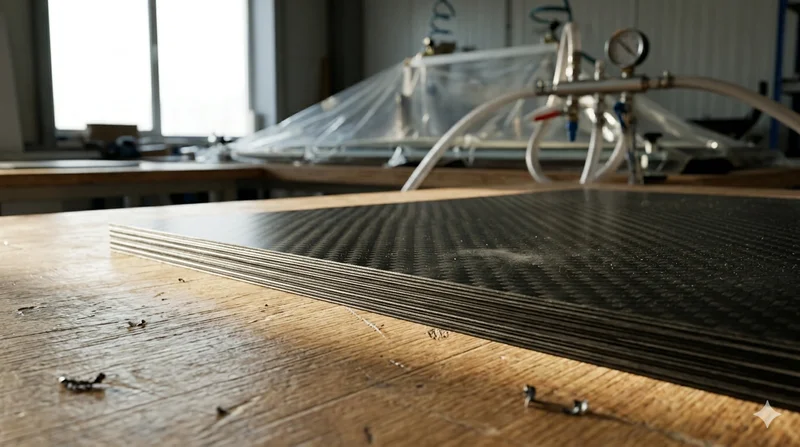
Carbon Fiber Plate — 3K Twill T700 3.0mm
Medium-thickness 3.0mm carbon fiber plate offering significantly higher load capacity while maintaining attractive 3K twill finish. Suitable for structural brackets, reinforcement plates, and load-bearing panels.