The question of carbon fiber sheet laser cutting opens with process, because the choice of laser source, assist gas and speed setting decides edge quality, throughput and price per part before any tolerance is quoted. A 10 kilowatt fibre laser running at ten to fifteen millimetres per second on a qu
Introduction
The question of carbon fiber sheet laser cutting opens with process, because the choice of laser source, assist gas and speed setting decides edge quality, throughput and price per part before any tolerance is quoted. A 10 kilowatt fibre laser running at ten to fifteen millimetres per second on a quarter inch CFRP panel is a different process from a 40 watt source running at five hundred millimetres per second, and the difference shows directly in kerf width, heat affected zone and carbonization risk.
This guide walks through the parameters that matter, the tolerance a qualified cutting service can hold, the cost per part at volume, and the checks that separate a genuine carbon fiber sheet cutting service from a shop that outsources the machining and calls the result cutting.
Carbon Fiber Sheet Laser Cutting: Process Parameters and Equipment
Laser cutting of carbon fibre sheet is a thermal process, and the parameters are set per thickness because CFRP behaves differently at each fibre volume fraction. A capability table with source power, speed, assist gas and measured kerf width per thickness is the starting point for any quotation.
| Thickness | Laser | Speed | Assist gas | Typical kerf |
|---|---|---|---|---|
| 1 mm | 40 W fibre | 500 mm/s | oxygen | 0.1 mm |
| 2 mm | 60 W fibre | 300 mm/s | oxygen | 0.12 mm |
| 3 mm | 80 W fibre | 150 mm/s | oxygen | 0.15 mm |
| 6 mm | 100 kW fibre | 80 mm/s | oxygen | 0.18 mm |
Thin sheets can use nitrogen assist to avoid oxidation, while thick laminates need oxygen for faster pierce cycles and cleaner edges. Speed and power trade off against each other: higher power shortens cycle time but increases the heat affected zone, which drives delamination risk in thick sections. The same trade off appears in waste: slower cuts waste more material but produce cleaner edges, which matters when the part cost is already close to margin.
Assist gas flow rate and nozzle condition also set the achievable edge quality, and both have to be validated on the first article before the quotation can stand. A cutting service that controls the source, the gas delivery and the motion system under one roof can hold tighter tolerances than a broker that mixes vendor equipment.
Carbon Fiber Sheet Laser Cutting: Tolerance, Throughput and Cost
The quoted tolerance depends on the fibre orientation in the layup, not only on the sheet thickness. Cross ply and unidirectional layouts cut differently, and a cutting service that does not record orientation per part will quote a single kerf value for very different jobs. Cost per part at volume is driven by nesting efficiency, because laser cutting waste grows linearly with the part geometry.
| Part | Volume | Indicative cost per part | Cost driver |
|---|---|---|---|
| Single ply coupon | 1 to 10 pcs | USD 12 to 40 | Setup |
| Small batch net shape | 10 to 100 pcs | USD 8 to 25 | Nesting |
| Full size panel | 100 to 1000 pcs | USD 3 to 9 | Cycle time |
| Protolike pilot | 1 to 25 pcs | USD 20 to 60 | Setup plus fibre waste |
Two patterns repeat on almost every quotation. First, setup dominates small batches, and the first article cost is mostly programming and fixturing. Second, a price quoted without kerf measurement is incomplete, because kerf deviation changes the finished part size and therefore the fit of the assembled part.
Delivery lead time and packaging also move the per part price, because laser cut parts rarely ship straight from the machine and often need edge sealing before layup. Quote lead time with the fibre waste allowance included, since scrap is a real cost line at volume. Fibre waste at volume is usually the largest hidden line item after setup, and nesting the cut geometry before the run is what separates a profitable quotation from an unprofitable one. A certified pilot run is the fastest way to convert a quotation into a repeatable process. For curved parts, note that how to bend carbon fiber sheet is a separate forming step after cutting, not part of the laser process itself.
How to Vet a Carbon Fiber Sheet Cutting Service Before You Commit
A buyer planning a production run should ask five questions before signing a cutting order.
- Source ownership: confirm the cutting service owns the fibre laser and the chiller, or only rents time on a third party machine.
- Orientation handling: require the cut file to carry ply orientation data for each layer, not a single flat layout.
- Edge quality gate: define the acceptable delamination depth at the cut edge before the first part is released.
- Measurement method: kerf width must be measured with a reference cut, not estimated from power tables.
- Consecutive lot history: three consecutive certified cuts before annual volume commitment.
Frequently Asked Questions
What power does a carbon fiber sheet laser cutting job need?
A 40 watt fibre laser handles 1 mm sheets, 60 watts covers 2 mm, 80 watts covers 3 mm and a 100 kilowatt source is used for 6 mm laminates and aerospace grade material. Power scales with thickness and fibre volume fraction, not with part area alone.
How much does carbon fiber sheet laser cutting cost per part?
Cost per part is driven by setup, nesting efficiency and fibre waste. Small batches pay setup first, large batches amortize the machine, and every percent of kerf loss moves the part count and the cost at volume.
Can carbon fiber sheet how to cut be done without delamination?
Yes, when nitrogen assist is used for thin sheets and when the cut path stays within a single ply, or when layers are sequenced with interpass cleaning. The risk rises on thick bidirectional cuts without interpass air assist.
Conclusion
A carbon fiber sheet laser cutting programme stands or falls on four numbers written before the first order: source capability per thickness, measured kerf with orientation data, cost per part with nesting separated out, and the edge quality gate that releases the first article. Fix those in the RFQ, run a certified pilot, and demand three consecutive lot reports before you commit annual volume. To compare services and finishes side by side, browse the current carbon fiber products catalogue or contact the technical sales team with your drawings and volume targets, and you will receive a written cutting specification rather than a bare per part number.
Part of topic
Related Articles
- Carbon Fiber Rod Testing Service: Methods, Standards and Cost | YongXian
- Carbon Fiber Plate Inspection Service: Methods, Standards and Cost
- Carbon Fiber Sheet Quality Inspection: Methods, Standards and Cost
- Carbon Fiber Sheet Thickness Guide: Standard Sizes and Selection | YongXian
- Carbon Fiber Tube Cutting Service Near Me: Process, Tolerance and Cost | YongXian
- Carbon Fiber Sheet Cutting Service Near Me: Process, Tolerance and Cost | YongXian
Interested in Our Products?
Contact our team for competitive pricing and technical specifications.
Get a QuoteRelated Products
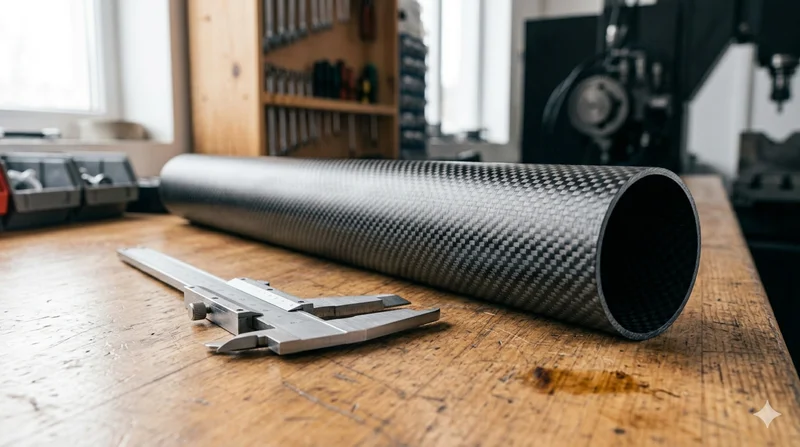
Round Carbon Fiber Tube — 3K Plain Weave T700
Standard round carbon fiber tube manufactured from Toray T700 grade fiber with 3K plain weave. Offers balanced strength and stiffness for general industrial applications including robotics, automation, sports equipment, and aerospace structures.
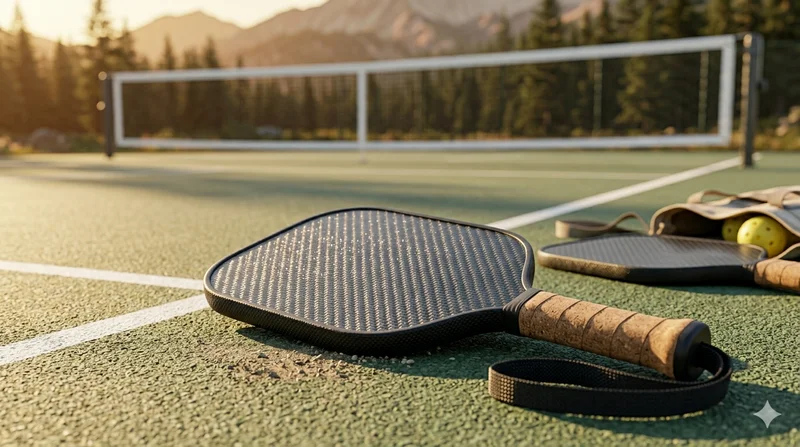
Carbon Fiber Pickleball Paddle
High-performance pickleball paddle with Toray T700 carbon fiber face and polypropylene honeycomb core. Delivers excellent power-to-weight ratio, spin generation, and vibration dampening for competitive play.
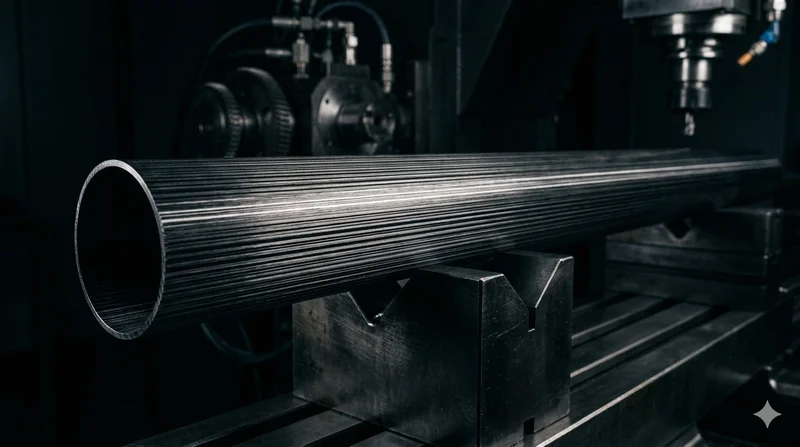
Round Carbon Fiber Tube — UD Unidirectional T700
Unidirectional (UD) round tube with all fibers aligned axially for maximum longitudinal stiffness. Ideal for applications requiring high bending rigidity with minimal weight, such as shafts, struts, and structural reinforcements.
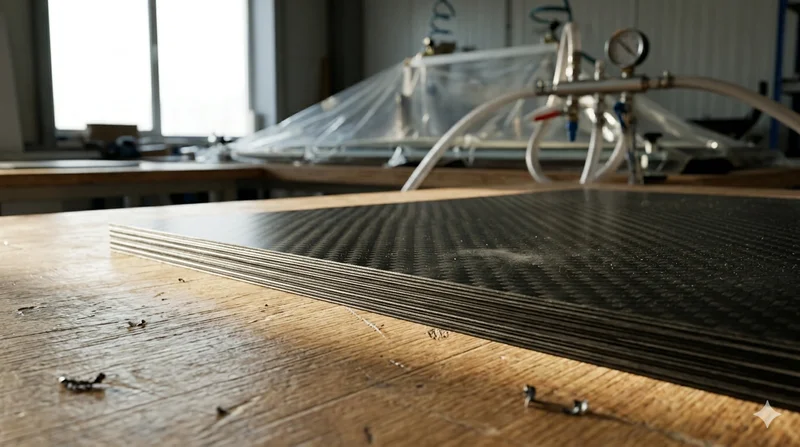
Carbon Fiber Plate — 3K Twill T700 3.0mm
Medium-thickness 3.0mm carbon fiber plate offering significantly higher load capacity while maintaining attractive 3K twill finish. Suitable for structural brackets, reinforcement plates, and load-bearing panels.
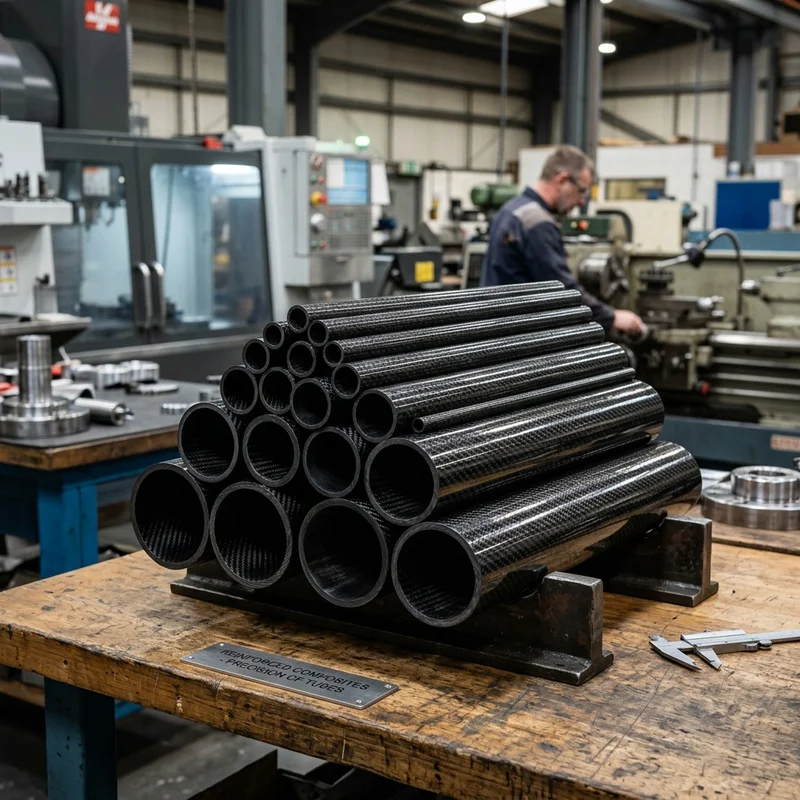
Round Carbon Fiber Tube — 3K Twill
Lightweight and ultra-stiff round tubes ideal for drone frames, robotics, and structural applications.