A carbon fiber rod mill is the right supplier when you need straight, constant-section rod rather than sheet or tube, and the mill's production route decides the tolerance, surface and price you will live with. This guide explains what a carbon fiber rod mill actually ships, which specs drive perfor
Introduction
A carbon fiber rod mill is the right supplier when you need straight, constant-section rod rather than sheet or tube, and the mill's production route decides the tolerance, surface and price you will live with. This guide explains what a carbon fiber rod mill actually ships, which specs drive performance, how to audit a carbon fiber rod mill factory in China, and what MOQ, pricing and lead time look like when you buy carbon fiber rod for series production.
Rod looks simple: one round section, one diameter, one length. In practice three numbers separate a good mill from a cheap one, namely diameter tolerance, fiber volume fraction and straightness. Miss any of them and the rod still fits the drawing yet fails at the assembly station, because a shaft that runs out by 0.3 mm over a metre will not pass a bearing block, and a rod at 55 percent fiber volume bends further than the load case assumed.
What a carbon fiber rod mill actually produces
Four production routes are sold as rod, and they are not interchangeable. Ask which route a quotation refers to before you compare price per metre.
| Route | Typical diameter | Diameter tolerance | Fiber volume | Best for |
|---|---|---|---|---|
| Pultrusion | 0.5-50 mm | plus or minus 0.05-0.30 mm | 60-70 percent | Long straight runs at low cost |
| Roll wrapping | 3-30 mm | plus or minus 0.10 mm | 55-65 percent | Clamped or pinned shafts |
| Machined from plate | 2-60 mm | plus or minus 0.02 mm | 55-62 percent | Tight-tolerance prototypes |
| Filament winding | 5-80 mm | plus or minus 0.15 mm | 60-68 percent | Thick-wall rod under hoop load |
Pultrusion dominates volume because it pulls continuous fiber through a heated die, giving a constant section at the lowest cost per metre. The trade-off is direction: fiber runs almost entirely along the axis, so hoop strength and transverse properties stay modest. Roll wrapping adds circumferential plies, which helps wherever the rod is clamped, pinned or press-fitted. Machining from a cured plate gives the tightest diameter control and the cleanest surface, but wastes material and raises the cost per part. Filament winding suits thick-wall rod where hoop load actually matters.
Length is the second surprise. A pultruded rod mill ships coils of several hundred metres or cut lengths to your drawing, while a machining shop rarely quotes beyond one metre. State cut length, end condition and packing in the enquiry, because square cut, chamfered, sealed or taped ends each change price and lead time.
Specs that decide performance at a carbon fiber rod mill
Five specifications carry most of the technical risk. Put all five in writing before you release a purchase order.
- Diameter and tolerance: state the fit, not just the nominal size; a rod at the low end of a plus or minus 0.15 mm band may be loose in a press fit that assumed the middle.
- Fiber volume fraction: 60 percent is a common floor for structural rod; anything below 55 percent usually means more resin, lower stiffness and higher creep under sustained load.
- Straightness: ask for millimetres of runout per metre, typically 1 mm per metre for pultruded rod and 0.3 mm per metre for machined rod.
- Resin system: epoxy for general structure, vinyl ester for chemical exposure, phenolic for fire performance, and high-temperature grades where the service temperature passes 120 C.
- Surface: natural pultrusion surface, sanded, peel-ply or coated; bonding and painting both depend on which one you receive.
Tensile modulus of a well-made unidirectional rod sits near 110 to 150 GPa, with tensile strength around 1200 to 1800 MPa depending on grade. Treat those as grade-level numbers, not lot guarantees. The lot certificate should show measured fiber content and a short-beam shear result, because interlaminar shear strength in the 60 to 90 MPa range is the quickest signal that the cure and the fiber wet-out were both under control.
How to audit a carbon fiber rod mill factory in China
China holds most of the world's pultrusion capacity, and the spread between a serious mill and a reseller is wide. Run these checks before you commit to a trial order.
- Ask for the die list: a real mill owns dies for the diameters it quotes; a trader forwards your drawing to someone else and cannot show tooling.
- Request three consecutive lot certificates: one good certificate proves nothing, three in a row show the process holds.
- Inspect the pull line: fiber creels, resin bath temperature control and die heaters should all be visible and logged during your visit or video call.
- Check the cut and end finish: a diamond saw leaves a clean square end; a worn abrasive wheel burns the resin and starts cracks that grow in service.
- Confirm packing: rod ships in rigid tubes or on saddled pallets, never in a loose carton where bending sets a permanent set.
Also ask how the mill handles a failed lot. A factory that can re-run a batch and trace the die, resin batch and cure date is worth a higher price than a reseller that can only offer a credit note.
MOQ, pricing and lead time when you buy carbon fiber rod
Commercial terms vary more than technical ones. Use the table below as a sanity check when you compare offers to buy carbon fiber rod from several sources.
| Order type | MOQ | Indicative lead time |
|---|---|---|
| Stock diameter, standard modulus | 50-200 kg | 1-2 weeks |
| Custom diameter or new die | 300-500 kg | 4-8 weeks including tooling |
| High-modulus or high-temperature grade | 100-300 kg | 3-6 weeks |
| Machined rod to tight tolerance | 20-100 pieces | 2-4 weeks |
Price follows fiber grade first, diameter second, tolerance third and volume last. A high-modulus rod can cost two to three times a standard-modulus rod of the same diameter, and a tolerance tightened from plus or minus 0.20 mm to plus or minus 0.05 mm often adds 15 to 30 percent because the line must run slower and more scrap is generated.
Freight is rarely the deciding cost for rod, because the material is light for its volume. Packing is the real risk: a coil that is compressed in transit takes a set, and a set rod cannot be straightened without cracking the matrix. Specify tube packing for diameters below 10 mm and saddle supports for longer cut lengths.
Quality checks before the first shipment
Run these checks on the trial lot before you release production volume.
- Dimensional sweep: measure diameter at both ends and the middle of ten rods with a micrometer, and record the spread rather than the average.
- Straightness test: roll each rod on a granite surface plate and read the gap under a straight edge.
- Short-beam shear: request ILSS data from the same lot, not from a generic datasheet.
- Burn-off test: a small sample burned in a muffle furnace gives fiber weight fraction within about one percent and catches a resin-rich batch quickly.
- Fit trial: assemble five rods into the real joint at production torque; a press fit that needs excessive force signals diameter drift.
ISO 9001 certification shows that a quality system exists, not that your rods are correct. Keep the lot certificate, the dimensional record and the fit trial result together, so a later deviation can be traced to a specific production run.
Frequently Asked Questions
Is a pultruded rod weaker than a roll-wrapped rod?
Not along the axis. Pultruded rod usually wins on axial stiffness and strength because the fiber is straight. Roll-wrapped rod wins where the joint clamps, pins or press-fits the rod, because the circumferential plies resist splitting and hoop stress.
What is a realistic tolerance for a carbon fiber rod mill?
Plus or minus 0.10 mm is routine for pultruded rod between 5 and 30 mm, and plus or minus 0.05 mm is achievable on selected diameters with a polished die. Below plus or minus 0.03 mm, plan on machining after cure.
Can a rod mill supply small trial quantities?
Most mills keep stock diameters and will ship 10 to 30 kg for a qualification trial. Custom diameters need a die, so the trial quantity rises to the minimum run that justifies setting the line, typically 100 to 300 kg.
Conclusion
A carbon fiber rod mill is only as good as the numbers it will put in writing: diameter and tolerance, fiber volume, straightness, resin system and surface. Compare quotations on those five points first, then on price per metre and lead time.
For rod programmes that need a stable supply, review the carbon fiber product range and send your drawing through the quotation page; a written spec sheet and a trial lot will tell you more than any catalogue.
Part of topic
Related Articles
- Carbon Fiber Rod Wholesale Price: Market Benchmarks and Drivers
- Carbon Fiber Plate Wholesale Price: Market Benchmarks and Drivers
- Carbon Fiber Tube Wholesale Price: Market Benchmarks and Drivers
- Carbon Fiber Sheet Wholesale Price: Market Benchmarks and Drivers
- Carbon Fiber Rod Distributor: Stock, Pricing, and Sourcing Guide
- Carbon Fiber Tube Distributor: Stock, Pricing, and Sourcing Guide
Interested in Our Products?
Contact our team for competitive pricing and technical specifications.
Get a QuoteRelated Products
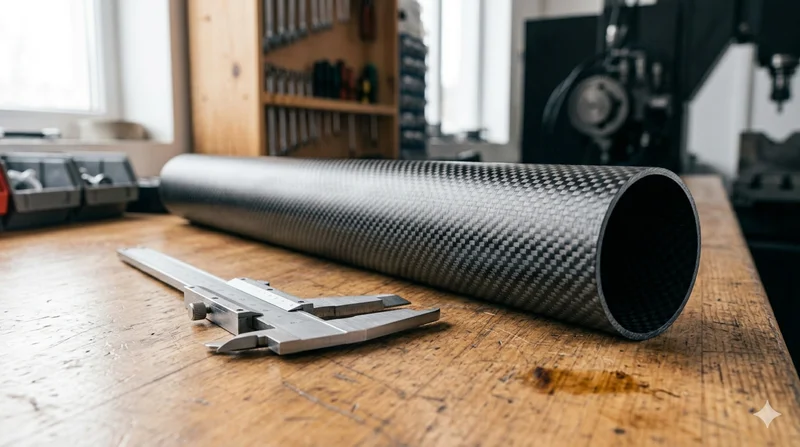
Round Carbon Fiber Tube — 3K Plain Weave T700
Standard round carbon fiber tube manufactured from Toray T700 grade fiber with 3K plain weave. Offers balanced strength and stiffness for general industrial applications including robotics, automation, sports equipment, and aerospace structures.
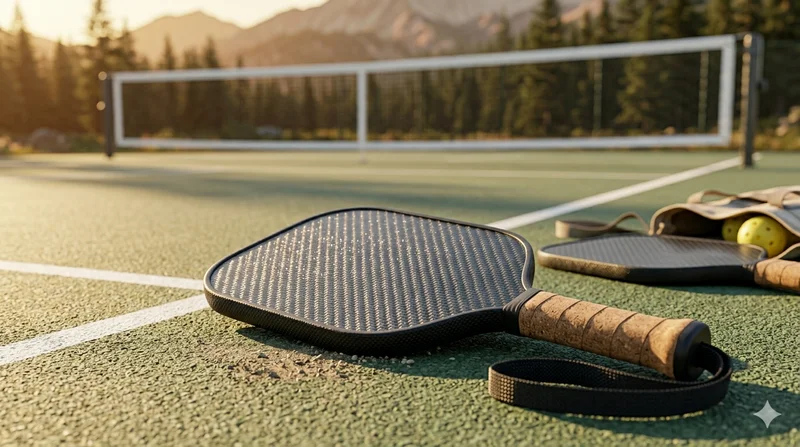
Carbon Fiber Pickleball Paddle
High-performance pickleball paddle with Toray T700 carbon fiber face and polypropylene honeycomb core. Delivers excellent power-to-weight ratio, spin generation, and vibration dampening for competitive play.
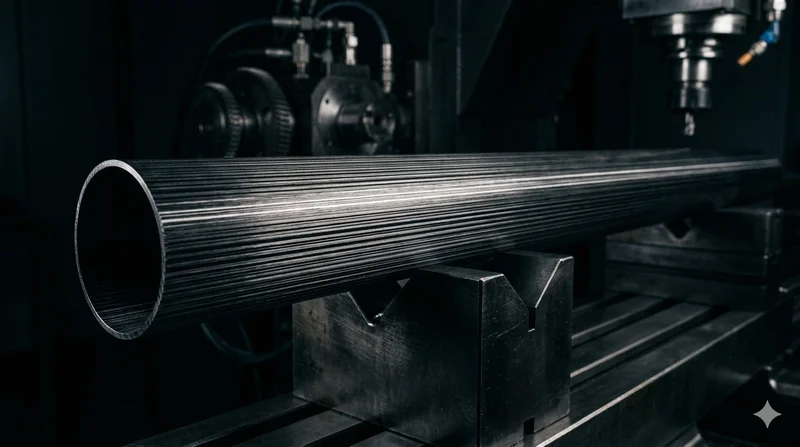
Round Carbon Fiber Tube — UD Unidirectional T700
Unidirectional (UD) round tube with all fibers aligned axially for maximum longitudinal stiffness. Ideal for applications requiring high bending rigidity with minimal weight, such as shafts, struts, and structural reinforcements.
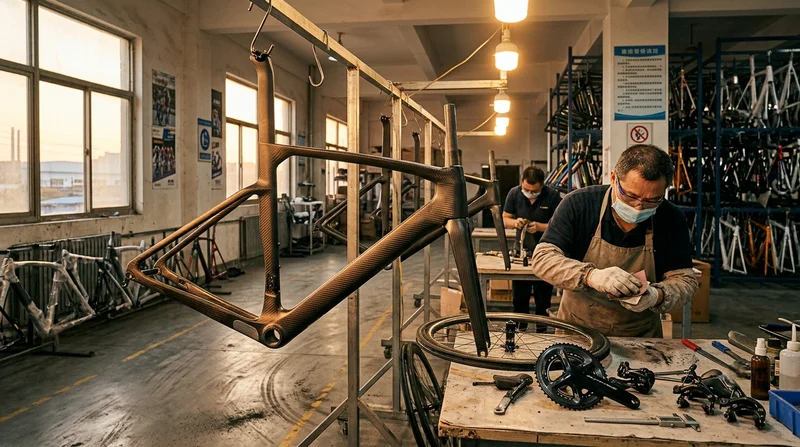
Custom Carbon Fiber Bicycle Frame
Full-custom carbon fiber bicycle frame manufactured to your geometry specifications. We produce road, gravel, mountain, and track frames using high-modulus carbon fiber layups optimized for each riding discipline. Monocoque construction with internal cable routing, available with disc or rim brake mounts.
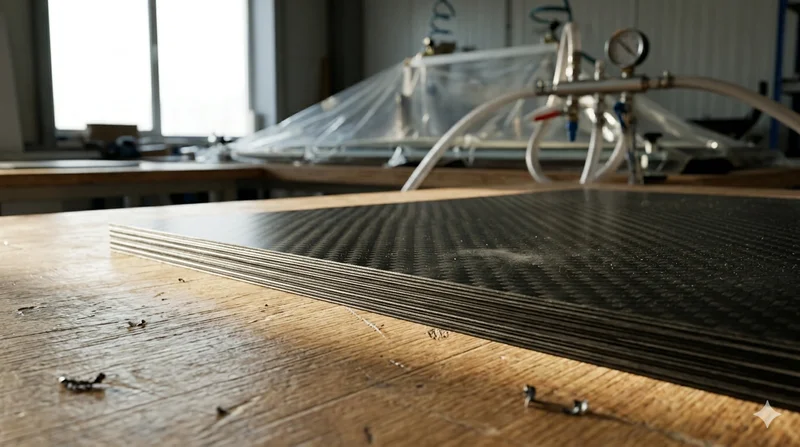
Carbon Fiber Plate — 3K Twill T700 3.0mm
Medium-thickness 3.0mm carbon fiber plate offering significantly higher load capacity while maintaining attractive 3K twill finish. Suitable for structural brackets, reinforcement plates, and load-bearing panels.