A carbon fiber plate factory sells thickness and stability, not just a black panel. Plate starts around 3 mm and runs past 50 mm, and at that size the press, the cure schedule and the stress-relief step decide whether a machined part stays flat. This guide covers what a carbon fiber plate factory ac
Introduction
A carbon fiber plate factory sells thickness and stability, not just a black panel. Plate starts around 3 mm and runs past 50 mm, and at that size the press, the cure schedule and the stress-relief step decide whether a machined part stays flat. This guide covers what a carbon fiber plate factory actually controls, how press and autoclave routes differ, and what MOQ, lead time and incoming tests look like when you buy carbon fiber plate for structural work.
Thick laminate fails differently from thin sheet. A 20 mm stack can look perfect on the outside and still carry porosity in the middle, because heat cannot escape and volatiles cannot leave. That defect only appears after machining, when a bearing seat or a bolt hole opens into a porous core. The specification has to reach the centre of the plate.
What a carbon fiber plate factory actually controls
Four variables decide the outcome: ply stack, cure pressure, exotherm control and machining allowance. A plate factory that quotes a thickness without asking about the machined feature is quoting half a product.
| Thickness | Cure route | Typical tolerance | Flatness | Typical use |
|---|---|---|---|---|
| 3-6 mm | Press, 2-5 MPa | ±0.15 mm | 1.0 mm per m | Robotic arms, brackets, plates |
| 6-15 mm | Press with dwell | ±0.25 mm | 1.5 mm per m | Structural plates, jigs, wear pads |
| 15-30 mm | Autoclave or sequenced press | ±0.40 mm | 2.0 mm per m | Tooling, machine bases, bearings |
| 30-50 mm | Sequenced cure, stress relief | ±0.60 mm | 2.5 mm per m | Heavy tooling, marine, industrial |
Above 15 mm, the cure becomes a thermal problem. A single ramp leaves the centre cooler than the skin, so the resin cures unevenly and locks in stress that bows the plate when one face is machined. A factory that runs a dwell at the gel point, then a slow post-cure, ships plate that survives machining.
Press curing versus autoclave curing
Both routes make good plate, but they fail in different ways and suit different order patterns.
- Press curing gives a fast cycle, a controlled thickness and two good faces, which suits plates from 3 to 15 mm in repeatable batches.
- Autoclave curing gives the lowest void content and even pressure over a large area, which suits thick, high-integrity plate and mixed batches.
- Sequenced press curing with a dwell and a post-cure is the practical middle route for 15 to 30 mm, where a single ramp would trap exotherm in the core.
- Resin choice matters as much as the machine: a toughened epoxy tolerates machining better, while a fast-curing system saves cycle time but leaves more stress.
Ask for the actual curve used on your thickness, not the generic one in the brochure. A factory that can show a thermocouple trace from the centre of a 25 mm stack is telling you more than one that quotes a pressure figure.
Choosing a carbon fiber plate factory in China
Plate capacity is narrower than tube or sheet capacity, because thick laminate needs a big press or a large autoclave. Use these checks to separate real plate makers from cutters of imported stock.
- Ask the maximum single-shot thickness: anyone can glue two plates together, but a bonded stack behaves differently at a bearing seat and hides the joint from inspection.
- Request the machining allowance: plate is usually supplied 0.5 to 1.0 mm oversize per face, and the drawing must say whether that allowance is included.
- Confirm stress relief: a dwell at gel and a controlled cooling ramp, plus an optional re-cure after rough machining for tight flatness.
- Check the NDT offer: ultrasonic C-scan or through-transmission for thick plate, with a written acceptance level rather than a verbal assurance.
- Verify their machining: diamond-coated tooling, dust extraction and a backing plate stop delamination at hole exit, which is where thick plate fails first.
The strongest signal is a factory that asks what you will machine into the plate before quoting, because a 20 mm plate destined for a bearing bore has a different acceptance level from one used as a spacer.
MOQ, pricing and lead time to buy carbon fiber plate
Plate is sold by panel or by weight, and the two units hide different risks. The table below gives a working baseline.
| Order type | MOQ | Indicative lead time |
|---|---|---|
| Stock plate, 3-10 mm | 1-3 panels | 3-7 days |
| Custom thickness, existing tooling | 5-20 panels | 2-4 weeks |
| Thick plate 15-30 mm with NDT | 10-30 panels | 4-6 weeks |
| New mould plus first production run | 30-100 panels | 8-12 weeks |
Price per kilogram is the wrong unit for plate. Two 20 mm panels of the same weight can carry different fibre volume and different void content, and the cheaper one usually costs more after a bearing bore is scrapped. Price per finished part, including machining allowance and NDT, is the only figure that compares.
Lead time is dominated by the press slot, not by material. A factory running one thickness all month can ship stock in days, while a custom stack waits for a cure window and then for NDT. Book the slot before you release the drawing, and keep two weeks of float for a re-cure if flatness fails after machining.
Checks before machining thick plate
- Density and fibre volume: acid digestion or burn-off per lot, with the value recorded against your drawing rather than a catalogue figure.
- Ultrasonic scan: C-scan both faces on anything above 15 mm, looking for mid-plane porosity and resin-rich pockets.
- Flatness before machining: granite plate and dial gauge across both diagonals, recorded per panel.
- Thickness map: nine points per panel; a 0.4 mm spread across a 25 mm plate changes the machined boss height.
- Edge and surface: check for delamination, dry patches and handling marks before the panel is clamped, because a clamp hides a defect and a cutter propagates it.
Keep the NDT report with the lot certificate and re-check flatness after rough machining, before the finish pass. If bow appears, a stress-relief re-cure at the factory is cheaper than scrapping a machined part, and it tells you whether the cure schedule needs changing for the next order.
Frequently Asked Questions
Can a carbon fiber plate factory supply plate thicker than 50 mm?
Yes, but usually as a sequenced build rather than one shot, with intermediate cures and a final stress relief. Above 50 mm the exotherm risk and the press size dominate, and some factories laminate two blocks and bond them. Ask directly whether the plate is monolithic, because a bonded block needs an ultrasonic check of the joint and a different machining allowance.
Why is thick plate supplied oversize?
Thick laminate moves during cure and again when one face is machined, so factories leave 0.5 to 1.0 mm per face and expect the customer to machine to final thickness. The allowance also removes surface resin that is richer than the core. Confirm the allowance in the purchase order, because a plate delivered to net thickness cannot be corrected later.
Does plate need NDT on every order?
Not on thin stock plate, where density and visual checks are enough. From about 15 mm upward, or wherever a machined feature will open into the core, ultrasonic inspection is worth the cost. Specify the acceptance level and the scan coverage in the RFQ, so the factory and your incoming inspection apply the same rule.
Conclusion
A carbon fiber plate factory earns its price when it controls exotherm through the thickness, states the cure curve it actually ran, supplies plate with a machining allowance and backs it with an ultrasonic report. Ask about maximum single-shot thickness, stress relief and NDT coverage before comparing money, because those three answers explain why two quotes for the same 20 mm panel differ by half. To compare thickness ranges, layups and machining options, browse the carbon fiber plate range or send your drawing to the technical team with the machined features and annual volume, and you will get a written process route.
Part of topic
Related Articles
- Carbon Fiber Rod Wholesale Price: Market Benchmarks and Drivers
- Carbon Fiber Plate Wholesale Price: Market Benchmarks and Drivers
- Carbon Fiber Tube Wholesale Price: Market Benchmarks and Drivers
- Carbon Fiber Sheet Wholesale Price: Market Benchmarks and Drivers
- Carbon Fiber Rod Distributor: Stock, Pricing, and Sourcing Guide
- Carbon Fiber Tube Distributor: Stock, Pricing, and Sourcing Guide
Interested in Our Products?
Contact our team for competitive pricing and technical specifications.
Get a QuoteRelated Products
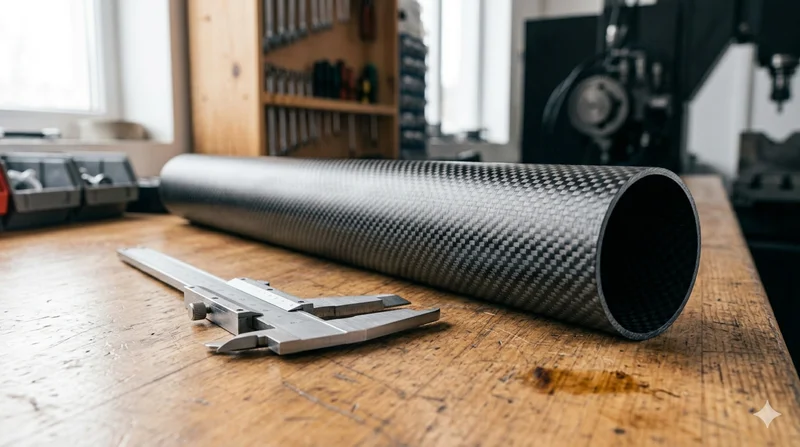
Round Carbon Fiber Tube — 3K Plain Weave T700
Standard round carbon fiber tube manufactured from Toray T700 grade fiber with 3K plain weave. Offers balanced strength and stiffness for general industrial applications including robotics, automation, sports equipment, and aerospace structures.
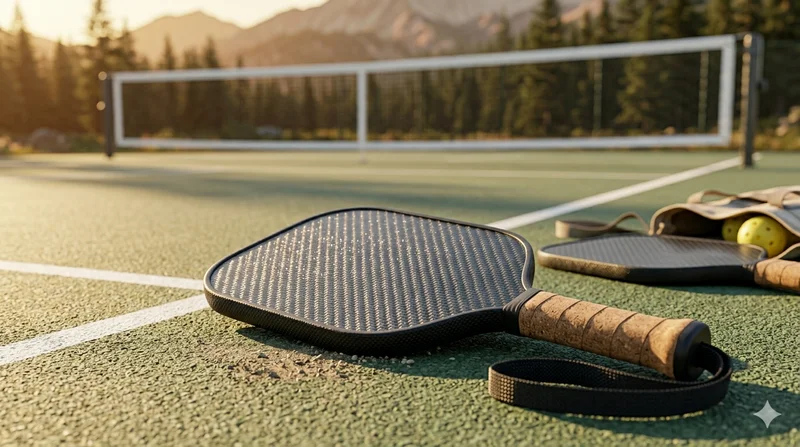
Carbon Fiber Pickleball Paddle
High-performance pickleball paddle with Toray T700 carbon fiber face and polypropylene honeycomb core. Delivers excellent power-to-weight ratio, spin generation, and vibration dampening for competitive play.
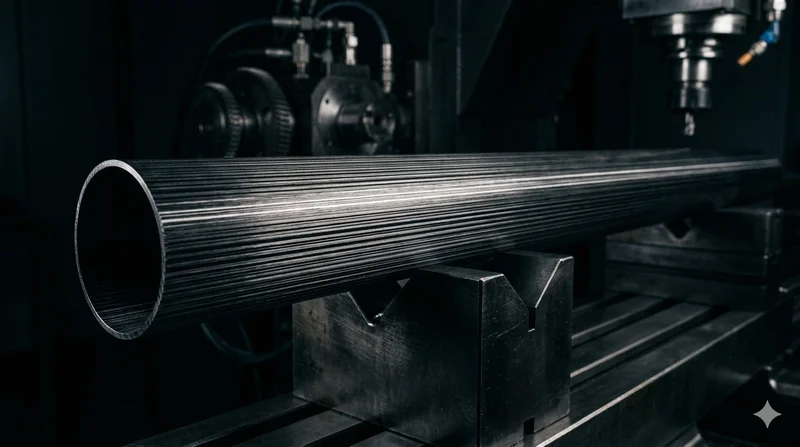
Round Carbon Fiber Tube — UD Unidirectional T700
Unidirectional (UD) round tube with all fibers aligned axially for maximum longitudinal stiffness. Ideal for applications requiring high bending rigidity with minimal weight, such as shafts, struts, and structural reinforcements.

Custom Carbon Fiber Bicycle Frame
Full-custom carbon fiber bicycle frame manufactured to your geometry specifications. We produce road, gravel, mountain, and track frames using high-modulus carbon fiber layups optimized for each riding discipline. Monocoque construction with internal cable routing, available with disc or rim brake mounts.
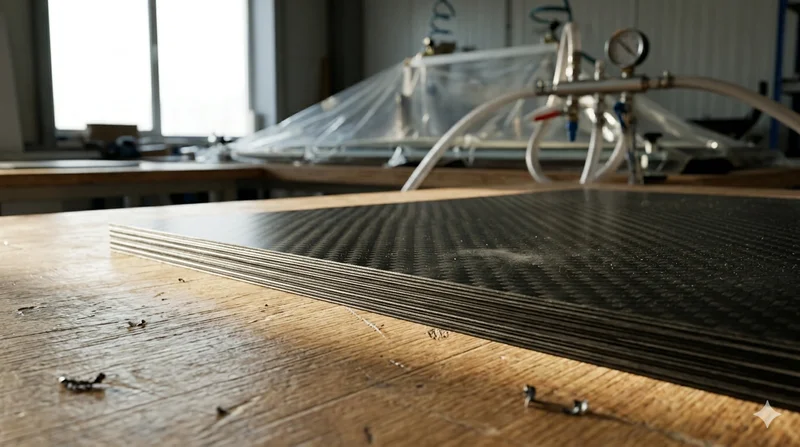
Carbon Fiber Plate — 3K Twill T700 3.0mm
Medium-thickness 3.0mm carbon fiber plate offering significantly higher load capacity while maintaining attractive 3K twill finish. Suitable for structural brackets, reinforcement plates, and load-bearing panels.