A carbon fiber oval tube manufacturer has to hold two dimensions instead of one, and that single fact drives most of the cost difference against round tube. A carbon fiber oval tube manufacturer who quotes from a drawing that fixes only the major axis will ship something that fits at the gauge line
Introduction
A carbon fiber oval tube manufacturer has to hold two dimensions instead of one, and that single fact drives most of the cost difference against round tube. A carbon fiber oval tube manufacturer who quotes from a drawing that fixes only the major axis will ship something that fits at the gauge line and rattles at the clamp, so the first commercial question is not price but which axis, which tolerance and which measuring station.
An oval section exists to trade stiffness between two planes. Flattening a round tube into an ellipse moves material away from one neutral axis and toward the other: bending stiffness in the major-axis plane rises, bending stiffness in the minor-axis plane falls by a similar amount, and torsional stiffness drops more sharply than either. That is exactly the trade a fairing strut, a tripod leg or a bike stay wants, and exactly the wrong trade for a drive shaft.
What a carbon fiber oval tube manufacturer actually ships
An oval quotation is only comparable when it names both axes plus the wall at the flat and at the crown. Ask for the six-line table below before discussing price.
| Parameter | Typical range | What it controls |
|---|---|---|
| Major axis | 30 mm to 120 mm | Bending stiffness in the wide plane |
| Minor axis | 15 mm to 60 mm | Envelope height and clamp fit |
| Axis ratio | 1.2 to 2.5 | How far stiffness is shifted between planes |
| Wall | 1.0 mm to 4.0 mm, flat and crown reported separately | Local bearing and crush resistance |
| Ovality | Within 1.5 percent of the major axis | Seal, clamp and fairing gap |
| Length | Up to 2500 mm, cut to size | Freight and splice count |
Oval tube is almost always mandrel-wound rather than pultruded, because a pultrusion die cannot easily produce a closed oval with a controlled wall at the flat. That means prepreg or wet winding on a machined aluminium or steel mandrel, oven or press cure, then extraction. Extraction is the hidden cost: a long oval mandrel grips the cured tube along two flats, so shops limit length or split the mandrel before they accept a tight ovality callout.
Buy carbon fiber oval tube: ovality, wall uniformity and twist
The reason to buy carbon fiber oval tube is directional stiffness at equal mass. The comparison below uses a 40 mm round tube and a 50 x 30 mm oval with the same 2 mm wall and therefore nearly the same mass per meter.
| Section | Mass per meter | Bending stiffness, major plane | Bending stiffness, minor plane | Torsion |
|---|---|---|---|---|
| Round 40 mm, wall 2 mm | 0.40 kg | 1.00 | 1.00 | 1.00 |
| Oval 50 x 30 mm, wall 2 mm | 0.40 kg | 1.38 | 0.62 | 0.62 |
Wall uniformity is where oval tube fails quietly. Resin migrates toward the crowns during cure and leaves the flats thin, so a tube that measures 2.0 mm at the crown may measure 1.6 mm at the flat, and the flat is where a clamp or a bonded insert loads it. Specify measurement at four stations, 0, 90, 180 and 270 degrees, on three cross-sections along the length, and require the flat reading in the inspection report.
Twist is the second quiet failure. An oval tube resists twist poorly by geometry, so any winding asymmetry shows up as a propeller twist that ruins a fairing gap. One degree per meter is a realistic limit for a wound oval; tighter than that needs a matched mandrel and a controlled winding angle, and both cost money.
Choosing a carbon fiber oval tube manufacturer in China
Oval capacity is narrower than round or square capacity, and many workshops that advertise oval tube are re-selling. Five checks separate a real line from a broker.
- Mandrel evidence: ask for a photograph or video of the oval mandrel for your section, because an oval mandrel is bespoke and cannot be borrowed from a round product line.
- Two-axis tolerance in writing: major axis, minor axis and ovality each need a number and a gauge, not a single nominal size.
- Flat-wall guarantee: the drawing must state the minimum wall at the flat, since that is the load path for clamps and inserts.
- Twist limit per meter: require a measured value on a full-length piece, because twist only appears over length and never on a coupon.
- Extraction method: ask whether the mandrel is split, tapered or hydraulically pulled, since that decides the achievable length and the surface quality inside.
A supplier who cannot answer the extraction question has never made the part. It is the single fastest way to separate a carbon fiber oval tube manufacturer from a trading desk that forwards your drawing to someone else.
MOQ, pricing and lead time when you buy carbon fiber oval tube
Oval tube carries a tooling premium that round tube does not, so the first order almost never reflects the annual price.
| Order type | MOQ | Indicative price | Lead time |
|---|---|---|---|
| Stock oval, wound | 50 m | USD 15 to 30 per meter | 10 to 15 days |
| Custom mandrel, wound | 150 pieces | USD 30 to 65 per piece | 20 to 30 days plus tooling |
| Custom, tight ovality | 300 pieces | USD 40 to 90 per piece | 25 to 35 days plus tooling |
| Painted or clear-coated | 200 pieces | Add USD 4 to 12 per piece | Add 5 to 8 days |
An oval mandrel typically costs USD 2000 to 5000 depending on length and whether it is split. Budget it as a one-time line, and ask whether the mandrel is exclusive to you; a shared mandrel means your section is available to your competitor, which matters in consumer products where the profile is part of the design language.
Auditing a carbon fiber oval tube manufacturer factory
Walk the line and look for the mandrel rack first. An oval line without a visible rack of oval mandrels is not an oval line.
- Mandrel rack and register: each oval section should map to a stored mandrel with a wear record, because a worn mandrel changes ovality before it changes size.
- Winding angle record: the angle and the pass count for each part, since torsion capacity depends on the plus or minus 45 content.
- Four-station wall mapping: measurements at 0, 90, 180 and 270 degrees recorded per part, not one number per lot.
- Straightness and twist table: a full-length check on a granite table or laser station, with the result attached to the lot.
Ask to see a rejected oval part and the reason. Crown-rich, flat-thin sections are the classic defect, and a plant that can show you one and explain the cure-pressure fix is a plant that understands the process rather than one that only ships.
Frequently Asked Questions
Why is oval tube more expensive than round tube at the same mass?
Because the mandrel is bespoke and extraction is slow. A round mandrel can be drawn or lightly tapped out; an oval mandrel grips along two flats and often has to be split or hydraulically pulled, which limits length, adds handling time and raises the scrap rate on tight ovality callouts.
Can a carbon fiber oval tube manufacturer match an existing aluminium extrusion profile?
Usually yes within a tolerance band, but expect a new mandrel and a first-article report. Send a 200 mm cut of the extrusion plus a drawing with major axis, minor axis and corner radii; the supplier will confirm which dimensions can be held and which will move because cured composite shrinks differently from aluminium.
Does oval tube work for a bolted joint?
Yes if the bolt passes through a solid insert or a bonded sleeve at the flat. Bare composite under a bolt will crush, and an oval section has less material at the flat than a square tube of similar envelope, so the insert is not optional. Specify the insert material and the clamp length in the drawing rather than leaving it to the assembly stage.
Conclusion
A carbon fiber oval tube manufacturer is judged on two axes, the wall at the flat, the ovality band and the twist limit per meter, all recorded on a full-length part. Fix those in your RFQ, request the mandrel evidence and a first-article report before volume, and confirm who owns the mandrel so your profile stays yours. To compare sections and finishes side by side, browse the current carbon fiber products catalog or contact the technical sales team with your profile drawing, load direction and annual quantity, and you will receive a written specification sheet rather than a bare price.
Part of topic
Related Articles
- Carbon Fiber Rod Wholesale Price: Market Benchmarks and Drivers
- Carbon Fiber Plate Wholesale Price: Market Benchmarks and Drivers
- Carbon Fiber Tube Wholesale Price: Market Benchmarks and Drivers
- Carbon Fiber Sheet Wholesale Price: Market Benchmarks and Drivers
- Carbon Fiber Rod Distributor: Stock, Pricing, and Sourcing Guide
- Carbon Fiber Tube Distributor: Stock, Pricing, and Sourcing Guide
Interested in Our Products?
Contact our team for competitive pricing and technical specifications.
Get a QuoteRelated Products
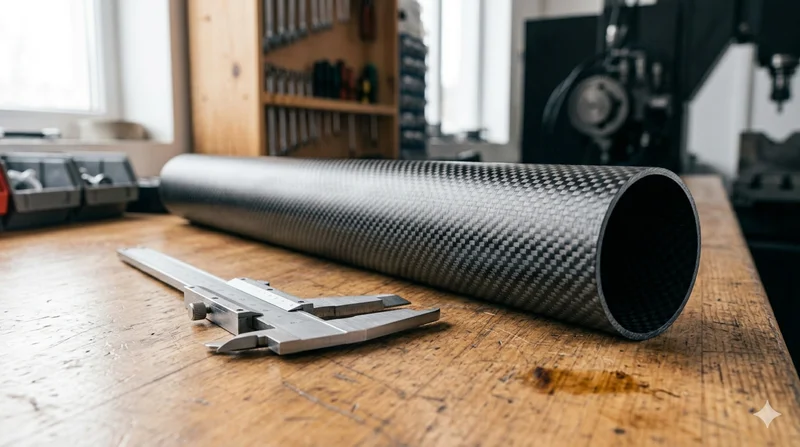
Round Carbon Fiber Tube — 3K Plain Weave T700
Standard round carbon fiber tube manufactured from Toray T700 grade fiber with 3K plain weave. Offers balanced strength and stiffness for general industrial applications including robotics, automation, sports equipment, and aerospace structures.
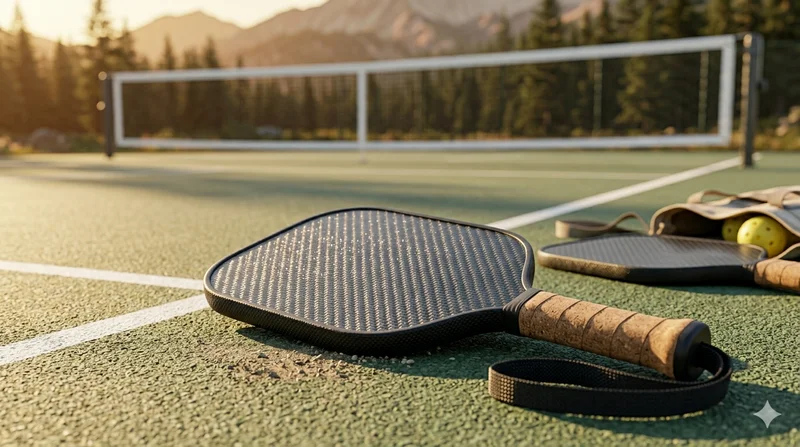
Carbon Fiber Pickleball Paddle
High-performance pickleball paddle with Toray T700 carbon fiber face and polypropylene honeycomb core. Delivers excellent power-to-weight ratio, spin generation, and vibration dampening for competitive play.
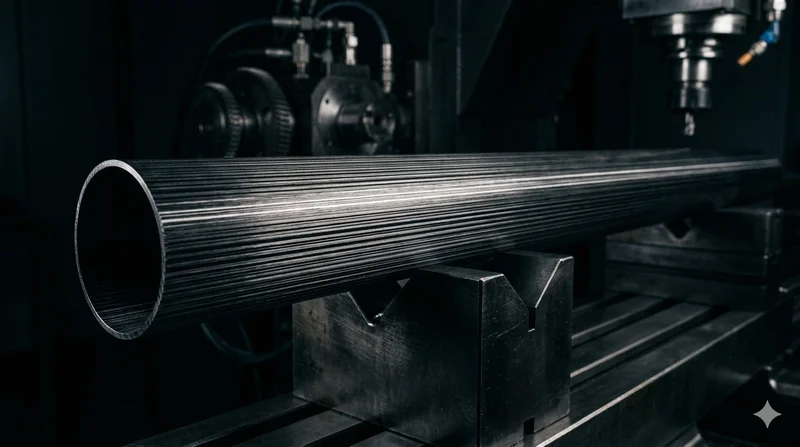
Round Carbon Fiber Tube — UD Unidirectional T700
Unidirectional (UD) round tube with all fibers aligned axially for maximum longitudinal stiffness. Ideal for applications requiring high bending rigidity with minimal weight, such as shafts, struts, and structural reinforcements.
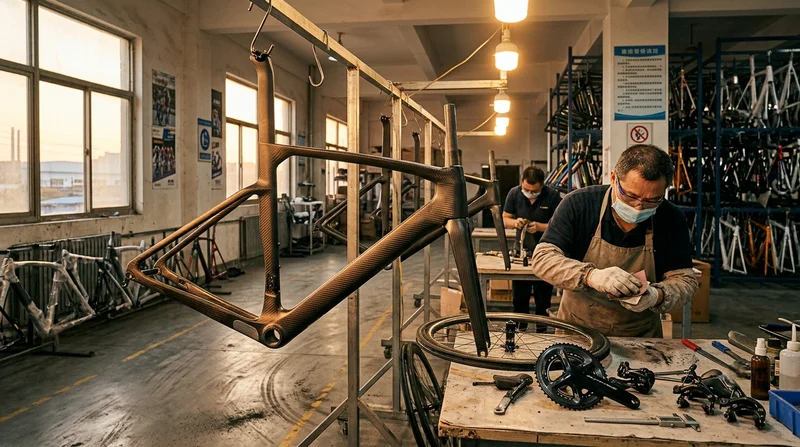
Custom Carbon Fiber Bicycle Frame
Full-custom carbon fiber bicycle frame manufactured to your geometry specifications. We produce road, gravel, mountain, and track frames using high-modulus carbon fiber layups optimized for each riding discipline. Monocoque construction with internal cable routing, available with disc or rim brake mounts.
Carbon Fiber Plate — 3K Twill T700 3.0mm
Medium-thickness 3.0mm carbon fiber plate offering significantly higher load capacity while maintaining attractive 3K twill finish. Suitable for structural brackets, reinforcement plates, and load-bearing panels.