Choosing a carbon fiber nonwoven mat supplier is the right call when your part needs uniform drapability, acoustic absorption or a conductive veil instead of a woven fabric, because a nonwoven mat is made by needling or binding loose chopped fibers rather than interlacing them. This guide explains w
Introduction
Choosing a carbon fiber nonwoven mat supplier is the right call when your part needs uniform drapability, acoustic absorption or a conductive veil instead of a woven fabric, because a nonwoven mat is made by needling or binding loose chopped fibers rather than interlacing them. This guide explains what a carbon fiber nonwoven mat supplier actually ships — fiber length, areal weight, binder chemistry and roll form — with real commercial numbers, then walks through MOQ, pricing and lead time so you can compare offers to buy carbon fiber nonwoven mat from a carbon fiber nonwoven mat supplier in China on the same basis as any other source.
Nonwoven mats come in two families. A chopped strand mat holds short filaments (typically 12 to 50 millimeters) together with a powder or emulsion binder that dissolves during molding, while a needled felt entangles continuous or long fibers mechanically without chemical binder. Both families drape into deep molds better than woven cloth, and both cost less per square meter because the process skips the loom entirely.
What a carbon fiber nonwoven mat supplier actually ships
Every mat quotation bundles five decisions. Get them wrong and the price comparison is meaningless.
| Parameter | Typical range | Why it matters |
|---|---|---|
| Fiber length | 12 mm, 25 mm, 50 mm chopped, or continuous | Drainage, drape and mechanical properties |
| Areal weight | 80-600 gsm per layer | Part thickness per ply and resin uptake |
| Binder type | Powder, emulsion, or needled (binder free) | Dissolution behavior and matrix compatibility |
| Fiber grade | Standard (T300 class), recycled carbon fiber | Conductivity, strength and cost per square meter |
| Roll width | 600 mm, 1000 mm, 1270 mm | Nesting efficiency on your mold |
| Surface finish | Plain, antistatic treated, veiled | Surface appearance after cure |
Binder choice deserves special attention. A powder binder melts and flows during compression molding, which suits sheet molding compounds; an emulsion binder dissolves in styrene-based resins, which suits hand lay-up. A competent carbon fiber nonwoven mat supplier asks which resin and process you run before quoting — the wrong binder turns into poor flow or floating fibers on the first shot.
Choosing a carbon fiber nonwoven mat supplier in China
China supplies both virgin and recycled carbon fiber nonwoven mats, and the field ranges from integrated plants to needling workshops. Run these checks before you commit.
- Ask for the fiber source: a real carbon fiber nonwoven mat supplier names whether the input is virgin tow or milled recycled fiber, because recycled grades carry batch-to-batch conductivity variation.
- Request areal weight tolerance in writing: plus or minus 5 percent per layer is typical; wider tolerance shifts your resin mix and part thickness at once.
- Check binder compatibility in writing: specify resin family, catalyst and cure temperature so the binder dissolves on schedule instead of gelling early.
- Verify roll consistency: ask for edge trim samples from the middle and end of a roll; thick-thin bands show up as resin-rich and resin-lean zones.
- Confirm recycled content certificates: if recycled fiber is acceptable, request the content percentage and lot traceability for your own material declarations.
A trading company can serve first orders well, but only the plant that runs the needling or powder line can re-form a batch when areal weight drifts.
MOQ, pricing and lead time when you buy carbon fiber nonwoven mat
Commercial terms vary more than technical ones. Use this table as a sanity check when you compare offers to buy carbon fiber nonwoven mat.
| Order type | MOQ | Indicative lead time |
|---|---|---|
| Stock mat, standard weight (200-300 gsm) | 300-800 m2 | 1-2 weeks |
| Custom fiber length or 500-600 gsm heavy mat | 800-2000 m2 | 3-5 weeks |
| Needled binder-free felt, continuous fiber | 500-1500 m2 | 3-6 weeks |
| Trial lot for process qualification | 100-300 m2 | 1-2 weeks plus testing |
Price follows fiber grade first, areal weight second, volume third. Recycled carbon fiber mats typically cost 20 to 40 percent less than virgin fiber at the same weight, which is exactly why conductive applications must confirm the recycled percentage instead of assuming it. Storage is simple compared with woven cloth: mats tolerate short-term humidity, but rolls should stay flat, indoors and off the floor to avoid permanent crease lines.
A carbon fiber nonwoven mat supplier factory will also quote differently by process line. Powder-binder lines, emulsion coating lines and needling lines each carry different setup costs, and asking for a format the plant does not run is the fastest way to get a price you cannot use.
Quality checks before the first shipment
Run these checks on the trial lot before you release production volume.
- Areal weight survey: cut five squares across the roll width and weigh them; deviation beyond the agreed tolerance invalidates your resin calculation.
- Binder dissolution trial: run one molded panel at your cure cycle and inspect for binder residue, dry spots or trapped volatiles.
- Fiber length verification: disperse a sample in solvent or burn off binder and measure chopped length against the certificate.
- Roll build inspection: no telescoping edges, no thin bands, no contaminated streaks from a mixed production run.
- Label traceability: lot number, grade, binder code and roll length must match the shipping documents.
ISO 9001 certification tells you the process is documented; it does not prove the rolls you received match the rolls you approved. Keep each lot certificate with your incoming-inspection record and repeat the areal weight survey on every new lot.
Frequently Asked Questions
What is the difference between a chopped carbon fiber mat and a needled carbon felt?
A chopped mat binds short filaments with powder or emulsion binder that dissolves during molding, while a needled felt mechanically entangles longer fibers without chemical binder. Chopped mats suit compression molding and resin transfer work; needled felts suit acoustic, filtration and continuous lamination lines where binder-free behavior matters.
Can a carbon fiber nonwoven mat supplier custom-roll width and areal weight?
Yes, within the plant's line width and weight range — specify roll width, areal weight and tolerance in the contract. Custom weights outside the standard range usually raise MOQ because the crosslapper or powder applicator must be re-set, so confirm the minimum batch for your qualification run first.
How should carbon fiber nonwoven mat rolls be stored?
Keep rolls flat or on end indoors at stable humidity, off the floor and away from direct sunlight; long-term vertical hanging can stretch the mat and create permanent thin lines. Rotate stock first-in first-out and keep the original lot labels attached so incoming inspection can trace any later complaint.
Conclusion
A carbon fiber nonwoven mat supplier is judged on areal weight discipline, binder matched to your resin and cure cycle, fiber source transparency, roll consistency and traceable lot data. Pin those down in your RFQ, run a qualification panel on your own press, and demand areal weight and binder certificates per batch before you commit annual volume. To compare specifications side by side, browse the current carbon fiber products catalog or contact the technical sales team with your fiber length, weight, resin system and annual area — you will get a written spec sheet back, not just a price.
Part of topic
Related Articles
- Carbon Fiber Rod Wholesale Price: Market Benchmarks and Drivers
- Carbon Fiber Plate Wholesale Price: Market Benchmarks and Drivers
- Carbon Fiber Tube Wholesale Price: Market Benchmarks and Drivers
- Carbon Fiber Sheet Wholesale Price: Market Benchmarks and Drivers
- Carbon Fiber Rod Distributor: Stock, Pricing, and Sourcing Guide
- Carbon Fiber Tube Distributor: Stock, Pricing, and Sourcing Guide
Interested in Our Products?
Contact our team for competitive pricing and technical specifications.
Get a QuoteRelated Products
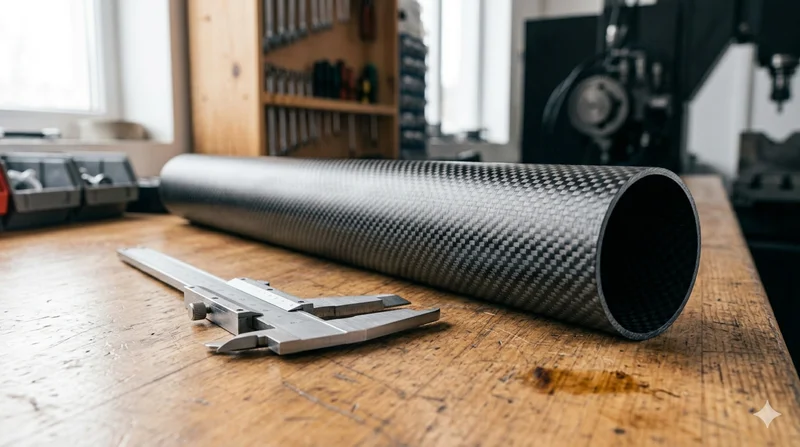
Round Carbon Fiber Tube — 3K Plain Weave T700
Standard round carbon fiber tube manufactured from Toray T700 grade fiber with 3K plain weave. Offers balanced strength and stiffness for general industrial applications including robotics, automation, sports equipment, and aerospace structures.
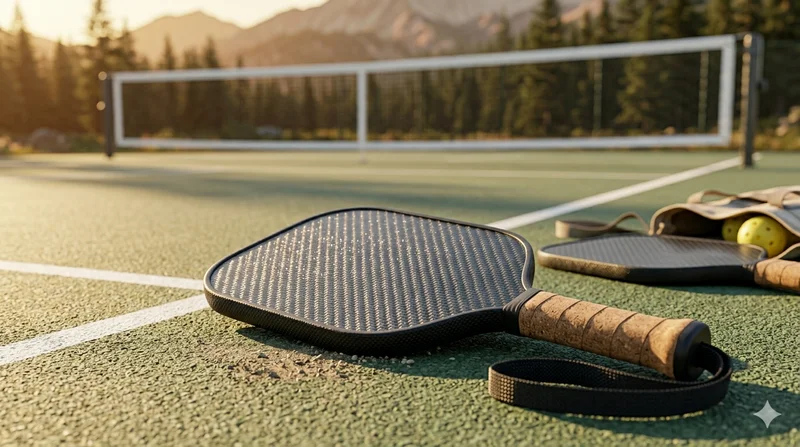
Carbon Fiber Pickleball Paddle
High-performance pickleball paddle with Toray T700 carbon fiber face and polypropylene honeycomb core. Delivers excellent power-to-weight ratio, spin generation, and vibration dampening for competitive play.
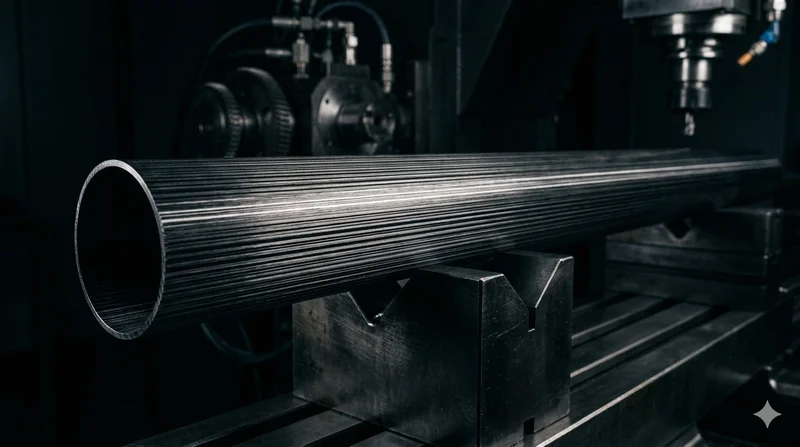
Round Carbon Fiber Tube — UD Unidirectional T700
Unidirectional (UD) round tube with all fibers aligned axially for maximum longitudinal stiffness. Ideal for applications requiring high bending rigidity with minimal weight, such as shafts, struts, and structural reinforcements.
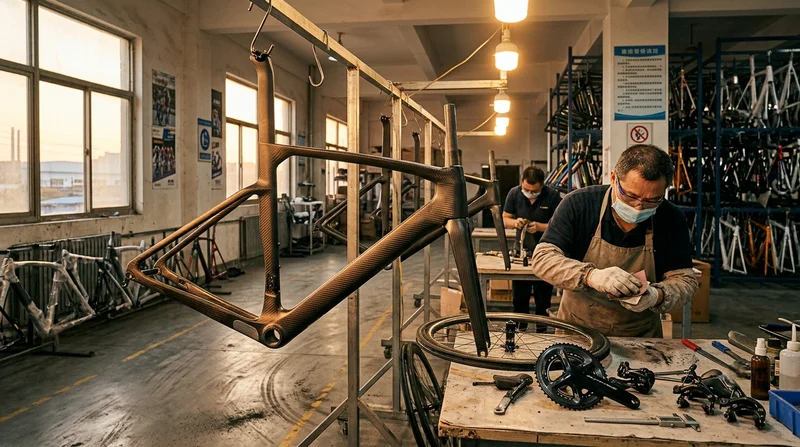
Custom Carbon Fiber Bicycle Frame
Full-custom carbon fiber bicycle frame manufactured to your geometry specifications. We produce road, gravel, mountain, and track frames using high-modulus carbon fiber layups optimized for each riding discipline. Monocoque construction with internal cable routing, available with disc or rim brake mounts.
Carbon Fiber Plate — 3K Twill T700 3.0mm
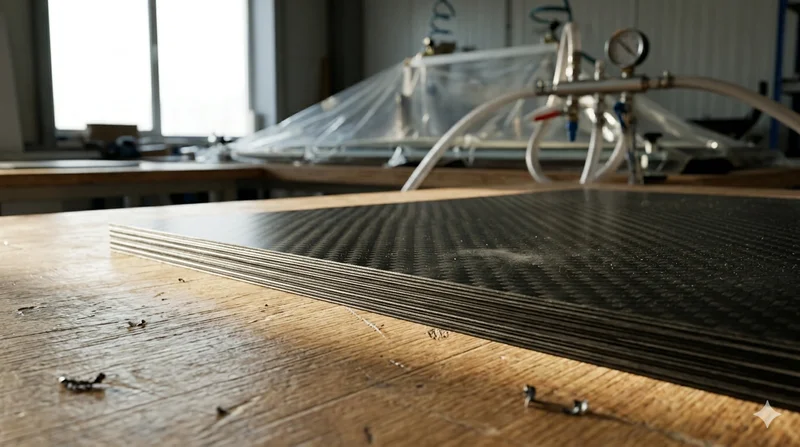
Medium-thickness 3.0mm carbon fiber plate offering significantly higher load capacity while maintaining attractive 3K twill finish. Suitable for structural brackets, reinforcement plates, and load-bearing panels.