Carbon fiber forged plate cut to size is not a woven laminate and should not be specified like one. Forged carbon starts as chopped tow mixed with resin into a molding compound, pressed into a plate under heat, then cut to the outline you need. The result is close to isotropic in plane, hides fasten
Introduction
Carbon fiber forged plate cut to size is not a woven laminate and should not be specified like one. Forged carbon starts as chopped tow mixed with resin into a molding compound, pressed into a plate under heat, then cut to the outline you need. The result is close to isotropic in plane, hides fasteners well, and shows the random marble flake pattern that made the material visible in watch cases and camera bodies. A carbon fiber forged plate cut to size supplier who quotes it as a substitute for a twill sheet will deliver a part that is heavier, less stiff and visually wrong for the drawing.
The process buys three things: shape freedom, a cosmetic surface without weave registration, and a shorter cycle than an autoclave laminate. It gives up absolute stiffness, because chopped fiber cannot be aligned, and it gives up the clean machined edge that a dense laminate produces, because the cut face shows the random chip pattern rather than continuous plies.
What carbon fiber forged plate cut to size means in practice
The molding compound, not the word forged, decides the properties. Ask for these values per batch.
| Parameter | Typical range | What it controls |
|---|---|---|
| Fiber length | 12 mm to 50 mm chopped tow | Strength and flow in the tool |
| Fiber content | 40 to 55 percent by weight | Stiffness, density and surface finish |
| Plate thickness | 1.5 mm to 10 mm | Stiffness and fastener depth |
| Panel size | 400 x 400 mm to 600 x 600 mm | Nesting yield and press size |
| Tolerance | Plus or minus 0.2 mm thickness, plus or minus 0.3 mm outline | Fit with mating parts |
| Finish | Matte as molded, or sanded and clear coated | Pattern visibility and scratch resistance |
Compression molding at 145 to 155 degrees Celsius for one to five minutes is the standard cycle. Density lands near 1.45 to 1.55 grams per cubic centimetre, tensile strength in the 180 to 350 MPa range and flexural modulus between 20 and 40 GPa depending on fiber length and content. Those figures are below a woven laminate on purpose: the random orientation removes the weak direction, and in exchange it also removes the strong one.
Buy carbon fiber forged plate: mechanical and visual numbers
The honest comparison is against a twill laminate and against die-cast metal, because those are the two materials a forged plate usually replaces.
| Property | Forged plate | 3k twill laminate | Die-cast aluminum |
|---|---|---|---|
| Density | 1.50 g/cm3 | 1.55 g/cm3 | 2.70 g/cm3 |
| Tensile strength | 180 to 350 MPa | 500 to 700 MPa | 230 to 320 MPa |
| Flexural modulus | 20 to 40 GPa | 50 to 70 GPa | 70 GPa |
| In-plane isotropy | Near isotropic | Direction dependent | Isotropic |
| Surface pattern | Random marble flake | Regular twill grid | None |
That table explains the use case. A forged plate wins where the load is multi-axis, the shape is complex, or the visible surface should not look like a woven sheet. It loses where a bending stiffness target was calculated from a unidirectional layup, and it loses again when a thin wall has to carry a tight bolt torque, because the random fiber network has less bearing strength than a dense laminate of the same thickness.
Cutting and finishing a carbon fiber forged plate cut to size
Cutting is straightforward and finishing is not, because the cut face is the exposed evidence of the process.
- CNC routing: the standard route for outlines, pockets and holes, holding plus or minus 0.2 mm on the outline with a diamond-coated cutter and a backing board.
- Waterjet: suitable for thick plate and heat-sensitive finishes, with a wider kerf and a matte cut face that needs sealing.
- Edge sealing: the cut face is porous and must be sealed with resin or a thin clear coat, otherwise it picks up handling marks and looks chalky.
- Surface finishing: sanding to 800 or 1500 grit followed by clear coat deepens the marble pattern, while a matte as-molded surface hides scratches but looks flatter.
One practical point that buyers learn late: the pattern at the edge does not continue across a joint. Two plates butted together will show a visible seam because the flake orientation is random per part, so any design that expects a continuous surface has to be molded as one piece rather than cut from two.
MOQ, pricing and lead time for carbon fiber forged plate cut to size
Forged plate is priced by press cycle as much as by material, which is why small orders carry a higher unit cost than the raw compound suggests.
| Order type | MOQ | Indicative price | Lead time |
|---|---|---|---|
| Stock plate, 3 mm, 400 x 400 mm | 1 piece | USD 45 to 90 per piece | 5 to 10 days |
| Cut parts from stock, simple outline | 20 pieces | USD 12 to 30 per piece plus plate | 8 to 14 days |
| Cut parts, pockets and inserts | 50 pieces | USD 20 to 55 per piece | 12 to 20 days |
| Custom thickness or molded shape | 50 pieces | USD 30 to 120 per piece | 25 to 40 days plus tooling |
A new compression mold for a molded shape usually runs USD 2500 to 8000 depending on size and surface requirement, while cutting from stock plate avoids tooling entirely. If you buy carbon fiber forged plate for a first prototype, cut from stock and validate the design before paying for a mold. A carbon fiber forged plate cut to size china quotation that includes molding, cutting and clear coat should list all three as separate lines, because a single bundled number cannot be compared when the design changes.
Inspecting a carbon fiber forged plate cut to size order
Inspection splits into pattern, dimension and porosity, and each one fails differently.
- Pattern consistency: compare flake density and color against the approved sample, since a change in fiber length or fiber content shifts the look before it shifts the strength.
- Porosity and voids: look for white spots and dry patches on the machined face, which indicate incomplete wet-out rather than a sanding error.
- Dimensional check: measure thickness at five points, then outline and hole position on a granite table, and record the values per lot.
- Edge sealing: confirm the cut face is sealed and free of fuzz, because an unsealed edge is the first place a cosmetic part fails in service.
Keep the approved sample and its measurement record with the purchase order. Forged plate varies visibly between batches, and the only defensible acceptance argument is a recorded reference rather than a memory of how the first order looked.
Frequently Asked Questions
Is forged carbon plate as strong as a carbon fiber sheet?
No. A forged plate from chopped tow typically reaches 180 to 350 MPa tensile and 20 to 40 GPa flexural modulus, while a 3k twill laminate reaches 500 to 700 MPa and 50 to 70 GPa. Forged carbon trades peak strength for near-isotropic behaviour, complex shape capability and a random cosmetic pattern, so it suits covers, housings and trim rather than primary load paths.
Can a forged plate be cut to size with a normal saw?
It can be cut, but the edge will chip and the cut face will need sealing. A carbide saw works for rough sizing, while a diamond-coated router or waterjet gives a dimensionally stable outline. Whichever method is used, specify edge sealing, because the exposed chopped fiber face is porous and absorbs handling contamination.
Why does the forged pattern look different between two orders?
Because the flake pattern depends on fiber length, fiber content, charge weight and flow during pressing, and none of those are perfectly repeatable. Color also shifts with resin batch and clear coat thickness. Approve a physical sample per project and keep it as the reference, rather than approving from a photograph that was taken under different lighting.
Conclusion
Carbon fiber forged plate cut to size is a molding compound product, so the specification has to cover fiber length, fiber content, thickness, tolerance and finish, not only a dimension and a colour. Set the pattern reference with a physical sample, state the edge sealing requirement, and check porosity on the machined face before accepting a lot. To compare plate thicknesses and surface finishes, browse the carbon fiber products catalogue or contact the technical sales team with your outline drawing and annual quantity, and you will receive a quotation split into molding, cutting and finishing rather than one opaque number.
Part of topic
Related Articles
- Carbon Fiber Rod Testing Service: Methods, Standards and Cost | YongXian
- Carbon Fiber Plate Inspection Service: Methods, Standards and Cost
- Carbon Fiber Sheet Quality Inspection: Methods, Standards and Cost
- Carbon Fiber Sheet Thickness Guide: Standard Sizes and Selection | YongXian
- Carbon Fiber Tube Cutting Service Near Me: Process, Tolerance and Cost | YongXian
- Carbon Fiber Sheet Cutting Service Near Me: Process, Tolerance and Cost | YongXian
Interested in Our Products?
Contact our team for competitive pricing and technical specifications.
Get a QuoteRelated Products
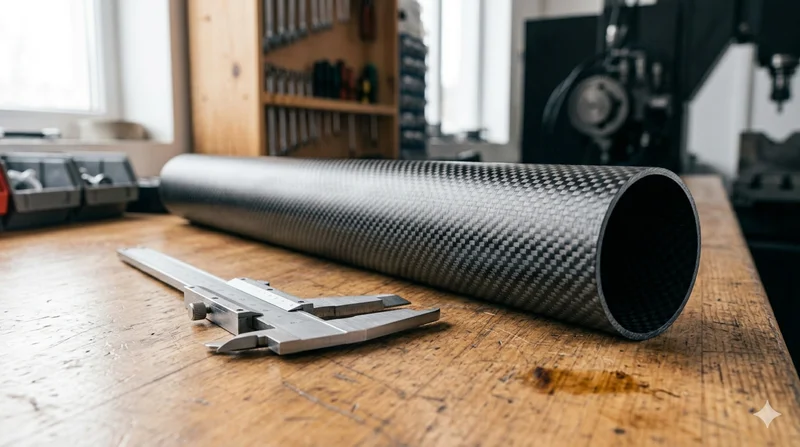
Round Carbon Fiber Tube — 3K Plain Weave T700
Standard round carbon fiber tube manufactured from Toray T700 grade fiber with 3K plain weave. Offers balanced strength and stiffness for general industrial applications including robotics, automation, sports equipment, and aerospace structures.
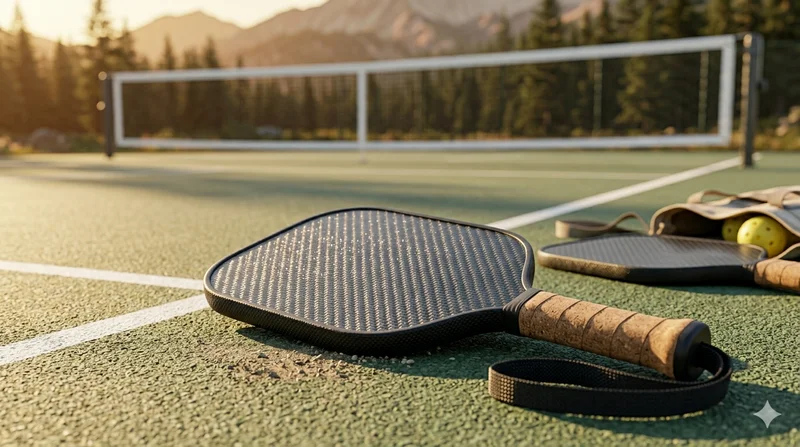
Carbon Fiber Pickleball Paddle
High-performance pickleball paddle with Toray T700 carbon fiber face and polypropylene honeycomb core. Delivers excellent power-to-weight ratio, spin generation, and vibration dampening for competitive play.
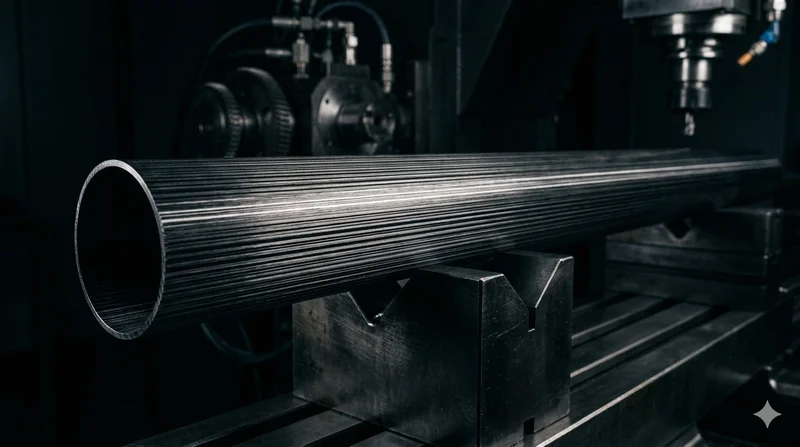
Round Carbon Fiber Tube — UD Unidirectional T700
Unidirectional (UD) round tube with all fibers aligned axially for maximum longitudinal stiffness. Ideal for applications requiring high bending rigidity with minimal weight, such as shafts, struts, and structural reinforcements.
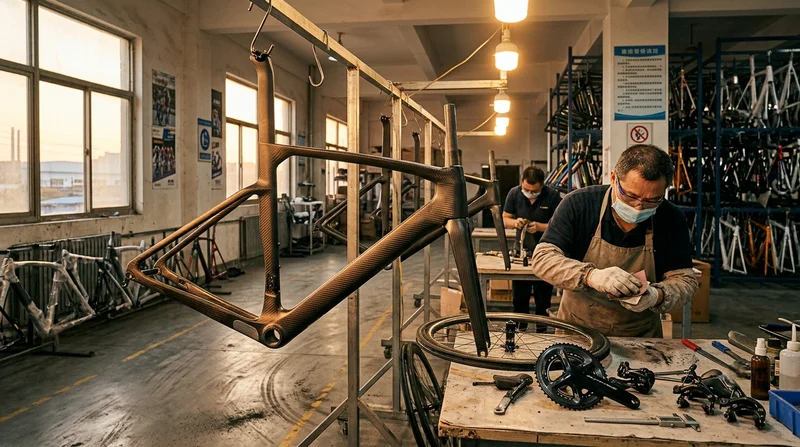
Custom Carbon Fiber Bicycle Frame
Full-custom carbon fiber bicycle frame manufactured to your geometry specifications. We produce road, gravel, mountain, and track frames using high-modulus carbon fiber layups optimized for each riding discipline. Monocoque construction with internal cable routing, available with disc or rim brake mounts.
Carbon Fiber Plate — 3K Twill T700 3.0mm
Medium-thickness 3.0mm carbon fiber plate offering significantly higher load capacity while maintaining attractive 3K twill finish. Suitable for structural brackets, reinforcement plates, and load-bearing panels.