
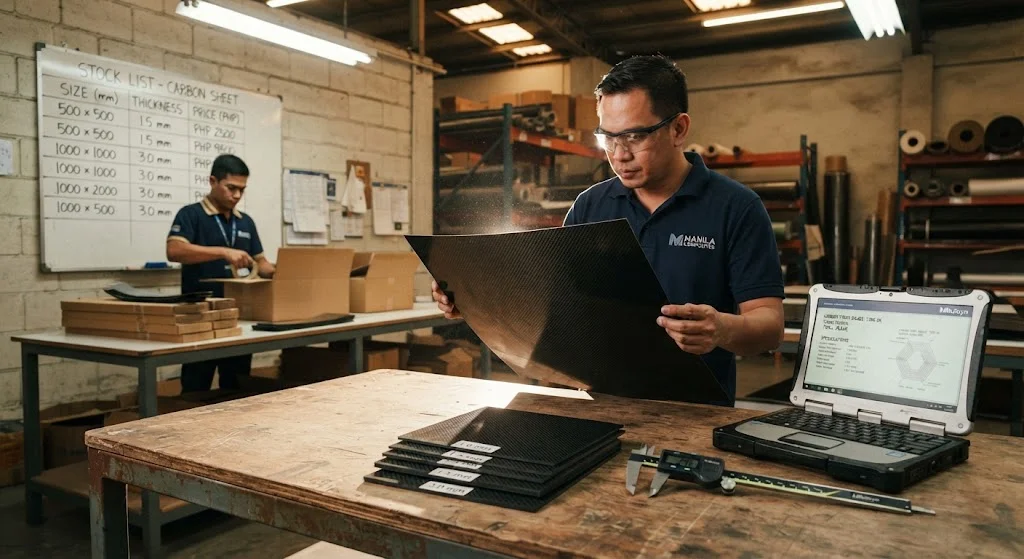
The carbon fiber sheet price Philippines buyers see today is shaped by logistics, exchange rates, and distribution margins rather than by the material alone. Carbon fiber sheet — the rigid, cured plate used for drone frames, automotive trim, jigs, and marine repairs — is not manufactured locally at
Introduction
The carbon fiber sheet price Philippines buyers see today is shaped by logistics, exchange rates, and distribution margins rather than by the material alone. Carbon fiber sheet — the rigid, cured plate used for drone frames, automotive trim, jigs, and marine repairs — is not manufactured locally at scale, so nearly every sheet sold in the country is imported, cleared through customs, and marked up by a local distributor.
This guide explains the peso price ranges you can realistically expect by grade and thickness, what drives the differences between suppliers, the import duty and shipping costs that sit on top of the quoted price, and how to compare quotes from carbon fiber sheet suppliers in the Philippines before you commit.
Carbon Fiber Sheet Price Philippines: What Moves the Number
Three cost layers decide the final price of a carbon fiber sheet in the Philippines. The first is the international price of the material, which follows the fiber grade: commercial T300-grade sheets are the cheapest, T700-grade sheets carry a premium of roughly 25-35 percent for better strength, and high-modulus grades cost several times more. The second layer is freight and import cost — air freight for urgent small orders can add 15-25 percent, while sea freight for full pallets adds 5-10 percent. The third layer is local margin, which is higher for small-volume distributors who stock cut sizes and provide advice.
| Grade | Typical international price (USD/kg) | Typical price in Manila (PHP/sheet, 300 x 300 mm, 1.5 mm) |
|---|---|---|
| T300 commercial, plain weave face | $18-28 | PHP 900-1,400 |
| T700 structural, twill face | $28-42 | PHP 1,400-2,200 |
| High modulus (M40J class) | $60-110 | PHP 3,200-5,500 |
Currency movement matters more than most buyers expect. Sheets are quoted internationally in dollars, so every peso depreciation pushes the landed price up; a 5 percent peso movement against the dollar moves the final price by roughly the same percentage, since the peso-denominated margin is usually fixed in peso rather than adjusted daily.
How Import Duties and Shipping Add to the Price
Carbon fiber composite sheets enter the Philippines under HS Chapter 39 (plastics) or Chapter 68 (articles of carbon fiber), depending on the exact product, with import duty typically in the 3-7 percent range and the 12 percent VAT applied on top of the duty-inclusive value. On a PHP 1,500 sheet, that adds roughly PHP 60-110 in duty and around PHP 190-200 in VAT — a combined uplift of about 17-20 percent before any local handling charge.
- Duty: 3-7 percent depending on the HS classification used by the importer.
- VAT: 12 percent, applied to the customs value plus duty.
- Freight: air freight adds 15-25 percent on small orders; sea freight 5-10 percent for pallet quantities.
- Local handling: customs brokerage and delivery from the port add PHP 500-1,500 per shipment.
Buyers who import directly should add roughly 20-25 percent to the international price to cover duty, VAT, and freight before comparing against a local distributor's quote. For orders under about 10 sheets, a local supplier is usually cheaper once all import friction is counted. That crossover point shifts with order size and lead time: a 20-sheet order with a two-week lead time is worth importing yourself, while a 5-sheet order needed in three days is almost always better bought from local stock, even at the higher per-sheet price.
Timing also changes the arithmetic. Air freight rates spike around the November-December peak season, when cargo space from China and Japan tightens and quoted freight can double; ordering sheets during this window pushes the effective import cost up by another 5-10 percent. Buyers with steady monthly demand typically smooth this by placing one consolidated sea-freight order per month instead of several small air-freight orders, which also cuts brokerage fees from a per-shipment cost into a per-sheet cost that is roughly 30-50 percent lower.
Carbon Fiber Sheet Suppliers in the Philippines: Where to Buy
Most Philippine carbon fiber sheet suppliers are concentrated in Metro Manila — around Quezon City, Makati, and the Laguna industrial belt — with a handful of specialist marine and aerospace suppliers serving Cebu and Davao. The practical difference between suppliers shows up in three areas: whether they stock cut sizes or only full sheets, whether they hold T300 and T700 grades or only one, and whether they can provide the datasheet with batch number that serious buyers need for structural work.
| Supplier type | Typical price level | Best for |
|---|---|---|
| General composite distributor (Metro Manila) | Reference | Cut sizes, small orders, same-day pickup |
| Marine / repair specialist | 10-20 percent higher | Boat repair, epoxy system bundles, field advice |
| Direct import (buyer handles customs) | 20-35 percent lower | Monthly volume, full pallets, price-sensitive projects |
For drone and RC applications — the largest consumer segment in the Philippines — a Metro Manila distributor with T700 twill stock and cut-to-size service is usually the right balance of price and speed. For production volumes, ask the distributor whether they can work on a back-to-back import basis, where they order to your specification and pass through most of the import saving.
How to Compare Carbon Fiber Sheet Price Philippines Quotes
Quotes for the same-looking sheet can differ by 40 percent or more, and the gap is usually explained by three variables rather than a bad deal. First, thickness: a 1.0 mm sheet uses roughly two-thirds the material of a 1.5 mm sheet, so price scales with thickness, not with sheet count. Second, face finish: a sheet with a decorative twill face and cosmetic clear coat costs more than a plain tooling surface. Third, batch traceability: sheets supplied with a datasheet and mill certificate cost more because the distributor paid for grade-verified material.
Ask every supplier for the same specification — grade, thickness, sheet size, surface finish, and whether the price includes delivery — and compare like for like. A quote that omits delivery, VAT, or the exact thickness is not comparable to one that includes them. For structural applications, reject any quote that cannot provide the fiber grade in writing.
Frequently Asked Questions
Is it cheaper to import carbon fiber sheets directly to the Philippines?
For orders under roughly 10 sheets, usually not — the duty, 12 percent VAT, freight, and customs brokerage add about 20-25 percent to the international price, which often wipes out the saving versus a local distributor. For full pallets ordered monthly, direct import typically runs 20-35 percent below local retail, because the distributor margin is the largest single cost layer you remove.
What carbon fiber sheet thickness is best for drone frames?
Most Philippine drone and RC builders use 1.0-1.5 mm T700 twill-face sheets for frames and arms. A 1.0 mm sheet is fine for light racers and camera gimbals, while 1.5 mm suits heavier multirotors and frames that carry payloads. Thicker 2-3 mm sheets are used for landing gear mounts and load-bearing brackets where local impact strength matters more than weight.
Why do carbon fiber sheet prices vary so much between Philippine suppliers?
Suppliers quote different base grades, thicknesses, and import channels. A quote at PHP 900 for a 300 x 300 mm sheet is likely T300 commercial grade without a datasheet; a PHP 1,800 quote for the same size is likely T700 with traceability and a clear coat finish. Confirm grade and thickness in writing before comparing — the physical sheet often looks identical.
Do Philippine suppliers sell carbon fiber sheets cut to size?
Most Metro Manila distributors cut sheets to size with a CNC or diamond blade for a small cutting fee, and some include one free cut per sheet. Cut-to-size service is worth confirming before ordering, because cutting a 500 x 500 mm sheet down to four 200 x 200 mm pieces at home requires a carbide or diamond tool and leaves a frayed edge if done with a standard saw.
Conclusion
The carbon fiber sheet price Philippines buyers pay is the sum of an international material price, freight and import charges, and local distribution margin. Expect PHP 900-1,400 for a 300 x 300 mm T300 sheet and PHP 1,400-2,200 for T700, plus roughly 20-25 percent import friction if you bring stock in yourself. Compare quotes on identical specifications — grade, thickness, finish, and delivery — and buy from a supplier who can document the fiber grade in writing.
YongXian supplies carbon fiber sheets in T300 and T700 grades, with datasheets, cut-to-size service, and worldwide shipping including the Philippines. Browse our carbon fiber sheet range or contact our technical team for a quotation for your project.
Part of topic
Related Articles
Interested in Our Products?
Contact our team for competitive pricing and technical specifications.
Get a QuoteRelated Products
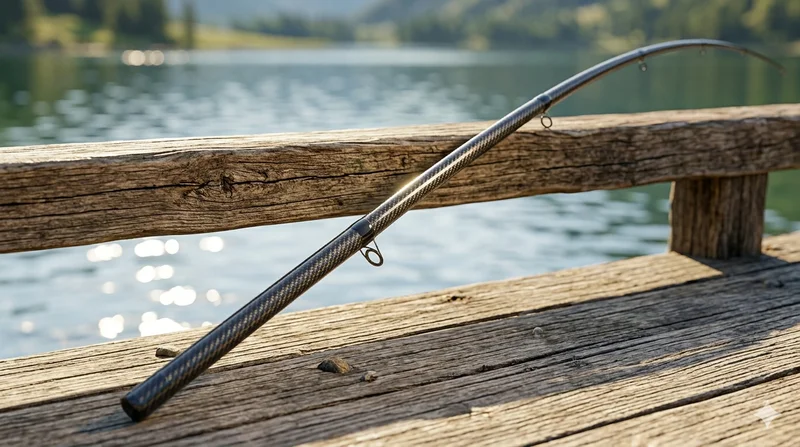
Carbon Fiber Fishing Rod Blank
High-quality carbon fiber fishing rod blank manufactured from multiple grades of Toray carbon fiber cloth. Available in a wide range of lengths, powers, and actions for freshwater and saltwater applications. Suitable for OEM rod building.

Carbon Fiber Plate — 3K Twill T700 3.0mm
Medium-thickness 3.0mm carbon fiber plate offering significantly higher load capacity while maintaining attractive 3K twill finish. Suitable for structural brackets, reinforcement plates, and load-bearing panels.

Carbon Fiber Plate — 3K Twill T700 1.5mm
Thin 1.5mm carbon fiber plate with 3K twill weave surface. Lightweight and stiff, commonly used for covers, panels, drone bodies, and applications requiring a premium aesthetic appearance.
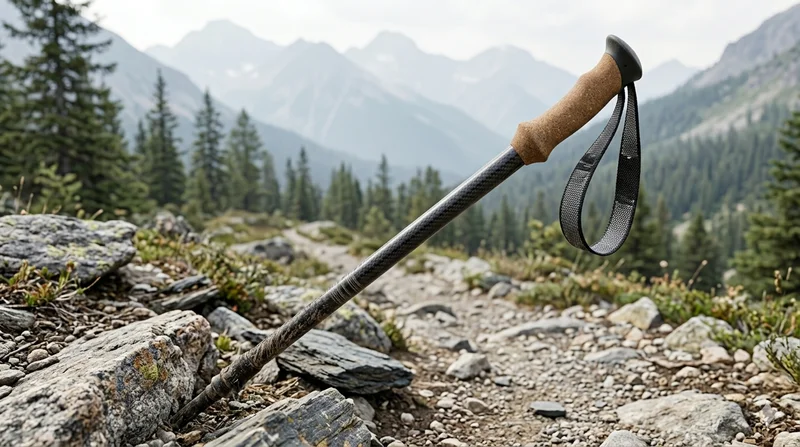
Carbon Fiber Trekking Pole
Lightweight carbon fiber trekking pole manufactured from high-grade carbon fiber tube. Weighs only 160g per pole while providing superior shock absorption and durability for hiking, trail running, and backpacking.

Square Carbon Fiber Tube — 3K Twill T700
Square cross-section carbon fiber tube manufactured with 3K twill weave for torsional strength. Preferred for structural frames, trusses, and support columns where rectangular geometry offers design flexibility.