
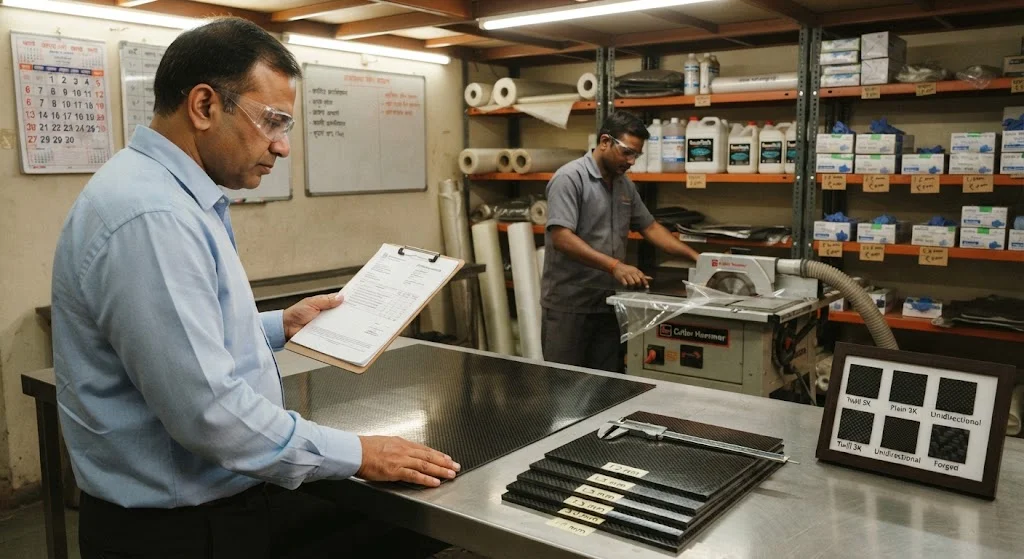
The carbon fiber sheet price in India is built from three layers: an international material price quoted in dollars, customs duty and GST applied at import, and a local distribution margin that differs sharply between traders and specialist composite suppliers. Because domestic carbon fiber sheet ma
Introduction
The carbon fiber sheet price in India is built from three layers: an international material price quoted in dollars, customs duty and GST applied at import, and a local distribution margin that differs sharply between traders and specialist composite suppliers. Because domestic carbon fiber sheet manufacturing is limited to a small number of Indian producers, most sheets sold in the country arrive from China, Japan, or Taiwan and carry the full import stack.
This guide explains the rupee price ranges you can realistically expect by grade and thickness, how GST and customs duty move the final bill, the supplier types that serve the Indian market from Mumbai to Bengaluru, and how to compare quotes on identical specifications.
Carbon Fiber Sheet Price In India: Current Rupee Ranges
Prices below reflect typical 2026 trade levels for a 300 x 300 mm sheet, the most commonly bought size in the Indian prototyping and drone market, quoted in rupees including GST:
| Grade and finish | 1.0 mm sheet | 1.5 mm sheet | 3.0 mm sheet |
|---|---|---|---|
| T300 commercial, plain finish | ₹900-1,400 | ₹1,200-1,900 | ₹2,200-3,400 |
| T700 structural, twill face | ₹1,400-2,200 | ₹1,900-3,000 | ₹3,500-5,200 |
| High modulus (M40J class) | ₹3,200-5,500 | ₹4,500-7,500 | ₹8,000-13,000 |
Two patterns stand out. First, thickness scales price faster than linearly — a 3.0 mm sheet is a pressed stack of 1.5 mm plies, and the additional consolidation work pushes cost per kilogram up. Second, grade is the largest single price driver: T700 costs roughly 40-55 percent more than T300 at the same thickness, and high-modulus sheets cost three to four times a T700 sheet of identical size.
How GST and Import Duty Shape the Final Price
Carbon fiber composite sheets fall under GST at 18 percent in India, applied to the assessable value that already includes basic customs duty. The duty itself is typically 10-15 percent for composite articles, with a social welfare surcharge of 10 percent on the duty amount. On a ₹1,500 sheet, the combined customs and GST stack adds roughly ₹400-500 — about 27-33 percent on top of the base import value.
- Basic customs duty: 10-15 percent for most carbon fiber composite articles.
- Social welfare surcharge: 10 percent on the duty amount.
- GST: 18 percent, applied to the duty-inclusive value.
- Freight and handling: typically ₹1,000-3,000 per small shipment from the port to a tier-1 city.
For buyers importing directly, add roughly 30-40 percent to the dollar price after conversion to cover the full duty and GST stack. That is why a local supplier's price, which already includes all taxes, can be competitive with direct import for orders under about 15 sheets — the import stack is a fixed percentage that small orders cannot absorb efficiently.
Carbon Fiber Sheet Suppliers in India: Who Serves the Market
The Indian carbon fiber sheet market is served by four supplier types, and the right one depends on your volume and documentation needs. National Carbon and similar composite distributors operate from Mumbai, Delhi NCR, and Bengaluru; industrial raw-material traders in Surat and Chennai stock sheets alongside other engineering plastics; aerospace-facing suppliers carry traceable T700 and T800 material with full datasheets; and online-first sellers serve hobby and drone builders with cut-to-size service.
| Supplier type | Price level | Documentation | Best for |
|---|---|---|---|
| Composite distributor (Mumbai/Delhi/Bengaluru) | Reference | Datasheet on request | Structural work, repeat orders |
| Industrial material trader | 10-20 percent lower | Minimal | Non-structural, price-sensitive |
| Aerospace-facing supplier | 20-40 percent higher | Full traceability | Certified and regulated parts |
| Online-first seller | Varies | Variable | Cut sizes, small orders, prototypes |
For structural applications — drone arms, brackets, and anything load-bearing — buy from a supplier who can provide the datasheet in writing. The grade is the price driver, and an untraceable "carbon fiber sheet" sold cheaply is often T300 commercial material or a cosmetic twill sheet that will not meet the stiffness you designed around.
The domestic manufacturing picture is changing slowly. Indian PAN-based carbon fiber production remains limited, so the import share of the market stays high, but the demand base is widening: drone programs, medical imaging tables, and defense prototyping all consume sheets in quantities that did not exist five years ago. That demand growth is why several Indian distributors have moved from trading imported rolls to stocking cut-to-size sheet inventory with datasheets — the market now rewards suppliers who behave like specialist composite houses rather than general material traders.
How to Compare Carbon Fiber Sheet Price In India Quotes
Indian quotes for the same-looking sheet can differ by 50 percent, and the gap usually comes from four variables. Grade is first: confirm T300, T700, or a specific modulus in writing. Thickness is second: a quote for a 1.0 mm sheet is not comparable to a 1.5 mm quote. Surface finish is third: decorative twill with a clear coat costs more than a plain tooling face. And GST treatment is fourth: some quotes include 18 percent GST, others do not, and comparing them without adjusting for tax inflates the apparent gap.
Ask for a proforma invoice listing grade, thickness, sheet dimensions, finish, and GST status before comparing. For production quantities, ask whether the supplier can source material directly from a mill on a back-to-back basis, which typically removes 15-25 percent versus buying from their local stock.
Payment and lead time complete the picture. Indian composite suppliers typically ask for advance payment on first orders, with 15-30 day terms only after an account history; budget for the lead time too, since cut-to-size sheet orders from local stock ship in 2-4 days while back-to-back mill sourcing runs 3-5 weeks. A supplier who quotes the lowest price but cannot hold the grade you specified is a rework risk, not a saving — the cost of a wrong-grade sheet shows up in scrapped parts, not in the invoice line.
Frequently Asked Questions
Is the carbon fiber sheet price in India cheaper from local suppliers or direct import?
For orders under about 15 sheets, local suppliers are usually cheaper or equal once you add the full customs and GST stack to a direct import. The import stack adds roughly 30-40 percent over the dollar price, and small shipments also carry fixed freight and brokerage costs. For full pallets ordered monthly, direct import typically runs 15-30 percent below local retail.
What GST rate applies to carbon fiber sheets in India?
Carbon fiber composite sheets attract 18 percent GST, applied to the assessable value that already includes basic customs duty and the social welfare surcharge. The rate can vary slightly depending on the exact HS classification used, so confirm the GST line on the proforma invoice before ordering rather than assuming the rate.
Why are some carbon fiber sheets in India so much cheaper than others?
The cheap sheet is usually T300 commercial grade without traceability, sometimes with a cosmetic surface that looks identical to a structural sheet. T700 structural material with a datasheet costs 40-55 percent more at the same thickness. If the price looks too good for the size, confirm the grade in writing — the visual difference between a T300 cosmetic sheet and a T700 structural sheet is close to zero.
Can Indian suppliers cut carbon fiber sheets to size?
Most composite distributors and online-first sellers offer cut-to-size service with a diamond blade or CNC router, often with one free cut per sheet. Confirming this before ordering matters because cutting a carbon fiber sheet with a standard abrasive saw produces a frayed, delaminated edge that weakens the part locally and requires rework.
Conclusion
The carbon fiber sheet price in India is the sum of an international dollar price, a customs and GST stack of roughly 27-33 percent, and a distribution margin that varies by supplier type. Expect ₹900-2,200 for a 300 x 300 mm T300 or T700 sheet in 1.0-1.5 mm thickness, with high-modulus grades at three to four times the price. Compare quotes on identical grade, thickness, finish, and GST terms, and buy structural material only from suppliers who document the grade in writing.
YongXian supplies carbon fiber sheets in T300 and T700 grades with datasheets, cut-to-size service, and worldwide shipping including India. Browse our carbon fiber sheet range or contact our technical team for a quotation for your project.
Part of topic
Related Articles
Interested in Our Products?
Contact our team for competitive pricing and technical specifications.
Get a QuoteRelated Products

Carbon Fiber Fishing Rod Blank
High-quality carbon fiber fishing rod blank manufactured from multiple grades of Toray carbon fiber cloth. Available in a wide range of lengths, powers, and actions for freshwater and saltwater applications. Suitable for OEM rod building.
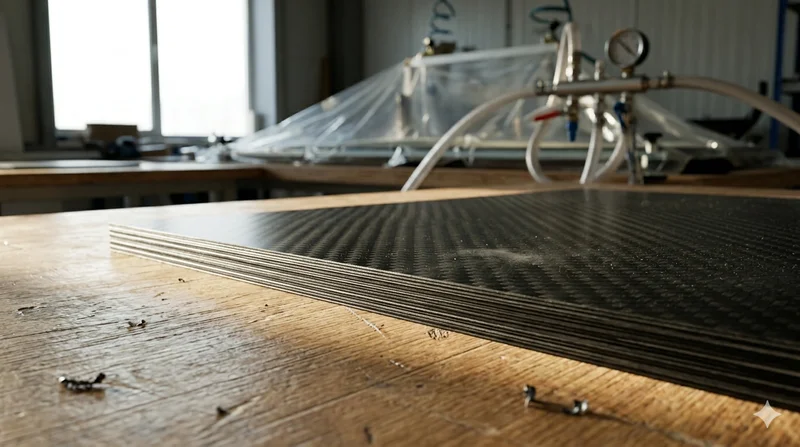
Carbon Fiber Plate — 3K Twill T700 3.0mm
Medium-thickness 3.0mm carbon fiber plate offering significantly higher load capacity while maintaining attractive 3K twill finish. Suitable for structural brackets, reinforcement plates, and load-bearing panels.
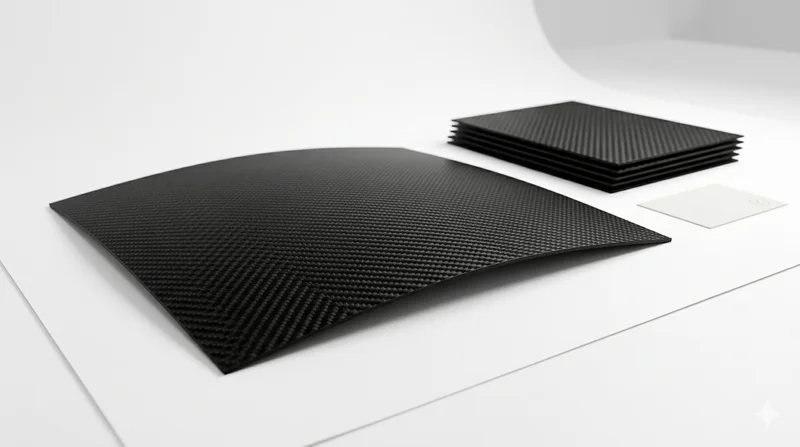
Carbon Fiber Plate — 3K Twill T700 1.5mm
Thin 1.5mm carbon fiber plate with 3K twill weave surface. Lightweight and stiff, commonly used for covers, panels, drone bodies, and applications requiring a premium aesthetic appearance.
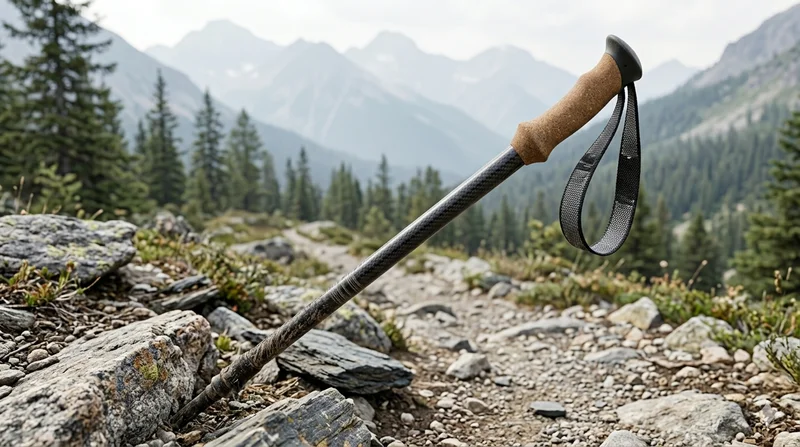
Carbon Fiber Trekking Pole
Lightweight carbon fiber trekking pole manufactured from high-grade carbon fiber tube. Weighs only 160g per pole while providing superior shock absorption and durability for hiking, trail running, and backpacking.
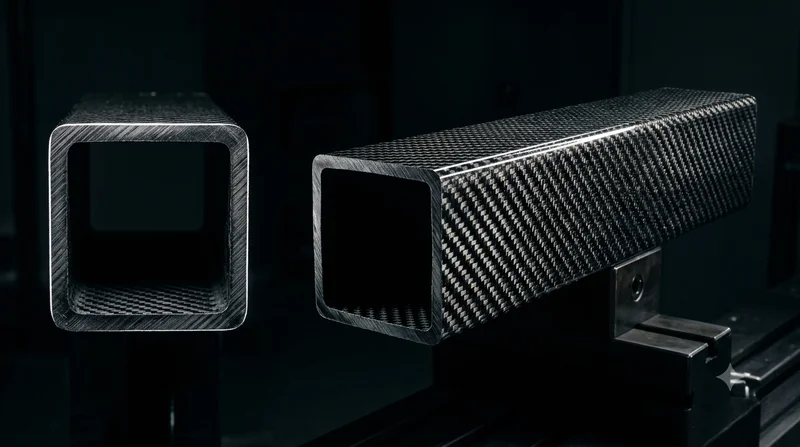
Square Carbon Fiber Tube — 3K Twill T700
Square cross-section carbon fiber tube manufactured with 3K twill weave for torsional strength. Preferred for structural frames, trusses, and support columns where rectangular geometry offers design flexibility.