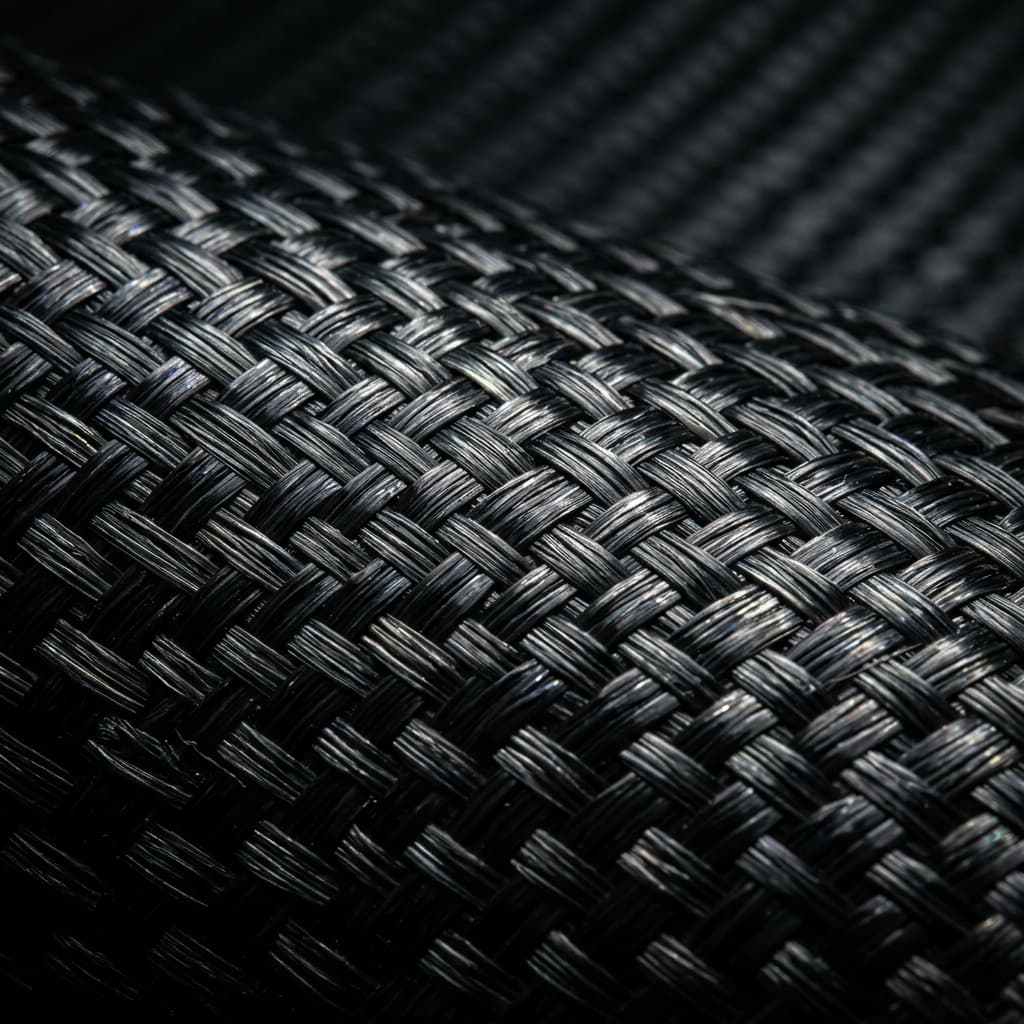
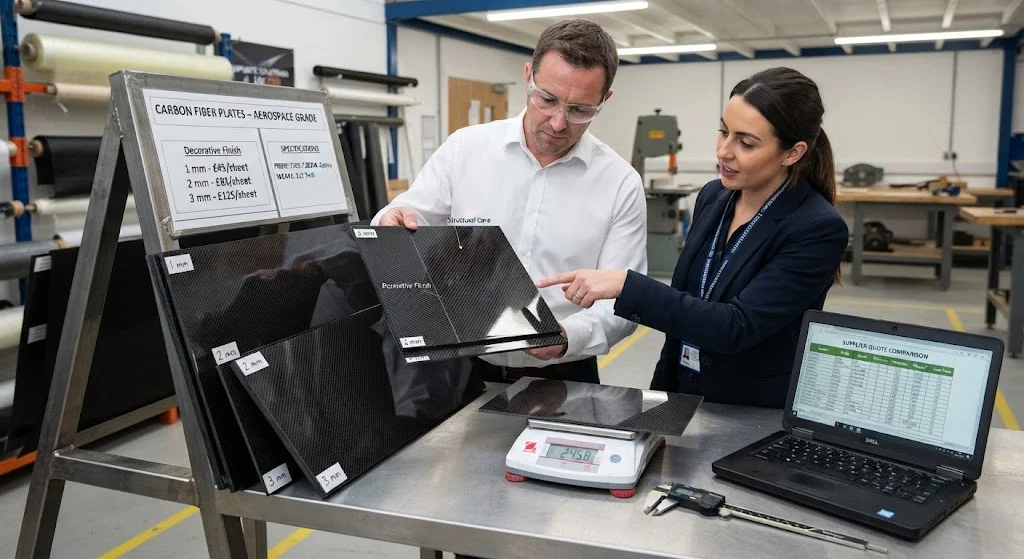
The carbon fiber plate price a buyer sees depends far more on specification than on any single market rate. A decorative 3K twill plate for an interior trim piece can cost a fraction of a structural cross-ply plate with the same dimensions, and both change with thickness, fiber grade, surface finish
Introduction
The carbon fiber plate price a buyer sees depends far more on specification than on any single market rate. A decorative 3K twill plate for an interior trim piece can cost a fraction of a structural cross-ply plate with the same dimensions, and both change with thickness, fiber grade, surface finish, and the quantity ordered. Understanding what drives the number lets you specify the cheapest plate that still meets your mechanical and cosmetic requirements — and avoid paying aerospace prices for a part that only needs to look good.
This guide explains how carbon fiber plate price is built up from material and process inputs, gives realistic benchmark ranges for the common plate types, and shows how to request quotes that suppliers can price accurately on the first round.
Carbon Fiber Plate Price by Grade and Type
Most carbon fiber plate sold today falls into three families, and each has a distinct price band. The table below shows typical ranges for small to medium quantities (1-50 plates) from established suppliers:
| Plate type | Typical construction | Thickness | Typical price (per kg) | Typical price (per 500 × 500 mm sheet) |
|---|---|---|---|---|
| Decorative twill plate | 3K 2x2 twill, cosmetic grade resin | 1-3 mm | $30-60 | $20-70 |
| Structural cross-ply plate | T300/T700 fabric or UD layers, epoxy | 1-6 mm | $50-110 | $40-160 |
| High-modulus plate | T800/M-series fiber, toughened epoxy | 1-3 mm | $120-250 | $90-300 |
| Aerospace prepreg plate | Autoclave-cured prepreg, traceable batches | 1-5 mm | $150-400 | $120-450 |
Two patterns matter. First, grade dominates: the jump from a T300 decorative plate to a T800 structural plate is typically a 3-4 times increase in material cost. Second, thickness changes the price per sheet roughly in proportion to weight, so a 3 mm plate costs about three times a 1 mm plate of the same area — unless the supplier holds a standard thickness in stock, which usually carries a small discount.
What Drives Carbon Fiber Plate Price
Every plate price is the sum of fiber, resin, process, and finishing costs. Knowing the inputs helps you challenge quotes and spot over-specification:
- Fiber grade: T300-class fiber costs roughly $15-25 per kg, T700-class $25-40, and T800 or high-modulus M-series $50-90. The fiber is the single largest material cost in the plate.
- Resin system: Standard epoxy adds little; toughened, flame-retardant, or aerospace-certified systems add 20-60 percent to resin cost and change the processing window.
- Weave and architecture: 2x2 twill and plain weave cost more to weave than unidirectional sheet, while quasi-isotropic cross-ply layups use more layers for the same thickness.
- Process: Oven-cured flat plate is the cheapest process; autoclave curing raises cost through cycle time and consumables. Vacuum-bagged prepreg sits between the two.
- Surface finish: A high-gloss cosmetic finish on both faces, a peel-ply texture, or a gel coat adds labor and rejects. One cosmetic face is the common compromise.
- Cutting and tolerances: Cut-to-size plates with tight thickness tolerance cost more per sheet than stock sizes; laser or waterjet cutting of finished plates adds $5-20 per cut depending on geometry.
Quantity is the other lever. Most suppliers discount 10-20 percent at 50 plates and 20-35 percent at 200 plates, because set-up, cutting programs, and inspection are amortized over more units. Below 10 plates, expect list price plus a small handling charge.
Regional Price Differences for Carbon Fiber Plate
Where you buy changes the number as much as the specification. Buyers comparing carbon fiber plate price near me with overseas quotes should account for three effects:
| Region | Typical price band (structural plate, per kg) | Notes |
|---|---|---|
| US domestic distributor | $60-130 | Fast delivery, stock sizes, technical support, higher labor cost |
| Europe (EU/UK) | $55-120 | Strong prepreg and aerospace heritage, similar labor structure |
| China manufacturer direct | $25-60 | Lowest unit cost, but MOQ, freight, and lead time add friction |
For a one-off plate or a 10-piece prototype, the domestic price premium buys speed and avoids freight minimums. For a 500-plate production run, the China direct price — even after shipping and import handling — typically lands 30-50 percent below domestic stock pricing, which is why volume buyers maintain both a local source and an overseas source.
Exchange rates and tariffs also move the effective price. A currency swing of 5-10 percent can erase or double a quoted discount, and import duties on composite materials vary by country of origin and trade agreement. When comparing carbon fiber plate price near me with an overseas quote, ask suppliers to quote in your currency and to state the incoterm — EXW, FOB, or DDP changes the landed cost by more than the typical volume discount.
How to Get an Accurate Carbon Fiber Plate Price Quote
Suppliers quote fastest and most accurately when you provide a complete specification. A good request for quotation includes:
- Dimensions and thickness: Length, width, thickness, and thickness tolerance. State whether you need cut-to-size or full sheet.
- Grade and fiber type: The carbon fiber grade (for example T700) and the weave or layup architecture — twill, plain, unidirectional, or cross-ply with a defined stacking sequence.
- Resin and flammability: Standard epoxy, toughened, or a specific certification such as FAR 25.853 for aircraft interiors.
- Surface finish: Cosmetic finish on one or both faces, peel-ply texture, or bare laminate for bonding.
- Quantity and schedule: The exact quantity, the expected annual volume, and the required delivery date. Volume commitments unlock the largest discounts.
- Mechanical requirements: Tensile modulus, flexural strength, or operating temperature — this lets the supplier recommend the cheapest adequate construction instead of defaulting to the most expensive one.
Ask for the price broken into material, processing, and finishing. If the quote arrives as a single number, request the breakdown — it is the fastest way to see whether you are paying for a higher grade than you need.
Certificates and test data are part of the price. A supplier quoting a structural plate should state which test method generated the datasheet values — ASTM D3039 for tension, D790 for flexure — and whether batch-level testing or only mill certificates are included. Fire-retardant and aerospace grades require additional qualification data that adds cost and lead time, so ask whether the quote covers the documentation or whether certificates are billed separately. For regulated industries, the difference between a quote with full traceability and one without is often 10-20 percent of the total.
Frequently Asked Questions
How much does a carbon fiber plate cost?
For small quantities, decorative twill plate runs $30-60 per kg, structural cross-ply plate $50-110 per kg, high-modulus plate $120-250 per kg, and aerospace prepreg plate $150-400 per kg. A typical 500 × 500 mm structural plate in 2 mm thickness weighs about 0.8 kg and costs $40-90 from a stock supplier. Ordering 50+ plates typically brings 10-20 percent discounts.
Why is carbon fiber plate so much more expensive than steel or aluminum?
The fiber itself is expensive to produce — PAN precursor, high-temperature carbonization, and surface treatment are energy- and capital-intensive — and carbon fiber plate is a laminated product built up layer by layer rather than rolled or extruded. Labor, consumables, and inspection add up. The cost is justified where the combination of low weight, high stiffness, and corrosion resistance pays for itself, which is why plate is common in aerospace, robotics, and lightweight structures rather than general construction.
Does thicker plate cost proportionally more?
Mostly yes — plate price scales with weight, and weight scales with thickness, so a 3 mm plate of the same area costs roughly three times a 1 mm plate. The exception is standard stock thicknesses: suppliers hold 1, 2, and 3 mm in inventory, so those sizes carry no tooling or set-up charge. Non-standard thicknesses such as 2.5 mm require custom layups and cost noticeably more per kilogram.
Can I buy carbon fiber plate cheaper in bulk?
Yes. Most suppliers discount 10-20 percent at 50 plates and 20-35 percent at 200 plates, and direct purchasing from a China-based manufacturer can cut the unit price 30-50 percent versus domestic stock at volume. The trade-offs are minimum order quantities, freight cost and time, and less immediate technical support. A dual-source strategy — local stock for prototypes and fast turns, overseas production for volume — is the standard approach for cost-sensitive programs.
Conclusion
Carbon fiber plate price is driven by grade, process, finish, and quantity — in that order. Decorative twill plate starts around $30 per kg, structural cross-ply plate runs $50-110 per kg, and aerospace-grade plate climbs above $150 per kg. The cheapest path is to specify the lowest grade and simplest construction that meets your mechanical and cosmetic requirements, and to consolidate volume to unlock tiered discounts.
YongXian supplies carbon fiber plate in standard and custom thicknesses, with cut-to-size service and full batch traceability. Browse our carbon fiber plate products or request a carbon fiber plate price quote from our engineering team for your project.
Part of topic
Related Articles
Interested in Our Products?
Contact our team for competitive pricing and technical specifications.
Get a QuoteRelated Products
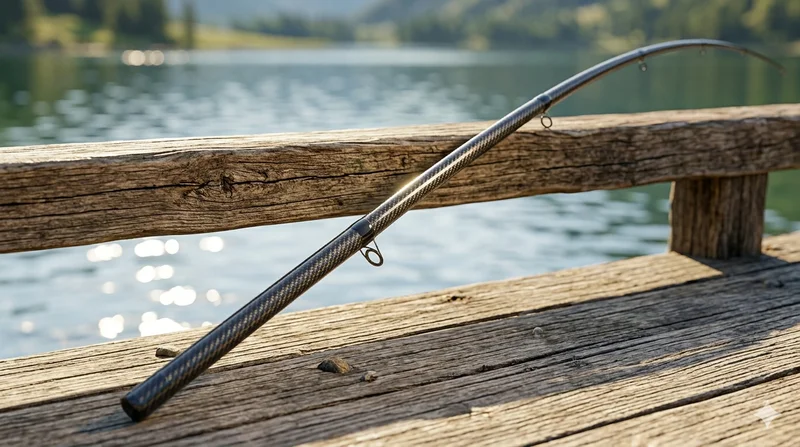
Carbon Fiber Fishing Rod Blank
High-quality carbon fiber fishing rod blank manufactured from multiple grades of Toray carbon fiber cloth. Available in a wide range of lengths, powers, and actions for freshwater and saltwater applications. Suitable for OEM rod building.
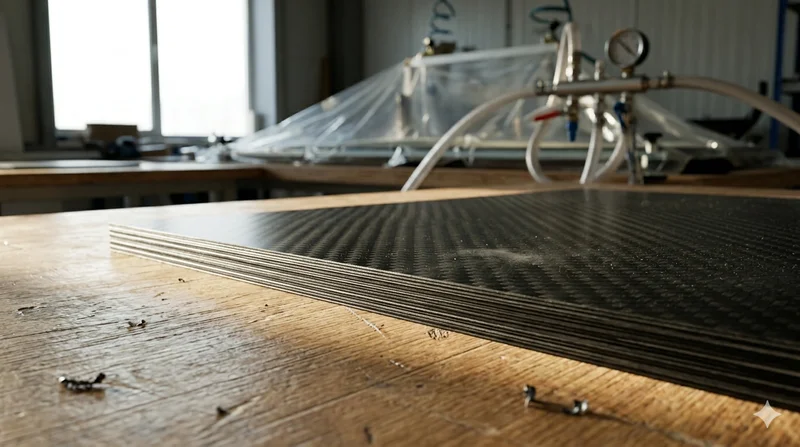
Carbon Fiber Plate — 3K Twill T700 3.0mm
Medium-thickness 3.0mm carbon fiber plate offering significantly higher load capacity while maintaining attractive 3K twill finish. Suitable for structural brackets, reinforcement plates, and load-bearing panels.
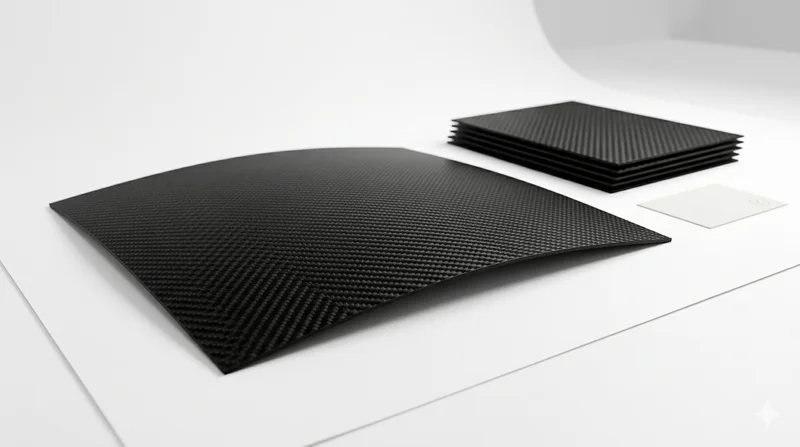
Carbon Fiber Plate — 3K Twill T700 1.5mm
Thin 1.5mm carbon fiber plate with 3K twill weave surface. Lightweight and stiff, commonly used for covers, panels, drone bodies, and applications requiring a premium aesthetic appearance.
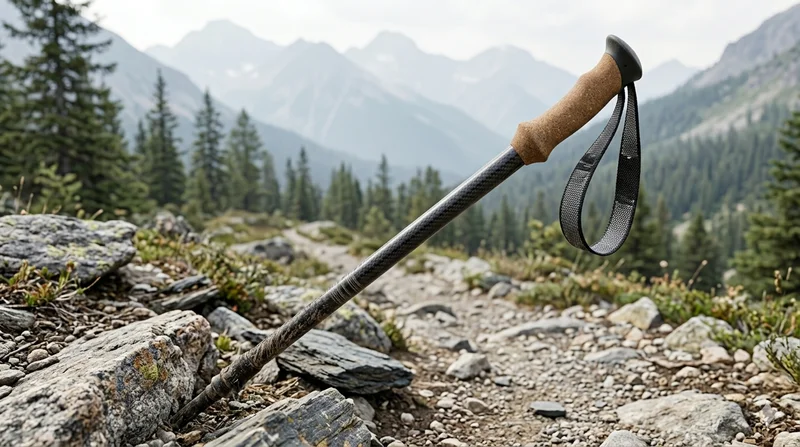
Carbon Fiber Trekking Pole
Lightweight carbon fiber trekking pole manufactured from high-grade carbon fiber tube. Weighs only 160g per pole while providing superior shock absorption and durability for hiking, trail running, and backpacking.
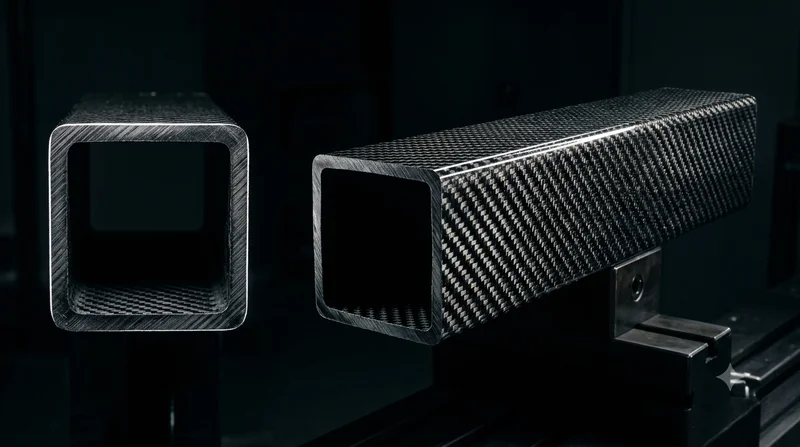
Square Carbon Fiber Tube — 3K Twill T700
Square cross-section carbon fiber tube manufactured with 3K twill weave for torsional strength. Preferred for structural frames, trusses, and support columns where rectangular geometry offers design flexibility.