
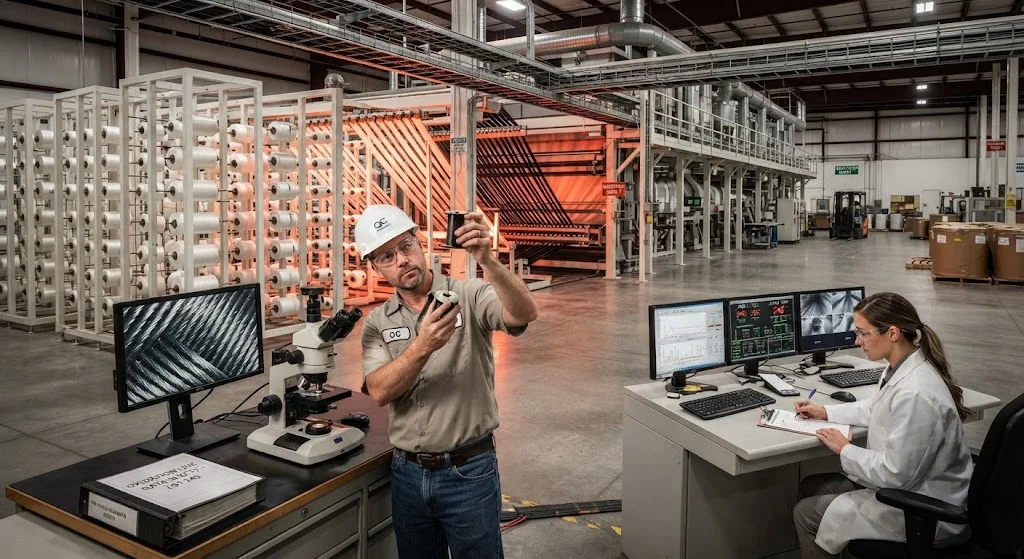
The world of carbon fiber manufacturers is smaller than most buyers assume: roughly 90 percent of global PAN-based carbon fiber production is controlled by around ten companies, and the choice between them is decided less by price per kilogram than by grade availability, tow format, capacity stabili
Introduction
The world of carbon fiber manufacturers is smaller than most buyers assume: roughly 90 percent of global PAN-based carbon fiber production is controlled by around ten companies, and the choice between them is decided less by price per kilogram than by grade availability, tow format, capacity stability, and supply reliability. Understanding how the industry is organized — the handful of Japanese majors, the Chinese capacity wave, and the Western aerospace suppliers — turns a confusing procurement exercise into a short checklist.
This guide maps the carbon fiber manufacturers landscape by region and product program, explains the tow and grade structure you will see on datasheets, and lists the questions that separate a workable supplier relationship from a costly one.
Carbon Fiber Manufacturers: How the Global Market Is Organized
Carbon fiber production splits into two families: PAN-based fiber, which accounts for roughly 90 percent of global capacity and serves aerospace, automotive, and industrial markets, and pitch-based fiber, which is a small, high-margin niche for extreme-stiffness applications. Within PAN, the market concentrates at the top:
| Producer (headquarters) | Focus grades | Typical tow range | Primary markets |
|---|---|---|---|
| Toray (Japan) | T300 to T1100, M-series | 1K-24K, 60K+ industrial | Aerospace, automotive, industrial |
| Teijin (Japan) | T700-T800 equivalents, Tenax range | 1K-24K | Aerospace, pressure vessels, industrial |
| Mitsubishi Chemical (Japan) | T800-M series, Pyrofil/Pyromex | 1K-24K | Aerospace, sporting goods, industrial |
| Hexcel (USA/France) | Aerospace-specified IM grades | 12K-24K | Aerospace, space, defense |
| Solvay / Syensqo (Belgium/USA) | Aerospace IM and HM grades | 12K-24K | Aerospace, defense |
| SGL Carbon (Germany) | Commercial and industrial grades | 50K large tow | Automotive, wind, industrial |
| Zhongfu Shenying (China) | T300 to T1100-equivalent (SYT series) | 12K-48K | Aerospace, wind, industrial, exports |
| Jiangsu Hengshen (China) | Commercial and aerospace grades | 12K-48K | Industrial, aerospace programs |
| Weihai Guangwei (China) | Commercial and aerospace grades | 12K-48K | Aerospace, sporting goods, industrial |
The Japanese majors anchor the top of the quality pyramid with decades of process data and the highest-strength grades; Chinese producers have scaled capacity fastest and now compete directly on commercial T300 and T700 grades; and the Western suppliers sit between, serving regulated aerospace programs where qualification history matters more than unit price.
How to Read a Carbon Fiber Manufacturer's Product Line
Datasheets from carbon fiber manufacturers follow a consistent structure, and knowing it lets you compare across suppliers. The grade name encodes the strength class: T300 is the baseline commercial grade at roughly 3.5 GPa tensile strength, T700 and T800 sit in the intermediate-high range, and T1100-class fibers exceed 6.6 GPa. The tow count — 1K to 60K — is the number of filaments per bundle; lower tows drape better and are easier to process for woven fabric and aerospace parts, while large tows above 24K cut cost per kilogram for wind blades and industrial parts.
- Tensile strength and modulus: the two headline numbers on any datasheet; strength drives load capacity, modulus drives stiffness.
- Tow format: 12K versus 50K changes price per kilogram, processing speed, and drape behavior.
- Fiber surface treatment: sizing chemistry affects how the fiber bonds with your resin system — always confirm compatibility.
- Batch-to-batch consistency: process control statistics matter for repeatable parts, not just the average datasheet value.
- Capacity and allocation: a manufacturer that is sold out of a grade for the next two years is not a supplier, regardless of price.
The practical consequence: two manufacturers can quote the same "T700-class" fiber with slightly different datasheets, and the deciding factor for your application is not the nominal strength but the consistency statistics and the sizing compatibility with your chosen resin.
Choosing Carbon Fiber Manufacturers for Your Application
The right manufacturer depends on the market you serve and the volume you need. For aerospace and defense programs, qualification history dominates: Toray, Hexcel, and Teijin carry decades of program data that certification bodies accept, and switching fiber after qualification is prohibitively expensive. For automotive and industrial parts, cost per kilogram and capacity security dominate, which pushes many buyers toward large-tow producers like SGL Carbon, Zoltek (a Toray subsidiary), or the Chinese majors. For prototyping and small production, a manufacturer's distributor network matters more than the mill itself — you need cut quantities, reliable lead times, and technical support without buying a truckload.
| Application | Priority when selecting a manufacturer | Typical grade | Typical tow |
|---|---|---|---|
| Aerospace and defense | Qualification history, traceability | IM and high-strength | 12K-24K |
| Pressure vessels (hydrogen) | Strength consistency, capacity allocation | T700-T800 class | 12K-24K |
| Automotive and wind | Cost per kilogram, supply security | Commercial T300-T700 | 24K-60K |
| Sporting goods and prototyping | Distributor service, small quantities | T300-T700 | 1K-12K |
For most mid-size buyers, the practical decision is not "which mill" but "which supply channel": buying from a specialist distributor who carries multiple manufacturers' grades gives you flexibility and technical support, while a direct manufacturer relationship only pays off at volumes that justify a dedicated allocation.
Supply security has become a selection criterion in its own right. Carbon fiber demand from wind energy and hydrogen pressure vessels has repeatedly outpaced capacity in recent cycles, and buyers who tied themselves to a single manufacturer have faced allocation cuts during tight quarters. Distributors with multi-source agreements absorb some of that risk because they can shift volume between manufacturers and grades when one line tightens. For any application that cannot tolerate a stopped production line, treat the supplier's own supply chain — not just their datasheet — as part of the specification.
Questions to Ask Carbon Fiber Manufacturers Before Ordering
Before committing to a direct relationship with carbon fiber manufacturers, confirm five things in writing. Ask for the current datasheet with batch statistics, not just the headline values. Ask which tow formats and grades are actually in production — a grade that requires a minimum campaign run may force you into a 500 kg minimum order. Ask about sizing chemistry and request a small test spool to confirm resin compatibility. Ask for capacity allocation: can they guarantee supply for your forecast volume, or are you competing with larger customers for the same output? And ask about lead time and minimum order quantities in the same conversation, because the combination — not any single number — decides whether the relationship works.
Frequently Asked Questions
Who are the largest carbon fiber manufacturers in the world?
Toray is the largest, controlling roughly 25-30 percent of global PAN-based capacity, followed by the Chinese majors Zhongfu Shenying and Jiangsu Hengshen, Teijin, Mitsubishi Chemical, SGL Carbon, and Hexcel. These companies together account for the large majority of global production, with Toray, Teijin, and Mitsubishi Chemical forming the traditional "big three" of Japanese carbon fiber.
What is the difference between 12K and 50K tow from a manufacturer?
The K number is filaments per bundle: 12K has 12,000 filaments and 50K has 50,000. Small tow (1K-24K) is used for woven fabric, aerospace parts, and applications needing good drape and surface finish; large tow (24K-60K) lowers cost per kilogram and processing time for wind blades, automotive parts, and industrial components where surface cosmetics matter less. Most manufacturers produce both, but the price difference at the same grade can reach 20-40 percent.
Are Chinese carbon fiber manufacturers competitive with Japanese and Western producers?
For commercial T300 and T700 grades, Chinese manufacturers now compete directly on price, capacity, and consistency, and several have qualified for aerospace programs. For the highest-strength grades — T800 and above — Japanese and Western producers still hold the clearest lead in process maturity and qualification data. The right choice depends on your grade requirement and whether your application needs certified supply chains.
Can I buy carbon fiber directly from a manufacturer in small quantities?
Usually not — manufacturers operate on minimum order quantities measured in hundreds of kilograms and sell to distributors, not end users. For prototyping and small production, buy through a specialist distributor who carries multiple grades and cuts to your requirements. Direct manufacturer relationships make sense only at volumes that justify a dedicated allocation, typically several tons per year.
Conclusion
Comparing carbon fiber manufacturers comes down to a short checklist: grade availability against your strength and stiffness needs, tow format against your process, consistency statistics rather than headline datasheet values, and capacity allocation that survives your forecast volume. The Japanese majors, Chinese capacity leaders, and Western aerospace suppliers each suit different applications, and most buyers are better served by a specialist distributor than by a direct mill relationship.
YongXian works with leading carbon fiber manufacturers and supplies T300, T700, and intermediate-modulus fibers in multiple tow formats, with datasheets and cut quantities for prototyping and production. Browse our carbon fiber range or contact our technical team for grade recommendations and supply options.
Related Articles
Interested in Our Products?
Contact our team for competitive pricing and technical specifications.
Get a QuoteRelated Products
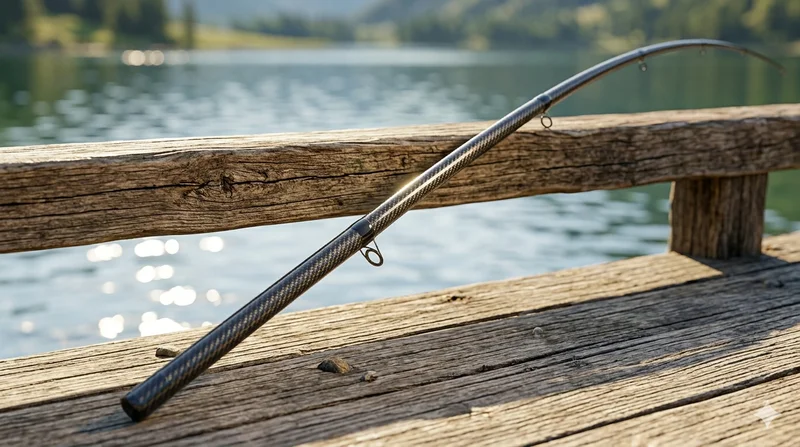
Carbon Fiber Fishing Rod Blank
High-quality carbon fiber fishing rod blank manufactured from multiple grades of Toray carbon fiber cloth. Available in a wide range of lengths, powers, and actions for freshwater and saltwater applications. Suitable for OEM rod building.

Carbon Fiber Plate — 3K Twill T700 3.0mm
Medium-thickness 3.0mm carbon fiber plate offering significantly higher load capacity while maintaining attractive 3K twill finish. Suitable for structural brackets, reinforcement plates, and load-bearing panels.

Carbon Fiber Plate — 3K Twill T700 1.5mm
Thin 1.5mm carbon fiber plate with 3K twill weave surface. Lightweight and stiff, commonly used for covers, panels, drone bodies, and applications requiring a premium aesthetic appearance.
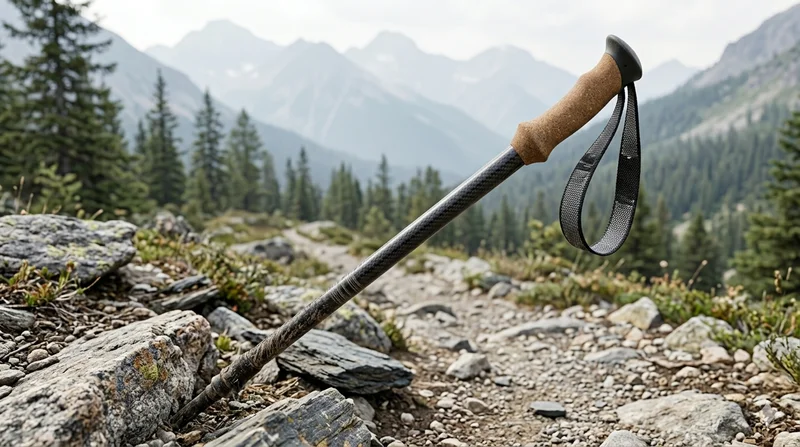
Carbon Fiber Trekking Pole
Lightweight carbon fiber trekking pole manufactured from high-grade carbon fiber tube. Weighs only 160g per pole while providing superior shock absorption and durability for hiking, trail running, and backpacking.

Square Carbon Fiber Tube — 3K Twill T700
Square cross-section carbon fiber tube manufactured with 3K twill weave for torsional strength. Preferred for structural frames, trusses, and support columns where rectangular geometry offers design flexibility.