
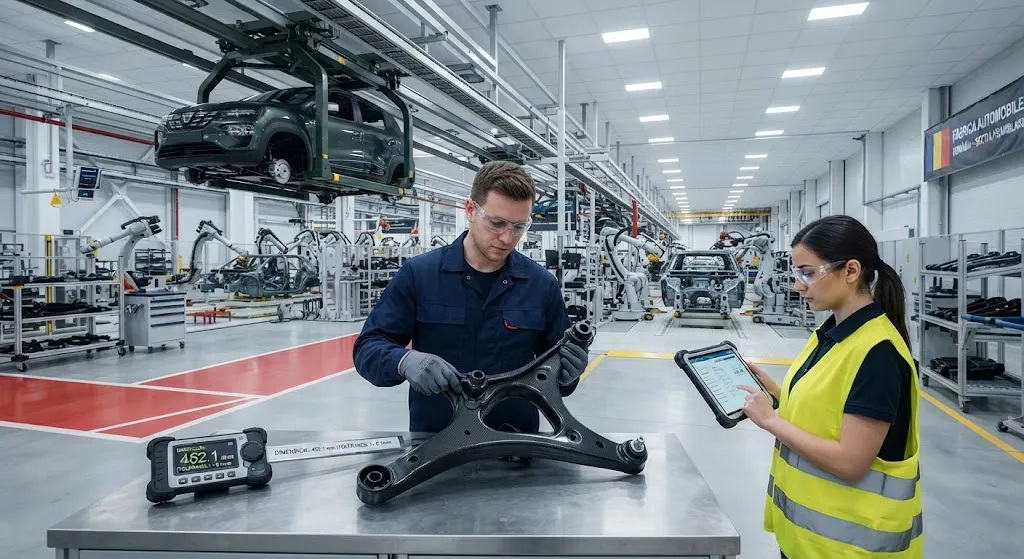
Romania rarely appears in the top five of Europe's composite demand statistics, but the country is far larger as a carbon fiber consumer than its composite industry reputation suggests. Three pillars drive the market: a massive automotive manufacturing cluster anchored by Dacia-Renault,
Introduction
Romania rarely appears in the top five of Europe's composite demand statistics, but the country is far larger as a carbon fiber consumer than its composite industry reputation suggests. Three pillars drive the market: a massive automotive manufacturing cluster anchored by Dacia-Renault, a small but strategic aerospace sector integrated into the Airbus supply chain, and an energy sector that is adding wind, hydrogen, and pipeline infrastructure at speed. Together they make Romania one of Eastern Europe's most interesting medium-term markets for carbon fiber materials and parts.
This article examines each pillar with the numbers that matter, explains why the country matters to composite material suppliers despite having no domestic carbon fiber production, and outlines the sourcing and partnership considerations for companies entering the Romanian market from abroad.
Automotive Cluster: The Largest Demand Engine
Romania is Europe's fourth-largest vehicle producer, and the Mioveni plant of Dacia-Renault — the group's most important manufacturing site by volume — anchors a cluster of more than 600 automotive parts and components suppliers spread across the country, with dense networks around Bucharest, Timisoara, and Cluj. The Romanian automotive industry exports roughly 90% of its output, which means its technical standards and material requirements are set by Western European OEMs, not by local demand.
For carbon fiber suppliers, the automotive pillar matters in three ways. First, the Dacia-Renault model range is built on cost engineering, and the popular Duster, Sandero, and Jogger platforms are not carbon-intensive — but the group's EV plans, including the all-electric Dacia Spring and future Renault EV programs, bring lightweighting requirements that reach into the supply base. Second, the 600-plus supplier companies increasingly work on EV, battery, and lightweight components where carbon fiber appears in specific parts: drive shafts, suspension arms, roof structures, and battery enclosures. Third, Romania participates in European automotive megatrends through its position inside the EU single market, so carbon fiber demand tracks European OEM cycles rather than Romanian ones.
Aerospace: Airbus Supply Chain and Defense Growth
| Segment | Key players / context | Carbon fiber relevance |
|---|---|---|
| Aerostructures | Romaero (Bucharest), Aerostar (Bacau) | Aircraft structural components, interior parts for Airbus programs |
| Helicopters | IAR Brașov | Composite airframe and rotor components under licensing programs |
| Defense | National defense programs, NATO commitments | UAV structures, armor, and maintenance of composite fleets |
| Satellites | Emerging space cluster | Thermal and structural composite panels for small satellites |
Romania's aerospace sector is modest in total headcount but strategically connected. Aerostar in Bacău and Romaero in Bucharest have long histories as suppliers of aircraft components, and IAR Brașov builds helicopters under license with a renewed European helicopter manufacturer. The sector receives public support through national aerospace strategies, and Romania's growing defense budget — driven by NATO spending commitments that have pushed past 2% of GDP — funds UAV and military aircraft programs that specify composite structures.
The aerospace pillar offers registered suppliers a higher-value, lower-volume pathway than automotive, with qualification-led demand. For carbon fiber producers this means prepreg-grade materials, documented traceability, and certification support command a premium in Romania, and the barriers to entry are the same certification hurdles seen across the European aerospace industry.
Energy Sector: Wind, Hydrogen, and Pipelines
Romania's energy transition is advancing quickly from a strong conventional base. The country operates one of the EU's larger onshore wind fleets, with substantial wind capacity concentrated in Dobrogea, and new competitive auctions under the Contracts for Difference mechanism have revived wind and solar project development. Black Sea offshore wind is being studied intensively as a next wave, and feasibility work has accelerated as Romania prepares its offshore energy law and grid infrastructure planning.
- Wind blades and nacelles: onshore repowering and offshore development both expand demand for composite blade structures, hub covers, and nacelle components made from glass and carbon hybrid laminates.
- Hydrogen economy: Romania's national hydrogen strategy targets electrolysis capacity and hydrogen transport, creating early demand for composite pressure vessels and storage systems that use carbon fiber.
- Oil and gas infrastructure: the legacy energy sector needs composite repair sleeves, reinforced pipe spools, and corrosion-resistant structural components as pipelines and refineries age.
- Power grid and industrial: composite poles, insulators, and structural repair products support grid modernization and industrial maintenance programs.
The energy pillar is the most project-based of the three, with demand arriving in discrete contracts rather than continuous supply chains. For material suppliers, this means the energy market rewards flexibility, local logistics, and engineering support that can respond to tender-driven purchasing.
Why Romania Matters Without Domestic Fiber Production
Romania produces no significant domestic carbon fiber and imports all of its composite material demand, which is precisely why the market is attractive to exporters. The absence of a national champion means OEMs, aerospace primes, and energy contractors buy through the same international supply channels used across Europe — Toray, Hexcel, SGL Carbon, Teijin, and China-based producers compete on the same tenders Romanian customers issue.
Two structural advantages favor Romania over other Eastern European markets: EU membership with full access to the single market and EU research funding, and a labor pool with strong engineering education, notably in aerospace and chemical engineering. The combination allows foreign suppliers to partner with local converters for near-shore processing while keeping material specification and quality control at home.
Market Entry and Sourcing Considerations
- Partner with local converters: Romania's competitive advantage sits in parts production and assembly, not materials; find established composite parts companies that already serve the automotive and aerospace clusters.
- Prepare for certification-led aerospace demand: aerospace customers require EN 9100-certified suppliers and full material traceability; align your documentation before approaching primes.
- Track EU funding programs: Romania draws heavily on EU cohesion and recovery funds; grant-funded projects in hydrogen, defense, and rail create projectable composite demand.
- Plan logistics through European hubs: most composite materials enter Romania through Western European distribution centers; build lead-time expectations around those routes rather than local stock.
- Participate in industry events: the Romanian composites and automotive trade events connect directly with the buyer base, bypassing the low visibility that comes from the country's modest composite-industry profile.
These steps converge on a single recommendation: Romania is best approached not as a materials market but as a manufacturing market that converts imported composites into exported products. Suppliers who position themselves as partners to Romanian converters and primes capture the demand without needing a local entity of their own.
Frequently Asked Questions
How big is Romania's automotive industry and does it use carbon fiber?
Romania is Europe's fourth-largest vehicle producer, with the Dacia-Renault Mioveni plant at its center and more than 600 automotive suppliers in the country, exporting roughly 90% of output. Carbon fiber content in Romanian-built vehicles is modest today because the core model range is cost-engineered, but the shift to EV programs for the Dacia Spring and European OEM battery and lightweight components is expanding specific carbon fiber parts such as drive shafts, suspension arms, and battery enclosures in the supplier base. The demand is indirect and driven by European OEM requirements rather than by Romanian brand specifications.
Is Romania part of the Airbus supply chain?
Yes. Romanian companies including Aerostar in Bacău and Romaero in Bucharest have longstanding positions in the European aerospace supply chain, producing structural components for aircraft programs, and IAR Brașov operates helicopter manufacturing under license from a European helicopter manufacturer. The sector is small in headcount but strategically connected, and it benefits from national aerospace strategy support and a defense budget that has exceeded 2% of GDP under NATO commitments. For composite suppliers, this means certified, aerospace-grade demand with proper qualification barriers.
What should a carbon fiber supplier know before entering the Romanian market?
Three facts shape the entry: Romania imports all of its carbon fiber, so competition happens at the international level; demand is concentrated in manufacturing and conversion, so local converter partners are the key channel; and the highest-value demand (aerospace, defense, hydrogen) is certification-led and EU-funding-linked, rewarding suppliers with documentation, traceability, and program experience. Practical steps are building EN 9100-aligned documentation, tracking EU-funded project pipelines, and establishing logistics through Western European distribution hubs rather than local stock.
Conclusion
Romania's carbon fiber market is a maker of things, not a maker of fiber: the country converts imported composite materials into vehicles, aircraft structures, and energy equipment for export across Europe. The automotive cluster around Dacia-Renault provides the volume, the aerospace and defense sector provides the value, and the wind and hydrogen energy programs provide the growth. For suppliers, the opportunity lies in partnering with Romania's strong manufacturing base rather than selling into a domestic materials market.
Companies entering Romania should lead with technical support, certification readiness, and EU-compliant materials documentation. Explore our carbon fiber products for automotive, aerospace, and industrial applications, or contact our engineering team to discuss supply partnerships for the Romanian and Eastern European market.
Part of topic
Related Articles
- Carbon Fibre Rods Near Me: Complete Guide
- Carbon Fiber Rods Near Me: Complete Guide
- Carbon Fiber Rod Manufacturer: Complete Guide
- Carbon Fiber Tube Price: Complete Guide
- Carbon Fiber Manufacturers in the World: Capacity, Technology, and Market Leaders
- Carbon Fiber Cloth Supplier Philippines: Sourcing Fabric for Marine, Automotive, and Construction
Interested in Our Products?
Contact our team for competitive pricing and technical specifications.
Get a QuoteRelated Products

Carbon Fiber Fishing Rod Blank
High-quality carbon fiber fishing rod blank manufactured from multiple grades of Toray carbon fiber cloth. Available in a wide range of lengths, powers, and actions for freshwater and saltwater applications. Suitable for OEM rod building.

Carbon Fiber Plate — 3K Twill T700 1.5mm
Thin 1.5mm carbon fiber plate with 3K twill weave surface. Lightweight and stiff, commonly used for covers, panels, drone bodies, and applications requiring a premium aesthetic appearance.

Carbon Fiber Plate — 3K Twill T700 3.0mm
Medium-thickness 3.0mm carbon fiber plate offering significantly higher load capacity while maintaining attractive 3K twill finish. Suitable for structural brackets, reinforcement plates, and load-bearing panels.
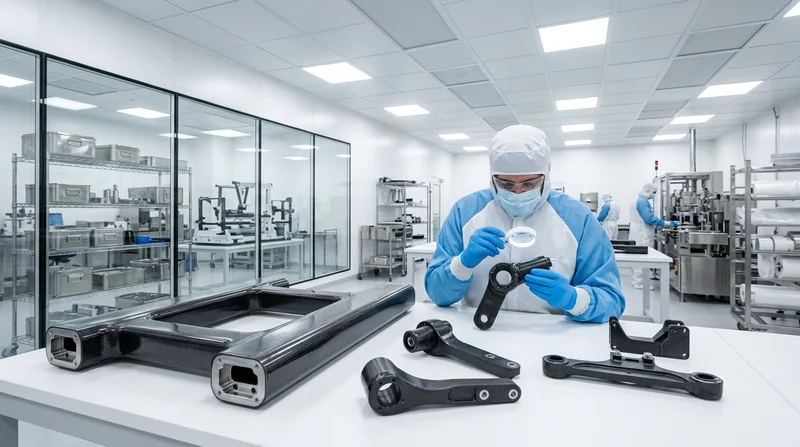
Custom Carbon Fiber Medical Device Components
Medical-grade carbon fiber components manufactured for imaging equipment, surgical instruments, and patient support systems. Carbon fiber's radiolucency (X-ray transparency) and high strength-to-weight ratio make it ideal for CT scanner beds, wheelchair frames, surgical robot arms, and MRI-compatible accessories. Biocompatible resin systems available.

Square Carbon Fiber Tube — 3K Twill T700
Square cross-section carbon fiber tube manufactured with 3K twill weave for torsional strength. Preferred for structural frames, trusses, and support columns where rectangular geometry offers design flexibility.